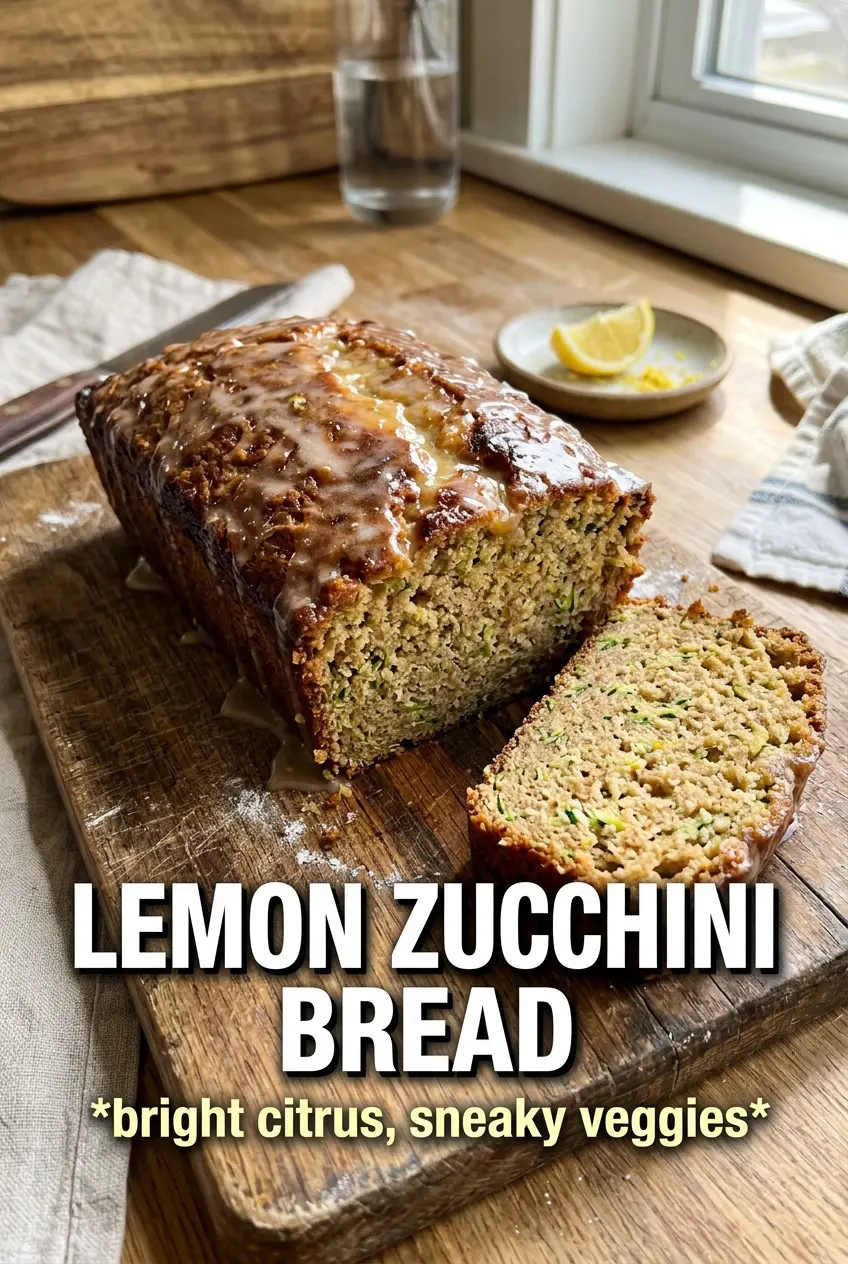
Lemon zucchini bread bakes up with a soft, fine crumb, a bright citrus aroma, and the kind of tenderness that makes a second slice feel inevitable. The zucchini keeps the loaf moist without turning it heavy, and the lemon runs through both the batter and the glaze so every bite tastes fresh rather than one-note sweet.
The trick here is balancing moisture and structure. Grated zucchini gets squeezed dry before it goes in, which keeps the loaf from collapsing or baking up gummy. Greek yogurt adds body and a little tang, while oil keeps the crumb soft for days. The glaze goes on while the loaf is still slightly warm, so it settles into the top instead of sliding off in a sticky sheet.
Below you’ll find the small details that matter most: how dry the zucchini should be, why the lemon zest belongs in the batter before the flour, and a few smart swaps if you need to work with what you’ve got.
The loaf stayed incredibly moist without being dense, and the lemon glaze soaked in just enough to give every slice a bright top. I squeezed the zucchini like you said and it baked perfectly in 55 minutes.
Lemon zucchini bread with thick glaze and a tender crumb is the one to keep close for breakfast, brunch, or afternoon coffee.
The Reason This Loaf Stays Tender Instead of Wet
A lot of zucchini breads go wrong for the same reason: too much hidden moisture. Zucchini looks harmless, but it carries enough water to turn a loaf gummy if you skip the squeeze. Once the vegetable is grated, press it in a clean towel or paper towels until it feels damp, not dripping. That one step protects the crumb and gives the bread a clean slice.
The other thing that helps is using both yogurt and oil. Yogurt brings structure and a little tang, while oil keeps the loaf soft after it cools. The batter should look thick and glossy, not loose or pourable. If you beat it until smooth after the flour goes in, the loaf gets tough instead of tender.
What Each Ingredient Is Doing in the Batter

- All-purpose flour — This gives the loaf enough structure to hold the zucchini and glaze without turning dense. Cake flour is too delicate here, and bread flour makes the crumb chewier than you want.
- Baking soda and baking powder — The two leaveners work together to lift the loaf and keep the texture even. The soda also responds to the lemon juice and yogurt, which helps the crumb bake up lighter.
- Greek yogurt or sour cream — Either one adds moisture and tenderness with a slight tang that makes the lemon taste sharper. Sour cream gives the richest result, while plain Greek yogurt is a little lighter but still works well.
- Lemon zest and lemon juice — Zest carries the strongest lemon flavor, so don’t skimp on it. Juice adds brightness, but the zest is what keeps the loaf from tasting flat.
- Zucchini — Grate it fine and squeeze it dry before adding it to the bowl. That keeps the bread moist instead of watery and helps the batter bake evenly.
- Powdered sugar for the glaze — This dissolves into a smooth finish that clings to the loaf. If you want a thinner drizzle, add juice a teaspoon at a time; too much at once can make it run off before it sets.
Building the Batter Without Overworking It
Mix the dry ingredients first
Whisk the flour, baking soda, baking powder, and salt together before they ever meet the wet ingredients. That spreads the leavening evenly, so you don’t get a pocket of bitterness or a patch that rises faster than the rest. Once the dry mix is blended, set it aside and move on without delay.
Beat the wet mixture until smooth
Mix the sugar, eggs, oil, yogurt, lemon zest, lemon juice, and vanilla until the batter looks creamy and glossy. The zest should smell strong at this stage, because rubbing it into the wet ingredients wakes up the oils. If the mixture looks curdled, keep going for another few seconds; that’s normal before the flour goes in.
Fold in the zucchini, then stop early
Add the squeezed zucchini and stir just until it disappears into the batter. After that, add the dry ingredients and fold only until no streaks of flour remain. If you keep mixing once the flour is hydrated, the loaf turns tight and a little rubbery instead of soft and delicate.
Bake until the center springs back
Pour the batter into the pan and bake until the top is set, deeply golden, and a toothpick comes out clean from the center. Ovens vary, so start checking a few minutes before the end of the bake time. If the top browns too quickly while the center still needs time, lay a loose piece of foil over the loaf for the last stretch.
Glaze while the loaf is warm, not hot
Let the bread cool for about 15 minutes before glazing it. Warm bread absorbs a little of the glaze, which gives you that thick, glossy finish without making the top soggy. If the loaf is still steaming, wait a bit longer; otherwise the glaze melts into a thin sugar wash instead of setting on top.
How to Adjust This Loaf Without Losing the Texture
Dairy-free version
Use a thick dairy-free yogurt in place of the Greek yogurt or sour cream. The loaf still stays tender, but the tang is a little softer, so the lemon flavor becomes the main note rather than the background one.
Make it extra lemony
Add an extra teaspoon of zest to the batter and use the full 3 tablespoons of lemon juice in the glaze. That gives you a sharper citrus finish without thinning the crumb.
Skip the glaze for a simpler breakfast loaf
Leave the glaze off and dust the cooled loaf with a little powdered sugar instead. The bread is still sweet enough on its own, and the top stays a bit drier, which some people prefer for slicing and packing.
Storage and Reheating
- Refrigerator: Store covered for up to 5 days. The glaze softens a little, but the crumb stays moist.
- Freezer: Freeze slices or the whole loaf, tightly wrapped, for up to 2 months. Freeze before glazing for the cleanest result, then add the glaze after thawing.
- Reheating: Warm slices at 300°F for about 8 minutes or microwave briefly in 10-second bursts. Heat just until the crumb loosens; overheating dries out the edges fast.
Questions I Get Asked About This Recipe
Lemon Zucchini Bread
Ingredients
Equipment
Method
- Preheat the oven to 350°F and grease a 9x5 loaf pan. The pan should be ready for batter as soon as mixing finishes.
- Whisk all-purpose flour, baking soda, baking powder, and salt in a bowl. Mix until the dry ingredients look evenly combined.
- Beat granulated sugar, eggs, vegetable oil, Greek yogurt or sour cream, lemon zest, fresh lemon juice, and vanilla extract in a separate bowl until smooth. Stop when the mixture is glossy and uniform.
- Fold in grated zucchini that has been squeezed dry. The batter should turn speckled and look evenly moistened.
- Add the dry ingredients to the wet mixture and fold until just combined. Keep mixing minimal so the loaf stays tender.
- Pour the batter into the greased loaf pan and level the top. Bake at 350°F for 50–60 minutes until a toothpick inserted in the center comes out clean, with a golden top.
- Cool the loaf for 15 minutes before glazing. Let the crust set slightly so the glaze pools instead of fully running off.
- Whisk powdered sugar, fresh lemon juice, and lemon zest until smooth. The glaze should be thick enough to drizzle in ribbons.
- Drizzle the glaze generously over the warm loaf. Watch it drip down the sides and lightly pool over the edges.