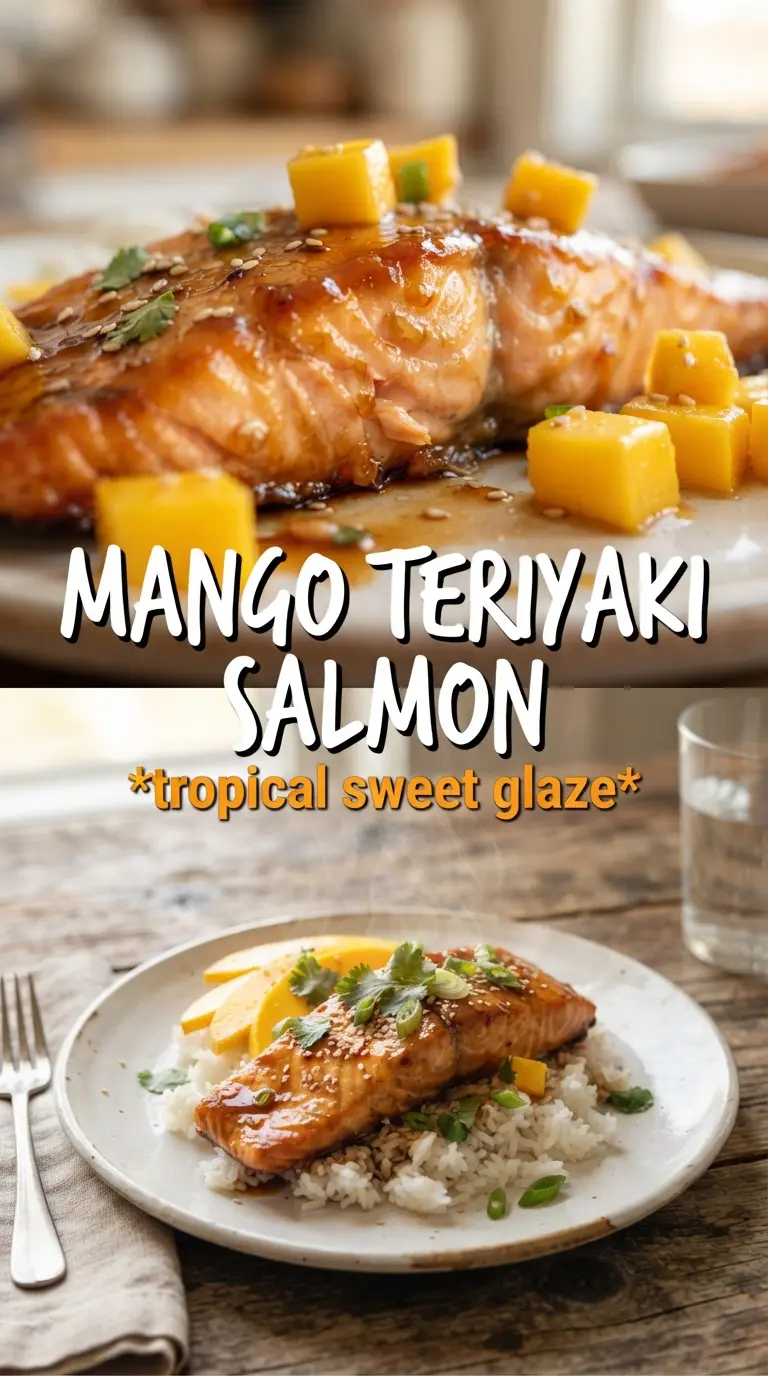
Mango teriyaki salmon lands on the plate with glossy, sticky edges and a bright, tropical finish that cuts right through the richness of the fish. The glaze turns deep orange as it cooks, then the fresh mango salsa adds a cool, juicy contrast on top. It’s the kind of dinner that looks like you worked harder than you did, but the technique stays straightforward enough for a weeknight.
What makes this version work is splitting the glaze in two. One part seasons and lightly marinates the salmon, while the reserved half stays clean for brushing on at the end, so you get a caramelized finish without cross-contaminating the sauce. The cornstarch gives the mango glaze enough body to cling to the fish instead of sliding off the pan, and the broiler at the end gives you those bronzed edges that make glazed salmon taste finished.
Below, I’ve added the part that matters most: how to keep the glaze from going thin, how long to marinate without softening the fish too much, and a few smart swaps if your mangoes aren’t perfect.
The glaze thickened up fast and stayed on the salmon instead of pooling on the pan. The mango salsa on top made it taste fresh, and the broil at the end gave the edges a nice sticky finish.
Love this sticky mango teriyaki salmon with fresh salsa? Save it for the nights when you want a fast salmon dinner with bold glaze and a bright finish.
The Part Most Mango Salmon Recipes Get Wrong
The mistake with fruit-based salmon glazes is letting them cook down until they taste flat before they ever hit the fish. Mango brings sweetness and body, but it still needs salt, acid, and ginger to taste like a glaze instead of baby food. The soy sauce deepens the color and seasons the fish, the rice vinegar keeps the sweetness from getting sticky in the wrong way, and the lime in the salsa wakes everything back up at the end.
There’s also a timing issue that matters here. Thirty minutes is enough time for the salmon to pick up flavor without getting mushy, especially if your mango puree is already smooth and sweet. If your glaze looks thin at the start, don’t panic; the cornstarch needs a minute in the heat to activate, and it thickens more as it cools.
What the Mango, Soy, and Ginger Each Do Here
- Mango puree — This is the backbone of the glaze, not just the sweet note. Use a smooth puree if you want the glaze to cling evenly; chunky fruit puree can leave you with bits that scorch before the sauce thickens. If fresh mangoes aren’t sweet enough, a good frozen puree works better than forcing an under-ripe fruit to do the job.
- Soy sauce — This brings the savory depth that keeps the glaze from tasting like dessert. Low-sodium soy sauce works fine here, and it’s the better choice if you want more control over the final saltiness, especially since the glaze reduces quickly.
- Rice vinegar — The small hit of acid keeps the glaze bright after it cooks. Don’t skip it. Without that little edge, the mango and honey can turn heavy once they’ve been heated and brushed over the salmon.
- Fresh ginger and garlic — These give the glaze its sharpness and stop it from tasting one-dimensional. Grate the ginger finely so it melts into the sauce; big fibrous pieces can cling to the fish and burn under the broiler.
- Cornstarch — This is what makes the glaze coat the salmon instead of running off the pan. Stir it into the cold mango mixture before heating so it disperses evenly; if you dump it into a hot saucepan, it can clump and leave you with a grainy finish.
How to Get the Salmon Glazed, Not Overcooked
Cooking the glaze until it coats the spoon
Start the glaze in a saucepan over medium heat and keep stirring as it comes up to a simmer. You’re looking for a sauce that goes from loose and glossy to thick enough to lightly coat the back of a spoon, which takes about four minutes. If it’s still watery, the salmon won’t hold onto it. Pull it off the heat once it thickens; it will tighten a little more as it cools.
Marinating without softening the fish
Use half the glaze for the salmon and save the rest for brushing and serving. Lay the fillets in the marinade for 30 minutes, no longer, because the acid and salt will start to change the texture if they sit too long. A lined baking sheet makes cleanup easy and keeps the glaze from fusing to the pan. Pat the salmon lightly if it comes out of the marinade dripping; excess glaze can puddle and steam instead of caramelize.
Baking first, broiling last
Bake the salmon at 400°F until it’s nearly cooked through and flakes at the edges, about 15 minutes depending on thickness. Then brush on the reserved glaze and broil for about 3 minutes, watching closely the whole time. The broiler is what creates that deep sticky finish, but it can go from caramelized to burnt in a blink if you walk away. The salmon is done when it flakes easily and still looks juicy in the center.
Finishing with the mango salsa
Mix the salsa while the salmon bakes so the onion has time to soften in the lime juice and the flavors can settle. Spoon it over the hot fish right before serving. The salsa should stay bright and fresh, not watery; if your mango is very juicy, drain off a little liquid before topping the salmon so it doesn’t wash away the glaze.
How to Adapt This for Different Kitchens and Diets
Dairy-Free and Naturally Gluten-Free
This recipe is already dairy-free, and it can be gluten-free if you use a certified gluten-free soy sauce or tamari. The flavor stays the same, but tamari usually tastes a little rounder and less sharp than standard soy sauce. That swap is the easiest way to keep the glaze balanced without changing the method.
Using Frozen Mango Instead of Fresh
Frozen mango works well for both the glaze and the salsa if fresh fruit isn’t at its best. Thaw it first and drain off excess liquid before pureeing, or the glaze will take longer to thicken. The flavor is often more consistent than under-ripe fresh mango, which can taste flat.
Making It Spicier
Keep the jalapeño seeds in the salsa or add a pinch of red pepper flakes to the glaze if you want more heat. That gives the dish a sharper finish and helps balance the honey. I wouldn’t overload the glaze with chile, though, because the mango needs room to stay front and center.
Storage and Reheating
- Refrigerator: Store leftovers in an airtight container for up to 2 days. The salsa will soften, and the glaze will lose a little shine, but the flavor stays good.
- Freezer: The cooked salmon can be frozen, but the salsa doesn’t freeze well. Wrap portions tightly and freeze for up to 1 month, then thaw in the refrigerator overnight.
- Reheating: Warm the salmon low and slow in a 300°F oven or covered in a skillet over low heat until just heated through. High heat dries the fish out fast and can make the glaze sticky in the wrong way, so skip the microwave unless you don’t mind a softer texture.
Questions I Get Asked About This Recipe
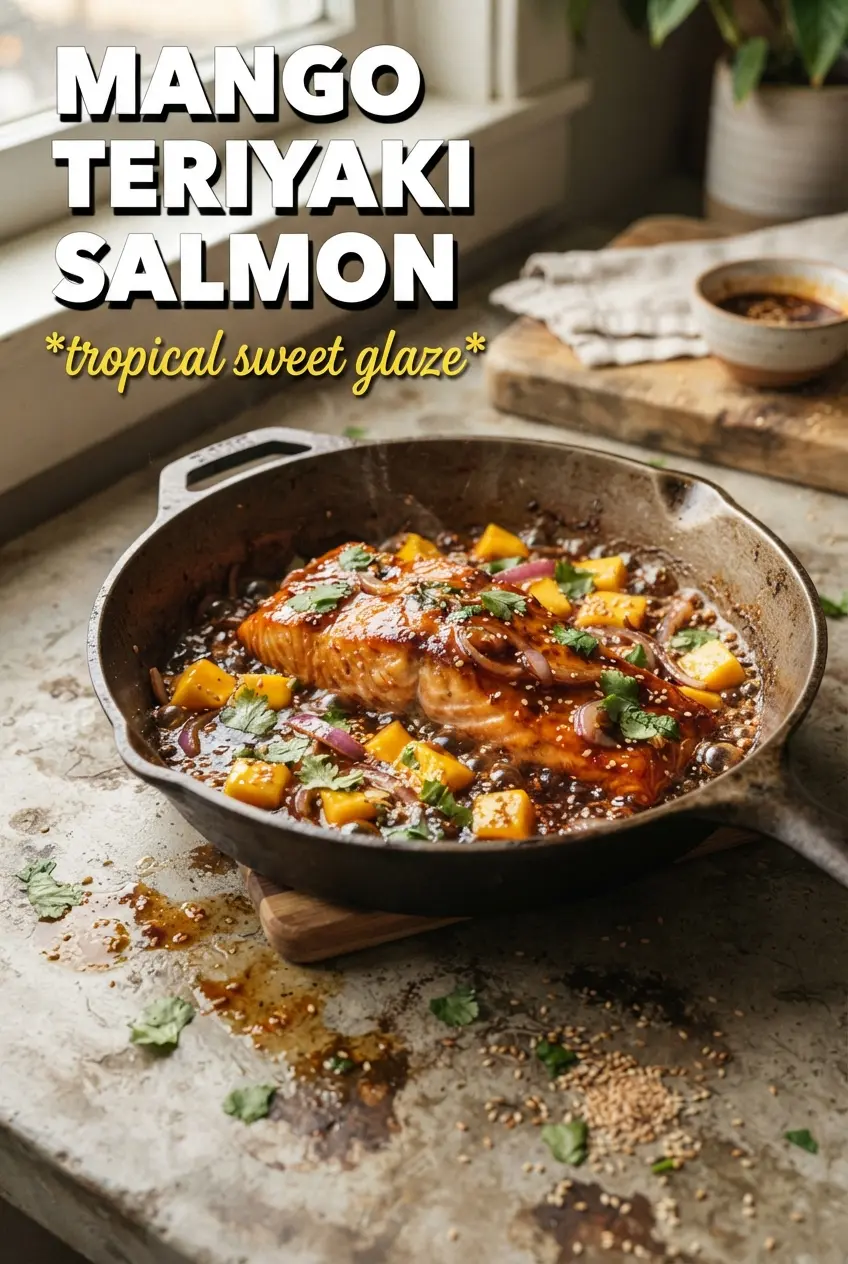
Mango Teriyaki Salmon
Ingredients
Equipment
Method
- Simmer mango puree, soy sauce, honey, rice vinegar, grated ginger, minced garlic, and cornstarch in a saucepan over medium heat until thickened, about 4 minutes. Reserve half of the glaze for serving.
- Marinate the salmon fillets in the remaining glaze for 30 minutes.
- Mix diced mango, diced red onion, minced jalapeño, and lime juice together, then set aside.
- Chop fresh cilantro and stir it into the salsa just before topping the salmon.
- Preheat the oven to 400°F and place the marinated salmon on a lined sheet pan. Bake for 15 minutes.
- Brush the salmon with extra glaze and broil at 400°F for 3 minutes until caramelized.
- Top the glazed salmon with the mango salsa and spoon any reserved glaze on the side for serving.