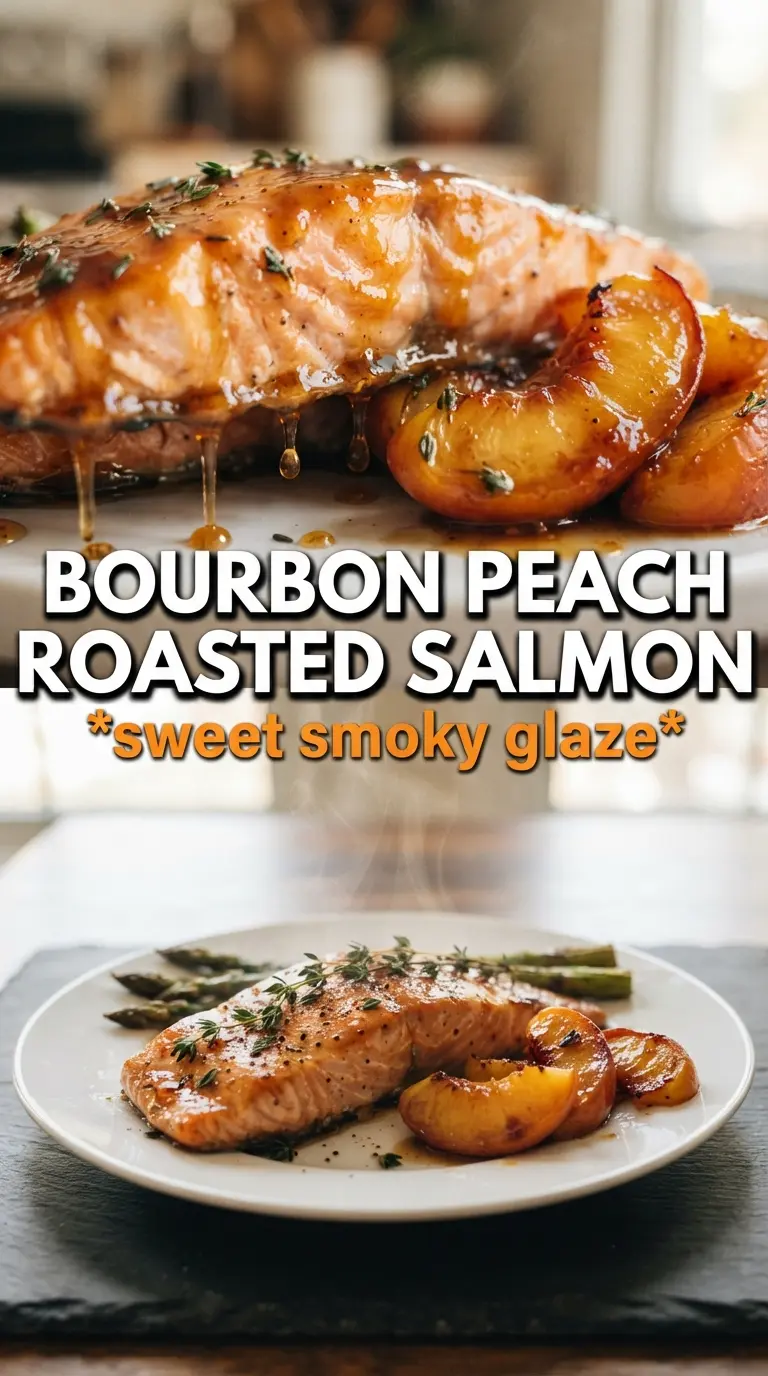
Salmon gets a deep amber glaze here that clings to the fish instead of sliding off, and the peaches turn soft, caramelized, and just sharp enough to keep the whole dish from feeling heavy. The bourbon cooks down into something warm and smoky, while honey and brown sugar give the sauce enough body to lacquer each fillet in the oven.
The trick is starting the peaches in the skillet before anything else. That first caramelization builds flavor right into the pan, and the salmon roasts in the same glossy base so every bite picks up a little sweetness, a little char, and a lot of savory depth. Dijon keeps the glaze from tasting flat, and the garlic gets just enough heat to mellow without turning bitter.
Below, I’ll walk through the part that matters most: how to thicken the glaze without burning the sugar, and how to keep the salmon tender while it finishes under that shiny peach topping.
The glaze turned glossy and thick in the pan, and the peaches held their shape instead of turning to mush. I served it with rice, and even my picky eater asked for the extra sauce.
Save this bourbon peach roasted salmon for the night you want glossy glazed salmon with caramelized peaches and almost no cleanup.
The Glaze Needs a Head Start, Not a Shortcut
The biggest mistake with fruit-glazed salmon is rushing the sauce straight into the oven before it has any body. Bourbon, honey, and brown sugar need a few minutes on the stove to lose their raw edges and turn syrupy. If you skip that reduction, the glaze stays thin and runs off the fish instead of coating it.
Cooking the peaches first does two jobs at once. It softens their edges and leaves a little fond in the pan, which gives the glaze a deeper, almost caramel-like flavor once the bourbon goes in. That pan needs to stay at medium heat, though. Too hot, and the sugar scorches before the salmon even hits the oven.
What Each Ingredient Is Actually Doing in This Dish
- Salmon fillets — Use fillets that are similar in thickness so they finish at the same time. Skin-on works well here because it protects the bottom of the fish from overcooking in the skillet and adds a little insurance under the glaze.
- Peaches — Ripe but still firm peaches hold their shape while they caramelize. If they’re too soft, they’ll collapse into the sauce; if peaches aren’t in season, use nectarines or even apricots with the same method.
- Bourbon — This gives the glaze its smoky depth and helps loosen the browned bits from the pan. Let it simmer long enough for the sharp alcohol edge to cook off; that’s when the sauce starts tasting round instead of boozy.
- Honey and brown sugar — This combination builds the sticky finish. Honey brings a clean sweetness, while brown sugar adds that molasses note that pairs well with salmon.
- Dijon mustard — Dijon keeps the glaze from tipping into candy-sweet territory. It also helps the sauce emulsify slightly, so it clings better to the fish.
- Butter — Butter softens the glaze and helps the peaches brown evenly at the start. You can use olive oil in a pinch, but the flavor won’t be as rich.
How to Keep the Salmon Tender Under a Sticky Bourbon Peach Glaze
Caramelize the Peaches First
Melt the butter in an oven-safe skillet over medium heat and lay the peach slices in a single layer. Leave them alone long enough to pick up color, then flip and cook the other side until they’re golden at the edges and fragrant. If the pan is too crowded, they’ll steam instead of brown, and you’ll lose the flavor that makes the glaze taste layered instead of one-note.
Build the Sauce in the Same Pan
Add the garlic for just 30 seconds, long enough to smell it bloom without letting it brown. Pour in the bourbon carefully and let it simmer for a minute so the sharp alcohol cooks off. Stir in the honey, brown sugar, and Dijon, then let the mixture bubble until it looks slightly thicker and coats the back of a spoon. If it still looks thin, give it another minute; if it gets too thick, it will turn sticky in the oven before the salmon finishes.
Roast Until the Fish Just Flakes
Season the salmon with salt and pepper, nestle it into the glaze, spoon some over the top, and tuck the peaches around the fillets. Roast at 400°F until the salmon flakes at the thickest part and still looks moist in the center, about 15 to 18 minutes depending on thickness. Pull it as soon as the flesh turns opaque and gives a clean flake with a fork. If you wait for it to look dry, it’s already gone too far.
How to Adapt This for Different Tables and Different Pantries
Gluten-Free Version
This recipe is naturally gluten-free as written, as long as your Dijon mustard is certified gluten-free. That’s the only ingredient I’d double-check, since some mustards use additives that don’t always show up clearly on the label. The texture and flavor stay exactly the same.
Swap the Peaches for Nectarines or Apricots
Nectarines work almost identically and save you from peeling fuzzier fruit skins if that bothers you. Apricots will give you a tarter glaze and softer texture, so use them if you want the sauce to lean brighter and a little less sweet.
No Bourbon on Hand
You can use apple juice with a teaspoon of apple cider vinegar or a dry white wine in place of the bourbon. You’ll lose the smoky warmth that bourbon brings, but the glaze still reduces into a glossy coating with enough sweetness and acidity to work.
Storage and Reheating
- Refrigerator: Store leftovers in an airtight container for up to 2 days. The salmon stays tasty, but the glaze will thicken and the peaches will soften more.
- Freezer: I don’t recommend freezing this one. Cooked salmon can go dry after thawing, and the peach glaze loses its fresh texture.
- Reheating: Warm it gently in a 300°F oven, covered loosely with foil, just until heated through. High heat dries out salmon fast, and the glaze can turn sticky and separate if it gets pushed too far.
Answers to the Questions Worth Asking
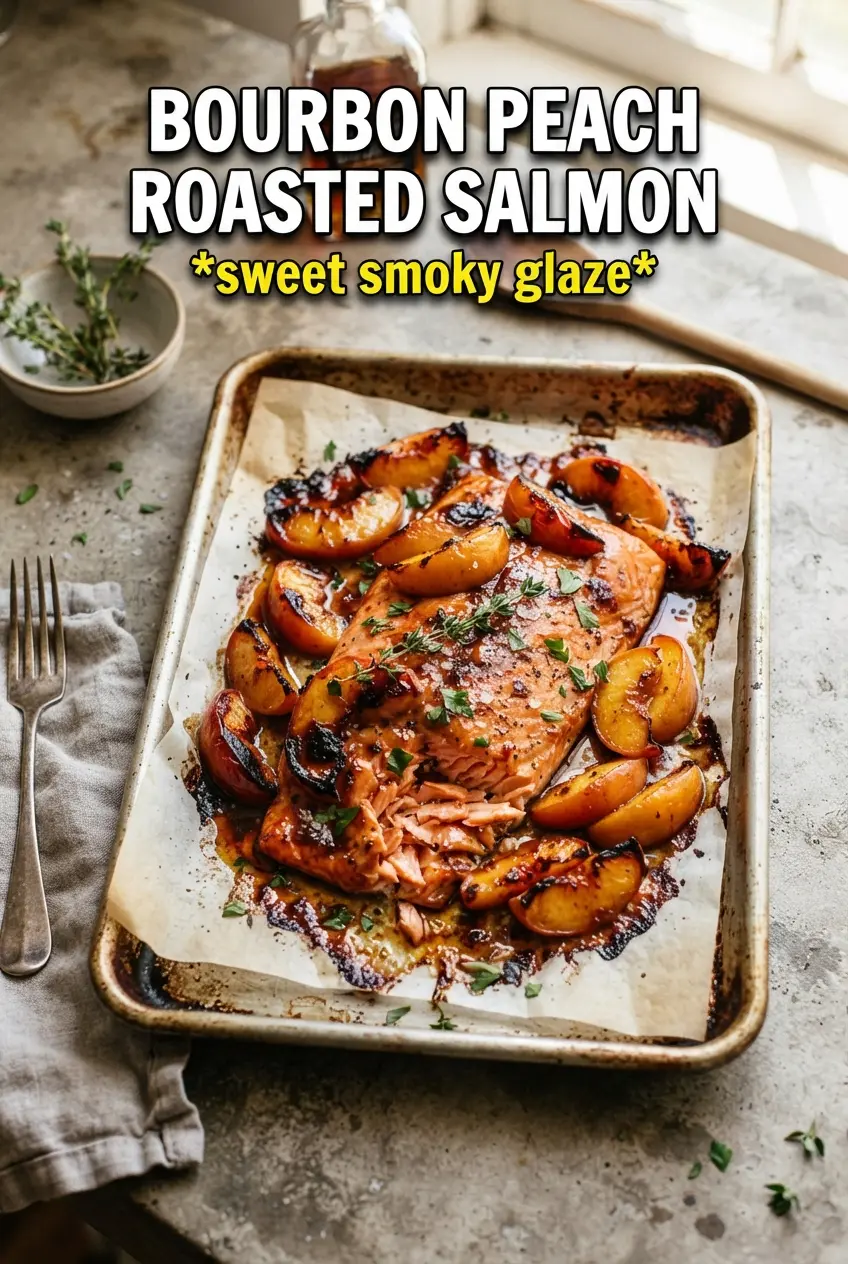
Bourbon Peach Roasted Salmon
Ingredients
Equipment
Method
- Preheat the oven to 400°F. Keep an oven-safe skillet ready so you can go from stovetop to roasting without delay.
- Melt the butter in the oven-safe skillet over medium heat and cook the peach slices 2–3 minutes per side until caramelized, then remove and set aside. Look for browned edges and a glossy, amber color.
- Add the garlic to the pan and cook for 30 seconds. Stir until fragrant but not browned.
- Carefully add the bourbon to the skillet and simmer for 1 minute. You should see bubbling and steam as the alcohol cooks off.
- Stir in the honey, brown sugar, and Dijon mustard and simmer until slightly syrupy. The glaze should coat a spoon lightly.
- Season the salmon fillets with salt and pepper. Use even coverage so each bite tastes seasoned.
- Nestle the salmon into the pan and spoon the glaze over each fillet, then top with the caramelized peaches. Make sure the tops look glossy and well coated.
- Transfer the skillet to the oven and roast for 15–18 minutes until cooked through, then garnish with fresh thyme. The salmon should flake and appear opaque, with the glaze caramelized over the top.