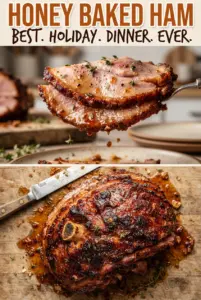
Honey baked ham comes out with a crackly caramelized crust, glossy edges, and slices that stay juicy all the way through. The sweet-spiced coating melts into the spiral cuts, so every piece gets a little lacquered, sticky edge instead of just sitting on top. It’s the kind of main dish that looks like you spent all day on it, even though the oven does most of the work.
What makes this version work is the two-part glaze treatment. The honey and butter give the sugar something rich to cling to, while the cinnamon, cloves, ginger, nutmeg, allspice, and paprika build that familiar holiday ham flavor without turning muddy. Baking the ham gently first keeps the meat tender, then the higher heat at the end sets the sugar into that brittle, caramelized shell.
Below, I’ve included the timing that keeps a fully cooked ham from drying out, the reason the foil comes off only after the ham is heated through, and a few ways to adapt the glaze if you want it a little less sweet or a little more spiced.
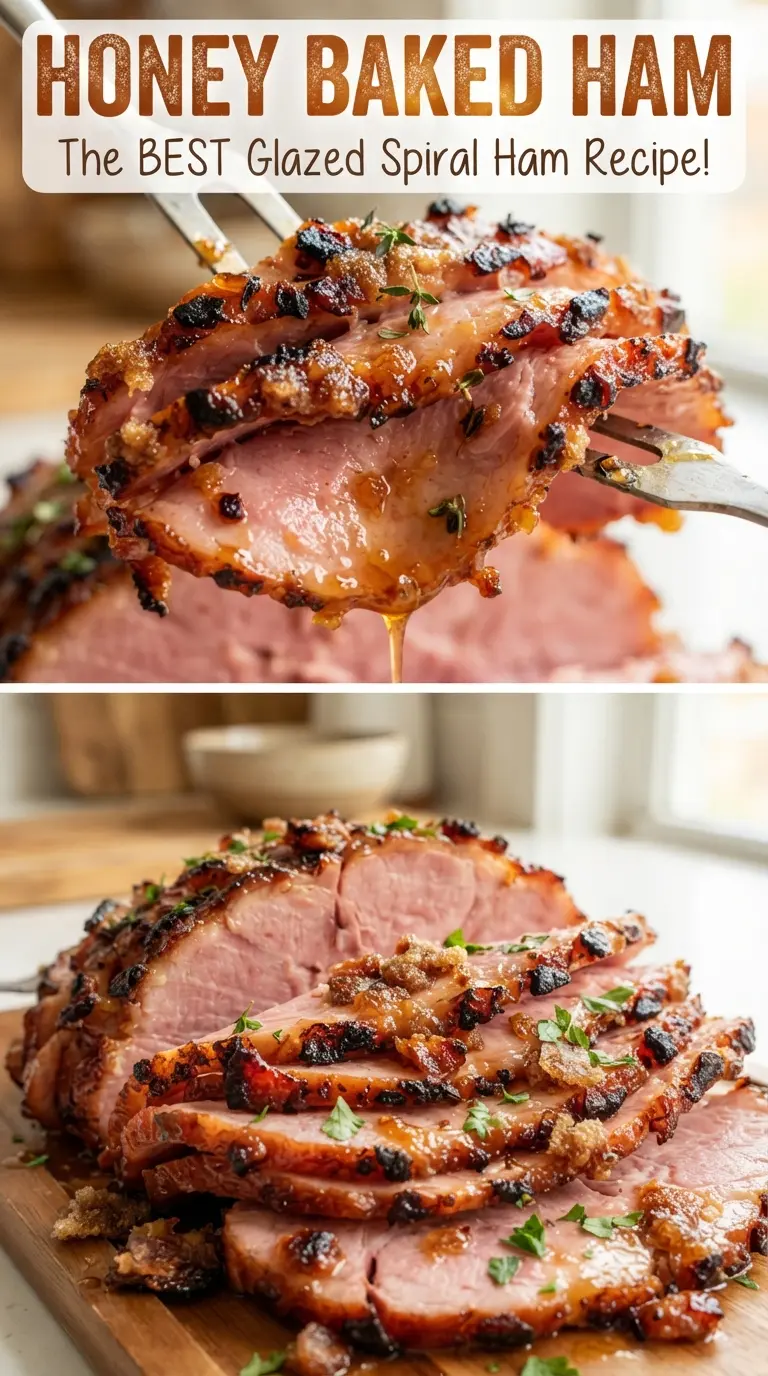
The glaze hardened into this shiny, crackly crust and the spiral slices stayed juicy all the way to the center. I followed the timing exactly and it was done right on schedule.
Like this honey baked ham? Save it for the next time you want a glossy, crackly brown sugar crust with juicy spiral-sliced ham.
The Secret to Keeping Spiral Ham Juicy Under a Sugar Crust
The biggest mistake with a glazed spiral ham is blasting it with heat too soon. The slices are already exposed, so if you start with high heat, the outside dries out before the center warms through. The low first bake gives the meat time to come up gently to temperature, and the foil traps just enough steam to protect the cut edges.
The second mistake is piling on the sugar before the ham is hot. The glaze can scorch if it spends too long in a hot oven, especially once the sugars start caramelizing. That’s why the honey-butter goes on after the ham is heated through, and the final 400°F bursts are short and deliberate. You’re setting the crust, not cooking the ham from scratch.
What the Honey, Butter, and Spices Each Bring to the Pan
- Honey — This is what gives the glaze its sticky shine and helps the sugar cling to the ham. Clover honey works well here; a darker honey will push the flavor deeper and a little less floral.
- Butter — Butter helps the glaze brush on smoothly and keeps the sugars from feeling dry and sandy. It also rounds out the spice so the coating tastes rich instead of sharp.
- Brown sugar and granulated sugar — The blend gives you both depth and structure. Brown sugar brings molasses flavor, while granulated sugar helps the crust set with a more brittle snap.
- Cloves, cinnamon, ginger, nutmeg, allspice, and paprika — These are the warm backbone of the crust. Don’t overload the cloves; too much turns medicinal fast. The paprika doesn’t make the ham spicy, it just deepens the color and helps the crust look as good as it tastes.
- Fully cooked bone-in spiral ham — Bone-in ham stays juicier and tastes more substantial than boneless. Spiral slicing matters because it lets the glaze seep between the cuts, which is exactly where the best bites live.
How to Build the Glaze in Layers Without Burning the Crust
Starting With a Gentle Bake
Set the ham cut-side down in a roasting pan and cover it tightly with foil. That first stretch in the oven is just about warming the meat to about 120°F, not browning it. If you skip the foil or crank the heat too early, the outer slices dry out long before the center is ready.
Mixing the Glaze While the Ham Warms
Melt the honey and butter together, then stir the sugars and spices in a separate bowl. Keeping the dry mix separate helps the spices distribute evenly instead of clumping in one sticky patch. You want the glaze to look like wet sand when it hits the ham, not a runny syrup that slides right off.
Brushing, Sugaring, and Repeating
Once the ham is hot, remove the foil and brush on the honey-butter mixture generously. Pat on the spiced sugar, then return the ham to the oven at 400°F for a short burst. Repeat that brush-and-sugar cycle two more times. The layer-by-layer approach is what builds the crackly crust; if you dump everything on at once, it melts into a puddle instead of setting into a shell.
Finishing to a Deep Golden Crust
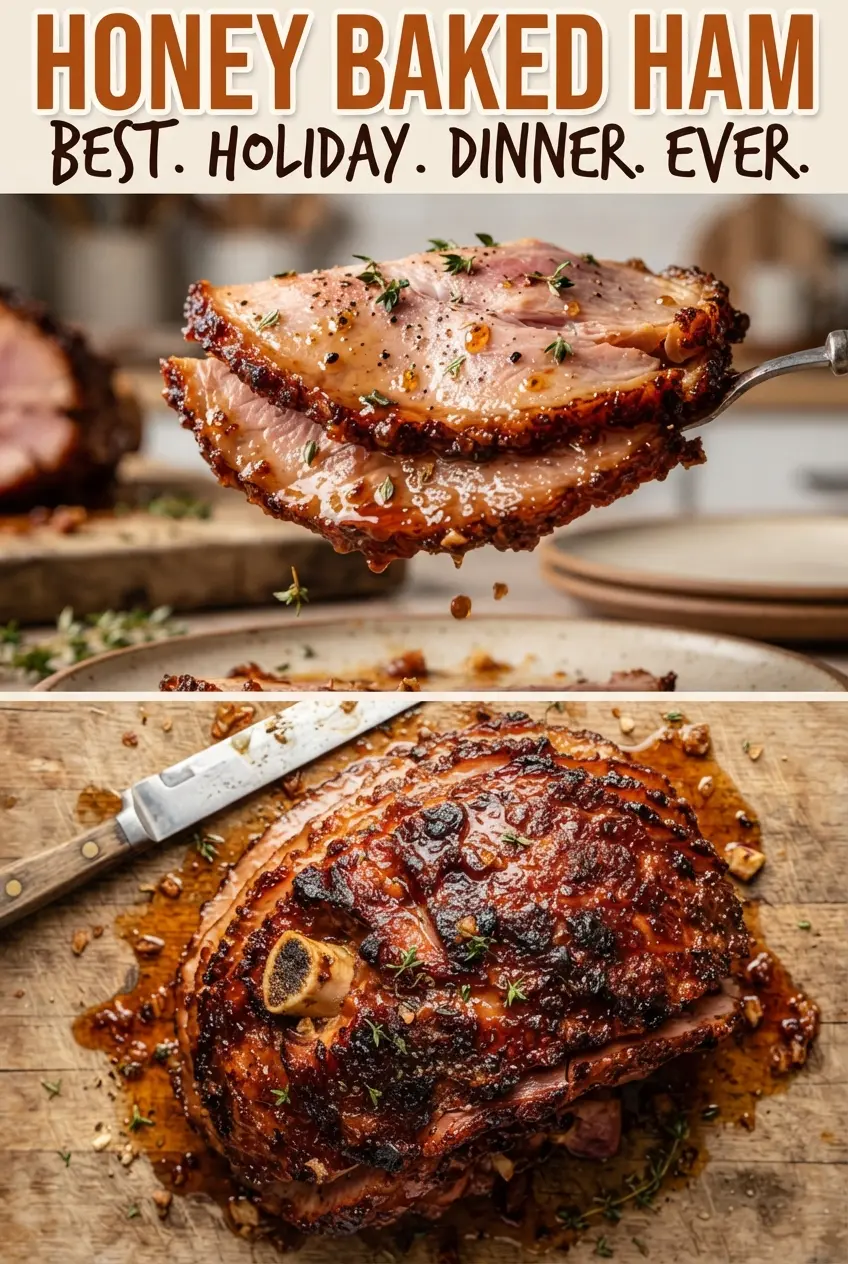
Keep baking until the crust looks deep golden and crackly and the ham reaches 140°F. The surface should look lacquered, with the edges of the sugar just starting to darken. Pull it out and let it rest for 15 minutes so the juices settle before slicing. Cutting too soon will dump those juices onto the board instead of back into the meat.
How to Adjust the Glaze for a Bigger Crowd or a Different Finish
Less-Sweet Honey Ham
Cut the granulated sugar back by a quarter cup and keep the brown sugar as written. You’ll lose a little crust thickness, but the ham will taste more balanced and less candy-like, which is a good trade if you’re serving a rich holiday meal.
More Spice, Less Sweetness
Add an extra 1/4 teaspoon of cloves and ginger, and hold back 2 tablespoons of honey. That shifts the glaze toward a warmer, more aromatic finish without making it heavy, but don’t overdo the cloves or the ham will taste harsh.
Gluten-Free and Dairy-Free
This recipe is naturally gluten-free if your ham label is clean, and it can be dairy-free if you swap the butter for a plant-based butter that melts smoothly. The glaze will still set, though the flavor will be slightly less rich and a little less round at the finish.
Storage and Reheating
- Refrigerator: Store leftovers tightly covered for up to 4 days. The crust softens, but the flavor deepens overnight.
- Freezer: Freeze sliced ham in airtight containers or bags for up to 2 months. The texture stays best if you freeze it with a little of the pan juices or wrap it well to prevent drying out.
- Reheating: Reheat slices covered at 300°F with a splash of pan juices or broth until just warmed through. High heat dries spiral ham fast, so warm it gently and stop as soon as it’s hot.
Questions I Get Asked About This Honey Baked Ham
Honey Baked Ham
Ingredients
Equipment
Method
- Preheat the oven to 325°F. Place the ham cut-side down in a roasting pan and cover tightly with foil, creating a sealed steam environment.
- Bake 12-14 minutes per pound, until the center registers 120°F. Keep the foil on during this stage to prevent drying while it warms through.
- Melt the honey and butter together until smooth. Combine the granulated sugar and brown sugar with all spices in a separate bowl to form a dry spiced sugar mix.
- Remove the foil and brush the ham generously with the honey butter. Pat on a layer of the spiced sugar to coat the surface.
- Raise the oven to 400°F and bake 5 minutes. Repeat brushing with honey butter and patting on spiced sugar two more times.
- Bake until the crust is deep golden and crackly and the ham reaches 140°F. Let the caramelized sugar set on the outside before slicing.
- Rest the ham 15 minutes before serving. This allows juices to redistribute while the crust stays crisp.