Pineapple chicken kabobs hit that sweet spot between smoky and sticky, with caramelized edges on the pineapple and juicy chicken that picks up just enough teriyaki glaze on the grill. The red peppers keep everything bright and crisp-tender, so every skewer tastes balanced instead of one-note. It’s the kind of meal that disappears fast because each bite gives you a little char, a little sweetness, and a little salt.
What makes these work is the marinade-basting setup. Half of the sauce seasons the chicken before it ever touches the heat, and the other half gets cooked onto the kabobs while they grill, which is how you get a glossy finish without brushing raw marinade onto finished food. Pineapple juice brings extra fruit flavor, but the cornstarch is what helps the sauce cling instead of running off the skewers. If you’ve ever had grilled kabobs taste good but look dry, this fixes that.
Below, I’ve included the timing that keeps the chicken tender, the small prep choices that help the pineapple caramelize instead of just warm through, and a few swaps that still keep the sweet-savory balance intact.
The sauce thickened just enough on the grill and clung to the chicken instead of dripping everywhere. My husband kept picking the caramelized pineapple pieces off the platter before dinner even started.
Save these pineapple chicken kabobs for the nights when you want sticky teriyaki glaze, caramelized pineapple, and almost no cleanup.
The Trick to Keeping the Pineapple Sweet Instead of Mushy
Grilled pineapple is best when it gets enough heat to caramelize before it starts collapsing. That’s why the fruit needs to be cut into larger chunks that can stand up to the grill grates and threaded close enough to the chicken that the juices and glaze work together. If the pieces are too small, they’ll soften and fall apart before the edges ever brown.
The other thing that matters here is spacing. Pack the skewers tightly enough that the pineapple has contact with the heat, but don’t crowd the chicken so much that steam gets trapped between the pieces. Steam is what gives you pale kabobs with soft edges. Direct heat is what gives you those sticky, browned spots everyone wants.
- Chicken thighs — They stay juicier than breasts on a hot grill and forgive a minute or two of extra cooking. Breasts work too, but they dry out faster, so cut them evenly and pull them as soon as they hit 165°F.
- Fresh pineapple — Fresh fruit caramelizes better than canned here. Canned pineapple brings too much extra moisture, which makes browning slower and the texture softer.
- Sesame oil — This adds a toasted, nutty note that makes the teriyaki taste fuller. Don’t swap in plain neutral oil unless you have to; you’ll lose some of that roundness.
- Cornstarch — It helps the reserved sauce glaze the kabobs instead of sliding off. Whisk it in completely before dividing the sauce, or you’ll get little starchy lumps on the grill.
Building the Glaze So It Clings on the Grill

Whisking the Sauce Once, Using It Twice
Whisk the soy sauce, pineapple juice, brown sugar, sesame oil, garlic, ginger, rice vinegar, and cornstarch until the mixture looks smooth and the brown sugar has started to dissolve. Then split it in half before the chicken goes in. One half seasons the meat, and the other half stays clean for basting, which keeps the finished glaze safe and glossy.
If you skip the divide and use the same bowl for everything, the sauce that touched raw chicken is no longer fit for brushing on at the end. That’s the mistake that ruins the finish. Keep the reserved portion untouched and you’ll get a clean, sticky coating instead of a dull, watery surface.
Marinating for Flavor Without Turning the Chicken Soft
Marinate the chicken for at least an hour, no more than about four. The pineapple juice and vinegar give the chicken flavor fast, but if it sits too long, especially with breast meat, the surface can get a little mushy. The goal is seasoned, not cured.
When the chicken comes out of the marinade, it should look glossy but not soggy. Let excess drip off before threading so the kabobs don’t steam in pooled liquid. That tiny step helps the grill do its job.
Threading for Even Cooking
Alternate chicken, pineapple, and red pepper so each skewer has a mix of ingredients that cook at a similar pace. Keep the chicken pieces close to the same size so one end of the skewer doesn’t finish before the other. If your pieces are wildly different, the smaller ones dry out while you wait for the bigger ones.
Soak wooden skewers long enough that they don’t scorch over direct heat. Metal skewers work too, and they’re a good move if you grill often because they don’t need soaking at all.
Grilling to Char, Not to Dryness
Preheat the grill to medium-high and oil the grates before the kabobs go on. You want a hot surface so the pineapple can caramelize and the chicken gets color quickly. If the grill isn’t hot enough, the sugar in the glaze turns sticky before it browns.
Grill for about 6 to 7 minutes per side, basting with the reserved sauce as you turn the kabobs. Watch for the chicken to firm up and the pineapple to pick up deep golden edges. Pull everything as soon as the chicken reaches 165°F; if you wait for the pineapple to look dramatically dark, the chicken will be overdone.
Use Chicken Thighs for the Juiciest Kabobs
Thighs hold up best on the grill and stay tender even if the heat runs a little high. They also soak up the teriyaki marinade with more depth, which makes the finished kabobs taste a little richer. If you use breasts, cut them the same size as the pineapple and watch the grill closely so they don’t dry out.
Make Them Gluten-Free
Swap the soy sauce for tamari or a certified gluten-free soy sauce. The flavor stays savory and balanced, and the rest of the glaze works the same way because the cornstarch is already doing the thickening.
Turn Them Into Dairy-Free Sheet Pan Kabobs
If grilling isn’t happening, thread the kabobs and roast them on a lined sheet pan at 425°F, turning once and basting near the end. You’ll lose some smoky char, but the pineapple still caramelizes and the sauce still gets sticky on the edges.
Swap in Chicken and Veggies You Already Have
Yellow bell pepper, red onion, or zucchini all work if the pieces are cut chunky enough to stay on the skewer. Zucchini cooks faster, so keep those pieces larger or tuck them between firmer ingredients so they don’t turn soft before the chicken is done.
Storage and Reheating
- Refrigerator: Store leftovers in an airtight container for up to 3 days. The pineapple softens a bit, but the flavor stays good.
- Freezer: Freeze the cooked chicken and vegetables off the skewers for up to 2 months. Pineapple gets softer after thawing, so expect a less crisp texture.
- Reheating: Warm in a 325°F oven until heated through, or use a skillet over medium-low with a splash of water to loosen the glaze. High heat dries out the chicken fast and can scorch the sugar in the sauce.
Questions I Get Asked About This Recipe
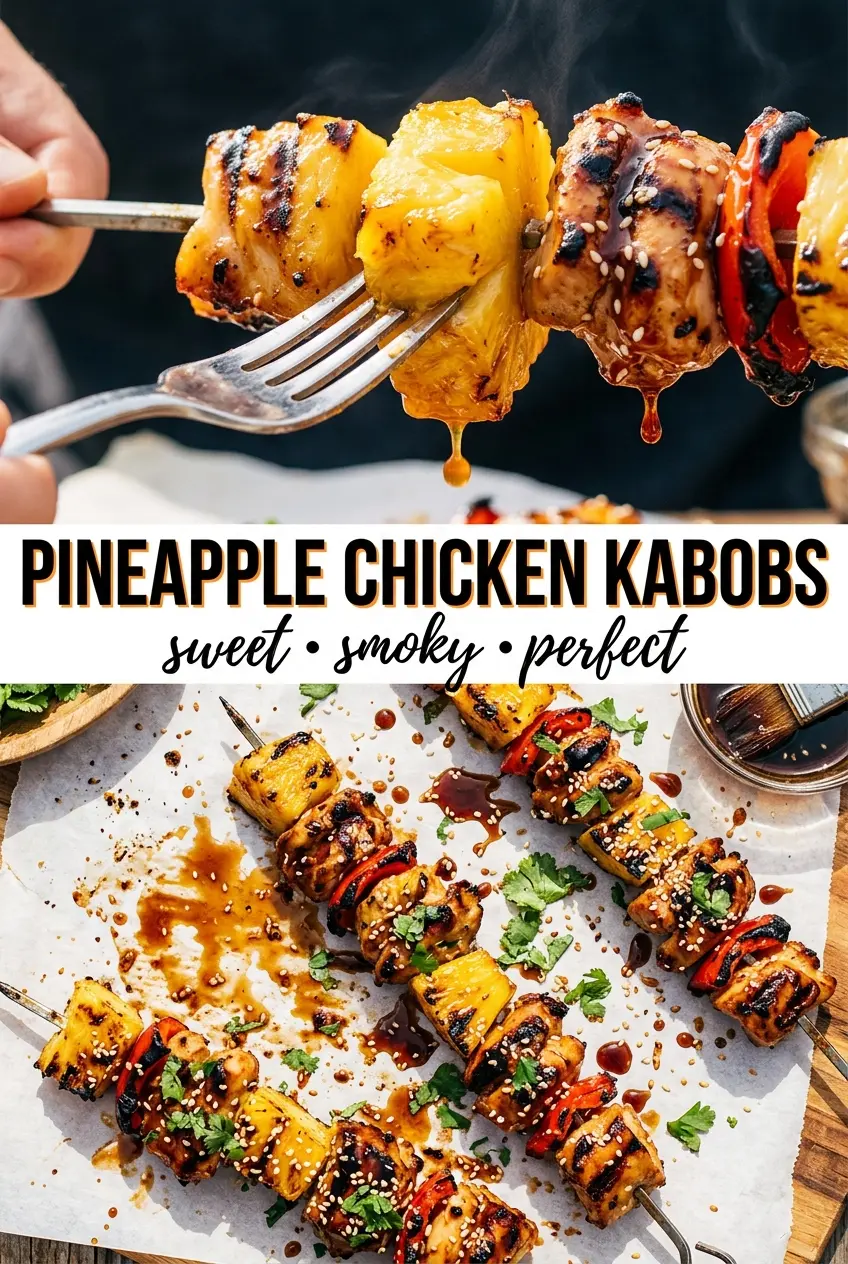
Pineapple Chicken Kabobs
Ingredients
Equipment
Method
- In a bowl, whisk soy sauce, pineapple juice, brown sugar, sesame oil, garlic, ginger, rice vinegar, and cornstarch until smooth, then reserve half for basting.
- Add the chicken to the remaining half of the marinade and toss to coat thoroughly, then cover and marinate for 1 hour.
- Soak wooden skewers in water, then thread alternating chicken, pineapple chunks, and red bell pepper pieces onto each skewer.
- Preheat the grill to medium-high and lightly oil the grates.
- Grill the kabobs for 6-7 minutes per side, basting generously with the reserved teriyaki sauce until the chicken is cooked through and the pineapple is caramelized.
- Remove the kabobs and garnish with sesame seeds and sliced green onions before serving.