These Thai peanut chicken wraps land in that sweet spot between fresh and filling. The chicken stays juicy, the vegetables keep their crunch, and the peanut sauce ties everything together with a glossy, salty-sweet coating that clings to every bite instead of sliding to the bottom of the tortilla. Rolled tightly, they eat like a proper meal, not a sad wrap that falls apart halfway through lunch.
What makes this version work is the balance in the sauce and the way the fillings are layered. The peanut butter gets loosened with warm water, rice vinegar, lime, and a little honey so it turns spoonable instead of pasty, and the chicken is seasoned before it ever hits the pan. That small step gives the meat enough flavor on its own, which matters because the wrap is full of crisp vegetables that need something savory to anchor them.
Below, I’ll walk through the part that keeps the wraps from turning soggy, a few smart swaps that still keep the texture intact, and the storage notes that make these useful for lunches as well as dinner.
The peanut sauce came out thick, glossy, and just pourable enough to coat everything without making the tortillas soggy. I made these for lunch and the cabbage stayed crunchy even after chilling overnight.
Like these Thai peanut chicken wraps? Save them to Pinterest for a crisp, saucy wrap dinner that actually holds together.
The Trick to Keeping the Wrap Crisp Instead of Soggy
The main failure point with a wrap like this is moisture. If the sauce goes on too early or the vegetables are cut too fine, everything starts collapsing into one wet layer and the tortilla gives up. The fix is simple: build the wrap with dry, crisp vegetables first, keep the sauce thick enough to cling, and add only enough inside the tortilla to flavor the filling before serving extra on the side.
Resting the chicken before slicing matters too. Hot chicken steams the vegetables and loosens the sauce, which makes the wrap slippery. Give it a few minutes on the cutting board, then slice it thin so every bite gets a little chicken without forcing the tortilla open.
What Each Ingredient Is Actually Doing in These Wraps
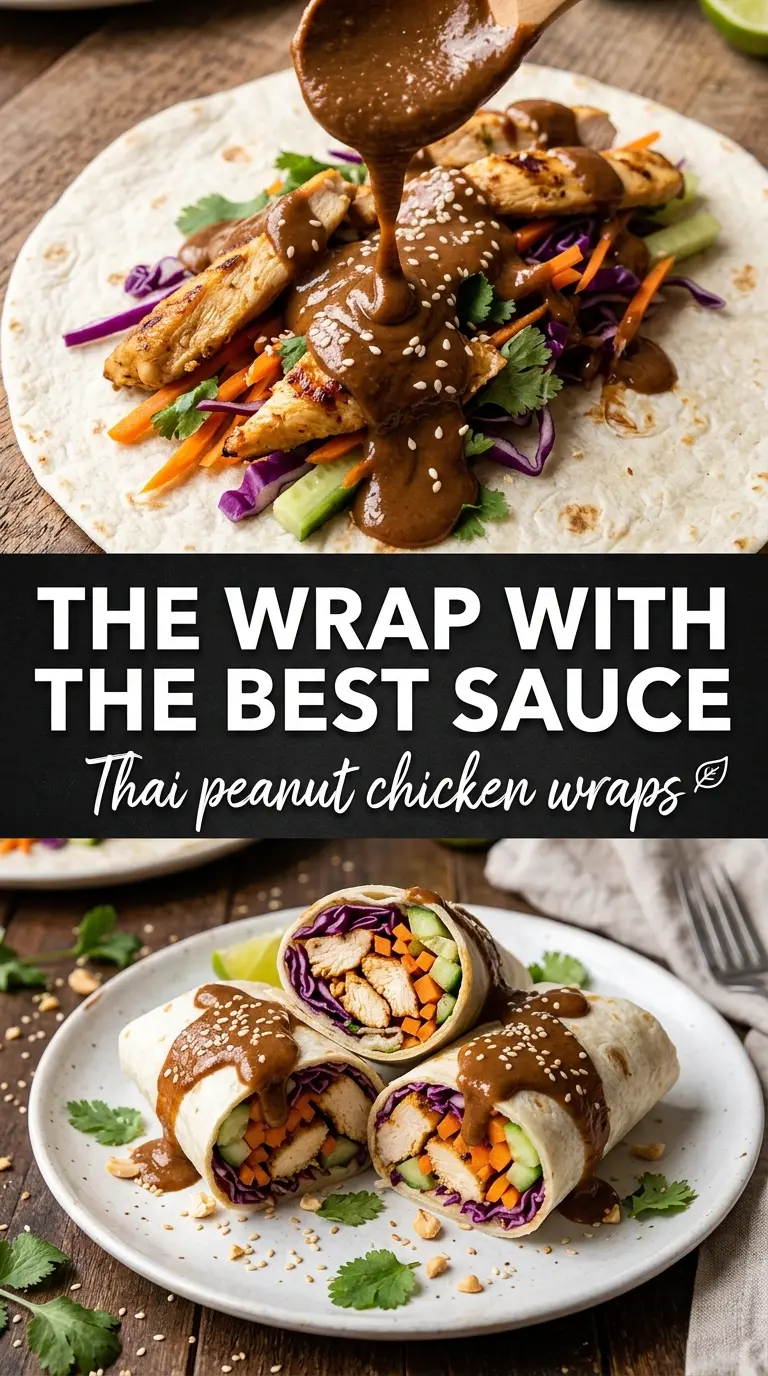
- Chicken breasts — Lean chicken works well here because the sauce brings the richness. Slice it thin after cooking so it tucks into the wrap cleanly and doesn’t fight the other fillings. Chicken thighs also work if you want a juicier result, but they’ll make the wrap a little richer.
- Peanut butter — This is the backbone of the sauce. Creamy peanut butter gives the smoothest texture; natural peanut butter can work, but stir it very well first or the sauce will separate before it comes together.
- Rice vinegar and lime juice — These keep the sauce from tasting flat. The vinegar gives it brightness and the lime adds a sharper finish, which matters because peanut butter can read heavy fast if you skip the acid.
- Flour tortillas — Soft flour tortillas roll better than corn here and hold the filling without cracking. Warm them briefly so they bend instead of tearing when you pack them up.
- Cabbage, bell pepper, carrots, and cucumber — These are there for crunch and moisture control. Shred and slice them thin enough to bite through, but not so thin they disappear into the sauce.
- Crushed peanuts — They’re not garnish fluff. They add a little extra crunch and reinforce the peanut flavor right at the end, which makes the wrap taste more complete.
Building the Sauce and Assembling the Wraps Without Losing the Crunch
Whisking the Peanut Sauce
Start the sauce in a bowl and whisk until the peanut butter, soy sauce, vinegar, honey, lime juice, sesame oil, and garlic become a smooth paste. Add warm water a tablespoon at a time until it turns glossy and pourable, not runny. If the sauce looks broken or grainy, it usually means the water was too cold or it needed a longer whisk; keep going and it will smooth out.
Cooking and Slicing the Chicken
Toss the chicken with soy sauce, sesame oil, and garlic powder before it hits the pan. Cook it over medium-high heat until the outside is golden and the center is no longer pink, then let it rest before slicing. Cutting too soon sends the juices onto the board instead of into the wrap, and that dry chicken is exactly what you don’t want here.
Rolling for a Tight, Clean Cut
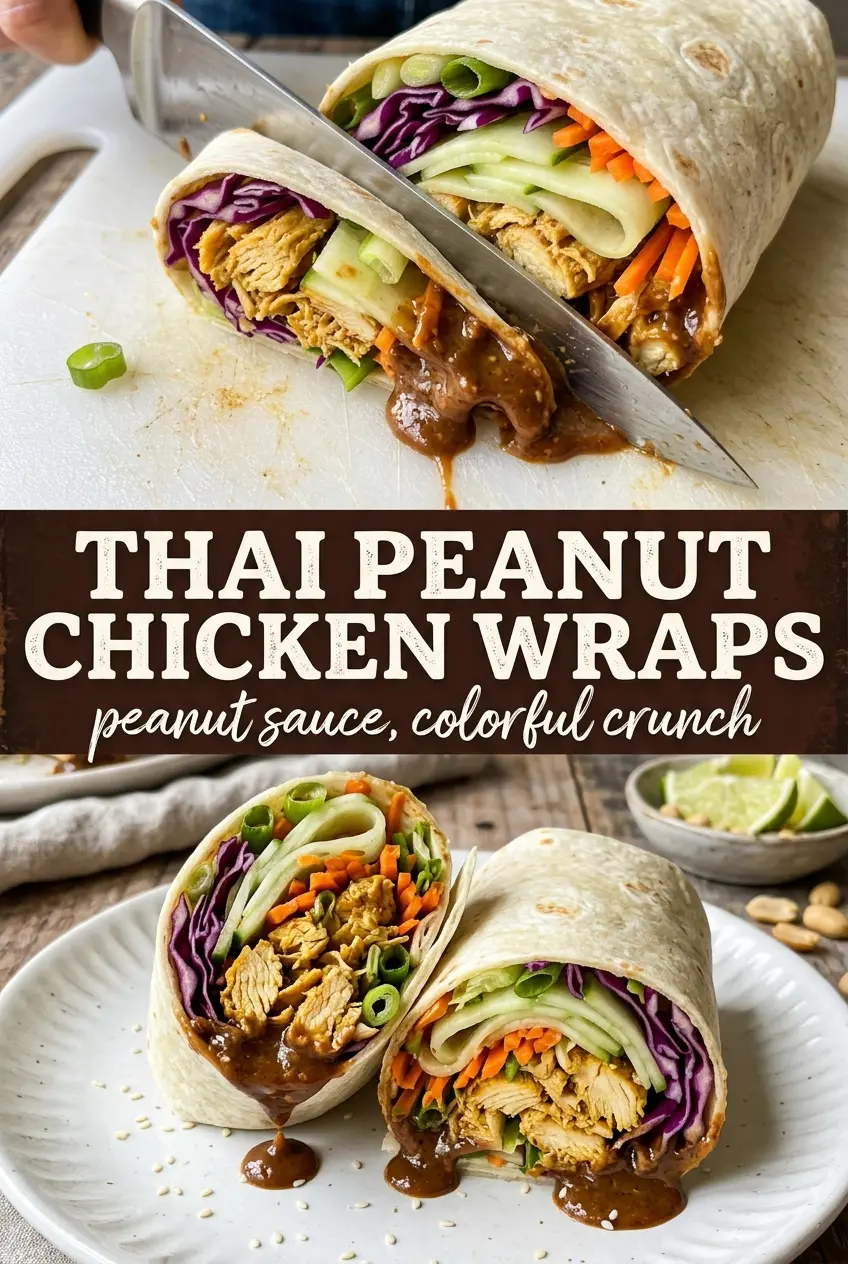
Warm the tortillas so they’re flexible, then spread the sauce in the center instead of all the way to the edges. Pile the vegetables and chicken in a compact line, drizzle on a little more sauce, and fold the sides in before rolling tightly away from you. If the wrap feels overfilled, pull some filling out; a neat roll beats a bursting tortilla every time, especially if you want to slice it in half for serving.
Make It Spicy with Chili Garlic Sauce
Stir a little chili garlic sauce or sriracha into the peanut sauce if you want heat. Start small, because the peanut butter mutes spice at first, then builds it as the flavors sit. The result is sharper and more takeout-style without changing the texture of the wrap.
Make It Dairy-Free and Gluten-Free
The recipe is already dairy-free, so the main change is the tortilla and soy sauce. Use certified gluten-free tortillas and swap in tamari or coconut aminos if needed. That keeps the wrap safe for gluten-free eating without losing the salty backbone the sauce needs.
Turn It Into a Rice Bowl
Skip the tortillas and spoon everything over warm rice or rice noodles. You’ll get more sauce-to-filling in each bite, and the peanut sauce acts almost like a dressing. This is the best option if you want the same flavors with less risk of the wrap falling apart.
Prep Ahead for Lunches
Keep the sauce, chicken, and vegetables separate until you’re ready to eat. If you assemble the wraps too early, the tortillas soften and the cabbage loses its snap. Pack the sauce in a small container and build the wrap right before lunch for the best texture.
Storage and Reheating
- Refrigerator: Store the chicken, vegetables, and sauce separately for up to 3 days. Fully assembled wraps get soft fast, so only roll what you plan to eat right away.
- Freezer: The cooked chicken freezes well for up to 2 months, but the vegetables and sauce don’t. Freeze the chicken on its own, then thaw and build fresh wraps later.
- Reheating: Warm the chicken gently in a skillet or microwave until just hot, then assemble with cold vegetables. Reheating a finished wrap makes the tortilla gummy and turns the cabbage limp.
Answers to the Questions Worth Asking
Thai Peanut Chicken Wraps
Ingredients
Equipment
Method
- Whisk together creamy peanut butter, soy sauce, rice vinegar, honey, lime juice, sesame oil, and garlic, adding warm water until pourable, then taste and adjust seasoning.
- Toss boneless skinless chicken breasts with soy sauce, sesame oil, garlic powder, and minced garlic.
- Cook the chicken in a skillet over medium-high heat for 5-6 minutes per side until golden and cooked through.
- Rest the chicken, then slice thin so it stacks easily in the wraps.
- Warm the flour tortillas until pliable, so they fold without cracking.
- Spread 2 tablespoons peanut sauce across the center of each tortilla.
- Layer purple cabbage, red bell pepper, shredded carrots, cucumber, sliced chicken, and fresh cilantro in the center.
- Drizzle additional peanut sauce over the filling, add crushed peanuts for garnish, roll tightly, and slice diagonally.
- Serve with extra peanut sauce for dipping.