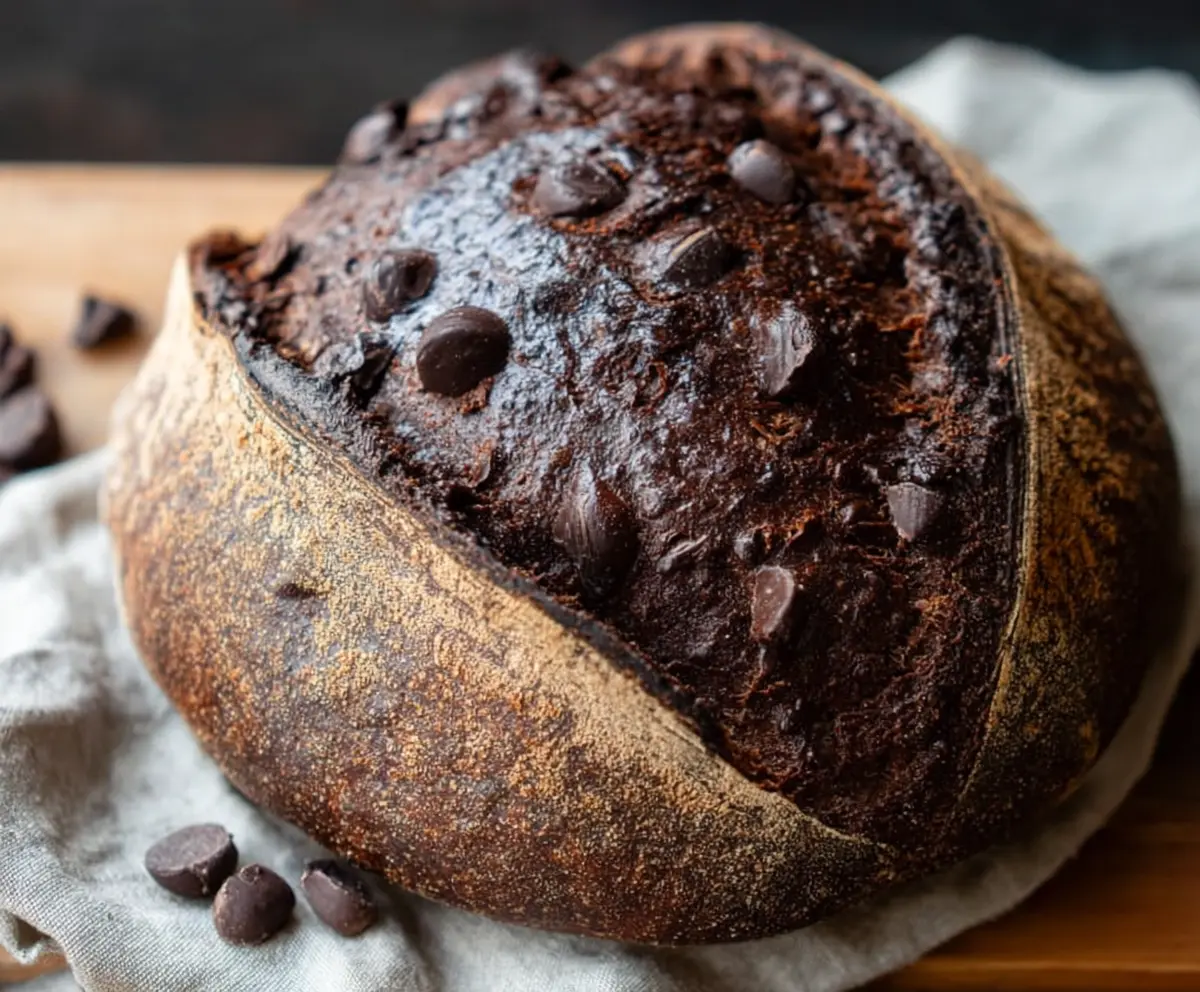
This Double Chocolate Sourdough Bread is a delightful mix of rich cocoa and tangy sourdough. It’s soft, chewy, and perfect for anyone who loves chocolate. Yum!
It’s like having dessert for breakfast! I enjoy toasting a slice and slathering it with butter, or just munching on it plain. Trust me, you won’t want to share! 😋
Key Ingredients & Substitutions
Bread Flour: High-protein bread flour is best for structure. If you can’t find it, all-purpose flour works, but your bread might be a bit softer.
Cocoa Powder: Always use unsweetened cocoa for the best chocolate flavor. If you’re out, you can use Dutch-processed cocoa for a mellower taste.
Sourdough Starter: Make sure it’s active and bubbly. If you don’t have a starter, you can use a store-bought yeast bread recipe, but the flavor will differ.
Dark Chocolate Chunks: I love using high-quality dark chocolate, as it melts beautifully. If you’re dairy-free, choose dairy-free chocolate chips.
Sugar: It’s optional, depending on how chocolaty you like your bread. Even a little honey or maple syrup works if you want a different sweetness.
How Can I Perfect the Autolyse Step?
Autolyse is a vital step for great bread texture. It helps hydrate the flour and begins gluten development without full kneading. Just mix flour, cocoa, and water until combined and let it rest! Covering it keeps moisture in, helping your dough rise better later.
- Always cover the bowl to prevent the dough from drying out.
- Let it rest for 30-45 minutes; this time is essential for improving dough elasticity.
What Are Stretch & Folds and Why Are They Important?
Stretch and folds help build structure in your dough without traditional kneading. They strengthen gluten, giving your bread the perfect rise! You’ll perform 3-4 sets during bulk fermentation. Simply pull a portion of the dough up and fold it over. Rotate the bowl and repeat.
- Use lightly floured hands to avoid sticking.
- Be gentle when folding in the chocolate to keep the dough airy.
How Can I Achieve a Great Bake in a Dutch Oven?
Baking in a Dutch oven provides steam, crucial for crust development. Preheat it alongside your oven to capture heat. Once your dough is scored, place it directly on parchment for easy transfer. Covering it for the first half of baking traps steam, making the crust crisp!
- Don’t skip scoring! It allows the dough to expand beautifully while baking.
- Check your bread towards the end to ensure the crust doesn’t burn; every oven is different.
Enjoy your baking journey with this double chocolate sourdough bread!
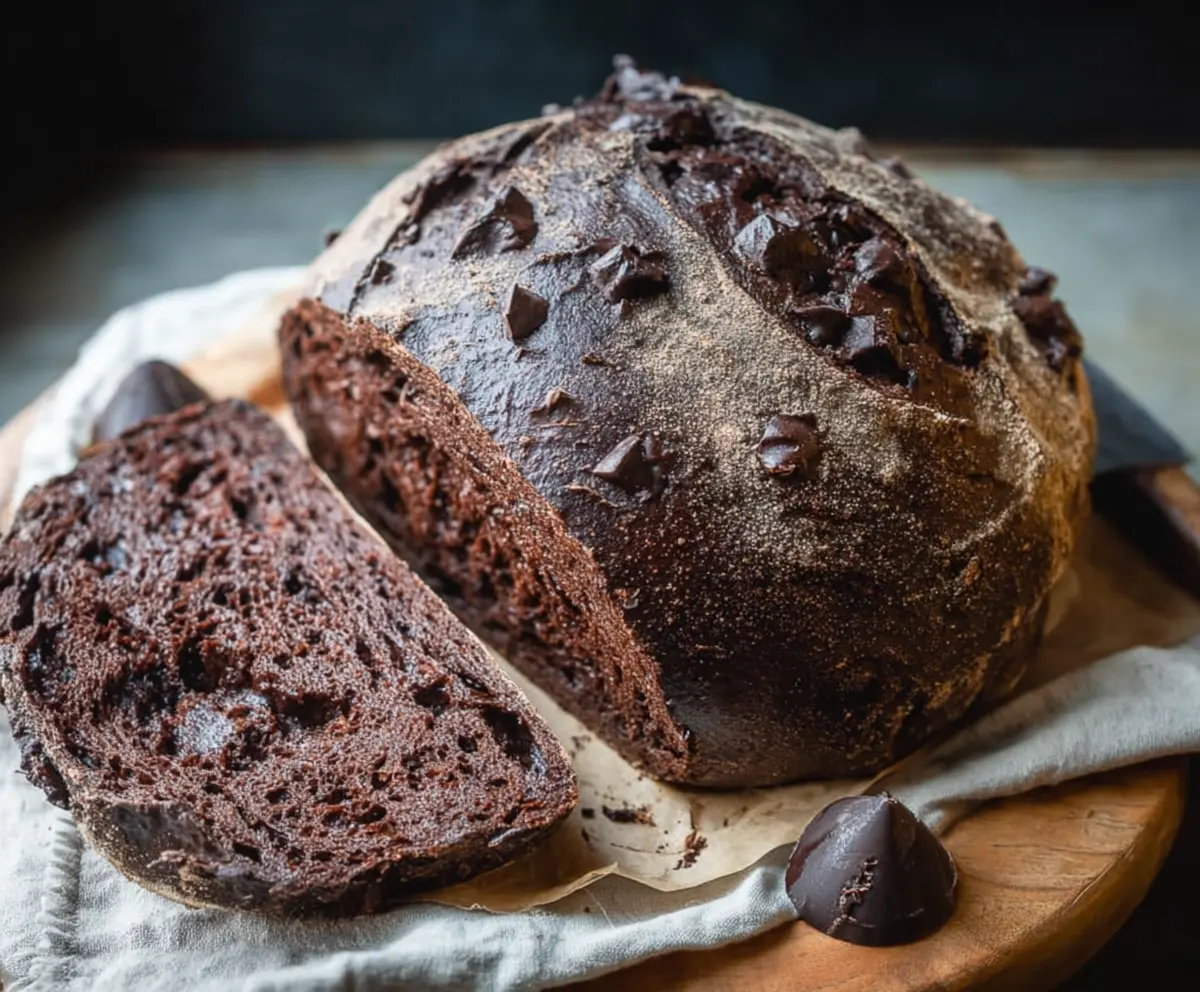
How to Make Double Chocolate Sourdough Bread
Ingredients You’ll Need:
For the Dough:
- 500g bread flour (preferably high protein)
- 60g cocoa powder (unsweetened)
- 375g water (room temperature)
- 100g active sourdough starter (100% hydration)
- 10g salt
- 150g dark chocolate chunks or chips
- 30g sugar (optional, adjust to taste for sweetness)
How Much Time Will You Need?
This recipe will take approximately 4-5 hours of active time but requires an additional overnight proofing in the refrigerator (8-12 hours). The total time includes mixing, resting, and baking, so plan ahead to enjoy your delicious bread!
Step-by-Step Instructions:
1. Mix the Dough:
In a large mixing bowl, whisk together the bread flour, cocoa powder, and sugar if you choose to use it. Then, add the water and the active sourdough starter. Mix everything together until all the dry ingredients are fully hydrated and you have a shaggy dough. It may look messy, but that’s okay!
2. Autolyse:
Cover the bowl with a damp towel or plastic wrap and let it rest for 30-45 minutes. This “autolyse” step helps the flour soak up water and kickstarts gluten development, which is key for the structure of your bread.
3. Add Salt:
After the resting period, sprinkle the salt over the dough. Mix it in thoroughly by folding and pinching the dough until the salt is well incorporated. This process will help strengthen the dough.
4. Bulk Fermentation with Stretch & Folds:
Over the course of the next 3-4 hours, perform 3-4 sets of stretch and folds at 30-minute intervals. To stretch and fold, pull one side of the dough up and fold it over the center. Turn the bowl and repeat for all sides. This technique develops the gluten network, making your bread nice and strong!
5. Add Chocolate Chunks:
During the second or third set of stretch and folds, gently fold in the dark chocolate chunks. Take care to distribute them evenly without deflating the dough too much—this ensures every bite is chocolatey!
6. Shape the Dough:
Once your dough has roughly doubled in size and is bubbly, turn it out onto a lightly floured surface. Shape it into a tight round boule by folding the edges toward the center. This forms surface tension, helping the bread hold its shape.
7. Final Proof:
Place the shaped dough seam-side up into either a floured banneton or a bowl lined with a floured kitchen towel. Cover it and refrigerate it for 8-12 hours overnight. This slow rise enhances flavor and texture.
8. Preheat Oven:
About 30 minutes before you plan to bake, preheat your oven to 230°C (450°F) and place a Dutch oven or baking stone inside. This will prepare your baking vessel for a perfect crust.
9. Score and Bake:
Once preheated, carefully transfer the dough onto parchment paper. Using a sharp knife or razor blade, score the top of your dough. This allows for proper expansion during baking. Place the dough, along with the parchment, into the hot Dutch oven, cover with the lid, and bake for 20 minutes.
10. Finish Baking:
After 20 minutes, remove the lid and continue baking for another 15-20 minutes. You want the crust to be deeply colored and crispy for that perfect texture.
11. Cool:
Remove the bread from the oven and place it on a cooling rack. Let it cool completely before slicing; this allows the crumb to set and makes for a better texture.
Enjoy the rich, chocolatey flavor and the subtle tang of sourdough in this decadent double chocolate bread! Perfect for breakfast or as a delightful snack!
Can I Use Whole Wheat Flour Instead of Bread Flour?
You can, but it may affect the texture and rise of your bread. Whole wheat flour absorbs more water, so you might need to adjust the water content slightly and consider adding vital wheat gluten to maintain structure.
What Should I Do If My Dough Doesn’t Rise?
If your dough isn’t rising, it might be due to an inactive sourdough starter. Ensure your starter is bubbly and fed before use. If your kitchen is too cold, try placing the dough in a warmer spot to encourage fermentation.
Can I Make This Recipe Without a Dutch Oven?
Yes! If you don’t have a Dutch oven, you can bake the bread on a preheated baking stone or baking sheet. To create steam, place a shallow pan of water at the bottom of the oven during baking.
How Do I Store Leftover Bread?
Store any leftover bread in an airtight container at room temperature for up to 3 days. For longer storage, slice and freeze the bread, wrapped tightly in plastic wrap and then in foil. It should last for about a month in the freezer!