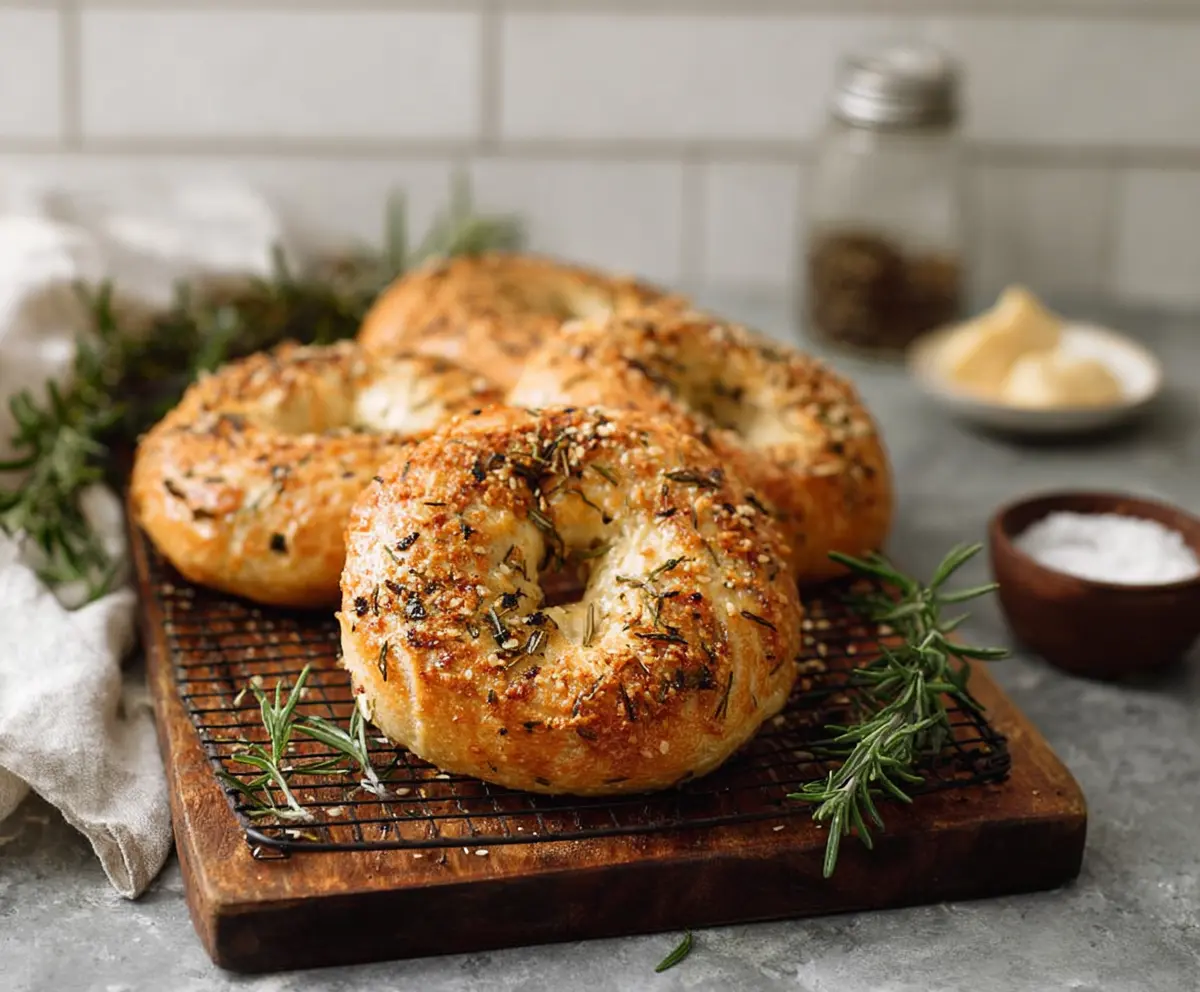
These fluffy rosemary bagels are a delightful twist on a classic favorite. Flavored with fresh rosemary, they bring a wonderful aroma and taste to your breakfast or snack time!
There’s nothing quite like the joy of making your own bagels. I love to toast them and spread a little cream cheese on top. It’s a simple treat that feels fancy! 🥯
Key Ingredients & Substitutions
All-Purpose Flour: This is the base of your bagels. If you’re looking for a healthier option, whole wheat flour can be used, but it may change the texture. I find a mix of both gives a nice balance.
Sugar: Just a tablespoon helps to feed the yeast. If you’re avoiding sugar, you can use honey or maple syrup in place, but adjust for sweetness to your taste!
Fresh Rosemary: This herb really lifts the flavor. You can use dried rosemary if that’s what you have on hand, but use about one-third the amount, as dried is more potent.
Instant Yeast: Instant yeast works best for quick rises. You can use active dry yeast as a substitute, but you’ll need to activate it in warm water first before mixing it into the dough.
Garlic: Fresh garlic adds a lovely depth. If you’re in a pinch, garlic powder can work, but use it sparingly—about a teaspoon should do.
How Do You Knead Dough Effectively?
Kneading is key to developing the gluten that gives bagels their chewy texture. Start by turning your dough onto a floured surface. With your hands, push it down and away from you, then fold it back over itself. Rotate it a quarter turn and repeat this process.
- Knead for 8-10 minutes until the dough is smooth and elastic.
- If the dough is sticky, sprinkle a little flour, just enough to keep it manageable.
Trust me, it’s worth the effort! The more you knead, the better texture your bagels will have.
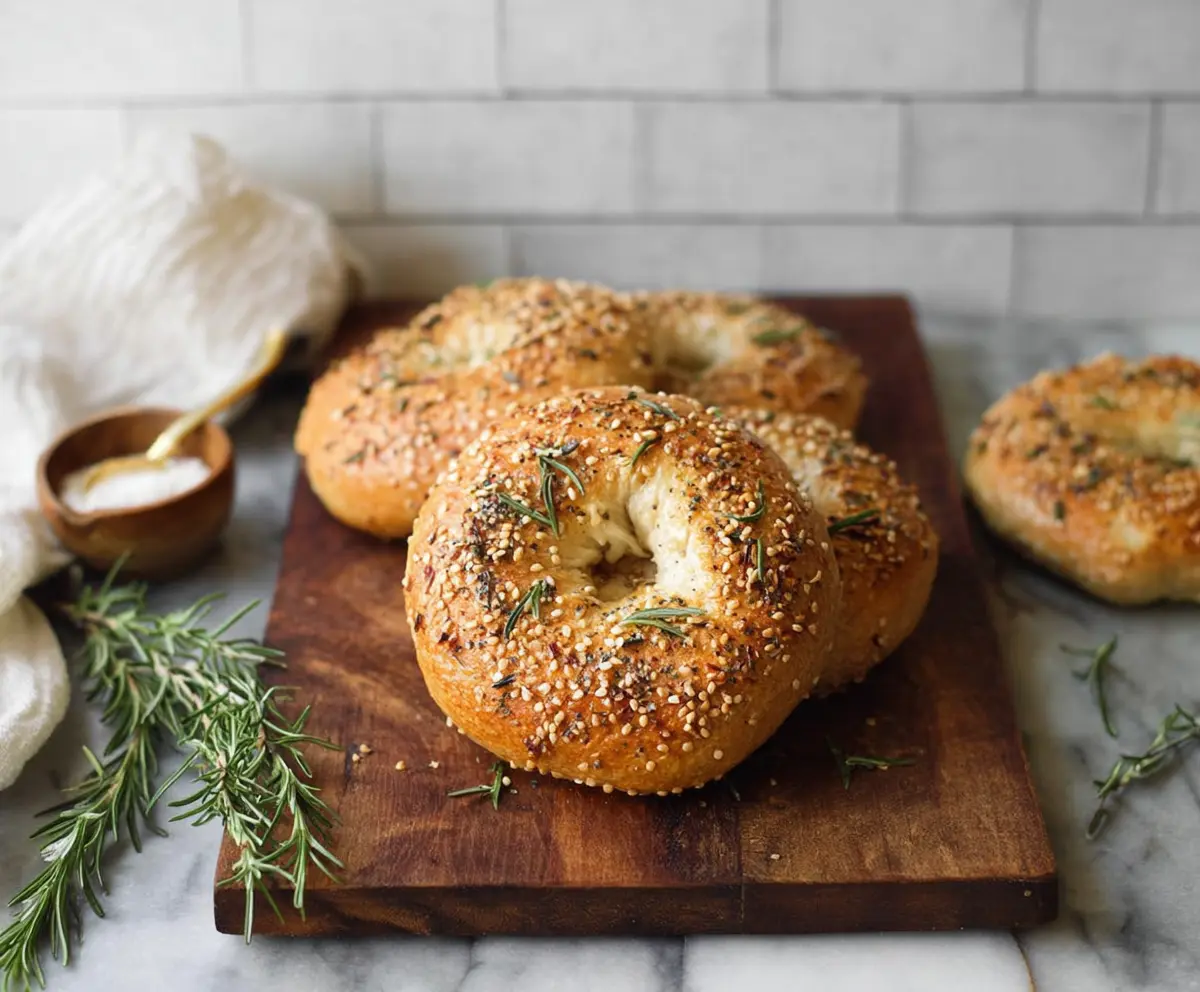
How to Make Rosemary Bagels
Ingredients You’ll Need:
For the Bagels:
- 4 cups all-purpose flour
- 1 tablespoon sugar
- 2 teaspoons salt
- 1 tablespoon instant yeast
- 1 1/2 cups warm water (about 110°F / 43°C)
- 2 tablespoons olive oil
- 2 tablespoons fresh rosemary, chopped (plus extra for topping)
- 1 tablespoon garlic, minced
For the Topping:
- 1 tablespoon coarse sea salt
- 1 tablespoon sesame seeds (optional)
How Much Time Will You Need?
This recipe takes about 15 minutes of prep time and 1.5 to 2 hours for the dough to rise, plus an additional 20-25 minutes for baking. In total, you’ll be enjoying your fresh rosemary bagels in about 2.5 hours!
Step-by-Step Instructions:
1. Mixing Dry Ingredients:
In a large bowl, combine the flour, sugar, salt, and instant yeast. Use a whisk or a spoon to mix them all together well. This ensures that the yeast and the salt are evenly distributed, which is important for the rising process.
2. Adding Wet Ingredients:
Now, it’s time to add the wet ingredients! Pour in the warm water and olive oil. Stir everything together until it forms a dough. You may need to use your hands to bring it all together, so don’t be afraid to get in there!
3. Kneading the Dough:
Turn the dough onto a lightly floured surface. Knead it for about 8-10 minutes until it’s smooth and elastic. If the dough sticks to your hands, sprinkle a little more flour as needed. This step is crucial as it develops the gluten, giving your bagels the perfect chewy texture.
4. Flavoring the Dough:
Once your dough is kneaded, knead in the chopped rosemary and minced garlic. You want these delicious flavors evenly distributed, so keep folding and pressing until they’re well incorporated.
5. Letting the Dough Rise:
Place the dough in a bowl that has been lightly oiled, cover it with a clean kitchen towel or plastic wrap, and set it in a warm place. Let it rise for about 1 to 1.5 hours, or until it has doubled in size. This is when your bagels will become light and fluffy!
6. Shaping the Bagels:
After rising, it’s time to punch down the dough! Gently deflate it by pressing down. Divide the dough into 8 equal pieces. Roll each piece into a ball, then poke a hole in the center with your finger. Gently stretch it to form a bagel shape. Don’t worry if they’re not perfect; they’ll bake up nicely!
7. Prepping for Boiling:
Preheat your oven to 425°F (220°C) and line a baking sheet with parchment paper. This will help your bagels not to stick while they bake.
8. Boiling the Bagels:
Boil a large pot of water, then reduce it to a gentle simmer. Carefully place 2-3 bagels in the pot at a time, boiling them for about 1 minute on each side. This step helps give your bagels their delightful chewiness.
9. Adding Toppings:
Once boiled, use a slotted spoon to remove the bagels and place them on the prepared baking sheet. Sprinkle the tops with extra chopped rosemary, coarse sea salt, and sesame seeds if you desire!
10. Baking the Bagels:
Bake the bagels in your preheated oven for 20-25 minutes, or until they’re golden brown and look irresistible. Keep an eye on them to avoid overbaking!
11. Cooling and Serving:
Remove the bagels from the oven and let them cool on a wire rack. Serve them warm or at room temperature, and enjoy with a bit of butter, cream cheese, or your favorite spread.
Enjoy your fragrant, flavorful rosemary bagels!
Can I Use Whole Wheat Flour Instead of All-Purpose Flour?
Yes, you can! Whole wheat flour will add a nuttier flavor and more fiber. However, it may create denser bagels. For best results, consider using a mix of whole wheat and all-purpose flour.
How Do I Store Leftover Bagels?
Store any leftover bagels in an airtight container at room temperature for up to 2 days. If you want to keep them longer, freeze them in a zip-top bag for up to 3 months. Just thaw at room temperature or toast directly from the freezer when you’re ready to enjoy!
Can I Make These Bagels Without Yeast?
While yeast is essential for the traditional chewy texture of bagels, you can try making a quick version using baking powder. However, the texture and flavor will differ significantly from the original recipe.
What Other Herbs Can I Use Instead of Rosemary?
Feel free to experiment! Thyme, oregano, or basil would work great as substitutes. Just keep in mind that the flavors will change, so choose herbs that you enjoy!