Salmon turns into something special when it’s brushed with a bright orange glaze that reduces down to a sticky, glossy finish. The sweet-citrus edge wakes up the fish, while the soy sauce keeps it from tasting flat or sugary. What you get at the end is tender salmon with a caramelized top and just enough savoriness to make each bite feel balanced.
The trick here is reducing the glaze until it’s syrupy before it ever touches the fish. If it’s too loose, it runs off the salmon and pools on the pan instead of clinging to the surface. Honey helps the glaze lacquer beautifully, but it also means the broiler step needs a close eye so the edges darken without going bitter. That’s the difference between a shiny finish and a scorched one.
Below, you’ll find the exact cues to watch for as the glaze thickens, plus a few smart swaps if you need to work with what’s already in the pantry.
The glaze thickened up into this beautiful syrup and actually stayed on the salmon instead of sliding off. I broiled it for the last minute and the edges turned glossy and caramelized without drying out the fish.
Like this orange salmon? Save it to Pinterest for a fast dinner with a sticky citrus glaze and caramelized edges.
The Part Where the Glaze Turns from Juicy to Sticky
The biggest mistake with a fruit glaze like this is stopping the reduction too early. At first, the mixture looks thin and glossy, almost like a sauce for spooning. Keep going until it lightly coats the back of a spoon and leaves a clear trail when you drag a finger through it. That’s the point where it will cling to the salmon and caramelize instead of sliding off in the oven.
Another place people go wrong is blasting the fish under the broiler before the glaze has time to set. The salmon needs that first bake to cook through gently; the broiler is just the finish. If you rush it, the sugars can darken before the center is done. Aim for salmon that flakes at the thickest part and still looks juicy in the middle.
Why These Three Ingredients Carry the Whole Dish

- Fresh orange juice — This is the backbone of the glaze. Bottled juice can work in a pinch, but fresh juice gives you a brighter, cleaner flavor and better aroma as it reduces. Use the juice straight from the orange; don’t dilute it.
- Soy sauce — This keeps the glaze from tasting one-note sweet. It brings salt and depth, and it also helps the glaze darken as it cooks. If you need a gluten-free version, use tamari in the same amount.
- Honey — Honey is what makes the glaze turn lacquered and shiny. Maple syrup will work, but it changes the flavor and won’t give quite the same sticky finish. If your honey is thick, stir it into the warm orange mixture until it dissolves fully before reducing.
- Salmon fillets — Thick, even fillets cook most predictably here. Very thin pieces can overcook before the glaze caramelizes, so if your fillets vary in size, tuck the thinner ends under so everything finishes at the same time.
Building the Glaze and Finishing the Salmon Without Drying It Out
Reducing the glaze
Set the orange juice, soy sauce, and honey over medium heat and let it simmer until the bubbles look slightly larger and the liquid has turned syrupy. You’re not chasing a jam-like texture, just enough body that it coats a spoon. If it smells sharp and watery, it needs more time. Pull it too early and the glaze won’t cling; let it go too far and it gets sticky in the pan before it ever hits the fish.
Seasoning and first bake
Line the baking sheet so the glaze doesn’t weld itself to the pan, then season the salmon with salt and pepper before brushing on the sauce. The first coat should look generous and glossy. Bake at 400°F until the fish is mostly opaque around the edges and still a touch translucent in the center. That’s the stage where the salmon is nearly done but still has enough moisture left to handle the broiler.
Broiling for the finish
Brush on the remaining glaze, then broil briefly until the top turns amber and the edges darken. Watch it constantly; sugar changes color fast once it starts to go. If the glaze bubbles hard and starts to smell smoky, stop immediately. Serve right away while the surface is shiny and the flesh flakes cleanly.
How to Tweak This Orange Salmon Without Losing the Point
Make it gluten-free with tamari
Swap the soy sauce for an equal amount of tamari. The glaze stays salty and savory, and the orange still leads, but tamari tends to taste a little rounder and less sharp. Use a certified gluten-free brand if cross-contact matters.
Use maple syrup instead of honey
Maple syrup will work if that’s what you have, but the glaze will taste earthier and a little less bright. It still reduces into a glossy coating, though the color will be deeper and the sweetness softer. If you go this route, keep a close eye on the broiler because maple can darken fast.
Turn it into a citrus-dijon version
Whisk in 1 teaspoon of Dijon mustard with the glaze before reducing. It adds a faint tang and helps the sauce cling a little more aggressively to the salmon. The mustard won’t overwhelm the orange, but it does make the finish taste sharper and more savory.
Storage and Reheating
- Refrigerator: Store leftovers in an airtight container for up to 3 days. The glaze may tighten a bit as it chills.
- Freezer: It freezes, but the salmon texture softens after thawing. For best results, freeze only if you don’t mind a less delicate bite, and wrap portions tightly before placing them in a freezer-safe container.
- Reheating: Warm gently in a 300°F oven, covered loosely with foil, until just heated through. High heat dries salmon out fast and can push the glaze from glossy to bitter.
Answers to the Questions Worth Asking
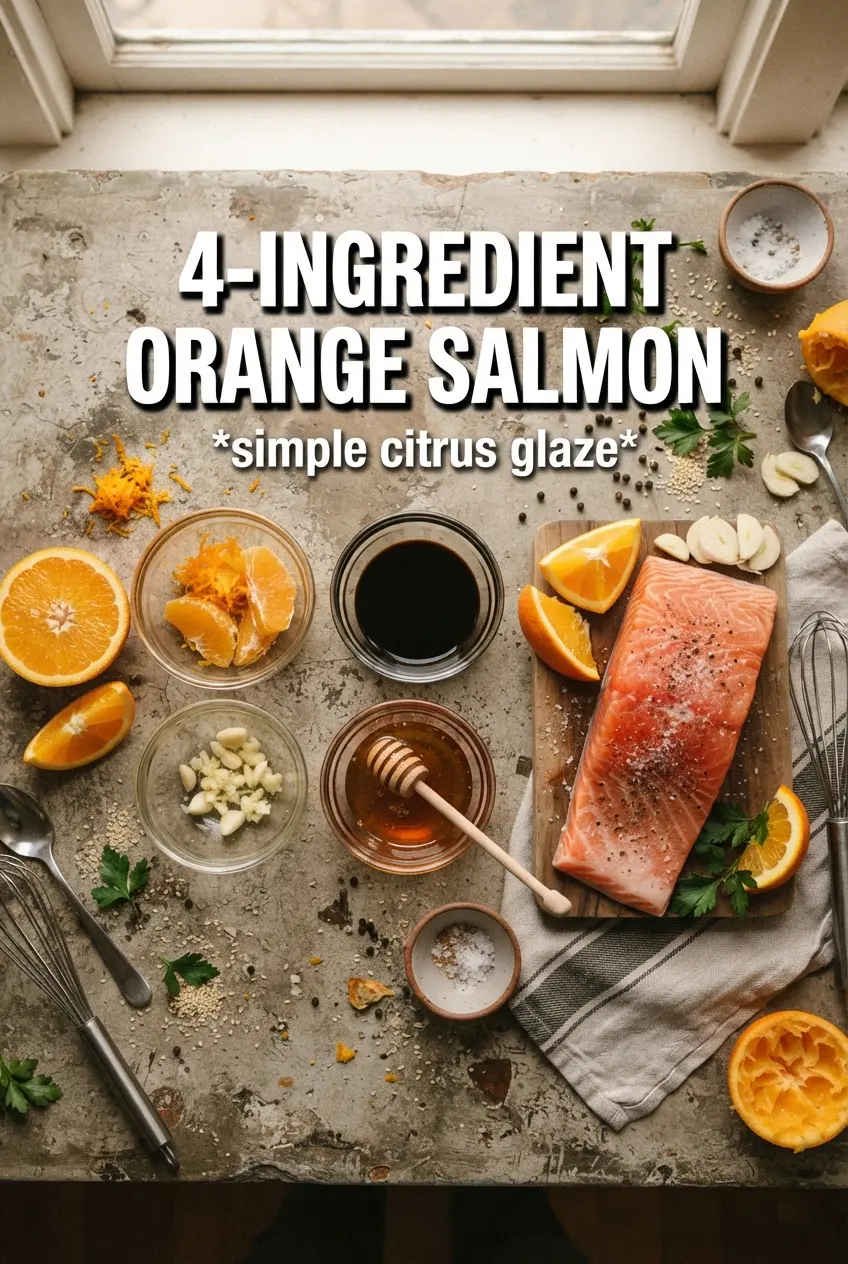
4-Ingredient Orange Salmon
Ingredients
Equipment
Method
- Combine fresh orange juice, soy sauce, and honey in a saucepan over medium heat. Simmer for about 5 minutes until reduced by half and syrupy, stirring so it turns glossy and slightly thick.
- Preheat the oven to 400°F. Line a baking sheet and season the salmon fillets with salt and pepper.
- Brush the salmon generously with the orange glaze. Add another even coat so the fillets look bright and fully covered.
- Bake for 12–14 minutes, brushing again halfway through. The glaze should darken slightly and cling to the surface.
- Broil for 2 minutes for a caramelized finish. Watch closely until the top turns amber and shiny in spots.
- Serve the salmon immediately. Keep it hot so the glaze stays glossy.