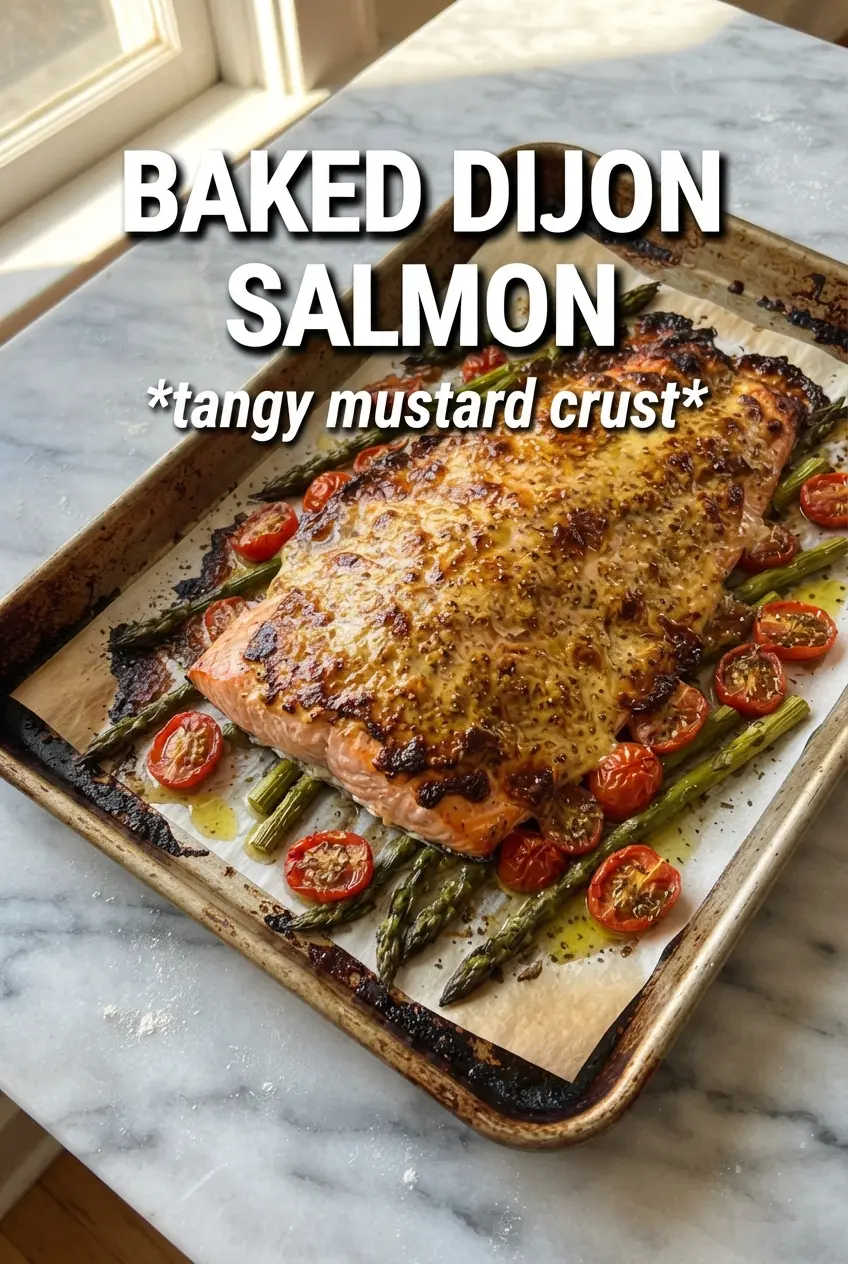
Golden Dijon salmon lands on the table with a crust that turns lightly caramelized in the oven and stays juicy underneath. The mustard mixture doesn’t just sit on top for color; it creates a sharp, savory layer that wakes up the rich salmon and gives every bite a little tang. The whole dish feels polished without asking for much more than a bowl, a brush, and fifteen minutes in the oven.
What makes this version work is the balance between Dijon, whole grain mustard, and honey. Dijon gives the paste its backbone, whole grain mustard adds texture and a little pop, and honey keeps the crust from tasting harsh after baking. The herbs go in raw, which keeps their flavor bright instead of muddy, and the salmon is cooked just long enough for the top to set before the fish dries out.
Below, I’ve included the timing cue I use to keep salmon tender, plus a few swaps that still keep the crust flavorful if you’re missing one of the mustards or want to adjust the sweetness.
The mustard crust baked up golden and stayed on the salmon instead of sliding off. I checked it at 12 minutes, and it was flaky, tangy, and still moist in the center.
Save this baked Dijon salmon for a fast dinner with a golden herb crust and bright lemon on the side.
The Mistake That Ruins a Dijon Salmon Crust
The biggest issue with mustard-topped salmon is putting the coating on too thin or baking it too long. A thin smear dries out before the fish finishes, and overbaking turns the top from crisp and aromatic to dull and pasty. You want a thick layer that looks almost too generous before it goes into the oven; the heat will settle it into a proper crust.
Salmon also keeps cooking after it leaves the oven, so the pull point matters. If you wait until it looks completely opaque in the center, it usually ends up dry by the time it hits the plate. Take it out when the crust is set and the thickest part flakes with light pressure but still looks a touch glossy in the middle.
What the Mustards and Herbs Are Actually Doing

- Dijon mustard — This is the backbone of the crust. It gives sharpness and enough body to cling to the fish, and there isn’t a substitute that delivers the same clean bite. If you need to swap, use another smooth mustard, not yellow mustard, which turns too sweet and one-note here.
- Whole grain mustard — These little seeds keep the topping from tasting flat and help the crust look rustic instead of pasty. If you only have Dijon, the recipe still works, but you lose some texture. Stir in a teaspoon of poppy seeds or finely chopped capers if you want more visual interest and crunch.
- Honey — Honey softens the mustard’s edge and helps the top bronz e in the oven. Maple syrup can step in, but it reads a little deeper and less bright. Use just enough to take the sharpness down without making the crust sticky-sweet.
- Fresh dill and parsley — Fresh herbs keep the topping lively. Dried herbs will work in a pinch, but they need time to hydrate and they won’t give the same clean finish. If you use dried, cut the amount down and mix them into the mustard paste a few minutes before spreading.
- Olive oil — This loosens the paste so it spreads evenly and helps the top brown instead of drying into a paste-like cap. Don’t skip it. Without the oil, the mustard layer can bake up patchy and thick in the wrong way.
How to Bake the Salmon So the Crust Stays Glossy and the Fish Stays Tender
Mixing the Paste
Stir the mustard, honey, garlic, herbs, and olive oil until the mixture looks smooth and spreadable. It should hold its shape on a spoon but still move easily; if it’s stiff, it won’t coat the salmon evenly. The garlic should be finely minced so it softens in the oven instead of staying sharp and raw. If the mixture looks broken or oily, keep stirring — it will come together once the mustard emulsifies with the oil and honey.
Coating the Salmon
Pat the fillets dry before seasoning them with salt and pepper. Moisture on the surface keeps the crust from sticking cleanly, and that’s when it starts sliding around on the pan instead of baking into the fish. Spread the mustard mixture thickly over the top of each fillet, covering the surface edge to edge. A few uneven ridges are good; they brown into the best part of the crust.
Baking and Broiling
Bake at 400°F until the salmon flakes at the thickest point and the topping is turning golden, usually 12 to 15 minutes depending on the thickness of the fillets. If the crust still looks pale but the fish is done, give it a brief broil at the end and watch it closely; mustard can go from bronzed to bitter fast. The salmon is finished when it gives a little resistance but separates into moist flakes. Let it rest for a minute, then squeeze on lemon right before serving so the acidity stays bright.
How to Adapt This Salmon When You’re Out of an Ingredient
Make it dairy-free and naturally gluten-free
This recipe already fits both of those needs as written, as long as your mustard is certified gluten-free if that matters for your kitchen. The crust gets all of its richness from mustard, honey, and olive oil, so nothing is missing when dairy is absent.
Use maple instead of honey
Maple syrup makes the crust a little darker and gives it a warmer sweetness. It still balances the mustard, but the finish is deeper and less floral than honey. Use the same amount and broil carefully, since maple browns a touch faster.
Swap the herbs based on what’s in the fridge
Dill and parsley are a classic pair here, but chives, tarragon, or even a little thyme can step in. Keep the total amount about the same so the mustard still leads. Stronger herbs like tarragon should stay in the background, not take over the crust.
Storage and Reheating
- Refrigerator: Store leftovers in an airtight container for up to 2 days. The crust will soften, but the flavor holds well.
- Freezer: It freezes, but the texture of cooked salmon changes after thawing, so I only freeze it if I have to. Wrap tightly and thaw overnight in the fridge before reheating.
- Reheating: Warm gently in a 275°F oven just until heated through. High heat dries salmon out fast, and the mustard topping can turn bitter if it gets blasted again.
Questions I Get Asked About This Recipe
Baked Dijon Salmon
Ingredients
Equipment
Method
- Preheat the oven to 400°F and line a baking sheet with parchment to prevent sticking and make cleanup easy.
- Mix Dijon mustard, whole grain mustard, honey, garlic, dill, parsley, and olive oil into a thick paste until well combined.
- Season the salmon fillets with salt and pepper, then spread the Dijon mixture thickly over the top of each fillet.
- Bake at 400°F for 12–15 minutes, until the salmon is cooked through and the crust is golden.
- Broil for 2 minutes to deepen the crust color and create a lightly crackled surface.
- Serve immediately with lemon wedges for bright, tangy contrast to the Dijon-herb crust.