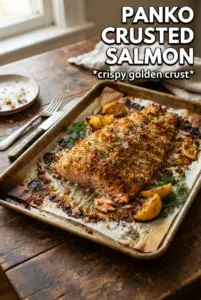
Golden, crunchy panko crusted salmon is one of those dinners that looks like you worked harder than you did. The topping bakes into a thick, shattering crust while the salmon underneath stays moist and tender, and the contrast is what keeps this one on repeat. It’s the kind of main dish that feels special enough for company but still fits into a normal weeknight.
The trick is in the layering. Dijon mustard gives the crumbs something to cling to and adds a sharp, savory note that keeps the topping from tasting flat, while the olive oil helps the panko toast evenly in the oven. Parmesan adds salt and depth, and fresh parsley keeps the crust from feeling heavy. You get a clean, crisp top without frying, which means less mess and less risk of overcooking the fish.
Below, you’ll find the little details that matter most: how to press the crust so it stays put, why a hot oven matters, and what to change if you need a dairy-free version or want to swap in a different herb.
The panko stayed incredibly crisp, and the Dijon layer kept the crust from sliding off when I served it. Mine was done right at 14 minutes and the salmon stayed flaky and moist underneath.
Save this panko crusted salmon for the nights when you want a crisp, golden dinner with almost no cleanup.
The Part That Keeps the Crust Attached Instead of Falling Off
The biggest mistake with breaded salmon is piling on a dry crumb mixture and hoping it sticks. It won’t. The mustard layer is doing real work here: it acts like edible glue, adds moisture to the surface, and gives the crust enough grip to stay put when the fish hits the oven.
Temperature matters too. A 425°F oven helps the panko brown before the salmon overcooks, which is the whole game with a fast-cooking fish like this. If the oven runs cool, the crust turns pale before it ever gets crisp, and the salmon sits in there long enough to dry out.
- Hot oven — This is what gives the breadcrumbs their deep golden color and dry crunch without needing a skillet.
- Dijon mustard — Don’t skip it. It keeps the topping anchored and adds a sharp edge that balances the rich salmon.
- Panko — Regular breadcrumbs won’t give you the same airy crunch. Panko stays lighter and gets crisper in the oven.
- Pressing the crust firmly — Use your fingertips to set the topping onto the mustard so it bakes into one cohesive layer instead of scattering on the pan.
What Each Ingredient Is Actually Doing Here
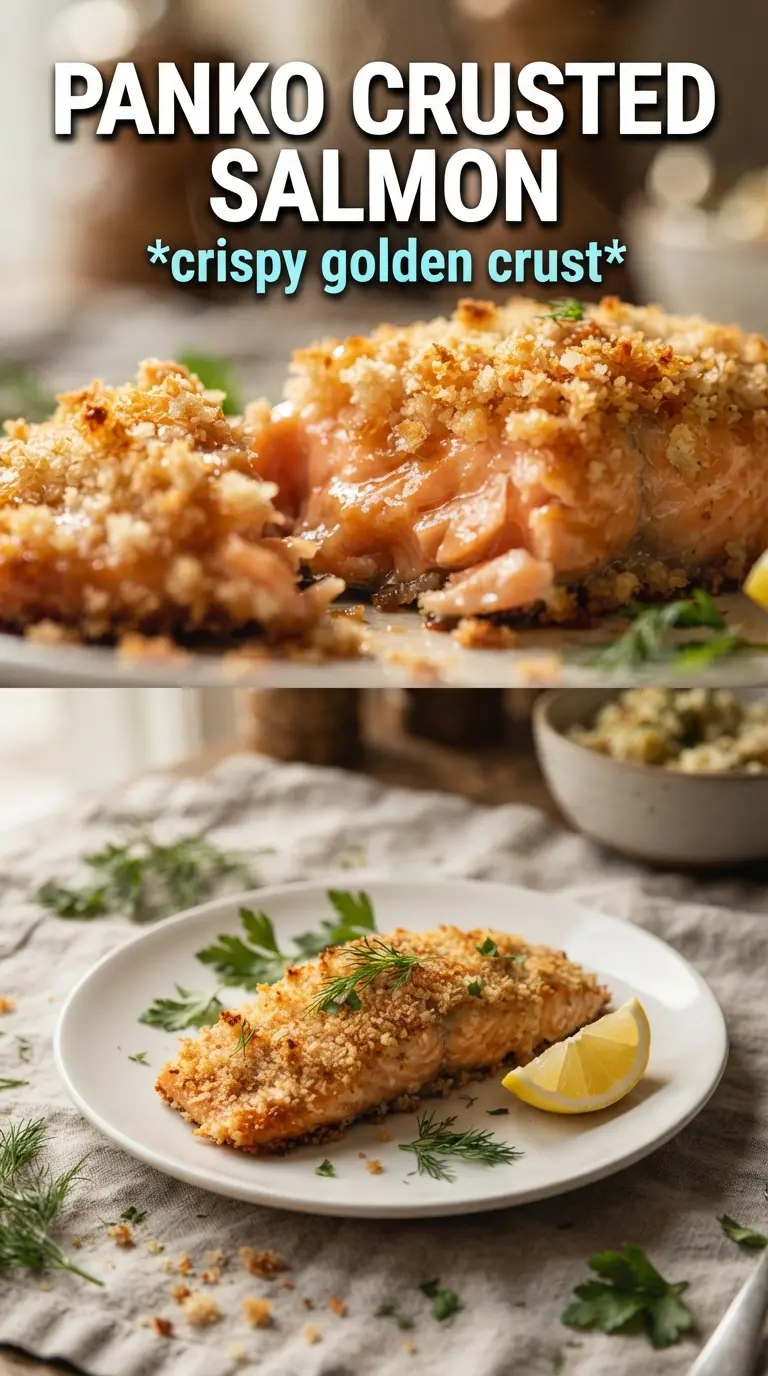
- Salmon fillets — Use fillets that are similar in thickness so they finish at the same time. Skin-on or skinless both work, but skin-on gives you a little extra protection against overcooking if the fillets are thin.
- Panko breadcrumbs — This is the crunch. Panko absorbs less moisture than fine crumbs, which is why the coating stays crisp instead of turning pasty.
- Parmesan — Parmesan adds salt, nuttiness, and a little extra browning. Grated is better than shredded here because it blends into the crumbs more evenly.
- Fresh parsley and garlic — Parsley keeps the crust tasting fresh instead of heavy, while garlic gives the topping enough savory backbone to stand up to the salmon.
- Olive oil — The oil helps the panko toast in the oven. If you leave it out, the topping bakes up dry and a little dusty instead of crisp and golden.
- Dijon mustard — This is the best part of the whole method. It gives you adhesion, acidity, and flavor in one layer.
- Lemon wedges — Serve them on the side, not in the topping. A squeeze at the table wakes everything up and cuts through the richness.
How to Bake It So the Salmon Stays Tender and the Top Gets Crunchy
Mix the Crust Until It Feels Damp and Sandy
Stir the panko, parmesan, parsley, garlic, olive oil, salt, and pepper until every crumb looks lightly coated. The mixture should hold together if you pinch it, but it shouldn’t feel wet or greasy. If it seems loose and dry, the topping won’t brown evenly; if it’s oily, it can clump into heavy patches instead of baking into a crisp layer.
Spread the Mustard in a Thin, Even Layer
Pat the salmon dry first, then season it and spread the Dijon over the top only. A thin coat is enough. Too much mustard can slide around and make the crust patchy, while a thin layer gives the crumbs something to grab without turning the fish sharp or sour.
Press and Bake Without Disturbing the Fillets
Pack the crumb mixture onto the mustard with your fingertips so it adheres in an even blanket. Transfer the fillets to the lined baking sheet and leave them alone while they bake. Pull them when the crust is deeply golden and the salmon flakes easily at the thickest point; if you wait until it looks completely opaque all the way through, it’s already headed toward dry.
Gluten-Free Panko Crusted Salmon
Use gluten-free panko in the same amount. The crust still bakes up crisp, though some brands brown a little faster, so start checking a minute or two early. The texture stays close to the original, which makes this an easy swap instead of a compromise.
Dairy-Free Version
Leave out the parmesan and add an extra 2 to 3 tablespoons of panko plus a little more salt. You’ll lose some of the nutty savoriness, but the crust still gets crisp, especially with the olive oil and mustard doing their jobs.
Change the Herb Without Changing the Method
Parsley can be swapped for dill, chives, or a little thyme. Dill gives the salmon a brighter, more classic pairing; thyme tastes earthier and a bit more rustic. Keep the amount the same so the crust doesn’t get soggy from too much fresh herb.
Storage and Reheating
- Refrigerator: Store leftovers for up to 2 days. The crust softens in the fridge, but the salmon stays usable.
- Freezer: Freezing isn’t ideal because the crust loses its crunch after thawing. If you must freeze it, wrap tightly and reheat from thawed, knowing the texture won’t be the same.
- Reheating: Warm in a 300°F oven until just heated through. A microwave will make the crust limp and can push the salmon past its best texture before the center is warm.
Answers to the Questions Worth Asking
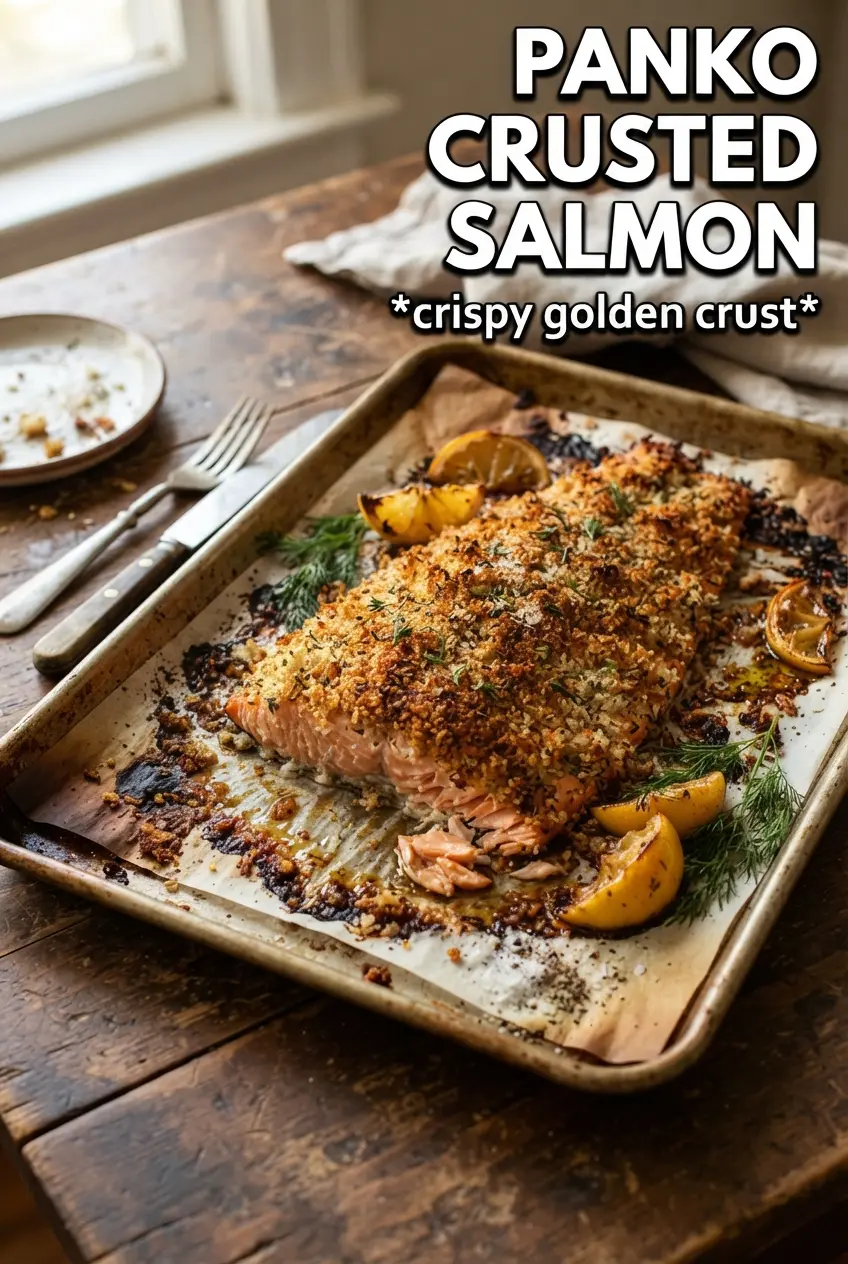
Panko Crusted Salmon
Ingredients
Equipment
Method
- Preheat the oven to 425°F and line a sheet pan with parchment.
- Mix panko, parmesan, parsley, garlic, olive oil, salt, and pepper in a bowl until evenly combined and crumbly.
- Season the salmon fillets with salt and pepper, then spread Dijon mustard over the top of each fillet.
- Press the panko mixture firmly onto the mustard-coated top of each fillet so the crust adheres thickly.
- Bake at 425°F for 12–15 minutes until the crust is deep golden and the salmon is cooked through, with the topping looking set and crisp.
- Serve immediately with lemon wedges alongside the fillets.