Pan seared salmon earns its place on the regular dinner rotation when the skin turns crisp enough to crack under your fork and the flesh stays tender and juicy. The payoff is bigger than the ingredient list suggests: a fast skillet dinner with deep browned flavor, glossy garlic butter, and just enough lemon to keep every bite bright.
The trick is in the first few minutes. Dry salmon hits hot oil skin-side down and stays there long enough for the skin to render and crisp before you even think about flipping. After that, the butter, garlic, and thyme do their work in the foaming fat, basting the fish until it’s just cooked through. That combination gives you restaurant-style salmon without needing the oven.
Below, I’ve laid out the exact cues I watch for in the pan, plus a few swaps that still keep the skin crisp and the butter sauce worth spooning over everything on the plate.
The skin crisped up beautifully, and the garlic butter stayed foamy instead of burning. I used the lemon at the end like you said, and the salmon came out flaky but still moist.
Save this pan seared salmon in garlic butter for a fast skillet dinner with crispy skin and a buttery lemon finish.
The Reason the Skin Stays Crisp Instead of Steaming
Most salmon goes soft in the pan for one simple reason: moisture. If the fillets go in damp, the skin steams before it has a chance to render. That’s why this method starts with a very dry surface and a hot skillet. Once the fish lands skin-side down, you leave it alone long enough for the skin to turn deeply golden and release cleanly from the pan.
The other big mistake is trying to move it too soon. If the skin sticks, it usually needs another minute. The fish will let go when the crust is ready. Pressing the fillets for the first 10 seconds keeps the skin flat against the pan so every part of it can crisp evenly instead of buckling in the heat.
What the Garlic Butter and Thyme Are Doing in the Pan
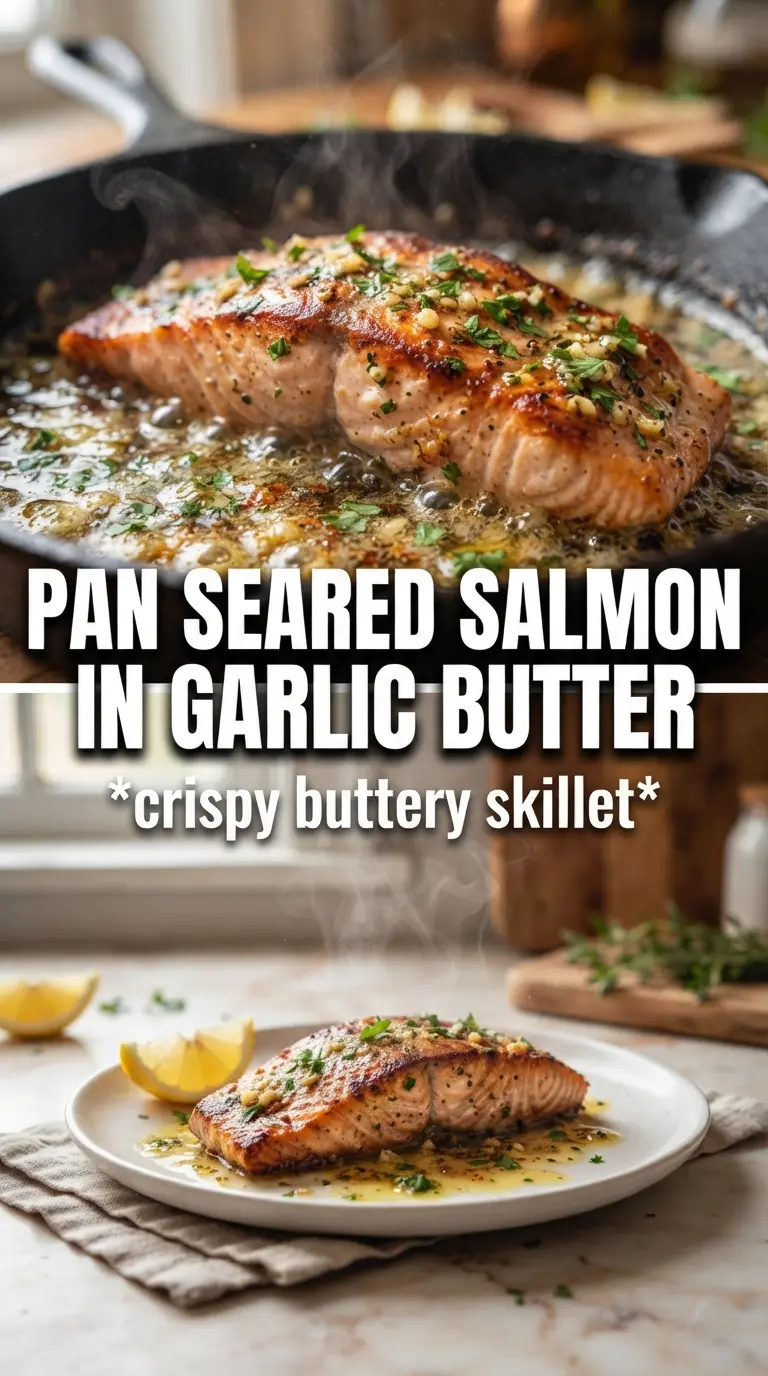
- Salmon fillets — Skin-on fillets are worth using here because the skin protects the flesh and gives you that shattering crust. Look for pieces that are similar in thickness so they finish at the same time. If yours are uneven, tuck thinner ends under slightly in the pan.
- Olive oil — This gets the pan hot and helps the skin crisp before the butter goes in. A neutral high-heat oil works too, but olive oil gives a little extra flavor under the fish. Don’t start with butter alone; it browns before the skin is ready.
- Butter — The butter becomes the baste, the sauce, and the gloss. Use unsalted butter so you can control the seasoning, and add it after the salmon has already developed color. That keeps it foamy and nutty instead of burnt.
- Garlic and thyme — Smashed garlic perfumes the butter without turning harsh as fast as minced garlic. Fresh thyme stands up to the hot fat and gives the pan a savory edge. Dried thyme works in a pinch, but use less because the flavor concentrates fast.
- Lemon juice — Add it at the end, off the hottest part of the pan, so it stays bright instead of cooking flat. It cuts through the richness and wakes up the browned butter. If you use bottled lemon juice, add a little less and taste before serving.
Getting the Sear, the Baste, and the Finish in the Right Order
Dry the Fish and Season It Well
Pat the salmon dry on all sides, especially the skin. Any surface moisture works against browning, and seasoned skin tastes better than plain skin later. Salt and pepper should look even, not buried, and the fillets should sit at room temperature only briefly so they don’t chill the pan.
Let the Skin Cook Without Disturbance
Heat the oil until it just starts to shimmer and smoke lightly, then lay the salmon in skin-side down, away from you so the oil doesn’t splatter back. Press gently for about 10 seconds to keep the skin flat. After that, leave it alone for 5 to 6 minutes until the edge turns opaque and the skin releases with almost no resistance.
Build the Garlic Butter Baste
Flip the salmon, then add the butter, smashed garlic, and thyme to the pan. The butter should foam right away and smell nutty, not dark and acrid. Tilt the skillet and spoon the hot butter over the top of the fillets for 2 to 3 minutes; if the butter starts to brown too fast, lower the heat a touch so the garlic doesn’t burn before the fish is done.
Finish with Lemon and Serve at Once
Pull the salmon when it flakes at the edge but still looks slightly translucent in the center. A little carryover heat will finish the job. Squeeze in the lemon juice, spoon the pan sauce over the top, and garnish with parsley. If you wait around, the skin softens, and that crisp first bite is the whole point here.
Three Ways to Make This Salmon Fit What’s in Your Kitchen
Dairy-Free Garlic Herb Salmon
Use olive oil or a dairy-free butter substitute in place of the butter. You’ll lose a little of the nutty browned-butter flavor, but the garlic, thyme, and lemon still build a clean, glossy sauce that works well over the crisp skin.
No Skin, Same Pan Method
Skinless fillets cook faster and won’t give you the same crackly finish, so reduce the first side by a minute or two and watch the thickness closely. You’ll still get a good sear and a rich garlic butter baste, but the texture will be softer overall.
Lower-Sodium Version
Cut back on the salt at the seasoning stage and rely on the lemon, garlic, and parsley to keep the fish lively. Salmon handles this adjustment well because its natural richness carries flavor even with less seasoning.
Storage and Reheating
- Refrigerator: Store leftovers in an airtight container for up to 2 days. The skin will soften, but the fish stays usable for lunch or grain bowls.
- Freezer: Salmon freezes fairly well, though the crisp skin won’t survive. Wrap tightly and freeze for up to 1 month; thaw overnight in the refrigerator before reheating.
- Reheating: Warm gently in a skillet over low heat with a lid for a minute or two, just until heated through. High heat dries salmon out fast and makes the garlic bitter, so keep the reheat soft and brief.
Answers to the Questions Worth Asking
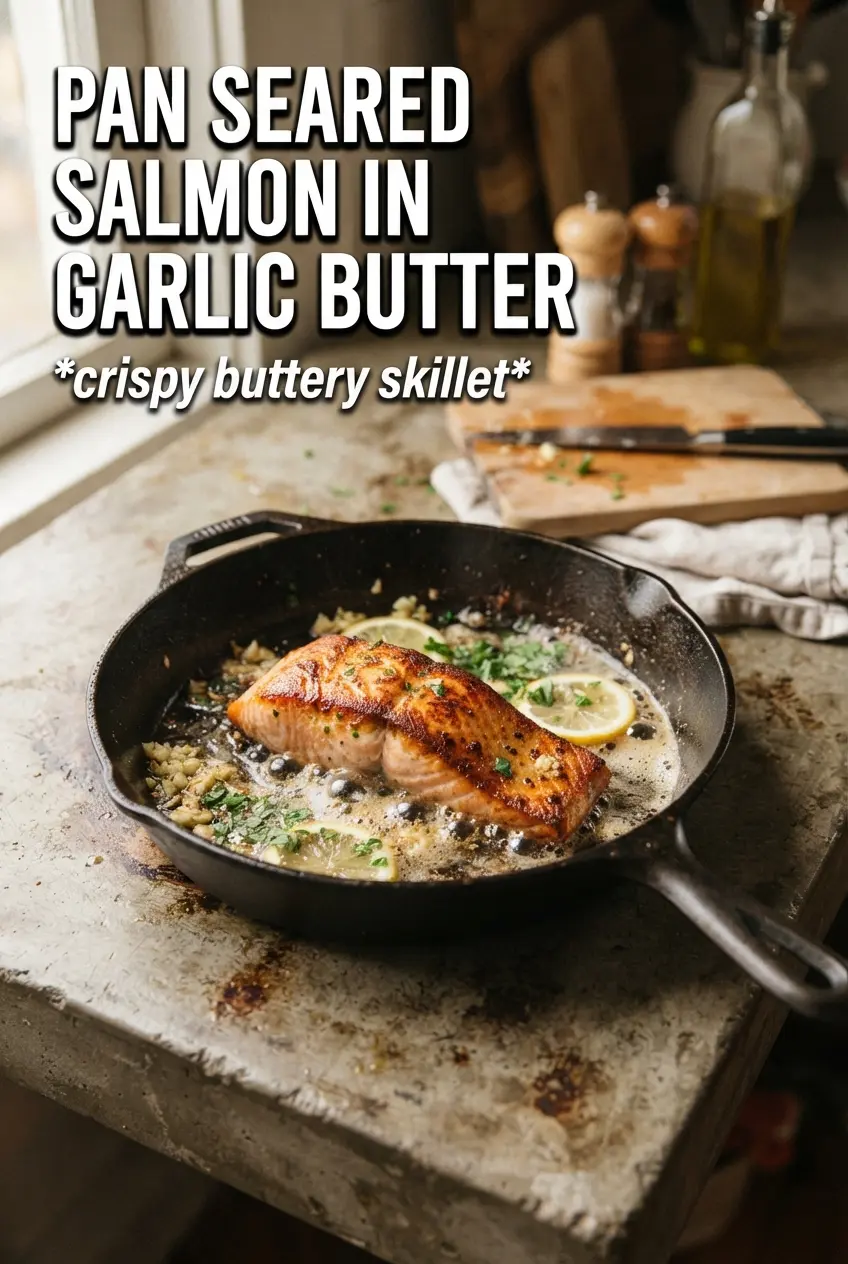
Pan Seared Salmon in Garlic Butter
Ingredients
Equipment
Method
- Pat the salmon completely dry and season generously with salt and black pepper for better crisping and flavor. Let it sit while you heat the pan.
- Heat the olive oil in a large cast iron skillet over medium-high heat until just smoking, about 2 minutes. The oil should shimmer but not burn.
- Place the salmon skin-side down and press gently for 10 seconds to help the skin make full contact. Cook undisturbed for 5–6 minutes until the skin is deeply golden and crispy.
- Flip the salmon, then add the butter, smashed garlic, and thyme in the skillet. Let the butter foam so it bubbles around the fish.
- Tilt the pan and baste the salmon continuously with the garlic butter for 2–3 minutes until cooked through. Watch for the butter to stay foamy while the salmon firms up.
- Squeeze in the fresh lemon juice, then garnish with fresh parsley and serve immediately. The citrus brightens the browned garlic butter right away.