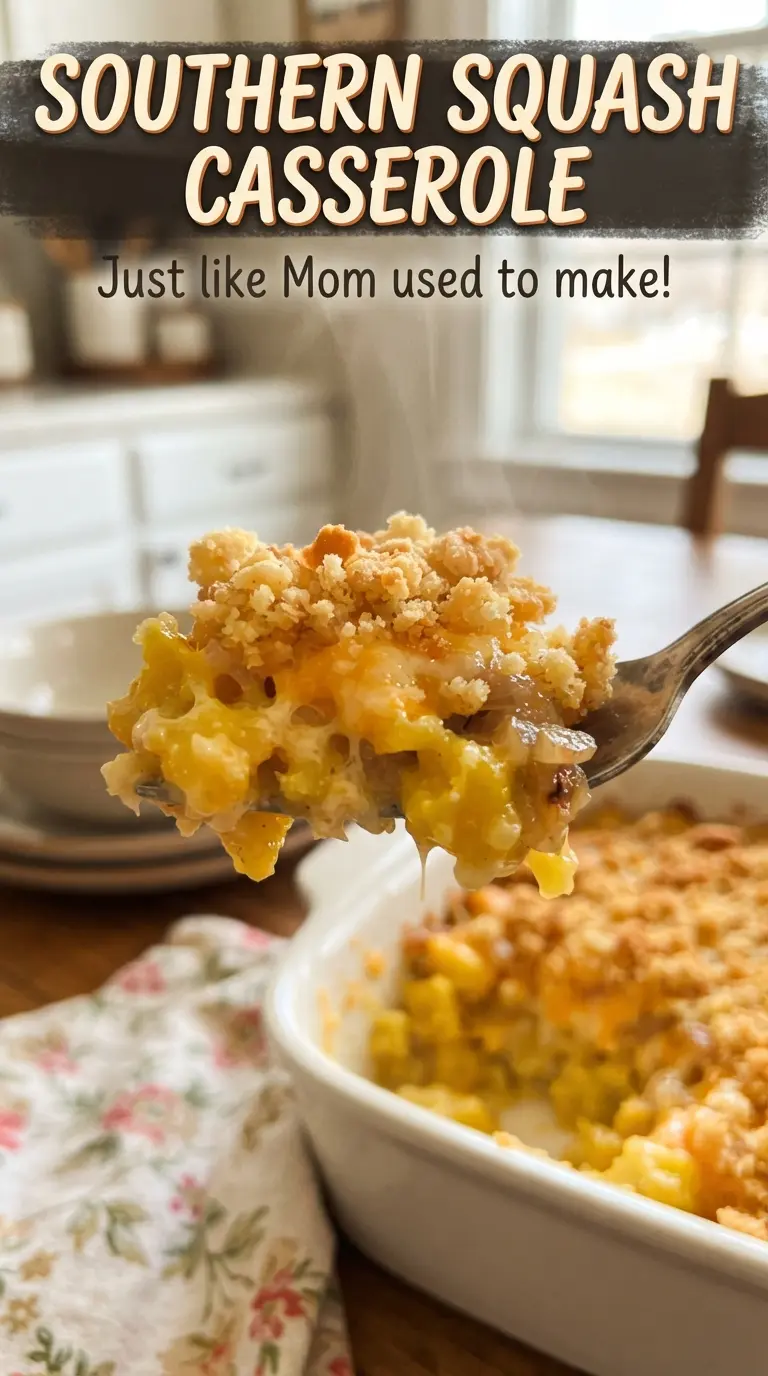
Southern squash casserole should come out tender in the middle with a buttery, cracker-crisp top that shatters when your spoon goes through it. The best versions don’t taste watery or flat; they taste like squash baked into a rich, savory custard with just enough cheddar and onion to keep every bite interesting. This one earns its place on the table because it holds together cleanly without losing that soft, comforting texture people expect from a true Southern side.
The difference is in the squash. It has to be cooked down first, then drained well enough that it won’t flood the casserole while it bakes. That step, along with the sour cream, mayonnaise, and eggs, gives you a filling that sets instead of slumping. The Ritz topping does the rest, adding salt, crunch, and a buttery finish that browns beautifully in the oven.
Below, you’ll find the part that matters most: how to keep the casserole from turning soggy, what each ingredient is doing, and the small swaps that still keep the spirit of the dish intact.
The squash stayed tender without turning mushy, and the Ritz topping browned up perfectly crisp. I drained it like you said and the casserole sliced instead of puddling on the plate.
Save this Southern Squash Casserole for the buttery Ritz topping and tender squash filling that bake up golden every time.
The Trick to a Casserole That Sets Instead of Slumping
The most common mistake with squash casserole is treating the squash like it can bake its way out of excess water. It can’t. Yellow squash releases a lot of moisture as it cooks, and if you skip the draining step, that liquid ends up loosening the egg mixture and softening the topping from underneath.
Cooking the squash with the onion first does two things at once: it takes the raw edge off the onion and starts collapsing the squash before it ever meets the casserole dish. Drain it in a colander, and don’t rush that part. A minute or two of extra draining is the difference between a casserole that slices and one that spoons out in a puddle.
What Each Ingredient Is Actually Doing In This Dish
- Yellow squash — This is the base of the dish, and fresh squash with firm skin will hold its shape better after cooking. Older squash can get watery and seedy, which makes the casserole softer and less clean-cut.
- Sharp cheddar — Sharp cheese gives you enough flavor to stand up to the creaminess of the filling. Mild cheddar disappears more easily, so if you swap, use a little more salt and expect a gentler cheese flavor.
- Sour cream and mayonnaise — Together they make the filling rich and tangy while helping it bake into a custard-like texture. Using both matters here; replacing one with the other changes the balance, and all-sour-cream versions can taste a little sharper and less plush.
- Eggs — These are the set agent. If the casserole seems loose going into the oven, the eggs are what turn it from a skillet mixture into a sliceable side dish.
- Ritz crackers — They bring salt, butteriness, and a fine crumb that browns better than a lot of sturdier crumbs. Crush them evenly so the topping bakes in a uniform layer instead of forming dry patches.
Building the Filling and Topping So Nothing Turns Watery
Softening the Squash First
Cook the squash and onion in butter until the squash has collapsed and the onion looks translucent, not browned. You want the pieces tender enough to mash slightly with a spoon, because undercooked squash can release water later and leave the casserole uneven. Once it’s tender, drain it well in a colander and press lightly if needed. If liquid is still pooling, it will dilute the egg mixture and keep the center from setting cleanly.
Mixing the Custard Base
Stir the cheddar, sour cream, mayonnaise, eggs, salt, and pepper together before folding in the squash. That keeps the seasoning evenly distributed and prevents big pockets of cheese or dairy from settling in one part of the dish. The mixture should look thick and loose, not soupy. If it looks thin before baking, the squash probably wasn’t drained enough.
Making the Ritz Crust Brown Properly
Toss the crushed crackers with melted butter until every crumb looks lightly coated. Dry crumbs on top stay pale and dusty; buttered crumbs turn deep gold and toast instead of burning. Sprinkle the topping evenly over the casserole so the whole surface bakes at the same rate. A few extra buttery clumps are fine and give you those crisp little nuggets people fight over.
Baking Until the Center Is Set
Bake until the top is golden and the casserole no longer jiggles in the center when the pan is nudged. If the top browns too fast, loosely cover it with foil for the last stretch so the middle can finish without scorching the crumbs. Pull it from the oven when it looks set but still soft beneath the crust; it firms up as it rests. Cutting too early is the fastest way to lose that clean, creamy texture.
Three Ways to Adjust Southern Squash Casserole Without Losing Its Character
Gluten-Free Crust Swap
Use a gluten-free buttery cracker or crushed gluten-free breadcrumbs in place of Ritz crackers. You’ll still get a crisp topping, though the flavor will be a little less rich and salty than the original.
Dairy-Free Version
Swap in a dairy-free cheddar-style shreds, plant-based butter, and a dairy-free sour cream alternative. The casserole will still set, but the filling will taste a little less tangy and the topping won’t brown quite as deeply.
Lighter Onion Flavor
If you want the squash to stay front and center, use a smaller onion or grate it instead of dicing it. Grated onion melts into the filling and gives flavor without the sharper bits you get from larger pieces.
Make-Ahead Storage
- Refrigerator: Store covered for up to 4 days. The topping will soften, but the flavor holds up well.
- Freezer: Freeze baked casserole in airtight portions for up to 2 months. The texture gets a little softer after thawing, but it still works if you reheat it gently.
- Reheating: Warm covered at 325F until heated through, then uncover for the last few minutes to re-crisp the top. Microwaving makes the topping soggy, which is the main thing to avoid here.
Questions I Get Asked About This Recipe

Southern Squash Casserole
Ingredients
Equipment
Method
- Preheat the oven to 350°F, then grease a 9x13-inch baking dish (visible coating on all sides).
- Slice the yellow squash and dice the onion so they cook evenly and the casserole bakes uniformly.
- Melt 2 tablespoons butter in a skillet over medium heat, then add the sliced squash and diced onion.
- Cook for 10-12 minutes until tender, stirring occasionally (squash should look soft and glossy).
- Drain the squash mixture well in a colander so the casserole doesn’t turn watery.
- In a mixing bowl, combine cheddar, sour cream, mayonnaise, beaten eggs, salt, and black pepper until smooth and thick.
- Fold the drained squash mixture into the cheddar mixture until evenly coated (no dry pockets).
- Spread the filling evenly into the greased 9x13-inch baking dish.
- Toss the crushed Ritz crackers with the melted butter until the crumbs look evenly moistened.
- Sprinkle the buttery crumbs over the top in an even layer for full coverage.
- Bake for 30-35 minutes at 350°F until the center is set and the top is golden, with visible bubbling around the edges.