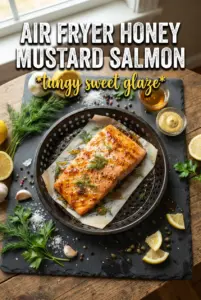
Air fryer honey mustard salmon comes out with the kind of finish that keeps it in regular rotation: sticky edges, a glossy glaze, and salmon that stays tender instead of drying out. The air fryer gives the top of each fillet a caramelized coat fast, while the inside stays juicy and flakes apart in clean pieces.
The trick is in the glaze. Dijon brings sharpness, whole grain mustard adds texture and a little heat, and honey helps the surface darken without burning before the salmon is done. A thin layer of oil keeps the mixture from seizing up and helps it brush evenly over the fish. You don’t need a long marinade here. The salmon picks up enough flavor in the short time between brushing and cooking, and the air fryer does the rest.
Below you’ll find the detail that matters most: how to keep the glaze from scorching, how to tell when the salmon is done, and a few smart swaps if you want to change the mustard mixture without losing that glossy finish.
The glaze bubbled up beautifully and the salmon stayed moist in the center. Mine was done right at 9 minutes, and the honey mustard coating caramelized without turning bitter.
Save this air fryer honey mustard salmon for a fast dinner with caramelized edges and a tangy glaze that comes together in minutes.
The Glaze Is Only Half the Job — Heat Control Is What Keeps the Salmon Juicy
Honey mustard salmon can go from glossy to dried out fast if the heat is too aggressive or the fillets are left in the basket too long. The air fryer moves hot air around the fish, which is great for caramelizing the glaze, but it also means thin fillets can overcook in a hurry. The goal is a surface that looks lacquered and bubbling at the edges while the center still flakes in moist layers.
Thickness matters more than weight here. A 6-ounce fillet that is thick in the middle will need the full 10 minutes, while a thinner piece may be ready closer to 8. If the top is browning too quickly before the fish flakes, the glaze has done its job and the salmon is probably close to done anyway. Pull it when the thickest part is just opaque and gives cleanly to a fork; carryover heat will finish the last bit.
What the Mustards Are Doing in the Sauce
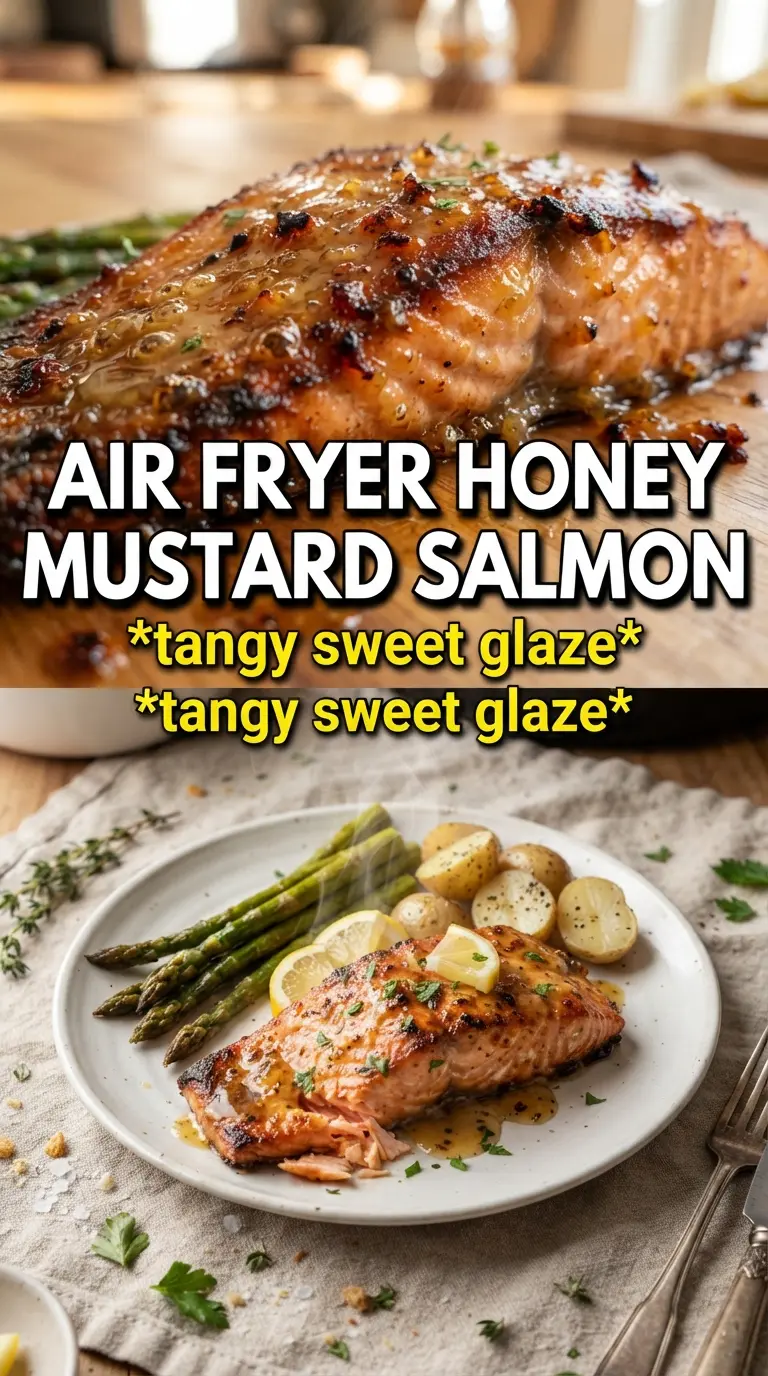
- Dijon mustard — This is the backbone of the glaze. It gives you sharpness and enough body to cling to the salmon, which plain yellow mustard won’t match. If you need a substitute, use another smooth mustard, not a grainy one alone, or the glaze can separate and look patchy.
- Whole grain mustard — The seeds add little pops of texture that keep the coating from tasting flat. You can skip it if that’s all you have, but the finished glaze will be smoother and a little less interesting. Stir it in after the honey so it stays evenly distributed.
- Honey — This is what gives the salmon its caramelized edge in the air fryer. Too much honey can make the surface darken before the fish is cooked through, so keep the measured amount as written. If your honey is thick, warm it for a few seconds so it mixes smoothly.
- Olive oil — A small amount loosens the glaze and helps it brush on in a thin, even layer. Without it, the mixture can sit in clumps and caramelize unevenly. Use a neutral olive oil you like the taste of, since it still shows up a little in the finished dish.
- Garlic — Fresh garlic adds bite, but it also burns more easily than the rest of the glaze. Mince it finely so it disperses instead of sitting in big pieces on top of the fish. If you use garlic powder, cut the amount way back or the glaze can taste dusty.
The Quick Cook Time That Makes the Glaze Work
Mixing the Glaze Until It Brushes Smoothly
Stir the Dijon, honey, whole grain mustard, olive oil, and garlic until the mixture looks glossy and unified. It should pour off a spoon slowly, not sit like a paste. If the honey is stubborn or the oil looks separated, keep stirring for a few extra seconds; that smooth texture matters because it spreads in a thinner layer and caramelizes more evenly.
Coating the Salmon Without Overloading It
Season the fillets with salt and pepper first, then brush the glaze over the top and sides. You want a generous coat, but not a mound of sauce pooling underneath the fish. Too much glaze on the bottom can drip and burn in the basket before the salmon is finished, while a thin, even coat on top gives you the best color and flavor.
Air Frying Until the Edges Turn Sticky
Preheat the air fryer to 400°F so the salmon starts cooking immediately when it goes in. Place the fillets in a single layer with a little space between them, then cook for 8 to 10 minutes. Watch for the glaze to bubble at the edges and deepen in color; if it starts to darken too fast, your fillets are probably thin and need to come out early. The fish is done when it flakes easily and still looks moist in the center.
Finishing at the Table
Scatter fresh parsley over the top and serve right away. That little hit of green keeps the glaze from feeling heavy and gives the dish a fresher finish. Let the salmon sit too long after cooking and the glaze loses its shine, so this is one of those meals that tastes best the minute it leaves the basket.
How to Adjust This Salmon Without Losing the Sticky Finish
Dairy-free, naturally
This recipe is already dairy-free, which is part of why it works so cleanly in the air fryer. The glaze stays glossy without needing butter, and the salmon gets plenty of richness from the fish itself. If you want a little more richness, brush on a touch more olive oil rather than adding cream or butter.
Use maple syrup instead of honey
Maple syrup works if that’s what you have, but it tastes rounder and less sharp than honey. The glaze will still caramelize, though it may brown a little faster, so keep an eye on the fish near the end. Use the same amount and expect a deeper, less tangy finish.
Make it gluten-free with confidence
This dish is naturally gluten-free as long as your Dijon and whole grain mustard are labeled gluten-free. Mustards can occasionally include additives, so it is worth checking the bottle if you’re cooking for someone with a strict sensitivity. The texture and cook time stay the same.
Storage and Reheating
- Refrigerator: Store leftovers in an airtight container for up to 2 days. The glaze softens a little, and the salmon will lose some of its just-cooked juiciness, but it’s still good cold or gently reheated.
- Freezer: It freezes, but the texture is not as good after thawing. Salmon can turn a little softer once frozen, so I only do this if I have extra cooked fillets I know won’t get eaten right away.
- Reheating: Warm it low and slow in the air fryer at 300°F for a few minutes or in a covered skillet over low heat. High heat will dry out the edges before the center is warm, and it can burn the honey glaze.
Questions I Get Asked About This Recipe
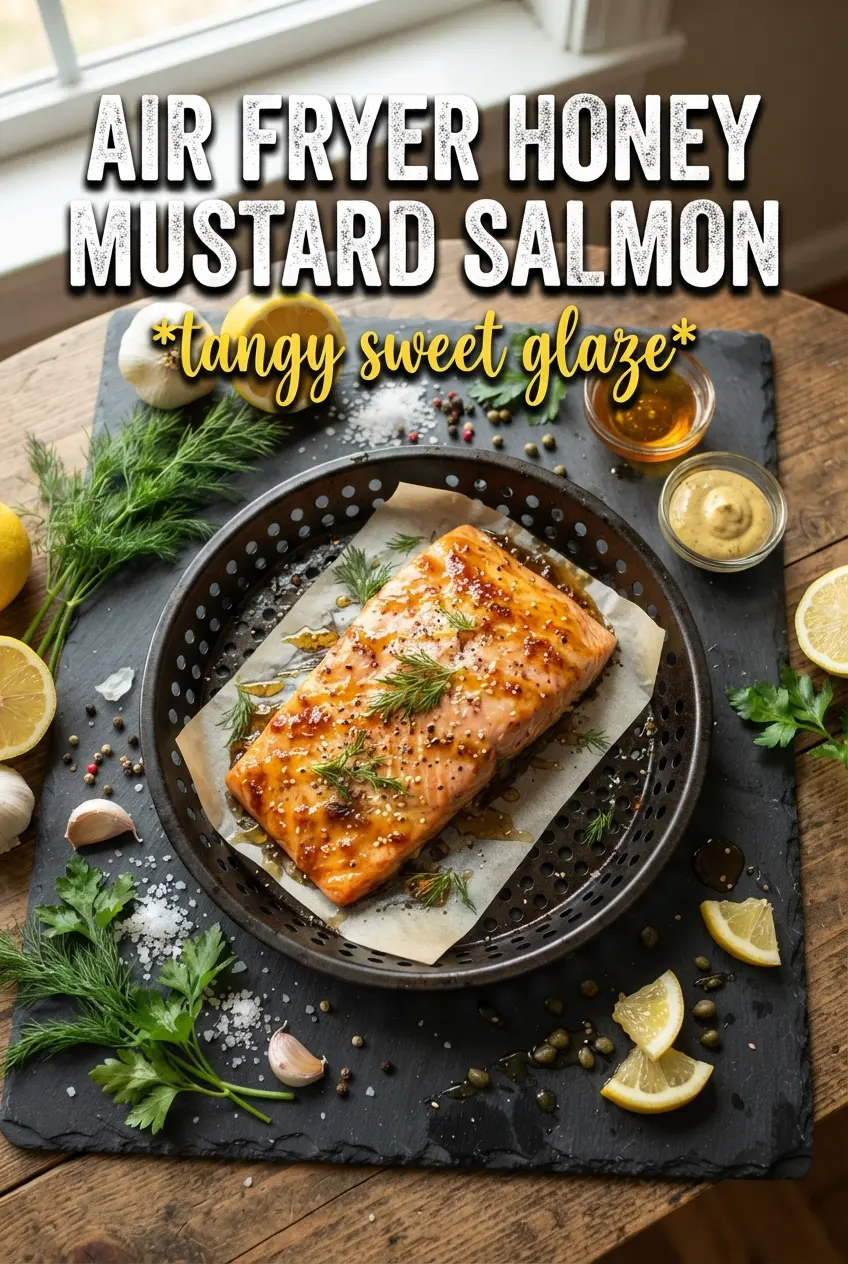
Air Fryer Honey Mustard Salmon
Ingredients
Equipment
Method
- In a bowl, mix Dijon mustard, honey, whole grain mustard, olive oil, and minced garlic until smooth.
- Season salmon fillets with salt and pepper, then brush the honey mustard mixture generously over the top and sides of each fillet.
- Preheat the air fryer to 400°F for 2–3 minutes.
- Place the salmon in the basket in a single layer and air fry for 8–10 minutes, until the glaze is caramelized and salmon flakes easily.
- Garnish with fresh parsley and serve immediately.