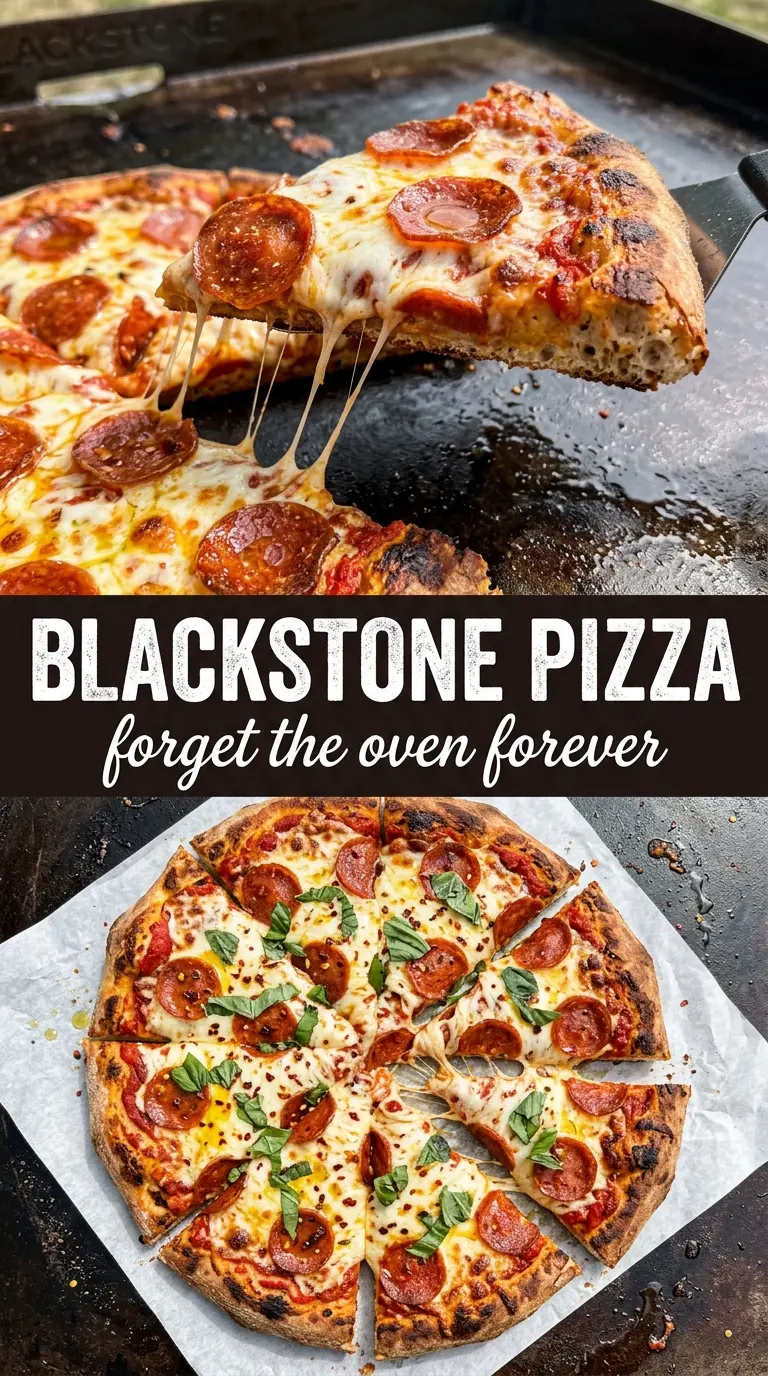
Pizza on a Blackstone griddle gives you the kind of crust that usually takes a hot oven or a pizza stone, but you get it outdoors with a deep golden bottom and melted cheese bubbling across the top. The dough picks up a little char from the flat top, the edges crisp fast, and the whole thing feels a lot more hands-on than ordering out.
The trick is cooking the dough first on one side so it has time to set before the sauce goes on. That quick first cook keeps the crust from turning soggy, and the olive oil on the surface adds flavor while helping the bottom blister instead of drying out. Once you flip it, the toppings go on fast and the dome traps enough heat to melt the cheese without overcooking the crust.
Below, I’ve included the small details that make griddle pizza work consistently, plus a few ways to change the toppings without losing that crisp edge.
Save this Blackstone griddle pizza for the next time you want a crispy crust, bubbly mozzarella, and an easy outdoor pizza night.
The Move That Keeps the Crust Crispy on a Flat Top
The biggest mistake with griddle pizza is loading the toppings before the dough has a chance to firm up. On a Blackstone, the heat comes from below fast and evenly, so the bottom can set quickly, but raw dough still needs that first dry cook to build structure. If you top it too soon, the sauce soaks in and the center stays soft while the edges race ahead.
That first side should look golden with a few darker spots and feel sturdy enough to flip without sagging. Once you turn it over, work quickly. The sauce goes on a crust that has already done its main cooking, so the cheese melts while the base stays crisp instead of steaming itself limp.
What Each Ingredient Is Actually Doing in This Pizza
- Pizza dough: Room-temperature dough stretches without snapping back and cooks more evenly on the griddle. Cold dough fights you and tends to cook up dense in the middle, so let it sit out long enough to relax before shaping.
- Olive oil: This is what helps the bottom crisp and brown. Brushing the dough instead of just the griddle gives you better contact and a little extra flavor, and the garlic powder mixes in cleanly this way.
- Pizza sauce: Use a sauce that isn’t too watery. A thin sauce is the fastest way to make the center soggy, especially once the dome traps steam, so if your sauce is loose, simmer it down first.
- Mozzarella: Shredded mozzarella melts fast and covers the surface evenly. Block cheese grated fresh works too, and it usually melts a little smoother than the pre-shredded kind because it doesn’t have anti-caking starches.
- Pepperoni or toppings: Keep toppings light. The griddle does best with a pizza that isn’t overloaded, because too many heavy toppings weigh down the crust and keep the center from crisping properly.
Building the Pizza So the Griddle Can Finish It Cleanly
Preheating the Griddle
Heat the Blackstone to medium, around 400 to 425F, and give it time to come fully up to temperature before the dough hits the surface. You want the oil to shimmer, not smoke hard. If the griddle is too cool, the dough absorbs oil and turns greasy; too hot, and the bottom scorches before the top ever gets a chance to set.
Shaping and Oiling the Dough
Stretch or roll the dough into an even oval or rectangle about 1/4-inch thick. Brush one side with the olive oil, garlic powder, and Italian seasoning mixture, then place that side down on the griddle. Uneven thickness is what causes one part to burn while another part stays pale, so take the extra minute to even it out before it cooks.
Flipping and Topping Fast
After 3 to 4 minutes, lift an edge and check for a deep golden bottom with crisp edges. Flip it, then move right into the sauce, cheese, and toppings. Don’t let the cooked side sit naked on the heat for long or it can dry out before the cheese melts.
Covering for the Melt
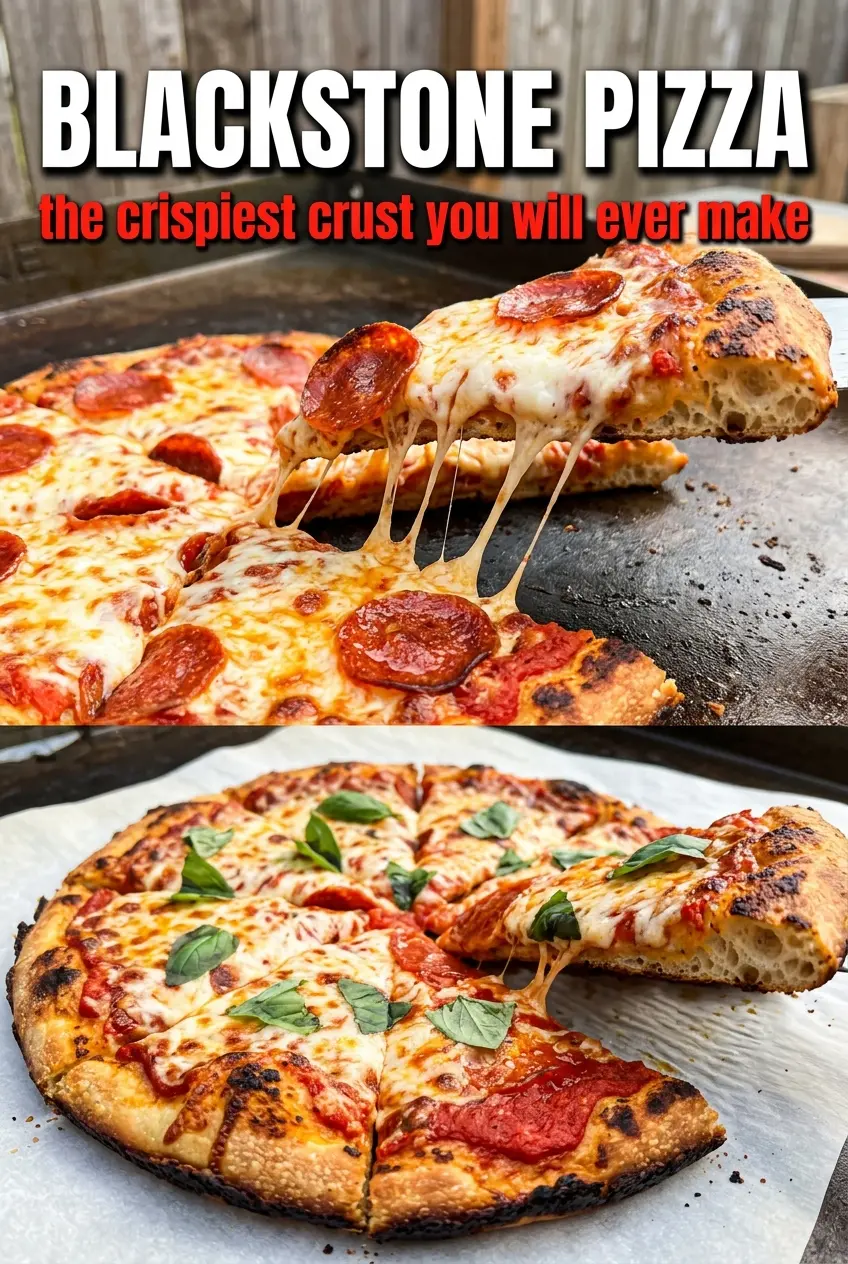
Set a dome lid or large metal bowl over the pizza so the trapped heat melts the cheese and softens the toppings. Four to six minutes is usually enough, but the real cue is bubbling cheese with pepperoni curling at the edges. If the crust is done but the cheese still looks dull, your cover isn’t trapping enough heat.
Finishing and Serving
Slide the pizza onto a cutting board as soon as the cheese is melted and spotted with a few browned bits. Add fresh basil and red pepper flakes right at the end so they stay bright and fragrant. If you leave it on the griddle after it’s done, the bottom keeps cooking and the crust loses that clean crunch.
How to Adapt This Griddle Pizza Without Losing the Crisp
Make it vegetarian
Skip the pepperoni and use thinly sliced mushrooms, peppers, onions, or olives. The key is keeping the topping layer light and pre-cooking watery vegetables if they need it, because raw mushrooms or onions can release enough moisture to soften the crust.
Use gluten-free dough
A gluten-free dough can work, but it usually needs gentle handling and a little more patience to set before flipping. Keep the thickness even and don’t stretch it too thin or it can tear when you turn it over on the griddle.
Turn it into a white pizza
Leave off the red sauce and spread a thin layer of ricotta or garlic cream after the first flip. This gives you a richer, softer finish, but it also means you need to go light on the topping so the surface doesn’t get heavy and slide around before the cheese sets.
Storage and Reheating
- Refrigerator: Store leftovers in an airtight container for up to 3 days. The crust softens a bit in the fridge, but it still reheats well.
- Freezer: Freeze slices wrapped tightly for up to 2 months. Thaw in the fridge before reheating so the cheese doesn’t separate.
- Reheating: Reheat in a dry skillet over medium-low heat or in a 375F oven until the crust crisps back up and the cheese melts again. The biggest mistake is microwaving it, which turns the crust chewy and the cheese rubbery.
Answers to the Questions Worth Asking
Pizza on a Blackstone Griddle
Ingredients
Equipment
Method
- Preheat the Blackstone griddle to medium heat (about 400-425F) and brush the surface lightly with olive oil.
- Roll or stretch the pizza dough into an oval or rectangle about 1/4-inch thick.
- Brush one side of the dough with olive oil mixed with garlic powder, then place oil-side down on the griddle.
- Cook for 3-4 minutes until the bottom is golden and crispy and the top surface begins to look cooked.
- Flip the dough and immediately top with pizza sauce, mozzarella, and your pepperoni or desired toppings.
- Close a dome lid or use a large metal bowl to cover the pizza, then cook 4-6 minutes until the cheese melts and bubbles.
- Slide the pizza onto a cutting board, then top with fresh basil and red pepper flakes.