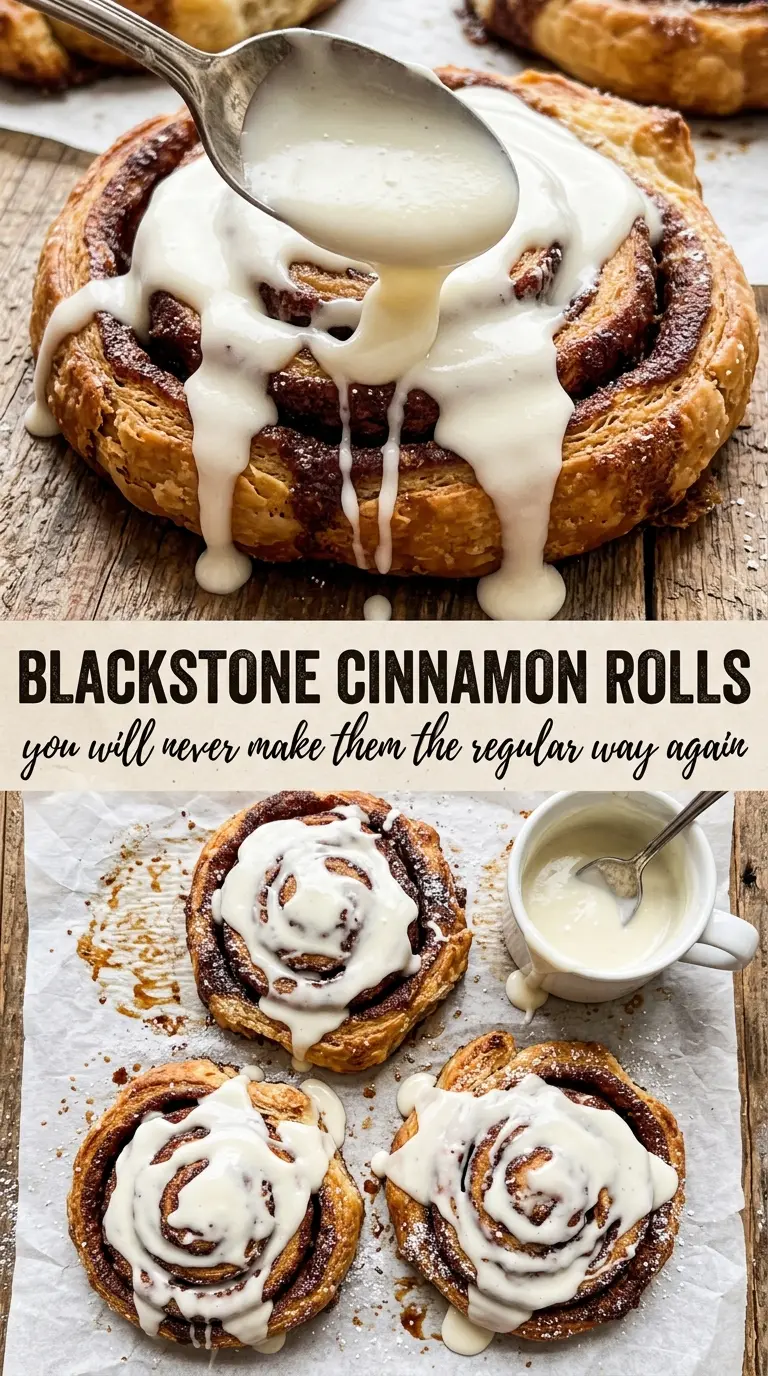
Smashing canned cinnamon rolls on a hot Blackstone changes everything. You get the same soft, swirled center people expect, but the griddle gives the outside a thin caramelized crust that crackles a little when you bite in. The icing melts into the warm ridges instead of sitting on top, and that contrast is what makes these worth repeating.
The key is heat control. Too hot, and the sugar burns before the center warms through. Medium-low gives the rolls time to brown evenly while keeping the middle pillowy. A little melted butter on the griddle helps the cinnamon-sugar topping take on a deeper color, and smashing them flat enough matters more than you’d think because it increases the surface area that can caramelize.
Below, I’ve included the one technique that keeps the rolls from sticking and the small timing cues that tell you when they’re ready to flip. There’s also a couple of smart variations if you want to change up the topping or make them work for different diets without losing that griddle-toasted texture.
The bottoms got this gorgeous caramelized crust, but the centers stayed soft and fluffy. I used the full 3 minutes on the first side and the icing melted right into all the layers.
Save these smashed Blackstone cinnamon rolls for the morning you want crisp, caramelized edges and warm icing in under 20 minutes.
The Part That Makes Griddle Cinnamon Rolls Crisp Instead of Soggy
Most griddle cinnamon rolls fail for one of two reasons: the surface is too hot, or the rolls sit too long before flipping. When that happens, the outside either scorches before the middle warms or steams itself soft in the butter. Medium-low heat gives you a steady caramelization instead of a dark shell with a doughy center.
Smashing the rolls before they hit the griddle is doing more than making them look different. It opens up more surface area, which means more contact with the hot metal and more of that crisp, candy-like edge where the brown sugar can work. If the rolls spring back when you press them, flatten them a little more before cooking. They should look sturdy, not puffy.
- Heat level — Keep the griddle around 300-325°F. That range lets the sugar brown without turning bitter.
- Butter first — The melted butter gives the rolls a richer crust and keeps the bottoms from grabbing the surface.
- Flat, not flimsy — A thicker smash still cooks, but you lose the crisp edge that makes this version special.
What the Brown Sugar and Butter Are Actually Doing Here
Refrigerated cinnamon rolls are the right shortcut here because they’re built to puff in the pan and hold that soft center. A homemade dough can work, but it usually needs a different baking setup and more time than a hot griddle breakfast deserves.
Melted butter is what helps the bottoms develop that deep golden crust. If you skip it, the rolls still cook, but they’re more likely to dry out on the outside before the sugar has a chance to caramelize.
Brown sugar and cinnamon intensify the filling already in the dough and create those sticky, crackly edges. Light brown sugar is fine here; dark brown sugar gives a deeper molasses note if you want a stronger finish. Cream cheese icing is the best match because its slight tang cuts the sweetness and melts beautifully over the warm rolls.
Getting the Rolls from Spiral to Sizzle
Preheating the Griddle
Preheat the Blackstone to medium-low and give it a minute to stabilize before adding the butter. If the surface is still climbing in temperature when the rolls go down, the first side can overbrown before the center catches up. You want the butter to shimmer, not smoke, when it hits the metal.
Smashing the Dough
Use a flat-bottomed plate to press each roll to about 1/2-inch thick. The dough should hold together with visible spiral lines, not tear apart into scraps. If a roll splits at the edge, press the pieces back together; a few rough spots won’t hurt the final texture.
Cooking the First Side
Lay the smashed rolls on the buttered griddle and leave them alone for 3 to 4 minutes. You’re waiting for a deep golden underside with darker caramel spots at the edges. If you try to lift them too early, they’ll stick; when they’re ready, they release with a clean edge and a faint crisp sound.
Flipping and Finishing
Turn them carefully and cook the second side for 2 to 3 minutes. It won’t need as long because the dough is already warmed through. Pull them off as soon as both sides are caramelized and the centers feel set when lightly pressed; overcooking here is what turns them from pillowy to bready.
Swap the Icing for a Maple Drizzle
Warm a little maple syrup with a spoonful of butter and drizzle it over the rolls instead of the packet icing. You’ll lose the cream cheese tang, but you gain a cleaner maple-caramel finish that works well if you want the cinnamon to stay front and center.
Make Them Dairy-Free
Use a plant-based butter and check that your canned rolls and icing are dairy-free. The griddle texture stays the same, though the icing may melt a little differently depending on the brand you use.
Add Nuts for More Crunch
Scatter finely chopped pecans over the tops right after flipping or fold them into the icing drizzle. They add a toasted crunch that plays well against the soft center, but keep the pieces small so they don’t burn on the griddle.
Storage and Reheating
- Refrigerator: Store leftovers in an airtight container for up to 2 days. The exterior softens, but the flavor stays good.
- Freezer: They freeze best before icing. Wrap tightly and freeze for up to 1 month, then thaw before reheating.
- Reheating: Warm on the griddle over low heat or in a 300°F oven until just heated through. Microwaving makes the crust soft and sticky instead of crisp.
Answers to the Questions Worth Asking
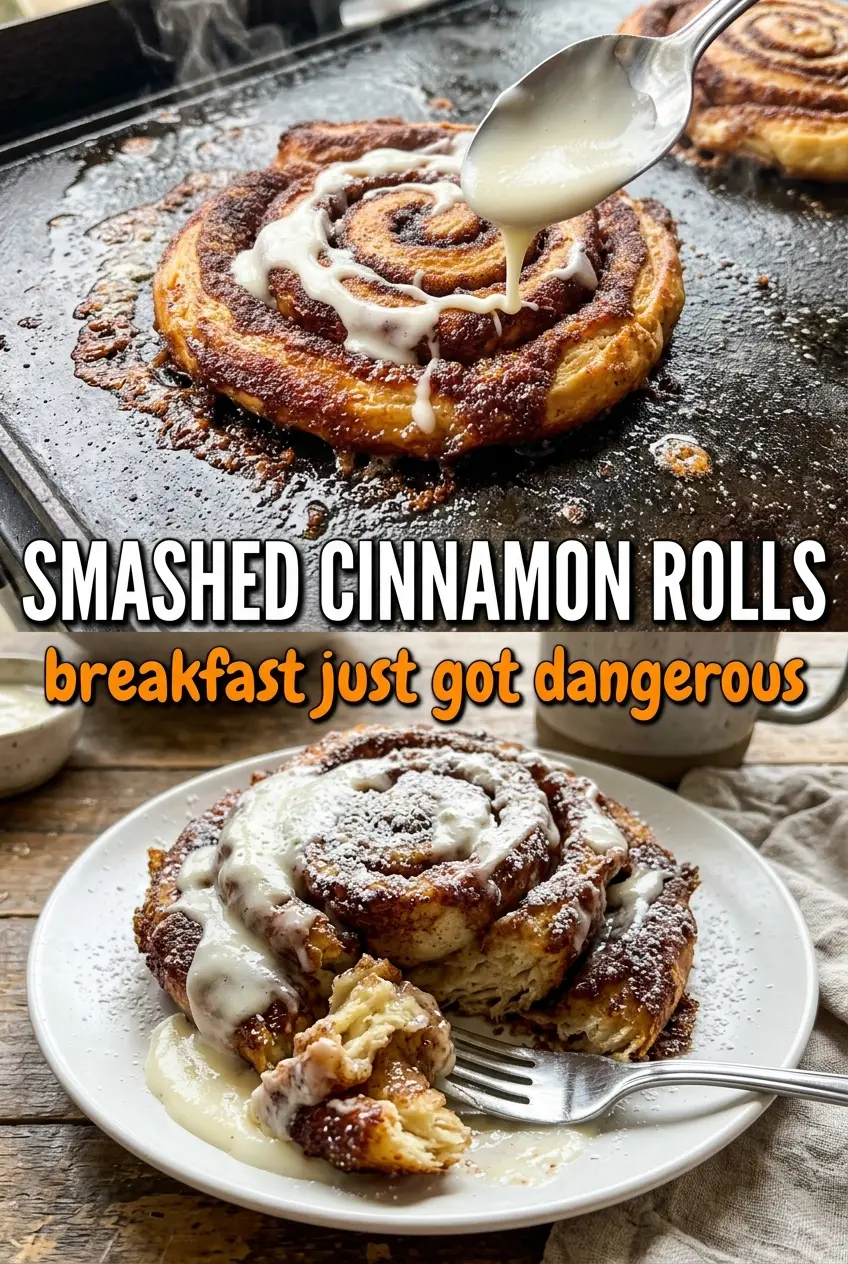
Smashed Blackstone Cinnamon Rolls
Ingredients
Equipment
Method
- Open the refrigerated cinnamon rolls and place them on a cutting board. Use a flat-bottomed plate to smash each roll to about 1/2-inch thick.
- Sprinkle the tops of the smashed rolls with cinnamon and brown sugar. Leave them as a single even layer so they cook uniformly on the griddle.
- Preheat the Blackstone griddle to medium-low heat (about 300-325F). Spread the melted butter on the surface to lightly coat.
- Place the smashed rolls on the buttered griddle. Cook for 3-4 minutes until the bottom is deeply golden and caramelized.
- Flip the rolls carefully and cook for 2-3 more minutes. Continue until the second side is caramelized and set, with visible crisp edges.
- Remove the rolls from the griddle. Drizzle warm cream cheese icing generously over the top and serve immediately.