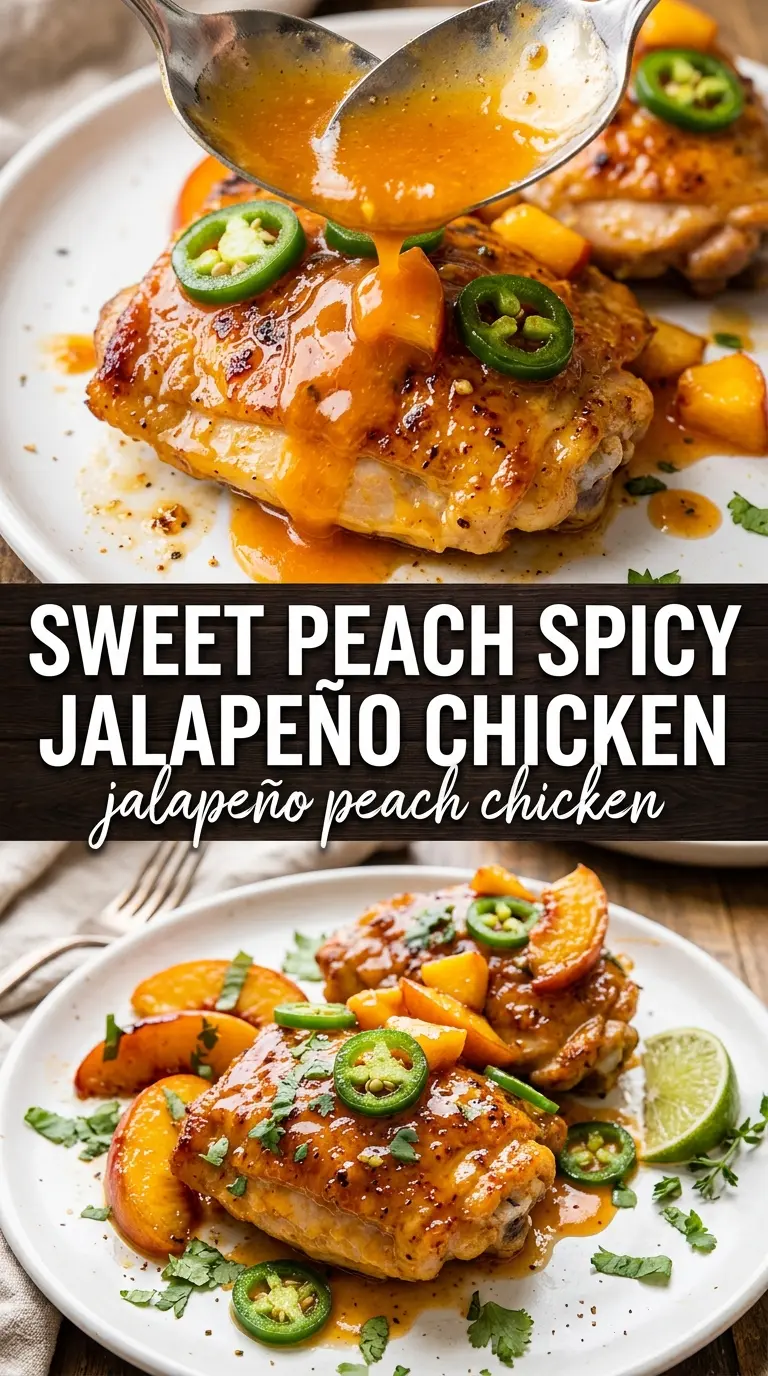
Golden seared chicken and a sticky peach-jalapeño glaze make this dinner feel a lot more interesting than the usual skillet chicken. The peaches break down just enough to turn jammy around the edges while still leaving a few soft pieces in the sauce, and the jalapeños bring heat without taking over. What you end up with is a glossy pan sauce that clings to the chicken instead of running off onto the plate.
The trick is building the glaze in the same skillet after the chicken comes out. Those browned bits left behind carry a lot of flavor, and the vinegar, honey, and soy sauce balance each other so the fruit tastes bright instead of heavy. I like using ripe peaches that still hold their shape for a bit, because they give the sauce body before they melt completely.
Below you’ll find the exact timing that keeps the chicken juicy, plus a few swaps that still let the sauce stay bold and sticky. If you’ve ever had fruit-based sauces turn thin or bland, the notes here will help with that.
The sauce thickened beautifully and coated the chicken instead of pooling at the bottom of the skillet. I used two jalapeños and it had just enough heat with the sweet peaches.
Save this jalapeño peach chicken for a sticky skillet dinner with sweet peaches, gentle heat, and a glossy pan sauce.
The Reason the Sauce Stays Glossy Instead of Watery
The sauce for this dish only works if the peaches are cooked long enough to soften and release some of their juices, but not so long that they turn the whole skillet into peach soup. The honey helps the glaze reduce, while the soy sauce and vinegar keep it from tasting like straight fruit syrup. If the pan looks thin at first, don’t rush it; a proper simmer is what turns the liquid into something that clings to the chicken.
- Chicken breasts — Boneless, skinless breasts give you a clean sear and a neutral base for the glaze. If yours are thick on one end, pound them lightly so they cook at the same rate and don’t dry out while the sauce finishes.
- Peaches — Ripe peaches matter here because they melt into the sauce and bring natural body. If fresh peaches aren’t in season, thawed frozen peaches work, but drain off excess liquid so the glaze doesn’t stay loose.
- Jalapeños — These are the heat source, and slicing them thin gives you little bursts of spice instead of one harsh hit. Seed them for a milder skillet, or leave a few seeds in if you want the pepper to show up more strongly.
- Apple cider vinegar — This keeps the glaze bright and prevents the honey and peaches from going flat. Lemon juice can work in a pinch, but it tastes sharper and less rounded than vinegar in this sauce.
- Soy sauce — Just a little gives the glaze salt and depth, plus a darker color that makes the peaches look even more golden. Low-sodium soy sauce is the safer pick if you’re watching salt, because the sauce reduces and concentrates quickly.
What Each Ingredient Is Actually Doing in This Recipe
- Primary ingredient (the star) — Quality matters most. Choose the best you can find.
- Cooking medium (oil, butter, or broth) — This carries flavors and prevents dryness.
- Seasonings (salt, pepper, spices, herbs) — Layer flavors so nothing overpowers. Build depth gradually.
- Aromatics (garlic, onion, herbs) — Cook with fat to bloom flavors. Become the foundation.
- Supporting ingredients — Complement the main ingredient without overpowering it.
- Sauce or liquid (if applicable) — Brings flavors together. Balance richness with acid.
- Acid (lemon, vinegar, wine, or other) — Brightens and prevents flat-tasting results.
- Final finish (garnish, glaze, or sauce) — Prevents one-dimensional taste and adds visual appeal.
How to Sear the Chicken Before the Fruit Goes In
Seasoning for a Deep, Savory Crust
Pat the chicken dry first, then coat it with salt, pepper, garlic powder, and smoked paprika. Dry surface plus hot oil equals color; wet chicken steams and turns pale. The paprika doesn’t just add flavor, it helps the chicken take on that warm golden look before it goes back into the glaze.
Building the Sear in a Hot Skillet
Heat the olive oil in a cast iron skillet over medium-high heat until it shimmers, then lay the chicken in without crowding the pan. Let it cook for 5 to 6 minutes without moving it so a crust can form. If it sticks hard, it’s not ready to flip yet; once the sear sets, the chicken releases more easily and the bottom turns a deep golden brown.
Reducing the Peach-Jalapeño Glaze
After the chicken comes out, use the same skillet for the jalapeños and garlic, then add the peaches, honey, vinegar, soy sauce, and broth. Scrape up the browned bits as the liquid starts to bubble. Simmer until the peaches collapse a little and the sauce looks thick enough to coat a spoon, because that is the point where it will cling to the chicken instead of slipping off.
Finishing the Chicken in the Sauce
Slide the chicken back into the skillet and spoon the glaze over the top so every piece gets coated. Let it heat through just long enough to reach 165°F, then pull it off the burner. If you keep cooking after the chicken is done, the sauce tightens too far and the meat starts losing its juices.
What to Change When You Want a Different Kind of Heat or Sweetness
Make it milder for kids or heat-sensitive eaters
Use just one jalapeño and remove every seed and white rib before slicing. You still get the pepper flavor, but the sauce stays sweet and mellow instead of building heat with each bite.
Turn it into a dairy-free, gluten-free dinner
The recipe is already dairy-free, and it becomes gluten-free when you use a gluten-free soy sauce or tamari. That swap keeps the sauce just as salty and glossy without changing the texture.
Use thighs instead of breasts
Boneless skinless thighs work well if you want a richer, juicier bite. They usually need a few extra minutes in the skillet, and they stay more forgiving if you let the sauce simmer a little longer.
Swap the peaches for nectarines or mango
Nectarines behave almost exactly like peaches, just without the peeling step. Mango gives a softer, sweeter glaze with less acidity, so keep the vinegar in place or the sauce can turn flat.
Storage and Reheating
- Refrigerator: Store leftovers in an airtight container for up to 3 days. The sauce thickens as it chills, and the peaches soften a little more.
- Freezer: You can freeze it, but the peaches will lose some of their texture. For best results, freeze the chicken and sauce together for up to 2 months, then thaw in the refrigerator overnight.
- Reheating: Reheat gently in a covered skillet over low heat with a splash of broth or water. High heat is what dries out the chicken and can make the glaze turn sticky in a bad way.
Answers to the Questions Worth Asking
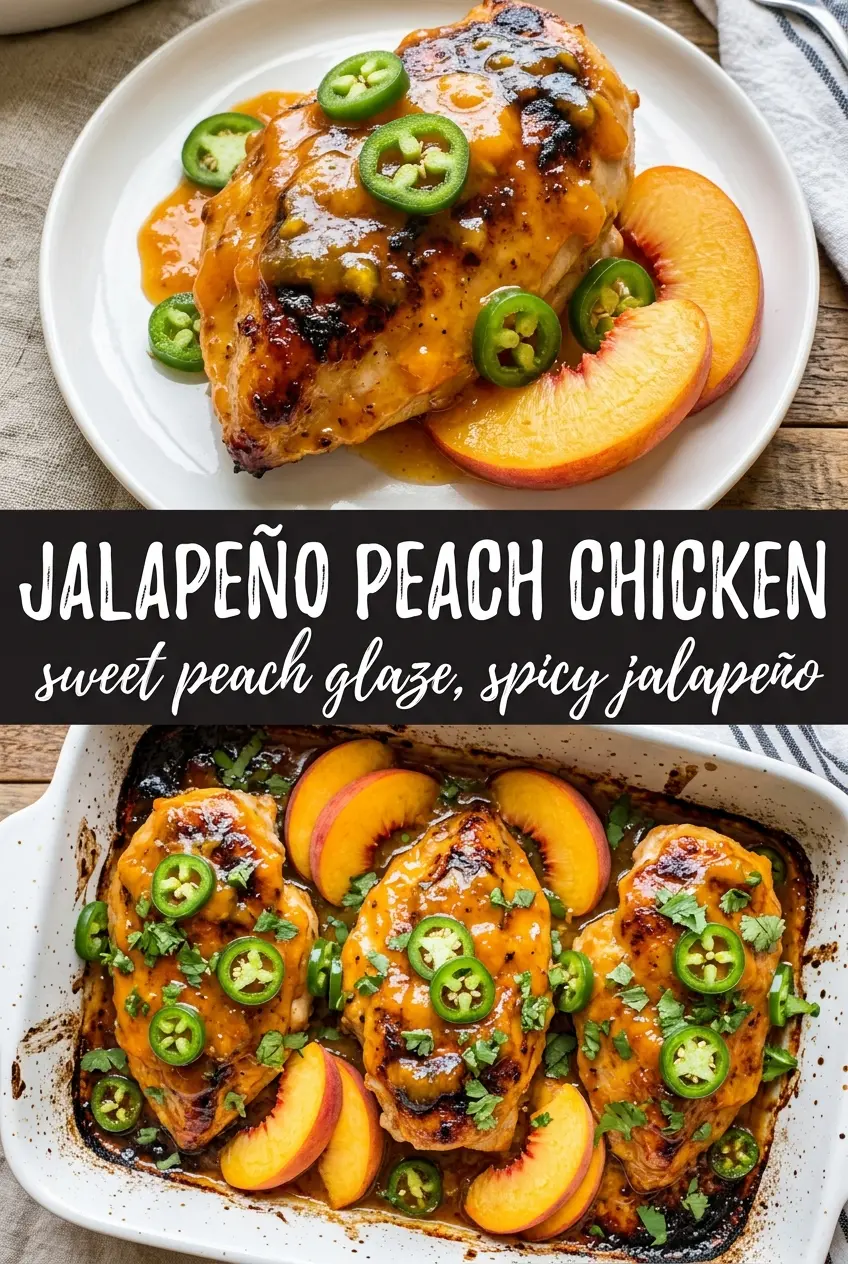
Jalapeño Peach Chicken
Ingredients
Equipment
Method
- Season the chicken breasts all over with salt, pepper, garlic powder, and smoked paprika.
- Heat olive oil in a large cast iron skillet over medium-high heat, then sear the chicken for 5-6 minutes per side until golden and cooked through to 165°F; remove to a plate.
- In the same skillet, cook jalapeños and garlic over medium heat for 2 minutes until fragrant and slightly softened.
- Add peaches, honey, apple cider vinegar, soy sauce, and chicken broth, stirring to combine and scrape up browned bits from the pan.
- Simmer the sauce over medium heat for 8-10 minutes until it thickens and turns glossy as the peaches soften.
- Return the chicken breasts to the skillet and spoon the jalapeño peach sauce over each breast so the surface is coated.
- Garnish with fresh thyme and red pepper flakes, then serve with the remaining glossy glaze.