Crisp lettuce cups piled high with deeply browned beef, garlic, chilies, and fresh Thai basil are the kind of dinner that disappears fast and still feels like you cooked with purpose. The beef gets a glossy, savory-sweet coating that clings to every craggy edge, and the cold lettuce does exactly what it should: keeps each bite bright, crunchy, and easy to eat. Add a fried egg on top and the whole thing turns into a messy, satisfying plate that lands somewhere between a weeknight dinner and a restaurant craving.
What makes these Thai basil beef rolls work is the order of operations. The beef needs high heat and enough time to actually brown, not just steam, because that caramelization is where the flavor comes from. The sauce is quick, but it only behaves if it hits hot meat and reduces for a minute or two before the basil goes in. Thai basil matters here too; its peppery, anise-like edge stands up to the oyster sauce and fish sauce in a way regular basil can’t quite match.
Below, I’ve included the small details that keep the beef glossy instead of greasy, plus a few swaps and storage notes for making this recipe fit the ingredients you already have.
The beef got those caramelized edges I was hoping for, and the basil stayed bright instead of turning muddy. I served it in romaine cups with a fried egg and my husband said it tasted like takeout in the best way.
Save these Thai Basil Beef Rolls for the nights when you want crispy lettuce cups, glossy beef, and a fried egg dinner in under 30 minutes.
The Browning Stage Is the Whole Recipe
Ground beef can go wrong in two directions here: pale and wet, or dry and overworked. High heat fixes the first problem, and leaving the meat alone for a minute or two fixes the second. You want the skillet hot enough that the beef sizzles the second it lands, then you break it up only after the underside has had time to color. That dark, sticky browning on the pan is what gives the sauce its depth.
The sauce also needs a little reduction. If you pour it in and pull the pan off too soon, it just tastes salty and thin. Give it a minute over the heat until it turns shiny and coats the beef instead of pooling around it. If you see a lot of liquid, the pan wasn’t hot enough or the beef needed a little more time before the sauce went in.
What Each Ingredient Is Actually Doing in These Rolls
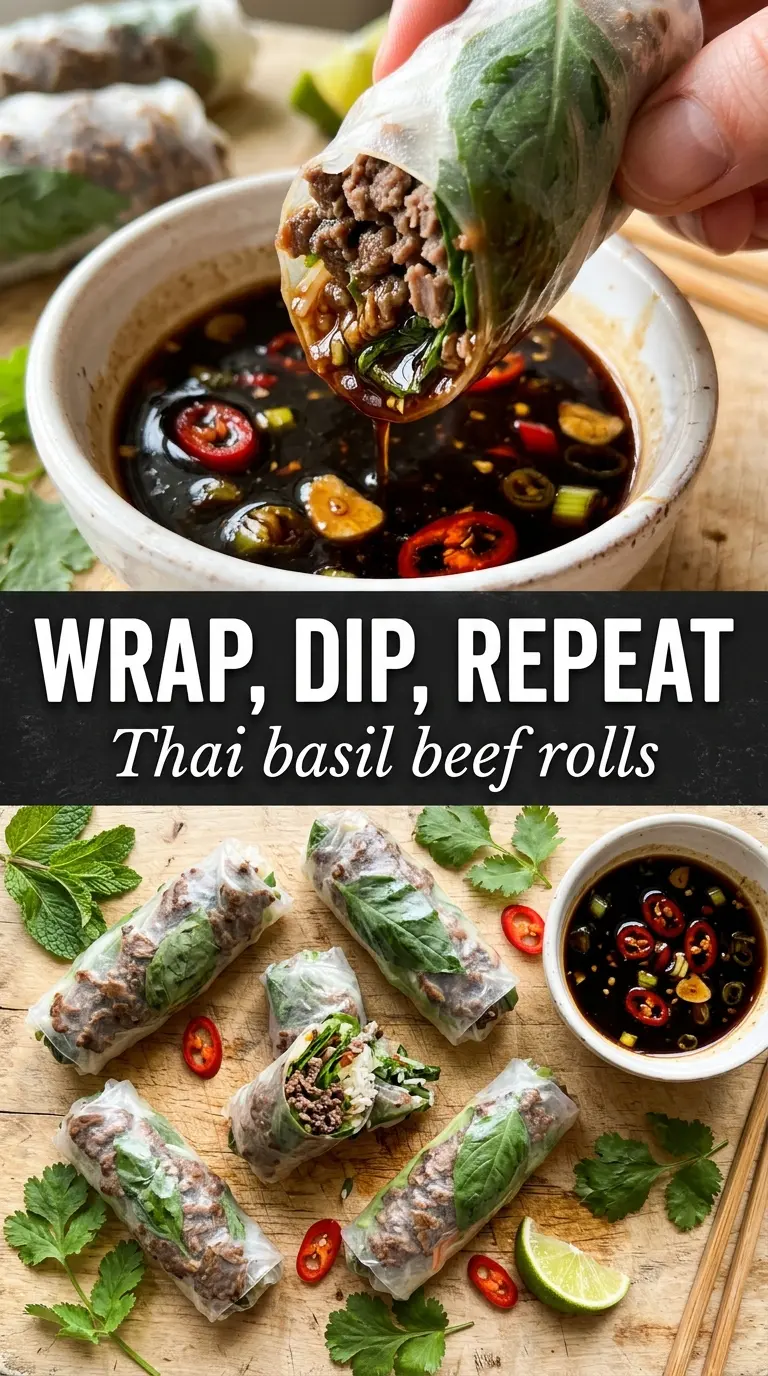
- Ground beef 80/20 — The fat carries the sauce and helps the meat brown fast. Leaner beef works, but it won’t give you the same rich edges unless you add a little extra oil.
- Thai basil — This is the ingredient that makes the dish taste specific instead of just savory. Regular basil will soften the flavor and read sweeter; use it only if you can’t find Thai basil, and add it at the very end so it stays fragrant.
- Fish sauce and oyster sauce — Together they build the salty, savory backbone. There isn’t a perfect substitute for fish sauce, but a mix of soy sauce plus a tiny splash of Worcestershire gets you partway there.
- Butter lettuce or romaine — Butter lettuce gives you the softest, most cup-like shape. Romaine is sturdier and better if you’re serving these buffet-style or packing leftovers separately.
- Fried eggs — Optional, but they add richness and turn this into a full meal. The runny yolk mixes into the beef and makes the lettuce cups taste even more luxurious.
From Hot Pan to Lettuce Cup
Mix the Sauce First
Whisk the oyster sauce, soy sauce, fish sauce, and brown sugar together before anything hits the pan. This keeps you from scrambling once the beef is cooked and the garlic is already browning. The sugar should dissolve almost completely; if it looks grainy, give it another quick whisk. Set it right by the stove so you can pour it in without pausing the cook.
Wake Up the Garlic and Chilies
Heat the oil in a wok or large skillet until it shimmers and just starts to smoke, then add the garlic and chilies. Stir them for only about 30 seconds, just until the garlic smells sharp and the edges look pale gold. If the garlic darkens too fast, the pan is too hot and it will turn bitter before the beef goes in. This part is fast on purpose.
Brown the Beef Hard
Add the ground beef and press it into the pan long enough to get contact before breaking it apart. The goal is deep browning, not just cooking it through, so let some pieces sit undisturbed until they pick up color. If the pan fills with liquid, keep cooking until it evaporates and the meat starts sizzling again. Drain off excess fat only if there’s a lot; leaving a little behind helps the sauce cling.
Reduce the Glaze
Pour the sauce over the beef and toss until every piece looks coated. Let it cook for 1 to 2 minutes, stirring, until the glaze turns shiny and starts to stick to the meat instead of looking watery. This is where the dish goes from seasoned beef to proper Thai basil beef. Pull the pan off the heat as soon as the sauce thickens a bit more than you think it should; it will keep tightening as it sits.
Fold in the Basil at the End
Add the Thai basil once the heat is off and toss just until the leaves wilt. If you cook it longer, the basil loses its bright, peppery edge and turns dark and sleepy. Spoon the beef into lettuce cups right away, then top with a fried egg, sliced chilies, and a squeeze of lime. Serve with jasmine rice if you want something to catch the extra sauce.
How to Adapt These Rolls Without Losing the Point
Make it gluten-free
Use a certified gluten-free soy sauce or tamari, and check the oyster sauce label because some brands include wheat. The texture and browning stay the same, so this is one of the easiest swaps to make without changing the dish’s character.
Make it dairy-free and lighter
The base recipe is already dairy-free if you skip the egg, and that version still tastes complete because the beef carries the richness. For a lighter plate, use extra lettuce and serve the rice on the side instead of stuffing it into the cups.
Swap the beef for ground chicken or turkey
Chicken or turkey works, but the meat is leaner, so you’ll want a little extra oil in the pan and a firmer eye on the browning. The flavor stays bold, though the finished filling will be a touch less rich and more delicate.
Storage and Reheating
- Refrigerator: Store the beef filling for up to 4 days. Keep the lettuce, herbs, and eggs separate so they stay fresh and crisp.
- Freezer: The beef filling freezes well for up to 2 months. Cool it completely first, then pack it flat in a freezer bag or airtight container.
- Reheating: Reheat the beef in a skillet over medium heat with a splash of water if it looks dry. Microwaving works in a pinch, but it can make the sauce separate and the meat turn unevenly hot.
Answers to the Questions Worth Asking
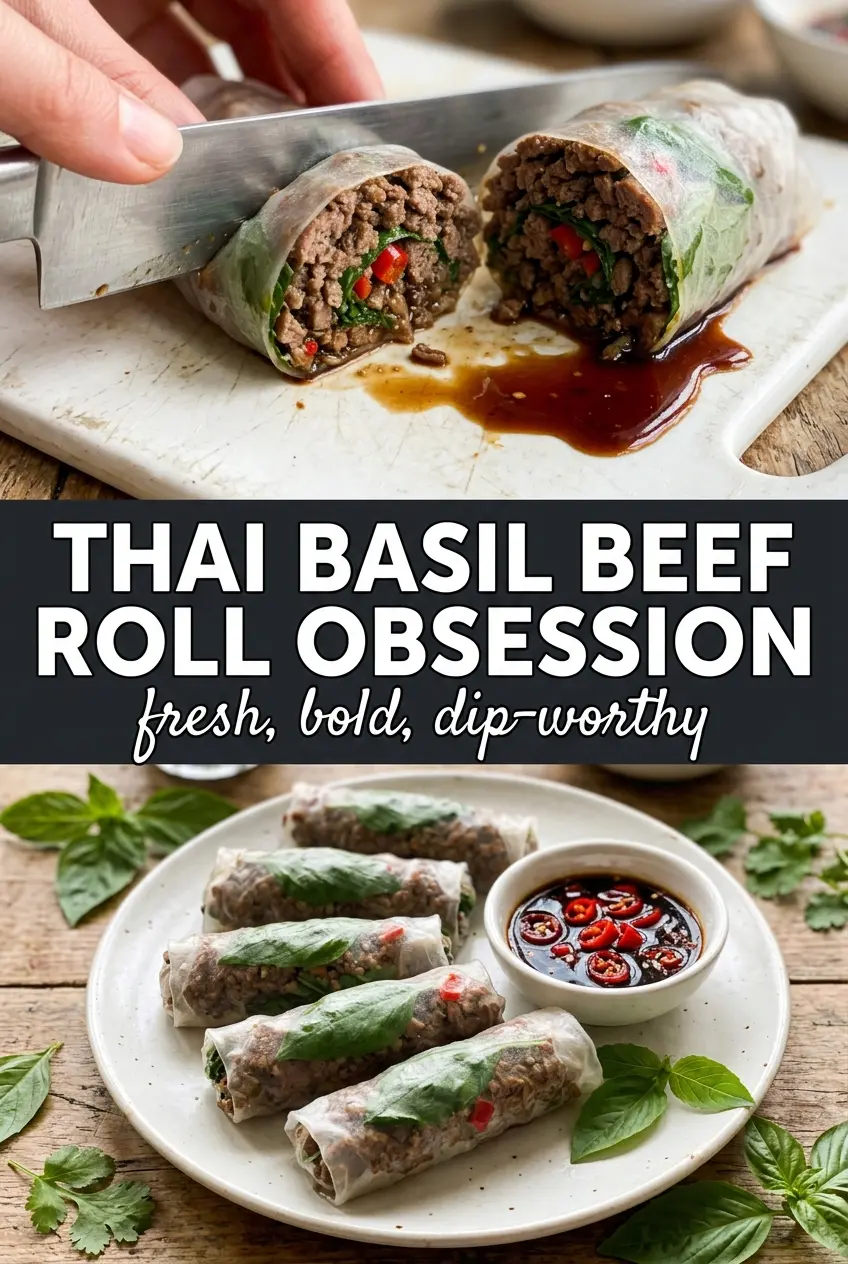
Thai Basil Beef Rolls
Ingredients
Equipment
Method
- Whisk together oyster sauce, soy sauce, fish sauce, and brown sugar; set aside so it’s ready for the hot pan.
- Heat vegetable oil in a wok or large skillet over high heat until smoking, showing a shimmering surface before adding ingredients.
- Add minced garlic and thinly sliced Thai chilies or jalapeño, then stir-fry for 30 seconds until fragrant and lightly sizzling.
- Add ground beef and cook, breaking it apart, for 5-6 minutes until deeply browned with caramelized edges.
- Drain any excess fat so the glaze clings instead of pooling.
- Pour the sauce over the beef and toss to coat, then cook for 1-2 minutes until the sauce caramelizes and looks glossy on the meat.
- Remove from heat and fold in fresh Thai basil until just wilted so the leaves stay bright.
- Serve the beef in butter lettuce or romaine leaves as crisp cups, then top with fried eggs if using.
- Finish with extra sliced red chili and lime wedges on the side alongside jasmine rice for serving.