Soft oatmeal spice cake and marshmallow cream filling hit the same nostalgic note as a packaged lunchbox treat, but this version tastes like someone in a home kitchen made it on purpose. The layers bake up tender and a little chewy from the finely blended oats, while the filling stays light, sweet, and billowy instead of heavy or greasy. It slices cleanly, stands tall, and gives you that classic oatmeal cream pie flavor in a celebration cake format.
The trick is in treating the oats like part flour, part texture. Blending them fine keeps the crumb delicate and helps the cake layers hold together without turning sandy. Brown sugar, cinnamon, and buttermilk bring the flavor closer to an oatmeal cookie than a plain spice cake, and the marshmallow fluff filling sets up with enough structure to spread between the layers without sliding out the sides.
Below, I’ll show you how to keep the cake layers moist, how to get the filling fluffy instead of loose, and what to change if you need a different pan size or want a dairy-free version.
The cake layers stayed incredibly soft, and the marshmallow filling whipped up thick enough to spread without sliding. It tasted just like the oatmeal cream pies I grew up with, only better as a layer cake.
Save this oatmeal cream pie cake for the days when you want a tall, nostalgic layer cake with a thick marshmallow filling and oatmeal cookie crumbles on top.
The part most people miss with oatmeal layer cakes
Oatmeal cakes can turn heavy fast if the oats stay too coarse. In this cake, the oats are blended fine so they behave more like part of the dry mix than like a breakfast bowl folded into batter. That gives you the cozy flavor without the dense, grainy bite that makes some oatmeal cakes feel stodgy after a day.
The other detail that matters is the balance between moisture and structure. Brown sugar and buttermilk keep the crumb soft, while eggs and a little baking powder give the layers enough lift to support the filling. If your cake sinks in the middle, it usually means the batter was overmixed or the oven was opened too early, so bake until the center springs back and the toothpick comes out clean.
What each ingredient is actually doing here
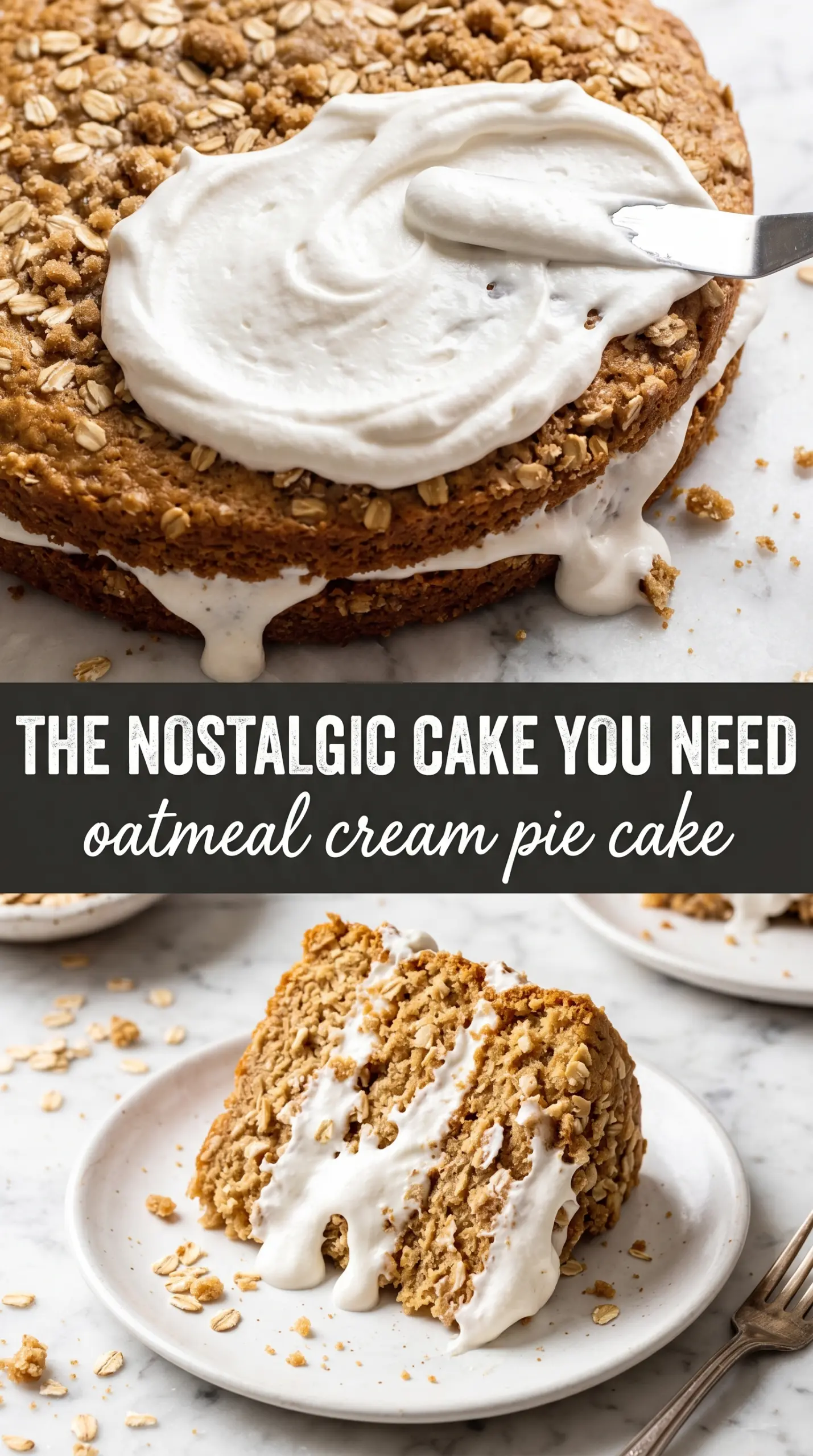
- Rolled oats, blended fine — This gives the cake its oatmeal cookie flavor without leaving the crumb rough. Don’t skip the blending step; whole oats will make the layers feel bumpy and less sliceable.
- Buttermilk — It softens the crumb and works with the baking soda for a gentle rise. Plain milk will work in a pinch if you add 1 teaspoon lemon juice or vinegar per cup, but the cake will taste a little flatter.
- Brown sugar — This is where the caramel-like oatmeal cookie note comes from. Light brown sugar works fine, but dark brown sugar gives a deeper molasses edge if you want the cake to lean more like a classic oatmeal cream pie.
- Marshmallow fluff — It keeps the filling airy and stable at the same time. Regular marshmallow creme is the right swap if that’s what you have; homemade meringue doesn’t behave the same way and won’t hold up as well between the layers.
- Heavy cream in the filling — Just a couple tablespoons loosens the frosting enough to spread cleanly. Add it slowly, because too much will turn the filling slack and make it harder to keep the cake neat.
Building the layers without a sliding filling
Mix the batter just until smooth
Whisk the dry ingredients together first, then add the wet ingredients and stir until the batter looks even and no dry pockets remain. Stop there. Overmixing develops too much gluten in the flour and makes the cake chewy instead of tender, and you can’t fix that after it’s baked. The batter should look thick but pourable, with the oats fully dispersed and no streaks of flour.
Bake until the centers spring back
Divide the batter evenly between the pans and bake at 350°F until a toothpick comes out clean and the centers bounce back lightly when touched. If the tops dome too much, that usually means your oven runs hot, so check a few minutes early next time. Don’t pull the layers too soon just because the tops look set; underbaked oatmeal cake can collapse as it cools.
Whip the filling to a spreadable texture
Beat the butter first until it looks pale and fluffy. That step gives the filling body before the sugar and marshmallow fluff go in. Once everything is added, beat until the frosting looks smooth and holds soft peaks, not stiff clumps. If it seems greasy or loose, the butter was too warm or the cream was added too quickly; chill it for a few minutes and beat again.
Stack and finish with a light hand
Spread a generous layer of filling over the first cake round, then set the second layer on top and press only until it sits level. Frosting the outside with the remaining cream works best when the cakes are completely cool, or the filling will melt and slip. Crumbled oatmeal cream pie cookies and a little powdered sugar on top give it the right look and add a soft crunch against the creamy layers.
How to adapt this cake for different kitchens and different cravings
Dairy-free version
Use a neutral dairy-free butter in both the cake and filling, and swap the buttermilk for unsweetened plant milk mixed with 1 tablespoon vinegar. The cake will stay soft, though the filling may be a little less rich and a little sweeter, so add the cream substitute slowly until it spreads well.
More like a true oatmeal cream pie
Add a pinch more cinnamon and a handful of finely crushed oatmeal cream pie cookies between the layers. That pushes the cake closer to the nostalgic packaged-cookie flavor, but keep the crumbs fine so the filling still spreads cleanly.
Cupcake version
Bake the batter in lined muffin tins for about 18 to 22 minutes and pipe a swirl of filling on top once they’re cool. You lose the dramatic layer cake look, but you gain a cleaner hand-held dessert with the same oatmeal-cookie-and-cream balance.
Storage and Reheating
- Refrigerator: Store covered for up to 4 days. The cake stays moist, and the filling firms up slightly, which helps neat slicing.
- Freezer: Freeze individual slices wrapped tightly in plastic and foil for up to 2 months. The texture holds up better than most cream-filled cakes if you wrap them well.
- Reheating: Let slices sit at room temperature for 30 to 45 minutes before serving. Don’t microwave the filling, or it will turn soft and slick instead of creamy.
Answers to the questions worth asking
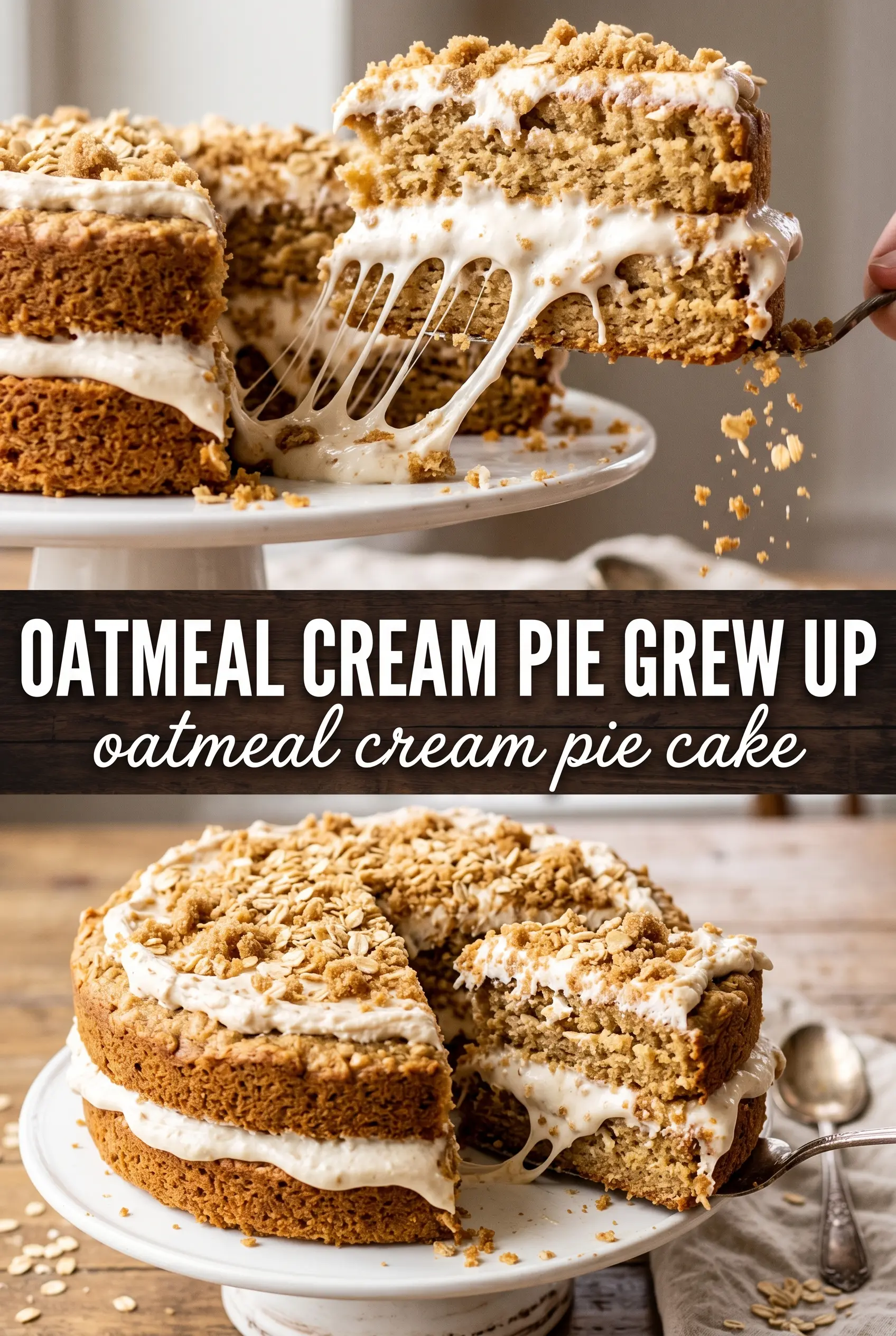
Oatmeal Cream Pie Cake
Ingredients
Equipment
Method
- Preheat oven to 350°F and grease two 9-inch round pans. Set aside so the pans are ready for batter.
- Whisk together all-purpose flour, blended rolled oats, packed brown sugar, cinnamon, baking soda, baking powder, and salt until evenly combined. Make sure there are no visible flour pockets.
- Whisk together eggs, buttermilk, vegetable oil, and vanilla extract in a separate bowl until smooth. The mixture should look uniform and glossy.
- Pour wet ingredients into dry ingredients and mix until smooth. Scrape the sides to remove dry streaks.
- Divide batter between the pans and bake 28-32 minutes, until a toothpick comes out clean. The tops should spring back lightly when touched.
- Cool the cakes completely in the pans, then remove and cool fully again before assembling. This prevents the cream from melting.
- Beat softened butter until fluffy. Keep mixing until the texture looks paler and airy.
- Add powdered sugar, marshmallow fluff, vanilla extract, and heavy cream, then beat until smooth and spreadable. Stop once the filling holds soft peaks.
- Place one cake layer on a stand and spread the cream filling generously over the top. Push toward the edges so some cream reaches the perimeter.
- Place the second layer on top and frost the outside with the remaining cream. Use a smooth layer so the sides look even.
- Crumble oatmeal cream pie cookies over the top for garnish. Sprinkle while the frosting is still fresh so crumbs stick.
- Dust with powdered sugar and serve. Slice to show the thick, pillowy filling between layers.