Coconut lime chicken lands on the table with crisp-skinned thighs and a sauce that turns silky instead of greasy. The coconut milk mellows the lime just enough to keep every bite bright, while ginger, garlic, and a little soy sauce push the whole pan into something deeper than a basic creamy chicken dinner.
The trick here is building the sauce in the same skillet after the chicken sears. Those browned bits left behind matter. They give the coconut milk something to pick up, and the sauce thickens into a glossy coating instead of tasting flat. Lime goes in at the end for a reason, too — add it too early and the brightness fades while the chicken finishes cooking.
Below, I’ve included the timing cues that matter most, the swaps that still keep the sauce balanced, and the one reheating note worth knowing if you want the leftovers to stay as good as the first night.
The sauce thickened up beautifully and the lime at the end kept it from tasting heavy. My chicken skin stayed crisp on top even after simmering, and we spooned every bit over rice.
Save this coconut lime chicken for nights when you want crispy thighs and a silky coconut sauce with fresh lime at the finish.
The Trick Most Coconut Chicken Misses: Brightness Goes in Last
A lot of coconut chicken recipes lean too hard on richness and never recover from it. Coconut milk brings body, but it also softens sharp edges fast, which is why the lime juice and zest belong at the end instead of simmering away with the sauce. If they go in too early, the finished dish tastes heavier than it should and the lime turns dull.
The other place people lose this recipe is the chicken skin. If you’re using skin-on thighs, the sear has to happen before the sauce goes in and the pan needs enough heat to actually render the fat. A pale sear means the skin will go soft once it simmers. You want deep gold color and enough texture left on the surface that it still feels a little crisp under the sauce.
What Each Ingredient Is Actually Doing in This Pan
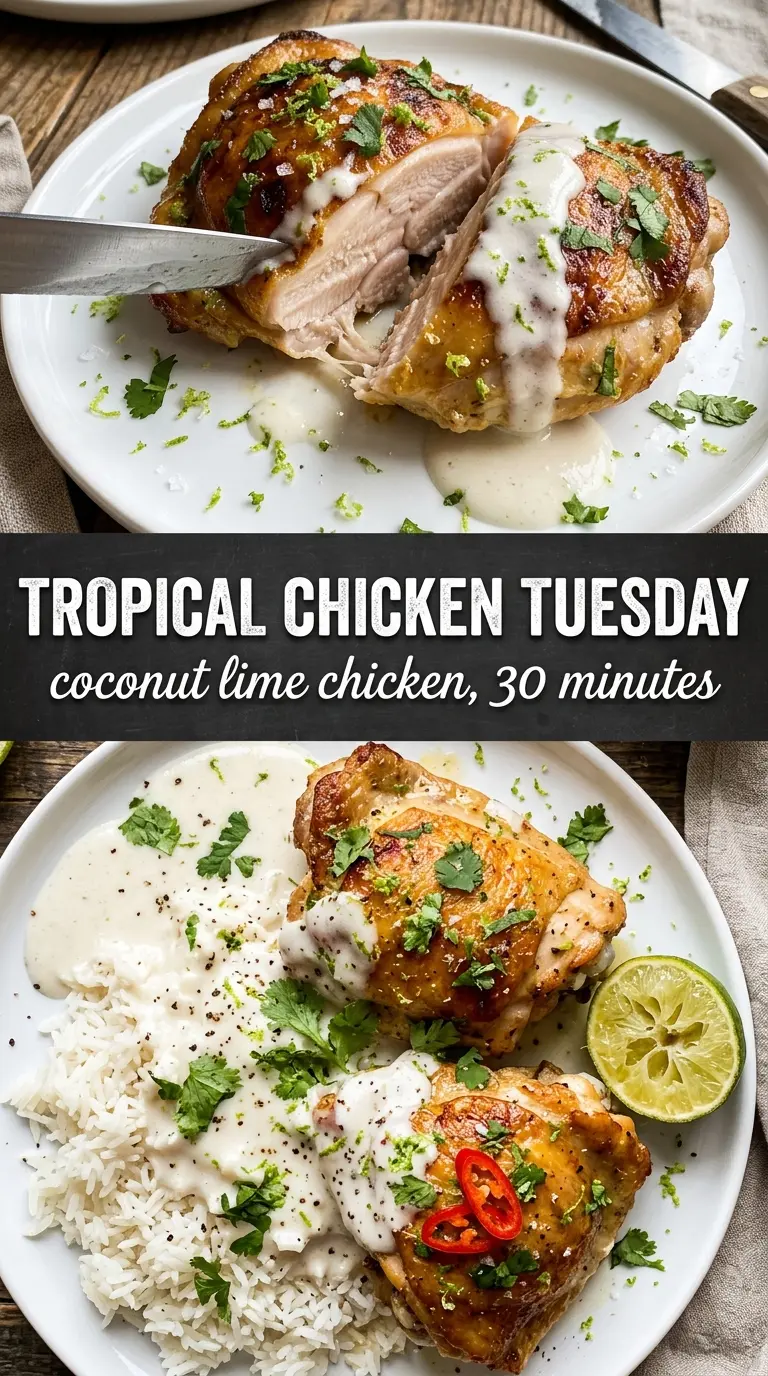
- Bone-in, skin-on chicken thighs — These stay juicier than breasts and give you the crispy skin that makes the dish feel complete. Boneless thighs work too, but they won’t hold the same texture after simmering.
- Full-fat coconut milk — This is the backbone of the sauce. Light coconut milk makes the pan thinner and less silky, so use full-fat if you want that glossy finish.
- Chicken broth — It loosens the coconut milk just enough so the sauce simmers instead of turning pasty. Stock works too, but broth keeps the flavor a little cleaner here.
- Ginger, garlic, and onion — This trio gives the sauce its savory base. Don’t rush the onion; a few minutes in the skillet softens the edge and keeps the finished sauce from tasting raw.
- Soy sauce — This adds salt plus the deep, rounded savoriness coconut milk needs. If you need a gluten-free option, tamari does the job without changing the texture of the sauce.
- Lime juice and zest — The juice brightens the sauce, and the zest carries the sharper lime aroma. Zest matters here because juice alone can taste thin once it hits the hot pan.
- Coconut oil — It supports the coconut flavor and handles the sear well. Neutral oil works in a pinch, but you lose a little of the dish’s signature taste.
How to Build the Sauce Without Losing the Skin
Season and Sear First
Season the chicken well before it hits the pan so the skin starts flavorful, not bland under the sauce. Place it skin-side down in hot coconut oil and let it sit until the skin is deeply golden and releases easily from the skillet. If it sticks, it needs another minute. Pull it out once the skin is crisped and some fat has rendered; that fat is what helps the onion soften and the sauce taste full.
Cook the Aromatics in the Fond
Add the onion to the same skillet and cook it in the rendered chicken fat until it turns soft and translucent. Then stir in the garlic and ginger just long enough for them to smell fragrant, about a minute. If the garlic starts browning fast, the heat is too high and the sauce will pick up a bitter edge, so lower the burner before anything scorches.
Simmer Until the Sauce Turns Silky
Pour in the coconut milk and broth, then scrape up every browned bit from the bottom of the pan. That’s where the savory depth lives. Return the chicken skin-side up, cover the skillet, and simmer gently until the thighs reach 165°F. Keep the heat at a low simmer, not a hard boil, or the coconut milk can look split and the skin will soften too much.
Finish With Lime and Cilantro
Stir in the lime juice and zest after the chicken is cooked. The sauce should smell bright the second the citrus hits it. Taste the sauce before serving and add a little salt only if it needs it, then scatter cilantro over the top and serve right away with rice or anything that can catch the sauce.
How to Adapt This for a Different Table
Make It Gluten-Free
Swap the soy sauce for tamari or coconut aminos. Tamari keeps the sauce closest to the original flavor, while coconut aminos taste a little sweeter and lighter. Either one works as long as you taste the sauce before serving, since the salt level shifts slightly.
Use Boneless Chicken Thighs
Boneless thighs shorten the cook time and make serving easier, especially if you’re spooning the chicken over rice. They won’t give you the same crisp skin, so you lose that textural contrast, but the meat stays tender and the sauce still clings beautifully.
Make It Dairy-Free Without Changing Anything
This recipe is already dairy-free as written, which is part of why it works so well for mixed-diet dinners. Keep the full-fat coconut milk, since that’s what gives the sauce its creamy body without any cream or butter.
Turn Up the Heat
Add a pinch of red pepper flakes with the garlic and ginger, or finish the dish with thin sliced fresh chili. Heat works best in the background here; too much and it crowds out the lime, so keep it measured if you still want the sauce to taste clean and bright.
Storage and Reheating
- Refrigerator: Store leftovers in an airtight container for up to 4 days. The sauce thickens as it chills, and the skin softens a bit, but the flavor stays strong.
- Freezer: Freeze for up to 2 months. The sauce may separate slightly after thawing, so whisk it gently while reheating to bring it back together.
- Reheating: Warm it covered over low heat on the stove with a splash of broth or water. Don’t blast it in the microwave for too long, or the chicken turns dry before the sauce loosens again.
Questions I Get Asked About This Recipe

Coconut Lime Chicken
Ingredients
Equipment
Method
- Season the chicken thighs with salt, pepper, garlic powder, and turmeric until evenly coated.
- Heat coconut oil in a large skillet over medium-high heat and sear the chicken skin-side down for 6-7 minutes until golden and crispy.
- Flip the chicken and sear for 3 more minutes, then remove from the skillet.
- Cook the onion in the same skillet for 3 minutes, scraping up browned bits as it softens.
- Add garlic and ginger and cook for 1 minute until fragrant.
- Pour in the coconut milk and chicken broth, stir in soy sauce, and bring the mixture to a simmer.
- Return the chicken to the skillet skin-side up, cover, and simmer over medium-low for 18-20 minutes until internal temperature reaches 165°F.
- Stir in lime juice and lime zest, then simmer uncovered for 1-2 minutes so the sauce turns glossy and lightly thickened.
- Garnish with fresh cilantro and serve the chicken over jasmine rice with lime wedges.