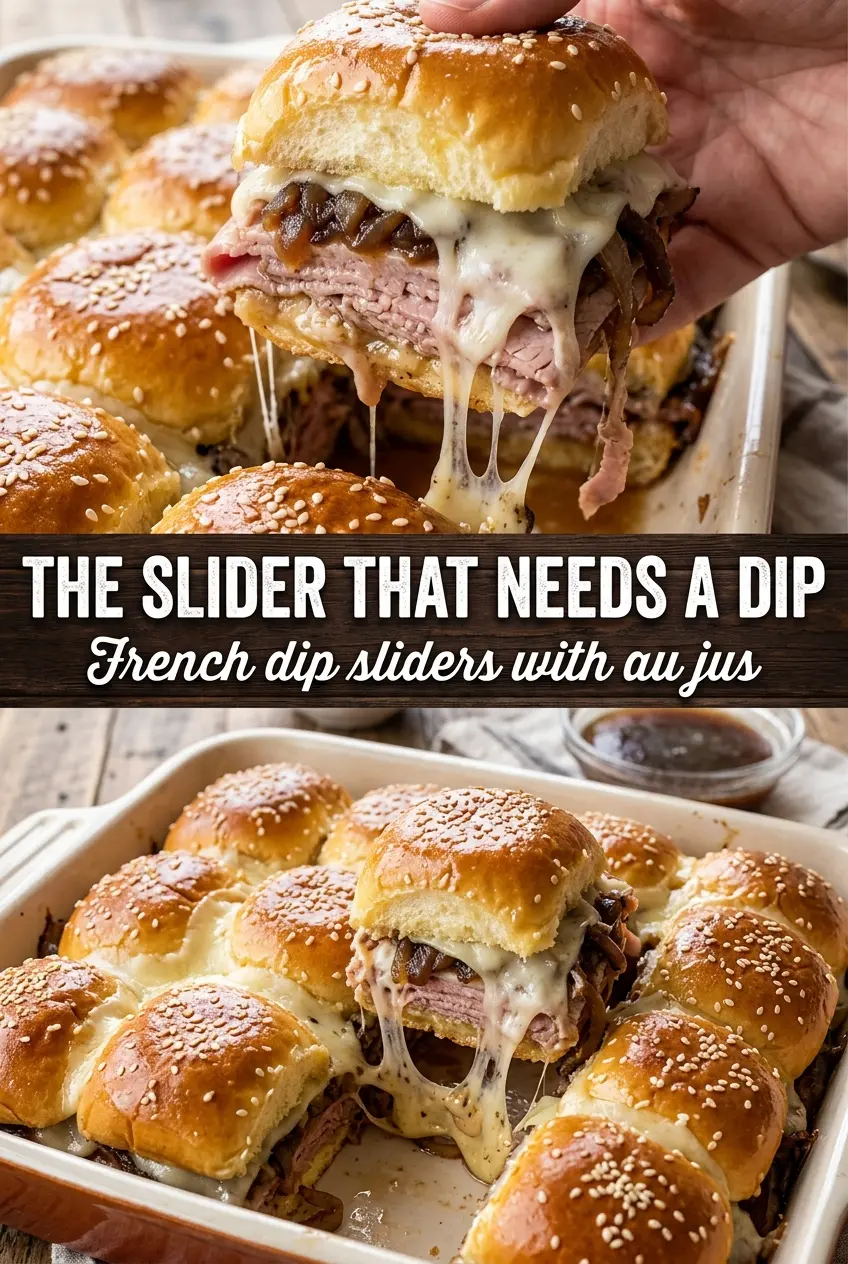
Golden, butter-baked French dip sliders hit the table with everything people want in a party sandwich: soft rolls, savory roast beef, melted provolone, and that hot little cup of au jus that turns each bite into a dip-and-swipe situation. The buns stay tender underneath but pick up a glossy, seasoned top in the oven, which is what keeps these from tasting flat or dry after baking.
The trick is building enough moisture and flavor in every layer without soaking the rolls. The roast beef goes on thin and even, the cheese covers the meat so it melts down into the filling instead of sliding off, and the butter topping gets brushed on after the sliders are assembled so it bakes into the bread instead of pooling in the pan. The au jus also matters here. A quick simmer with Worcestershire, soy sauce, and garlic gives you the deep, beefy flavor people expect from French dip without needing a long reduction.
Below, I’ve included the few details that make these sliders come out cleanly and taste like more than just roast beef on buns, plus the easiest ways to adapt them for a crowd or a make-ahead dinner.
The au jus tasted rich and savory, and the sliders held together nicely instead of getting soggy. I baked them right before kickoff and the cheese was perfectly melted without overdoing the rolls.
These French dip sliders bake up buttery, cheesy, and perfect for dunking in the homemade au jus.
The Part That Keeps These Sliders from Going Soggy
The main mistake with baked sliders is loading in too much liquid or letting the bottom layer sit in the oven long enough to steam. French dip sliders need heat, but they don’t need a wet pan. Keeping the au jus in a separate saucepan and baking the sandwiches covered only until the cheese melts gives you soft rolls without collapse.
The other thing that matters is the order of the layers. Roast beef goes directly on the rolls, then cheese on top of the meat. That lets the cheese act like a barrier as it melts, which helps hold everything together when you slice the sliders and keeps the meat from sliding out on the first dip. The butter topping belongs on the outside of the buns, where it can brown and season the top instead of sinking into the filling.
What Each Ingredient Is Doing in These French Dip Sliders

- Slider rolls — Hawaiian rolls give you a little sweetness and a soft, tight crumb that holds together well. Dinner rolls work too if you want a less sweet finish, but skip anything too airy or the juices will tear the sandwich apart.
- Deli roast beef — Thin slices warm through quickly and stay tender. Ask for it shaved or sliced thin at the deli counter; thick slices make the sliders bulky and harder to cut cleanly.
- Provolone — This is the cheese that melts into a smooth layer without getting greasy. Mozzarella can work in a pinch, but provolone brings the sharper, more classic deli flavor that makes the sandwich taste complete.
- Beef broth, Worcestershire, and soy sauce — Together they build the au jus fast. The soy sauce deepens the color and savory edge, while Worcestershire adds that familiar French dip backbone; water won’t give you the same depth.
- Butter, Dijon, and parsley — This topping is what gives the buns their golden, seasoned finish. Dijon cuts through the richness, and parsley keeps the top from tasting heavy.
Building the Sliders So the Cheese Melts Before the Rolls Dry Out
Warm the au jus first
Start the au jus before the sliders go into the oven so it has time to steep and stay hot for serving. A gentle simmer for about 10 minutes is enough to pull the flavors together; if it boils hard, the broth can taste harsh and lose some of its depth. Keep it on low once it’s done so it’s ready when the sliders come out.
Layer the meat and cheese evenly
Set the roll bottoms in the baking dish and spread the roast beef in an even layer so every slider gets a full portion. Lay the provolone over the meat rather than directly on the bread; that gives you a better melt and helps keep the filling tucked in. If the meat is piled too high in the center, the tops will slide around when you cut the sandwiches.
Brush on the butter topping last
Whisk the butter with Dijon, Worcestershire, garlic powder, and parsley, then brush it generously over the tops right before baking. That topping should look glossy and soak into the bread slightly without dripping down the sides. If it pools in the pan, the rolls will fry on the bottom instead of baking evenly, so use a pastry brush and work across the tops in a thin, even layer.
Bake covered, then finish uncovered
Cover the dish with foil for the first part of baking so the cheese melts and the filling heats through without the tops scorching. Remove the foil for the last few minutes to let the buns turn golden and a little crisp on top. The sliders are ready when the cheese is fully melted and the rolls feel warm and lightly toasted, not hard.
How to Adapt These for a Crowd, a Shortcut, or a Different Cheese
Make Them Ahead for Game Day
Assemble the sliders a few hours ahead, cover them, and refrigerate until baking time. Hold the butter topping until just before they go in the oven so the bread doesn’t absorb it and turn soft. The au jus can be made earlier too and reheated gently on the stove.
Swap the Cheese for a Stronger Melt
Swiss gives these a more classic deli-shop flavor, while mozzarella makes them milder and extra stretchy. If you use Swiss, the sandwich tastes a little sharper and more traditional; if you use mozzarella, the flavor leans softer and less assertive. Both work, but provolone gives the best middle ground.
Make Them Dairy-Free
Use a good dairy-free butter for the topping and a melty plant-based cheese that softens well in the oven. The flavor will still be savory and dip-worthy, but the filling won’t have quite the same rich pull as provolone. Keep an eye on the tops near the end of baking, since some dairy-free butters brown faster.
Storage and Reheating
- Refrigerator: Store leftovers in an airtight container for up to 3 days. The rolls soften a bit as they sit, but the flavor stays good.
- Freezer: The baked sliders freeze best if wrapped tightly and frozen without the au jus. Reheat from thawed for the best texture; the bread gets tougher if you try to go straight from frozen.
- Reheating: Warm the sliders covered in a 300°F oven until heated through, then uncover for the last few minutes to revive the tops. Reheat the au jus separately on the stove; microwaving it too long can make it taste flat.
Answers to the Questions Worth Asking
French Dip Sliders
Ingredients
Equipment
Method
- Preheat the oven to 350°F. Simmer beef broth, Worcestershire sauce, soy sauce, garlic powder, and onion powder in a saucepan over medium heat for 10 minutes, then keep warm.
- Place the slider roll bottoms in a greased 9x13 baking dish. Layer deli roast beef and provolone slices over the rolls and replace with the tops.
- Whisk together melted butter, Dijon mustard, Worcestershire sauce, garlic powder, and fresh parsley. Brush the mixture generously over the tops of all the sliders.
- Cover the dish with foil and bake at 350°F for 15 minutes. Remove the foil and bake another 5 minutes until the tops are golden and the cheese is fully melted.
- Slice into individual sliders. Serve immediately with the warm au jus in small cups for dipping.