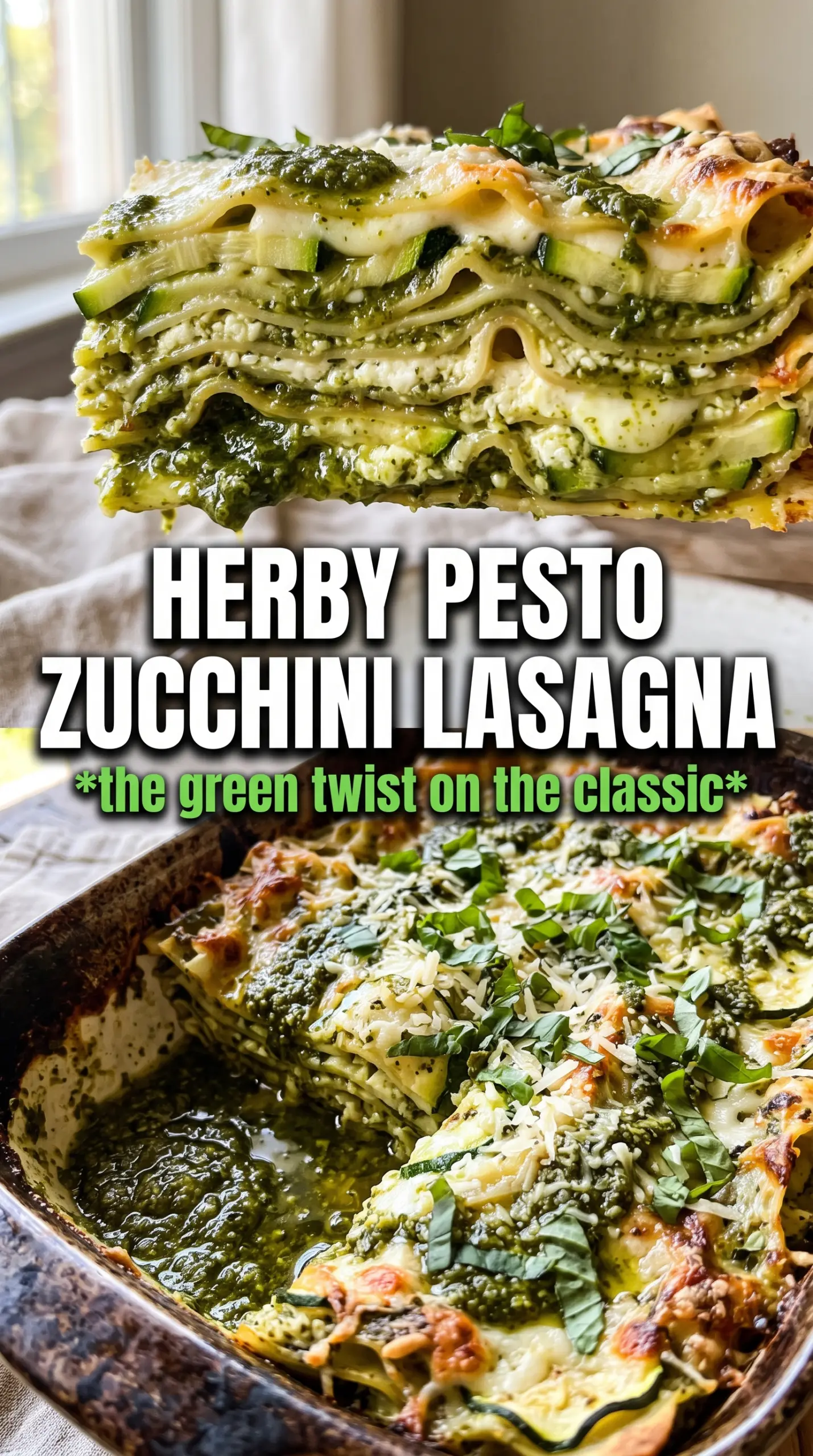
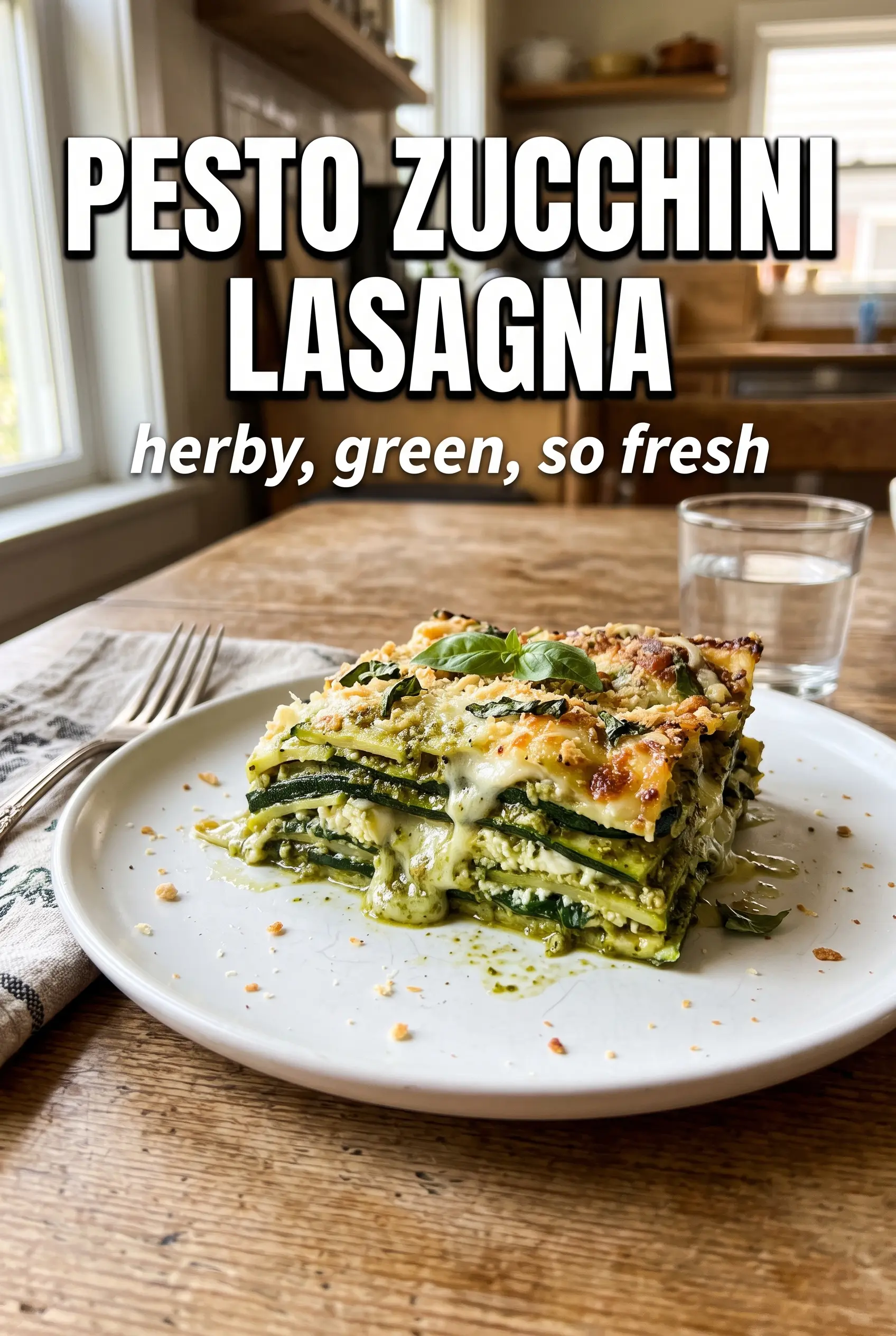
Pesto zucchini lasagna lands on the plate like the best kind of compromise: hearty enough to stand in for a baked pasta dinner, but light enough that the zucchini still tastes fresh under the cheese. The layers hold together with real structure, and when you cut into it, you get those bright green ribbons of pesto running through creamy ricotta and melted mozzarella instead of a watery casserole that slides apart.
The trick is treating the zucchini like the main ingredient it is. Salting and roasting the planks pulls out excess moisture before they ever hit the baking dish, which keeps the layers from turning soupy. The pesto also matters here more than it would in a pasta bake, because its garlic, basil, and parmesan are carrying most of the seasoning in every bite.
Below you’ll find the small details that make this lasagna slice cleanly, plus a few smart swaps if you’re working with what you have. The rest time at the end is worth it, and I’ll show you exactly why.
I was worried the zucchini would get soggy, but roasting it first made a huge difference. The lasagna sliced neatly after resting, and the pesto stayed bright instead of fading into the cheese.
Save this pesto zucchini lasagna for the nights when you want a green, creamy bake with clean slices and no noodles.
The Moisture Trap That Ruins Zucchini Lasagna
Zucchini can hold a shocking amount of water, and that is what usually turns vegetable lasagna into a loose pan of sauce instead of a sliceable bake. Salting the planks first draws out surface moisture, and the quick roast finishes the job by evaporating even more before the layers go into the dish. Skip that step and the ricotta will start to float, the mozzarella will get greasy, and the bottom layer will never set properly.
The other piece that matters is layer thickness. Thin zucchini planks bend into the dish without breaking apart, but they still need enough structure to carry the filling. If you slice them too thick, they stay firm in the middle and the lasagna eats like stacked vegetables instead of a unified casserole.
What Each Layer Is Doing in This Green Lasagna
- Zucchini planks — These replace noodles and bring the structure, but only if you sweat and roast them first. Fresh zucchini is best here; older oversized zucchini can be seedy and watery, which makes the finished bake softer.
- Pesto — This is the flavor engine of the dish, so use a pesto you actually like eating by the spoonful. Store-bought works in a pinch, but a basil-heavy homemade version keeps the lasagna bright and keeps the garlic from tasting flat.
- Ricotta — Ricotta gives the filling body and creaminess. If it seems loose in the container, drain it briefly in a sieve so it doesn’t thin out the layers.
- Parmesan and mozzarella — Parmesan sharpens the pesto and ricotta, while mozzarella gives you the melt and the browned top. Pre-shredded mozzarella will work, but a block you shred yourself melts cleaner and doesn’t bring the anti-caking powder that can make the surface feel slightly dry.
- Sun-dried tomatoes — Optional, but they add a sweet-tart chew that plays nicely with the basil. Use them sparingly or they’ll compete with the pesto instead of supporting it.
Building the Layers So They Bake Up Cleanly
Dry the zucchini before anything else
Salt the zucchini planks and let them sit until you see beads of moisture on the surface, then pat them dry before roasting. That first rest is where the water comes out, and the oven finish is what prevents it from sneaking back into the lasagna. If the planks still look shiny and wet when they go into the dish, the finished bake will slacken as it cools.
Blend the pesto until it turns silky
Pulse the basil, pine nuts, garlic, and parmesan first, then stream in the olive oil until the sauce loosens and turns smooth. You want a thick pesto that spreads, not a runny sauce that disappears between the layers. If it tastes sharp in the blender, it usually just needs a pinch more salt and a moment to sit.
Stack with restraint, then finish with cheese
Start with a thin layer of pesto on the bottom so the first zucchini layer doesn’t stick. Alternate zucchini, ricotta, pesto, and any sun-dried tomatoes, then end with mozzarella so the top browns evenly. If you overfill each layer, the center slides when you cut it, so keep the filling generous but controlled. Covering the pan for the first part of baking lets the middle heat through before the cheese dries out.
Let it rest before slicing
The 15-minute rest is not optional if you want clean squares. During that time, the melted cheese settles and the ricotta firms just enough to hold the layers together. Cut too early and the filling runs; cut after it rests and the knife comes out with defined layers and that bright green pesto line through the middle.
Three Ways to Adjust This Lasagna Without Losing the Point
Dairy-Free Version with Cashew Ricotta
Swap the ricotta for a thick cashew-based ricotta and use a dairy-free mozzarella that melts well. You keep the creamy layers and the stretch on top, but the bake will be a little less rich and a little more nutty, which works nicely with the basil pesto.
Gluten-Free as Written
This dish is naturally gluten-free as long as your pesto and cheese are certified gluten-free. The only thing to watch is store-bought pesto, since some brands use additives that vary by label.
Add Protein Without Turning It Heavy
Browned Italian sausage or shredded rotisserie chicken can be tucked into the layers if you want a more filling main dish. Keep the amount modest so the zucchini and pesto stay in control; too much protein turns the bake into a dense casserole instead of a layered lasagna.
Storage and Reheating
- Refrigerator: Store leftovers covered for up to 4 days. The zucchini softens a bit more as it sits, but the flavor stays strong.
- Freezer: It freezes, but the texture of the zucchini changes and gets softer after thawing. If you do freeze it, wrap individual portions tightly and thaw in the fridge before reheating.
- Reheating: Warm slices in a 350°F oven, covered loosely with foil, until heated through. The microwave works in a pinch, but it can make the cheese rubbery and push extra moisture into the layers.
Answers to the Questions Worth Asking
Pesto Zucchini Lasagna
Ingredients
Equipment
Method
- Salt the zucchini planks and rest 20 minutes, letting them sweat out moisture.
- Pat the salted zucchini dry and roast at 425°F for 10 minutes until lightly tender.
- Blend basil, pine nuts, garlic, and parmesan until the mixture starts to come together.
- Stream in olive oil while blending until smooth, then season with salt to taste.
- Stir ricotta with the egg, parmesan, chopped basil, and salt and pepper until evenly combined.
- Preheat the oven to 375°F and spread 3 tablespoons pesto on the bottom of a 9x13 baking dish.
- Layer the roasted zucchini planks over the pesto, then spread the ricotta layer evenly.
- Dollop and spread pesto generously over the ricotta, then scatter sun-dried tomatoes if using.
- Top with shredded mozzarella, then repeat layering zucchini, ricotta, pesto, and sun-dried tomatoes, ending with mozzarella.
- Cover with foil and bake 30 minutes.
- Uncover and bake 15 minutes more at 375°F until the mozzarella is golden.
- Rest the lasagna 15 minutes before slicing to help the layers set.
- Serve with extra pesto drizzled over each slice and garnish with extra basil.