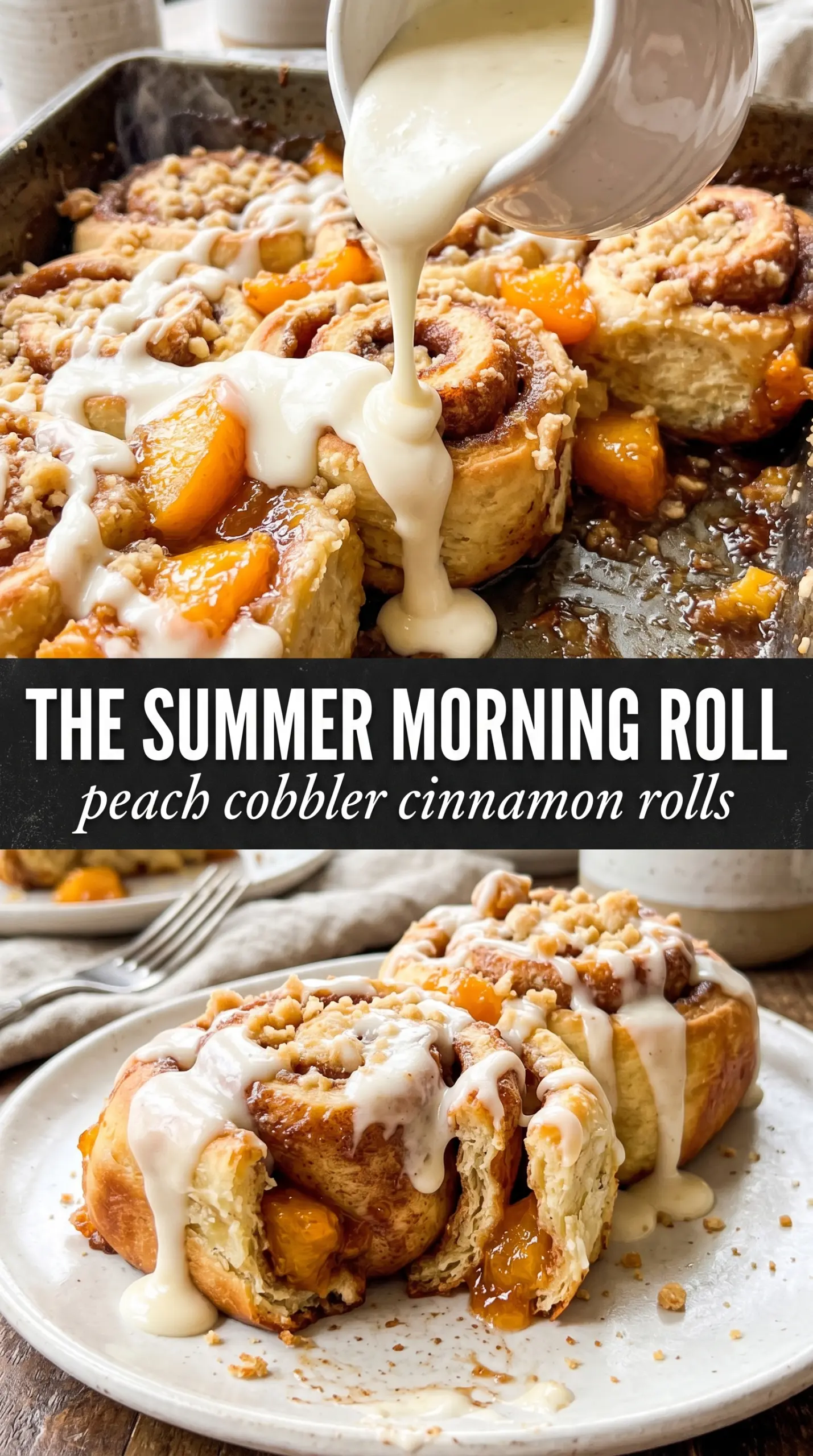
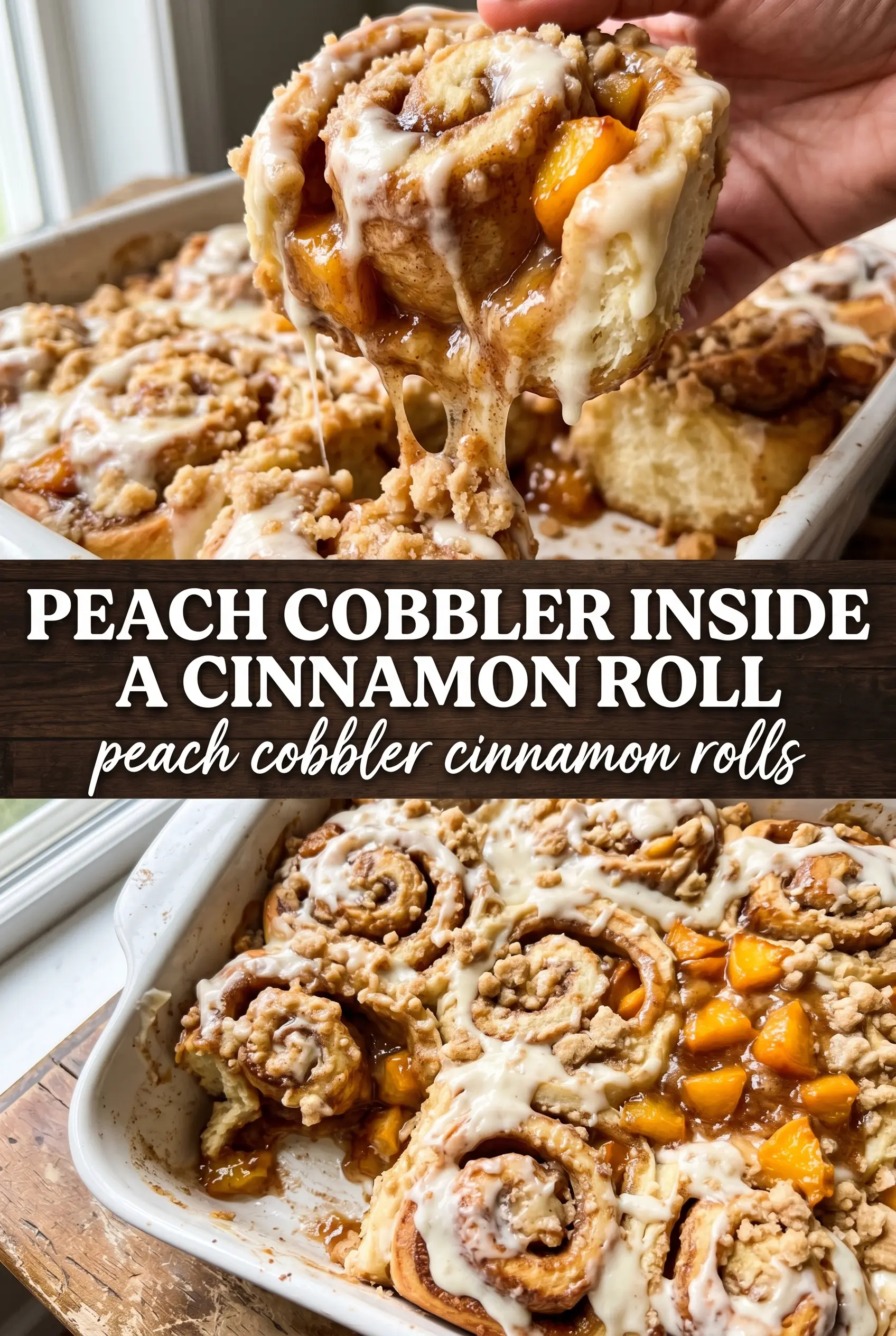
Peach Cobbler Cinnamon Rolls bake up soft, tall, and sticky at the edges, with a jammy peach filling that sinks into every swirl instead of leaking out onto the pan. The best bites give you buttery dough, brown sugar cinnamon, and little pockets of fruit that taste like cobbler tucked inside a proper breakfast roll.
What makes this version work is the balance: the peaches are diced small so they soften fast and don’t tear through the spiral, and the filling is built on softened butter rather than melted butter so it stays put while the rolls rise and bake. The glaze leans thick and tangy, which keeps the sweetness in check and settles into the warm rolls instead of sliding right off.
Below, I’ll walk you through the point where most fruit-filled rolls go wrong, what to do if your peaches are extra juicy, and a few smart ways to adapt the batch without losing that cobbler-like center.
The filling stayed put, the rolls baked up fluffy, and the glaze melted into every swirl without making them soggy. I followed the rise times exactly and the center rolls came out just as pillowy as the ones on the edge.
Save these Peach Cobbler Cinnamon Rolls for the mornings when you want soft spirals, juicy peach filling, and a thick cream cheese glaze.
The Part That Keeps the Peach Filling Inside the Spiral
Fruit-filled rolls can turn sloppy fast if the filling is too wet or spread too far to the edges. Here, the peach pieces stay small and the butter-cinnamon layer acts like glue, holding everything in place as the dough rises and the rolls expand in the oven. That means you get distinct swirls instead of a pan full of fruit syrup.
The other thing that matters is when you cut them. A tight roll holds the filling better than a loose one, and clean cuts keep the layers intact. If the dough starts squishing under the knife, chill the log for 10 minutes first so the spiral firms up and the peaches don’t smear out.
What Each Ingredient Is Actually Doing in These Rolls
- Warm milk — This wakes up the yeast and gives the dough a softer crumb than water would. Keep it warm, not hot; anything that feels like bath water is fine, but steamingly hot milk can knock the yeast back.
- Active dry yeast — This is what gives the rolls their lift and those pillowy layers. If your yeast doesn’t foam after a few minutes in the milk, start over before you waste the flour.
- Butter in the dough and filling — Melted butter enriches the dough, while softened butter in the filling keeps the sugar and cinnamon anchored to the surface. Don’t swap the filling butter for melted butter unless you want the filling to run.
- Brown sugar — This melts into the peaches and creates the sticky, cobbler-like layer inside each swirl. Light or dark brown sugar both work; dark brown gives you a deeper molasses note.
- Ripe peaches — Fresh peaches give the best texture because they soften into little jammy pockets without turning mushy. If yours are extra juicy, blot the diced fruit lightly with a paper towel before scattering it over the dough.
- Cream cheese glaze — The cream cheese adds tang and helps the glaze stay thick enough to cling to warm rolls. Heavy cream loosens it just enough to drizzle, so add it gradually if you want a thicker finish.
From Dough to Pan: The Moves That Matter Most
Waking Up the Yeast
Stir the yeast into warm milk with a pinch of sugar and give it a few minutes to foam. You want a creamy, bubbly surface, not a quiet bowl with a few floating grains. If the mixture stays flat, the yeast is dead or the milk was too hot, and the dough won’t rise the way it should. Once it’s active, mix in the sugar, butter, eggs, vanilla, flour, and salt, then knead until the dough feels smooth and elastic rather than sticky and rough.
Rolling, Filling, and Cutting Cleanly
Roll the dough into a rectangle that stays even from corner to corner, then spread the softened butter all the way out with a thin layer of brown sugar and cinnamon over top. Scatter the peaches evenly, but don’t pile them in the middle or the log will burst when you roll it. Roll from the long side for tighter spirals, and use a sharp knife or unflavored dental floss to cut the rolls without squashing the layers.
Proofing Until Puffy
After the rolls go into the greased pan, give them the full rise until they look noticeably puffier and the sides are touching. They don’t need to double in the pan, but they should look relaxed and airy. If they’re underproofed, they’ll bake up dense and leave too much space between the spirals. A warm spot helps, but don’t park them somewhere hot enough to melt the filling before they go in the oven.
Baking and Glazing at the Right Time
Bake until the tops are golden and the centers are set but still tender when pressed lightly. If the rolls brown too fast, tent loosely with foil for the last few minutes so the middles can finish without overbaking the edges. Let them cool for about 10 minutes before glazing; if they’re scorching hot, the glaze will disappear into the pan instead of sitting thickly on top.
How to Adjust These Rolls Without Losing the Peach Cobbler Feel
Use canned peaches when fresh aren’t in season
Drain them well and pat them dry before dicing. Canned peaches are softer than fresh, so they’ll give you a more jam-like center and a little less texture, but the flavor still lands in the same cobbler lane.
Make them dairy-free
Use plant-based butter, your favorite unsweetened non-dairy milk, and a dairy-free cream cheese for the glaze. The rolls will still bake up soft, though the glaze may be a touch looser depending on the brand you use.
Add a nutty cobbler topping
A handful of finely chopped pecans sprinkled over the peaches adds crunch and a deeper bakery-style flavor. Keep the pieces small so they don’t tear the dough as you roll it up.
Make them ahead for a slower morning
Shape the rolls, cover the pan tightly, and refrigerate overnight after the second rise starts. In the morning, let them sit at room temperature until puffy before baking, because cold dough straight from the fridge will bake unevenly in the center.
Storage and Reheating
- Refrigerator: Store covered for up to 4 days. The rolls will firm up a bit in the fridge, but the glaze keeps the centers soft.
- Freezer: Freeze baked rolls without glaze for up to 2 months. Wrap them tightly and thaw overnight before reheating so the filling doesn’t get watery.
- Reheating: Warm individual rolls in the microwave for 20 to 30 seconds or cover the pan with foil and heat in a 300°F oven until just warmed through. If you overheat them, the peaches can turn mushy and the glaze will melt away.
Answers to the Questions Worth Asking
Peach Cobbler Cinnamon Rolls
Ingredients
Equipment
Method
- In a bowl, mix warm milk with active dry yeast and a pinch of sugar, then rest 5 minutes until foamy with visible bubbles.
- Stir in granulated sugar, melted butter, eggs, and vanilla until smooth and glossy.
- Add all-purpose flour and salt, then mix until a shaggy dough forms and no dry flour remains.
- Knead 6-8 minutes until smooth and elastic, with the dough springing back when lightly pressed.
- Place the dough in a lightly greased bowl, cover, and let rise 1 hour until doubled in size and puffy.
- Roll the dough into a 12x18-inch rectangle on a lightly floured surface.
- Spread softened butter over the dough in an even layer, leaving the edges mostly coated.
- Sprinkle brown sugar and cinnamon over the butter, covering the surface completely.
- Scatter diced peaches evenly across the dough so each bite will include fruit pieces.
- Roll tightly from the long side into a log, then pinch the seam to seal.
- Cut into 12 rolls and place in a greased 9x13 pan, cut sides up.
- Cover and let rise 30 minutes until puffy and noticeably increased in height.
- Bake at 375°F for 25-30 minutes until the rolls are deep golden and the edges look set and blistered.
- Cool for 10 minutes so the glaze melts but doesn’t run off completely.
- Beat cream cheese, powdered sugar, heavy cream, and vanilla until smooth, then drizzle over warm rolls so glaze pools between swirls.
- Serve warm while the peach filling is jammy and the glaze is thick and pourable.