Red, white, and blueberry trifle looks like a party before the first spoon hits the bowl. The layers stay distinct, the whipped cream stays light, and the cake catches just enough fruit juice to turn soft at the edges without collapsing into a soggy mess. What you get is a dessert that slices through with a spoon in big, dramatic scoops and tastes as good as it looks.
The trick is building it in a way that protects the texture. A sturdy cake, like pound cake, holds the weight of the cream and fruit better than a very delicate sponge, and folding part of the whipped cream into the cream cheese makes the middle layer fluffy instead of heavy. Chilling matters here too. The resting time gives the layers time to settle together so the trifle tastes cohesive instead of separated.
Below, I’m sharing the layering order that keeps the bowl looking clean from the outside, plus a few swaps that make this work if you need to change the cake, adjust the fruit, or make it ahead for a crowd.
The whipped cream stayed light and the cream cheese layer set up perfectly. I made it the night before, and the cake softened just enough without turning mushy.
Like this red, white, and blueberry trifle? Save it for the next time you need a no-bake dessert with clean layers and a patriotic finish.
The Reason Trifles Turn Soggy Before They Set
The biggest mistake with a trifle is using soft layers in the wrong order. If the fruit sits directly against a loose cake layer for too long, the juices run downward and the whole dessert can turn muddy instead of striped. This version stays cleaner because the cream cheese mixture acts like a buffer between the cake and the juiciest fruit, so the layers keep some definition even after chilling.
Another thing that matters here is the cake choice. Pound cake gives you enough structure to hold the weight of the cream and berries, while angel food cake makes a lighter trifle with a more delicate bite. Both work, but neither should be too dry; stale cake can drink up the filling before the dessert has a chance to chill properly.
- Pound cake or angel food cake — Pound cake gives the most structure and a richer bite. Angel food cake makes the dessert feel lighter, but it softens faster, so it’s best when you’re serving the trifle the same day.
- Cream cheese — This is what gives the middle layer body. Softened cream cheese blends smoothly only when it’s taken out ahead of time; cold cream cheese leaves little lumps that don’t disappear later.
- Fresh strawberries and blueberries — Fresh fruit matters here because frozen berries release too much liquid as they thaw. If strawberries are especially juicy, pat them dry after slicing so they don’t leak into the cake.
- Heavy whipping cream — This needs enough fat to whip into stable peaks. Light cream won’t hold the same shape, and the trifle will slump once it chills.
What Each Ingredient Is Actually Doing in This Recipe

- Primary ingredient (the star) — Quality matters most. Choose the best you can find.
- Cooking medium (oil, butter, or broth) — This carries flavors and prevents dryness.
- Seasonings (salt, pepper, spices, herbs) — Layer flavors so nothing overpowers. Build depth gradually.
- Aromatics (garlic, onion, herbs) — Cook with fat to bloom flavors. Become the foundation.
- Supporting ingredients — Complement the main ingredient without overpowering it.
- Sauce or liquid (if applicable) — Brings flavors together. Balance richness with acid.
- Acid (lemon, vinegar, wine, or other) — Brightens and prevents flat-tasting results.
- Final finish (garnish, glaze, or sauce) — Prevents one-dimensional taste and adds visual appeal.
Building the Layers So the Bowl Stays Beautiful
Whipping the Cream to Stiff Peaks
Start with cold cream and a cold bowl if you can. Beat the cream with the powdered sugar and vanilla until the peaks hold their shape and stand straight when you lift the beaters. If you stop too early, the layers will slide; if you go too far, the cream starts to look grainy and loses its smooth, fluffy texture. Set aside half of it for folding into the cream cheese and keep the rest plain for the top layers.
Making the Cream Cheese Layer Smooth
Beat the softened cream cheese with powdered sugar until it’s completely smooth before adding the whipped cream. Any lumps will stay visible in the finished trifle, so this is the point to work them out. Fold in half of the whipped cream gently so the mixture stays airy. Stirring hard knocks out the volume and leaves you with a dense middle layer instead of a light one.
Assembling the Trifle in Visible Layers
Press the first layer of cake cubes into the bottom of the bowl, then spoon the cream cheese mixture over it in an even layer. Add strawberries next, then another cake layer, then plain whipped cream, then blueberries, repeating until the bowl is full. The goal is clean contrast at the sides of the bowl, so spread each layer right to the glass edge before adding the next one. Finish with whipped cream on top and tuck the whole berries into the surface so the top looks deliberate, not crowded.
Chilling Until the Layers Set
Cover the bowl and chill for at least 2 hours before serving. That resting time lets the cake soften slightly and the cream settle, which makes the trifle easier to scoop cleanly. If you serve it too soon, the layers taste separate and the cake can feel dry in the center. A longer chill is fine, and the texture often gets better by the next day as long as the berries are fresh.
How to Change the Trifle Without Losing the Structure
Dairy-Free Cream Layer
Use a dairy-free whipping topping and a plant-based cream cheese with a firm texture. The result will be a little less rich, but it still holds the same layered look and scoops well if you chill it long enough to set.
Gluten-Free Version
Swap in a gluten-free pound cake or an almond-flour cake that cuts into sturdy cubes. Avoid cakes that crumble when sliced, since loose crumbs cloud the layers and turn the bottom of the bowl gummy.
Using Mixed Berries Instead of Just Strawberry and Blueberry
Blackberries or raspberries can step in for part of the fruit, but keep the total amount about the same. Raspberries bring more juice and a softer texture, so layer them in the middle rather than against the glass if you want the sides to stay neat.
Make-Ahead for a Party
Assemble the trifle up to 24 hours ahead for the best balance of flavor and structure. If you’re making it earlier in the day, hold back the final fruit garnish and add it just before serving so the top berries stay bright and fresh.
Storage and Reheating
- Refrigerator: Cover and refrigerate for up to 2 days. After that, the cake softens too much and the berries start to weep into the cream.
- Freezer: I don’t recommend freezing this trifle. The whipped cream and fruit both change texture when thawed, and the bowl turns watery.
- Reheating: No reheating needed. Serve it straight from the fridge, and use a large spoon to lift from the bottom so you get all the layers in each serving.
Questions I Get Asked About This Recipe
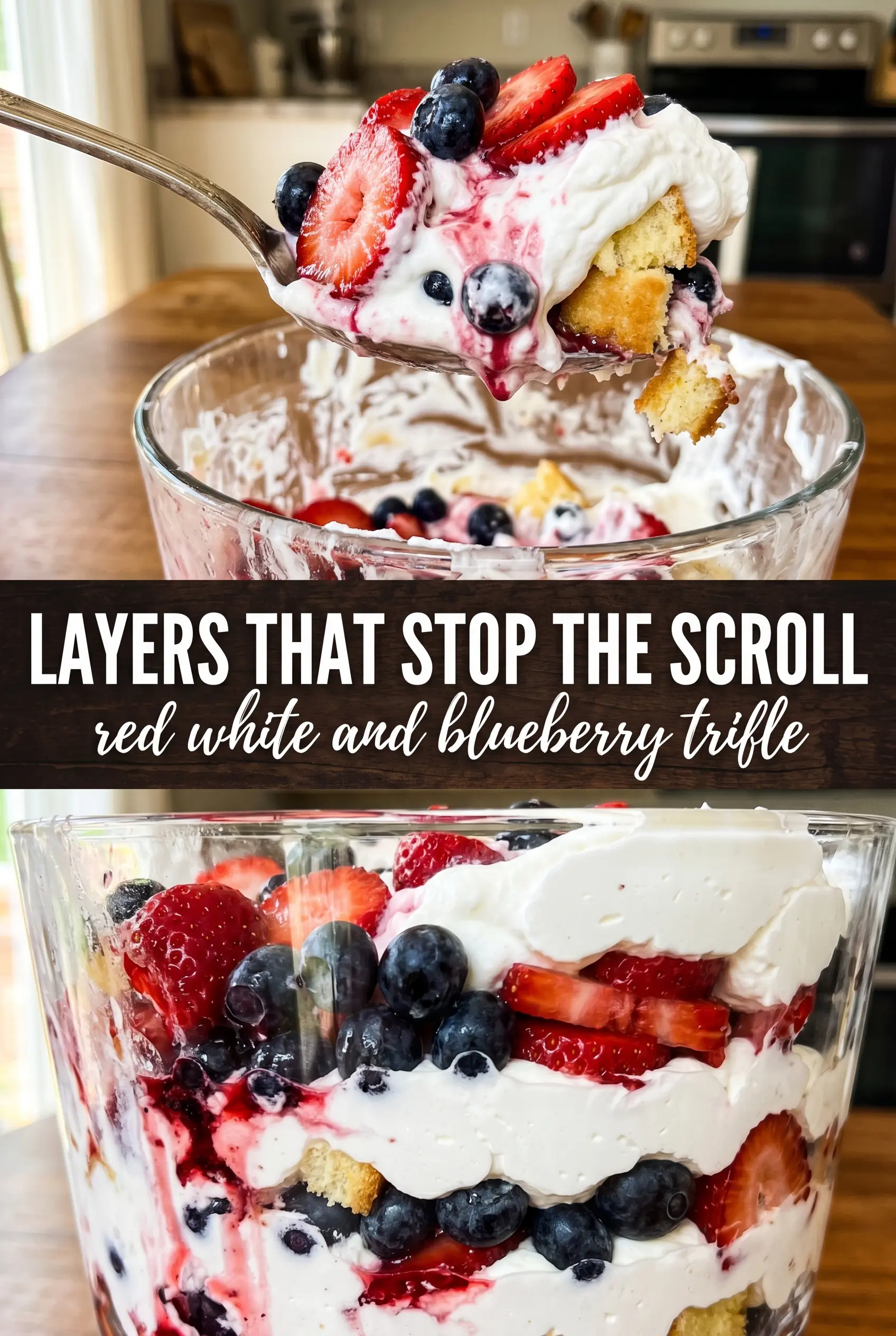
Red, White and Blueberry Trifle
Ingredients
Equipment
Method
- Beat heavy whipping cream with 1/4 cup powdered sugar and vanilla extract until stiff peaks form, then set aside for layering.
- Beat cream cheese with 1/2 cup powdered sugar until smooth, then fold in half the whipped cream to create a fluffy cream cheese layer.
- Place a layer of pound cake cubes in the bottom of a large trifle bowl, spreading to cover the base.
- Spoon a generous layer of cream cheese mixture over the cake, spreading gently so it reaches the edges.
- Add a layer of sliced strawberries over the cream, then press lightly to help it settle.
- Add another layer of cake cubes on top of the strawberries.
- Spoon plain whipped cream over the cake cubes to form a smooth, even layer.
- Add a layer of blueberries over the whipped cream.
- Repeat layers until the bowl is full, finishing with whipped cream on top so the sides show alternating colors.
- Decorate the top with whole strawberries and blueberries, cover, and refrigerate for at least 2 hours before serving.