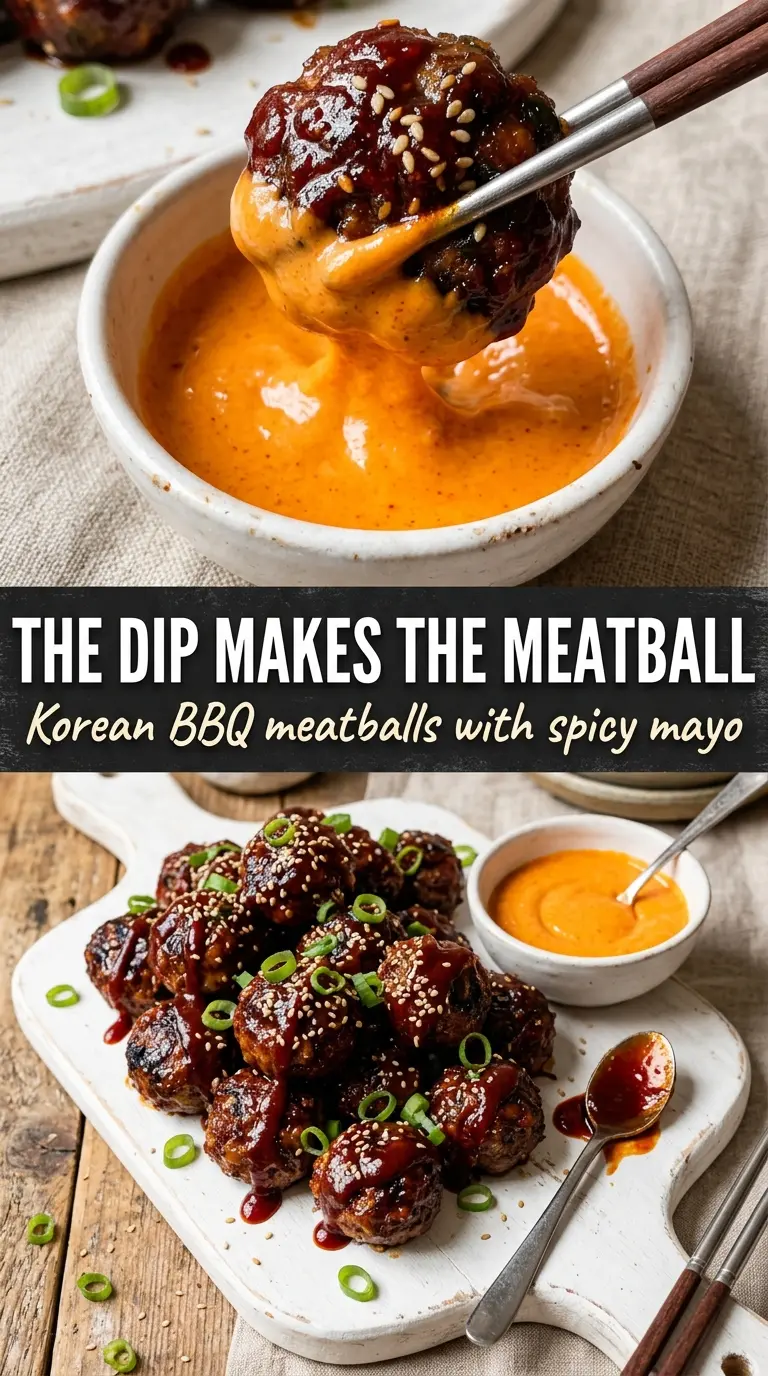
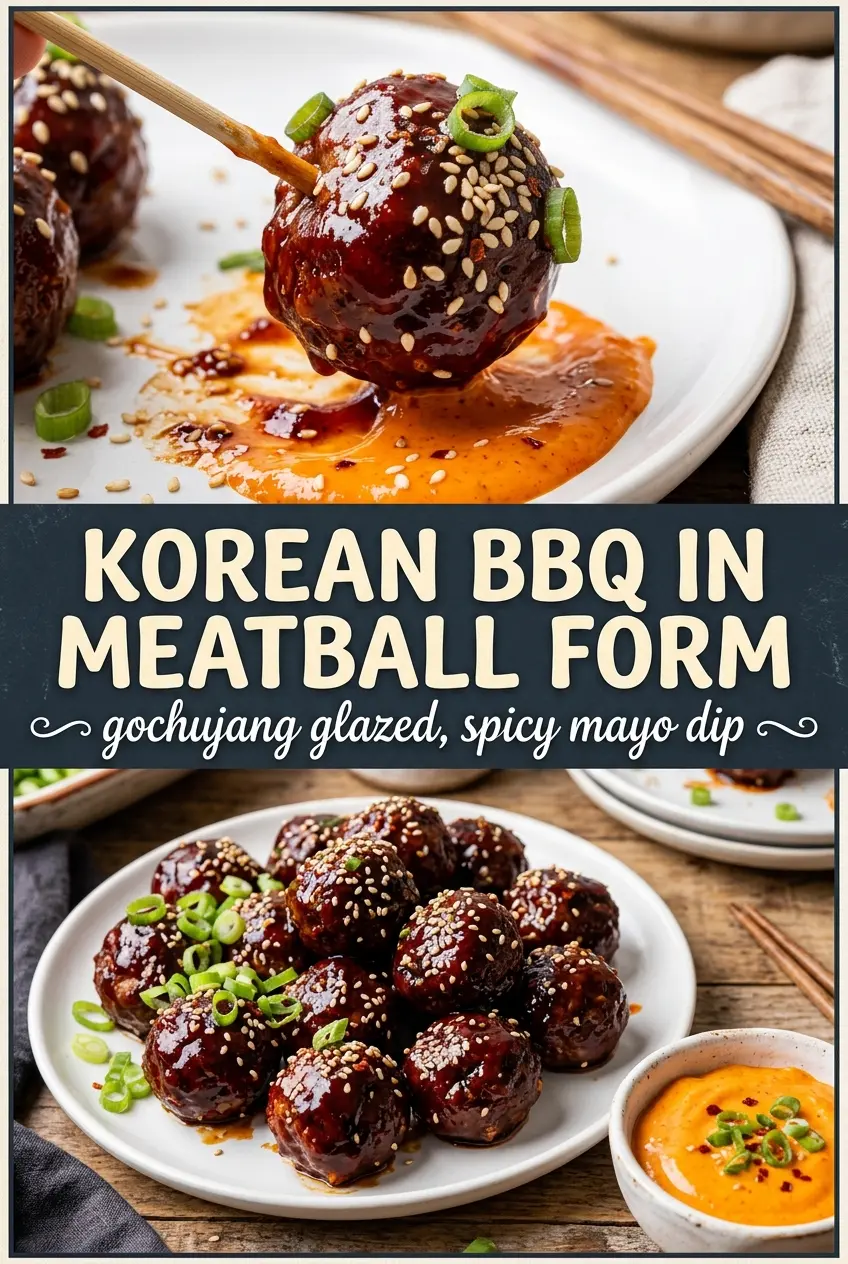
Sticky, savory-sweet Korean BBQ meatballs earn their spot fast because they hit three things at once: a browned, tender center, a glossy gochujang glaze, and a cool, spicy mayo that keeps every bite from feeling heavy. They taste like party food with enough depth to stand on their own, which is exactly why they disappear so quickly off a platter.
The key is in the balance. Gochujang brings heat and fermented richness, honey gives the glaze its lacquered finish, and rice vinegar keeps the sauce from turning flat. The meatball mix stays tender thanks to panko and egg, but it still holds together well enough to bake cleanly before getting tossed in the sauce.
Below, I’ll walk through the one part that matters most: how to get the glaze thick and clingy without making it sticky-syrupy or harsh. I’ll also show you a couple of smart swaps, including how to make them work with what’s already in your fridge.
The glaze clung to every meatball and the spicy mayo cut the heat just enough. I baked them exactly 19 minutes and they came out juicy, not dense.
Korean BBQ meatballs with spicy mayo dip are the kind of appetizer people hover over until the platter is empty.
The Glaze Works Because It’s Built Last, Not Left to Sit
A lot of meatball recipes go wrong in the sauce stage, not the baking stage. If the glaze is simmered too long, the honey can take over and turn it candy-like before the meatballs ever hit the pan. If it’s too thin, it slides off and leaves you with a wet bowl and plain meatballs underneath.
This version stays balanced because the sauce is cooked just long enough to thicken slightly, then it goes straight onto hot meatballs. That heat helps the glaze cling immediately, and the sesame oil keeps it glossy instead of sticky in the wrong way. The meatballs also bake first, which means the sauce isn’t fighting raw meat juices while it tries to set.
- Gochujang — This is where the deep, savory heat comes from. Nothing else gives the same sweet-fermented chile flavor, so it’s worth using the real paste here.
- Honey — It softens the spice and helps the glaze coat the meatballs. Maple syrup can work in a pinch, but it tastes a little heavier and less clean.
- Rice vinegar — A small amount keeps the glaze from tasting flat. If you skip it, the sauce can lean one-note and overly sweet.
- Panko breadcrumbs — These keep the meatballs lighter than regular breadcrumbs. If you only have fine crumbs, use a little less or the texture can get dense.
- Mayonnaise — Full-fat mayo makes the dip creamy enough to stand up to the gochujang heat. Light mayo works, but the dip will taste thinner and less luxurious.
How to Keep the Meatballs Tender Before the Sauce Goes On
- Ground beef or pork — Both work well, and pork gives you a little more richness. If you use beef, choose something with enough fat to stay juicy after baking; extra-lean beef can turn dry fast.
- Egg and panko — This is the binder that keeps the meatballs from crumbling. Mix just until combined, because overworking the meat tightens the texture and makes them springy instead of tender.
- Garlic, ginger, soy sauce, and sesame oil — These season the meatball itself so the flavor doesn’t depend only on the glaze. Fresh ginger matters here; dried ginger won’t give the same bright bite.
- Green onions — They add freshness and a little sharpness inside the meatball. Slice them thin so they disappear into the mixture instead of creating little loose pockets.
- Spicy mayo — Whisk it together first and chill it while the meatballs bake. That resting time lets the lime and sriracha settle into the mayo instead of tasting separately sharp and creamy.
The Part Where the Meatballs Turn Sticky and Glossy
Mixing the Meatball Base
Combine the meat, panko, egg, garlic, ginger, soy sauce, sesame oil, and green onions in one bowl and mix just until you don’t see dry streaks. The mixture should hold together when you press it, but it shouldn’t look paste-like. If it feels wet, add a spoonful more panko; if it seems stiff, stop mixing and let the egg do its job.
Baking Until Just Cooked Through
Shape the mixture into 24 meatballs and place them on a foil-lined baking sheet so they brown without sticking. Bake at 400°F until they’re cooked through and lightly browned at the edges, about 18 to 20 minutes. If they go much longer, the glaze can’t rescue dry meatballs, so pull them when the centers are no longer pink and the tops have a little color.
Cooking the Glaze to the Right Thickness
Whisk the gochujang, soy sauce, honey, rice vinegar, sesame oil, and garlic in a small saucepan, then simmer over medium heat for just a few minutes. You want it slightly thickened, not reduced into a paste. If it starts bubbling hard or smelling sharp, lower the heat; too much simmering makes the honey dominate and mutes the clean chile flavor.
Tossing and Serving
Add the hot meatballs to the saucepan or a large bowl and toss until every surface is coated in a dark, shiny layer. The glaze should cling in a thin coat, not pool at the bottom. Finish with sesame seeds and green onions, then serve the spicy mayo on the side so people can dip or drizzle as they like.
How to Adapt These for a Crowd, a Shortcut, or a Different Pantry
Make Them Gluten-Free
Swap the panko for gluten-free breadcrumbs and use a gluten-free soy sauce or tamari. The texture stays close to the original, though the meatballs may feel a touch softer if your breadcrumb mix is very fine. Keep an eye on the glaze too, since some tamari brands taste saltier than regular soy sauce.
Use Pork for a Richer Bite
Ground pork gives these a juicier, slightly sweeter finish that works beautifully with the gochujang glaze. The meatballs brown a little differently and can feel richer on the palate, which makes them especially good for an appetizer platter. If you use all pork, don’t skip the ginger and green onion, because they keep the flavor from feeling too heavy.
Adjust the Heat for a Milder Crowd
Use less sriracha in the mayo and start with a smaller amount of gochujang in the glaze if you’re serving people who don’t love heat. The dish will still taste layered and savory; it just lands more on the sweet-smoky side than the spicy side. Don’t replace the gochujang with plain hot sauce, though, because you’d lose the depth that makes the glaze taste like Korean BBQ instead of generic spice.
Storage and Reheating
- Refrigerator: Store leftovers in an airtight container for up to 4 days. The glaze will thicken a bit in the fridge, but the flavor holds up well.
- Freezer: Freeze the baked, unglazed meatballs for up to 2 months. The spicy mayo doesn’t freeze well, so make that fresh when you’re ready to serve.
- Reheating: Warm the meatballs in a covered skillet or a 325°F oven with a splash of water, then add the glaze after they’re hot. Microwaving them with the glaze already on can make the coating tacky and the meatballs unevenly heated.
The Questions I Hear Most About These Korean Meatballs
Korean BBQ Meatballs with Spicy Mayo Dip
Ingredients
Equipment
Method
- Whisk together mayonnaise, sriracha, and lime juice until smooth, then refrigerate to thicken slightly; cover and chill for the best dip texture.
- Preheat oven to 400°F and line a sheet pan with foil for easy cleanup.
- Combine ground beef or pork, panko breadcrumbs, large egg, garlic, fresh ginger, soy sauce, sesame oil, and green onions, then form into 24 meatballs.
- Bake at 400°F for 18-20 minutes, until cooked through and no longer pink in the center.
- Whisk gochujang, soy sauce, honey, rice vinegar, sesame oil, and garlic in a small saucepan, then simmer over medium heat for 2-3 minutes until slightly thickened.
- Toss hot meatballs in the Korean BBQ glaze until fully coated and glossy, so the caramelized coating clings to the surface.
- Arrange on a platter, garnish with sesame seeds and green onions, and serve with spicy mayo on the side for dipping.