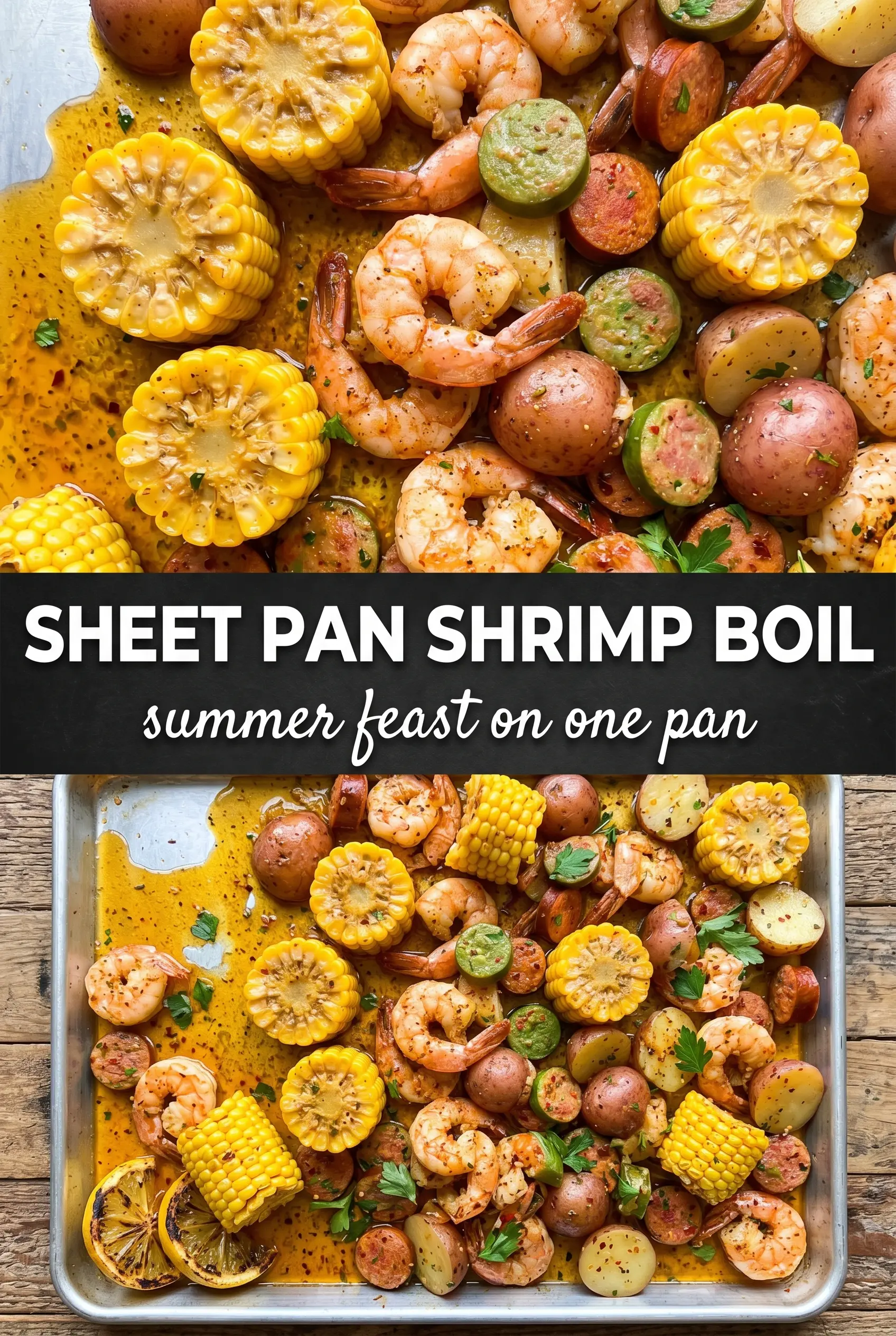
Sheet pan shrimp boil brings all the best parts of a classic boil into one pan with less fuss and a lot more caramelized flavor. The shrimp stay juicy, the potatoes turn tender with crisp edges, and the sausage leaves little browned spots that cling to the Old Bay butter. You get the same bold, messy, lemony dinner energy, just without hauling out a giant pot of water.
The trick is giving the potatoes a head start so they’re fully tender by the time the shrimp go in. Shrimp cook fast, and if they hit the oven too early, they turn rubbery before the rest of the pan catches up. Layering the seasoning in stages also matters here: the potatoes soak up the first round, the sausage and corn pick up the second, and the shrimp get tossed in butter right before roasting so they stay glossy instead of drying out.
Below, I’ll walk through the timing that keeps everything on track, plus a few smart swaps if you want to use different sausage, make it dairy-free, or stretch the meal a little further.
The potatoes were tender right on time and the shrimp stayed plump instead of overcooked. That Old Bay butter on the corn and sausage had everyone reaching back for seconds.
Save this sheet pan shrimp boil for the nights when you want buttery shrimp, smoky sausage, and roasted corn all on one pan.
The Potato Head Start That Keeps the Shrimp Tender
The biggest mistake in a sheet pan shrimp boil is treating every ingredient like it needs the same amount of time. Potatoes need a real roast to soften in the center and pick up color on the cut sides. Shrimp need a short blast at the end, or they go from plump to tight and chalky fast.
Starting with the potatoes gives the whole pan a better texture. By the time you add the corn and sausage, the potatoes have already begun to caramelize, and the drippings from the sausage help season the rest of the pan. Then the shrimp go in last, just long enough to turn pink and curl into loose C-shapes. If they’re tight little O’s, they’ve gone too far.
What Each Ingredient Is Doing in the Pan
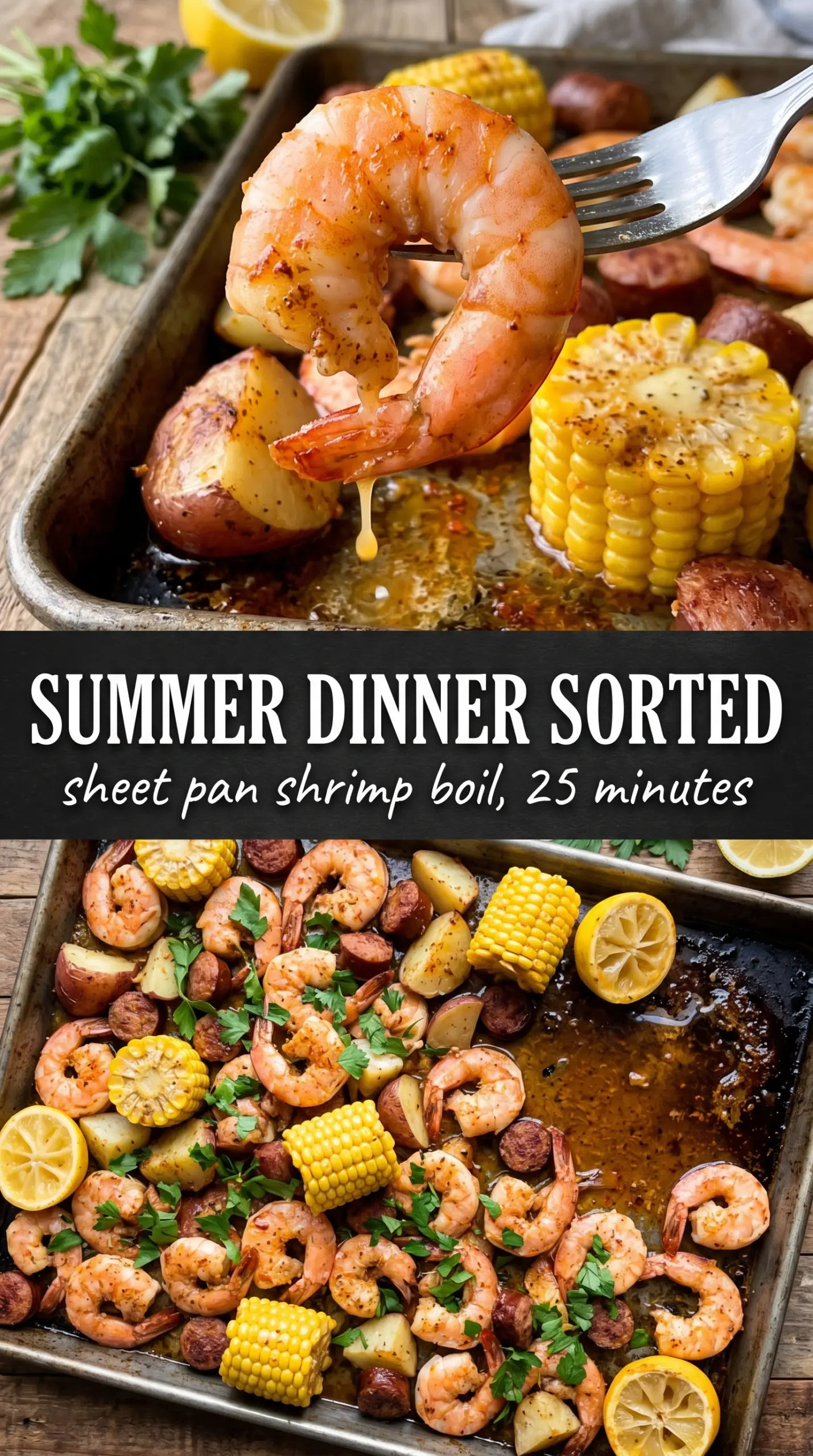
- Large shrimp — Big shrimp hold up better in the oven and stay juicy during the short final roast. Smaller shrimp overcook before the potatoes finish.
- Andouille sausage — This brings smoke, fat, and seasoning to the pan. If you use a milder smoked sausage, add a pinch more Old Bay or smoked paprika to keep the dish from tasting flat.
- Baby potatoes — Halving them gives you enough surface area for browning without making them fall apart. Waxy potatoes work best because they keep their shape after roasting.
- Corn on the cob — Cut ears into short pieces so they roast instead of steaming. Fresh corn gives the best sweet bite, but thawed frozen corn on the cob pieces can work if fresh isn’t available.
- Old Bay seasoning — This is the backbone of the whole recipe. No substitute hits the same mix of celery, paprika, and spice, though Cajun seasoning works in a pinch if you want a little more heat.
- Butter and olive oil — Butter gives the shrimp that glossy finish and helps the seasoning cling, while olive oil keeps the potatoes and corn roasting cleanly. Using both gives better flavor than relying on one fat alone.
- Lemon and parsley — Don’t skip them. The lemon cuts through the richness, and the parsley keeps the pan from tasting heavy at the end.
How to Roast Everything in the Right Order
Give the Potatoes a Private Head Start
Spread the potatoes cut-side down on the foil-lined sheet pan and roast them before anything else. They should begin to soften and get some color at the edges before you add the other ingredients. If the pan looks crowded, use a second sheet pan instead of piling everything on top of each other. Crowding traps steam, and steamed potatoes never get the same roasted flavor.
Add the Corn and Sausage When the Potatoes Are Halfway There
Once the potatoes are starting to turn golden, push them outward and add the corn and sausage to the pan. Drizzle on the remaining olive oil and seasoning so everything picks up flavor from the start of its roast. The sausage should start to brown in spots, and the corn should look a little blistered around the edges. If the sausage slices are thick, give them an extra minute or two before adding the shrimp.
Coat the Shrimp Right Before They Go In
Toss the shrimp with the melted butter, garlic, garlic powder, smoked paprika, and the rest of the Old Bay just before they hit the oven. That keeps the seasoning bright and the shrimp glossy instead of watery. Add them in a single layer and roast just until they’re pink, opaque, and curled. Pull the pan as soon as the shrimp are done, because the carryover heat finishes the job fast.
Finish With Acid and Serve Fast
Scatter lemon wedges and parsley over the top the second the pan comes out. That last hit of acid wakes up the butter and seasoning, and the parsley gives the whole dish a fresher finish. Serve it straight from the sheet pan while the shrimp are still hot and the potatoes are crisp at the edges. This dish loses its best texture if it sits too long.
How to Adapt This for Different Kitchens and Different Crowds
Make It Dairy-Free Without Losing the Finish
Use all olive oil instead of the butter if you need a dairy-free version. The shrimp won’t have quite the same rich gloss, but the garlic, paprika, and Old Bay still carry plenty of flavor. A final squeeze of lemon becomes even more important here because it replaces some of the roundness butter usually gives.
Swap the Sausage for Chicken or Skip It
If you don’t want sausage, add bite-size cooked chicken sausage or smoked turkey sausage for a similar smoky edge. You can leave it out entirely, but the pan will taste lighter and need a little extra seasoning and maybe a touch more butter to keep the flavor anchored.
Use Different Potatoes When That’s What You Have
Yukon Gold potatoes work well if that’s what’s in the kitchen, though they’re a little creamier and less firm than baby potatoes. Cut them into even pieces so they roast at the same pace, and check them early if they’re on the smaller side. Russets aren’t the best choice because they can dry out and get fluffy instead of staying buttery-tender.
Store the Leftovers for Another Meal
Leftovers keep well, but the shrimp is best within a day or two because it firms up as it sits. Reheat everything gently in a 300°F oven or in a skillet over low heat with a splash of water or a little butter so the potatoes don’t dry out. The microwave works in a pinch, but short bursts are the only way to keep the shrimp from turning rubbery.
Answers to the Questions Worth Asking
Sheet Pan Shrimp Boil
Ingredients
Equipment
Method
- Preheat oven to 400°F and line a large rimmed baking sheet with foil, keeping the sheet ready for staged roasting.
- Toss baby potatoes with 2 tablespoons olive oil, 1 tablespoon Old Bay seasoning, salt, and pepper, then spread in a single layer.
- Roast potatoes at 400°F for 15 minutes, until they begin to brown on the edges.
- Push potatoes to the edges of the pan to make room in the center.
- Add corn and sausage, then drizzle with remaining olive oil and Old Bay seasoning.
- Roast at 400°F for another 8 minutes, until corn starts to char and sausage begins to brown.
- Toss shrimp with melted butter, minced garlic, garlic powder, smoked paprika, and remaining Old Bay seasoning.
- Add shrimp to the pan and roast at 400°F for 8-10 minutes, until pink and curled and the pan looks caramelized.
- Garnish with lemon wedges and fresh parsley, then serve directly from the sheet pan while hot.