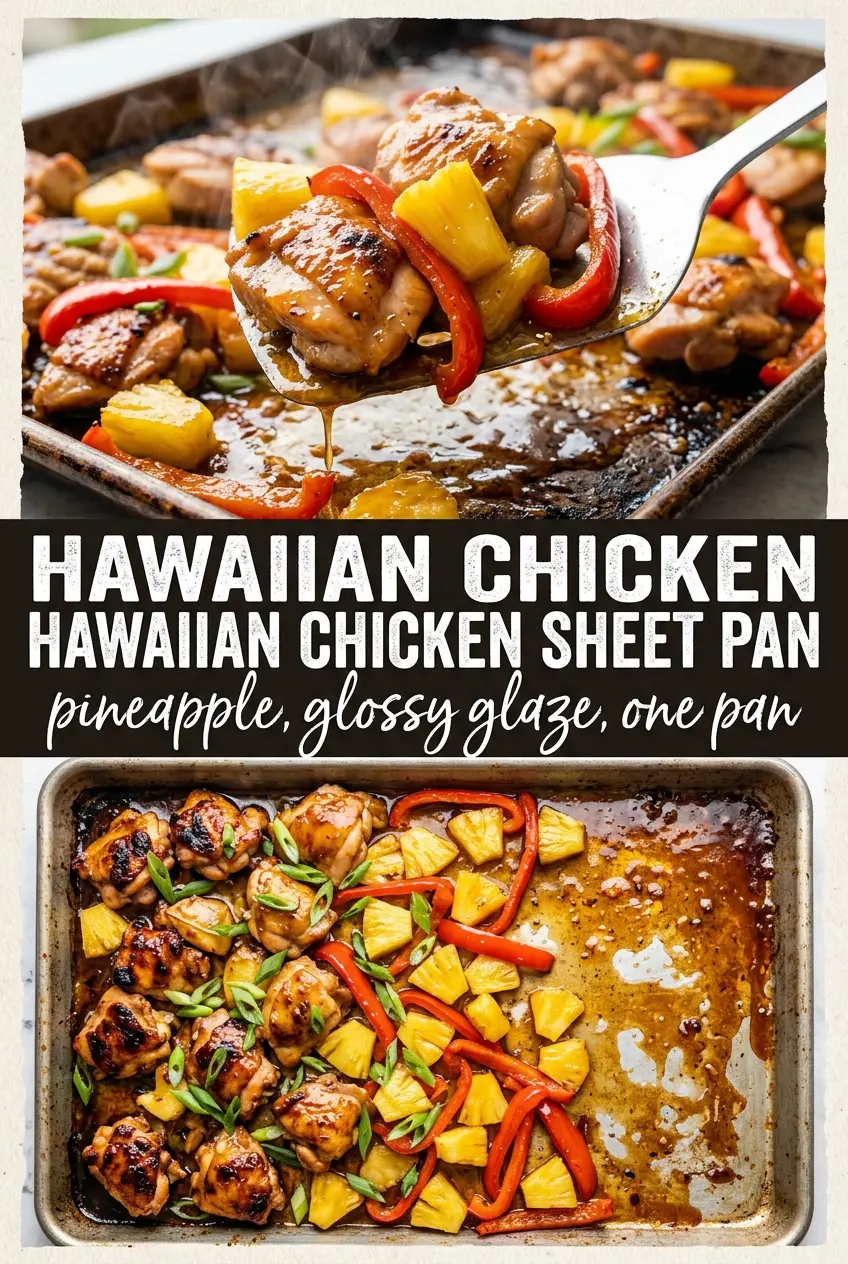
Sticky, caramelized Hawaiian chicken sheet pan dinners have a way of disappearing fast because they hit every note at once: salty soy sauce, sweet pineapple, glossy glaze, and chicken thighs that stay juicy while the edges turn crisp. The sheet pan does the heavy lifting here, but the real payoff is the contrast — tender chicken, blistered peppers, and pineapple that softens just enough to pick up all that teriyaki-style sauce.
Bone-in, skin-on thighs matter because they hold up to the hot oven and give you a deeper, more forgiving roast than lean cuts ever will. The short marinade is enough to season the chicken without turning the skin soggy, and the reserved sauce goes over the vegetables instead of the raw chicken, which helps it reduce into a sticky glaze instead of steaming off the pan.
Below, I’ve laid out the small details that keep this dinner from falling flat, plus a few smart swaps if you need to work with what’s in the fridge.
The pineapple got caramelized at the edges and the sauce reduced into this sticky glaze that coated everything. My husband kept picking at the peppers straight from the pan.
Like this Hawaiian chicken sheet pan? Save it for the nights when you want sticky pineapple glaze, crisp-edged chicken thighs, and one-pan cleanup.
The Trick to Keeping the Chicken Skin Crisp Under the Glaze
The biggest mistake with sheet pan chicken like this is drowning the skin before it has a chance to render. A bone-in, skin-on thigh wants direct heat, not a bath in sauce. That’s why the chicken goes on the pan first, skin-side up, with the marinade reserved for the vegetables and the area around the chicken instead of poured over the top. The skin gets browned, the thighs stay juicy, and the sauce reduces into a lacquer instead of a puddle.
Pineapple also needs a little respect here. Fresh chunks caramelize beautifully at 425°F, but if you crowd the pan, they’ll steam and turn mushy. Leave space between the pieces so the edges can pick up color. That little bit of char is what keeps the sweetness from tasting flat.
What Each Ingredient Is Actually Doing in This Dish

- Bone-in, skin-on chicken thighs — These give you the best texture in a hot oven. Boneless thighs will work in a pinch, but they cook faster and won’t give you the same crisp skin or rich drippings that help the whole pan taste fuller.
- Fresh pineapple chunks — Fresh pineapple softens and caramelizes instead of turning watery. Canned pineapple can work if it’s well drained, but it won’t brown the same way and the flavor tends to be sweeter and softer.
- Soy sauce, pineapple juice, honey, and brown sugar — This is the glaze base. Soy brings salt and depth, pineapple juice adds tang, and the honey-brown sugar combination gives you the sticky finish. If you use only one sweetener, the sauce tastes thinner and less rounded.
- Rice vinegar and ginger — These keep the glaze from tasting heavy. Rice vinegar brightens the sweet-salty mixture, and fresh ginger gives the sauce a sharper edge that cuts through the richness of the chicken skin.
- Sesame oil — A little goes a long way. It doesn’t make the dish taste like sesame oil, but without it the marinade loses that toasted note that makes the whole thing read as more than just sweet chicken.
Building the Glaze Without Burning the Sugar
Mixing the Marinade
Whisk the soy sauce, pineapple juice, honey, brown sugar, rice vinegar, garlic, ginger, and sesame oil until the sugar looks mostly dissolved. If you rush this and leave gritty sugar behind, it can settle in spots on the pan and darken too fast in the oven. Toss the chicken in the marinade, then let it sit for 20 minutes — just enough to season the meat without softening the skin too much.
Arranging the Pan
Line the sheet pan with foil, then lay the chicken skin-side up with a little space between each thigh. Scatter the peppers, onion, and pineapple around the chicken so they can catch the drippings and glaze. If the pan is crowded, the vegetables steam and the pineapple loses its edges, which is the opposite of what you want here.
Roasting to Sticky, Caramelized Finish
Pour the reserved marinade over the vegetables and around the chicken, not over the skin. Roast until the chicken hits 165°F and the skin looks deep golden with glossy spots, about 22 to 25 minutes. If the glaze looks pale when the chicken is done, leave the pan in for a few extra minutes, but watch closely because the sugars can go from caramelized to bitter fast. Finish with sesame seeds and green onions while the pan is still hot so the garnish sticks.
Make It Gluten-Free
Swap the soy sauce for tamari or a certified gluten-free soy sauce. The dish keeps the same salty-sweet balance, and because the marinade is short, you won’t lose much texture or color from the change.
Use Boneless Chicken Thighs
Boneless thighs cook faster, usually in closer to 18 to 20 minutes. They’ll still be juicy, but you lose the crisp skin and some of the roasted flavor from the bone, so watch the pan closely and pull them as soon as they’re cooked through.
Make It Less Sweet
Cut the honey to 2 tablespoons and skip the brown sugar if you want a sharper, more savory glaze. The sauce will still cling, but it won’t reduce into quite as thick a lacquer, so keep an eye on the pan near the end of roasting.
Add More Vegetables
Broccoli florets, snap peas, or zucchini can join the pan, but add softer vegetables like zucchini only for the last 10 minutes so they don’t collapse. Firmer vegetables will pick up the glaze and give you a fuller dinner without changing the main flavor.
Storage and Reheating
- Refrigerator: Store leftovers in an airtight container for up to 4 days. The chicken stays moist, though the skin will soften.
- Freezer: Freeze the chicken and vegetables together for up to 2 months. The pineapple gets a little softer after thawing, but the flavor holds up well.
- Reheating: Reheat in a 375°F oven until hot, uncovered, so the skin has a chance to re-crisp. The microwave works in a pinch, but it will steam the chicken and turn the glaze loose.
Questions I Get Asked About This Recipe
Hawaiian Chicken Sheet Pan
Ingredients
Equipment
Method
- Whisk together soy sauce, pineapple juice, honey, brown sugar, rice vinegar, minced garlic, grated ginger, and sesame oil until smooth.
- Toss chicken thighs in the marinade, cover, and rest for 20 minutes in the refrigerator while reserving the marinade.
- Preheat the oven to 425°F and line a large sheet pan with foil.
- Arrange marinated chicken thighs skin-side up on the sheet pan, then scatter red bell pepper strips, green bell pepper strips, red onion wedges, and pineapple chunks around the chicken.
- Pour the reserved marinade over the vegetables and around the chicken so it pools lightly on the foil.
- Roast for 22-25 minutes at 425°F until the chicken skin is golden and caramelized and the internal temperature reaches 165°F, with peppers blistered and pineapple turning deep golden.
- Rest the sheet pan for 2-3 minutes, then garnish with sesame seeds and sliced green onions.
- Serve the caramelized pineapple-glazed chicken and charred vegetables over steamed rice.