Tender orzo tossed with crisp cucumber, juicy cherry tomatoes, briny olives, and feta lands in that sweet spot where a side dish starts getting requested like the main event. The pasta stays small enough to catch the lemon herb vinaigrette in every bite, and the mix of creamy, crunchy, salty, and bright keeps the bowl interesting from the first forkful to the last.
What makes this version work is the balance. The dressing leans on lemon juice, zest, and a little Dijon to keep it sharp and emulsified, while the honey rounds off the edges just enough to keep the vinegar from taking over. I also like folding in most of the feta after the salad is dressed so it softens into the orzo instead of disappearing into the bowl.
Below, I’ll walk you through the small details that matter here — like cooling the pasta properly, when to add the herbs, and how to keep the salad bright even after it sits in the fridge.
The dressing coated every little piece of orzo and the feta stayed nice and creamy after chilling. I made it the night before a cookout and it still tasted fresh the next day.
Save this lemon herb orzo salad for the cookouts and potlucks when you want something bright, make-ahead friendly, and full of feta, cucumber, and tomatoes.
The Trick to Keeping Orzo Salad from Going Flat
Orzo salad can turn dull fast if the pasta soaks up all the dressing before it ever reaches the table. That’s the part most people miss. Orzo is small, and it acts like a sponge, which means the dressing needs enough acid and oil to cling without disappearing. The other thing that matters is temperature: warm orzo wilts herbs, softens feta too much, and makes the cucumbers lose their snap.
Cook the pasta just until tender, then cool it fully before mixing. If it goes into the bowl even a little warm, the vegetables start to slacken and the herbs darken. A short chill after tossing lets the lemon, oregano, and feta settle into the salad instead of sitting on top of it.
What the Feta, Lemon, and Herbs Are Each Doing Here
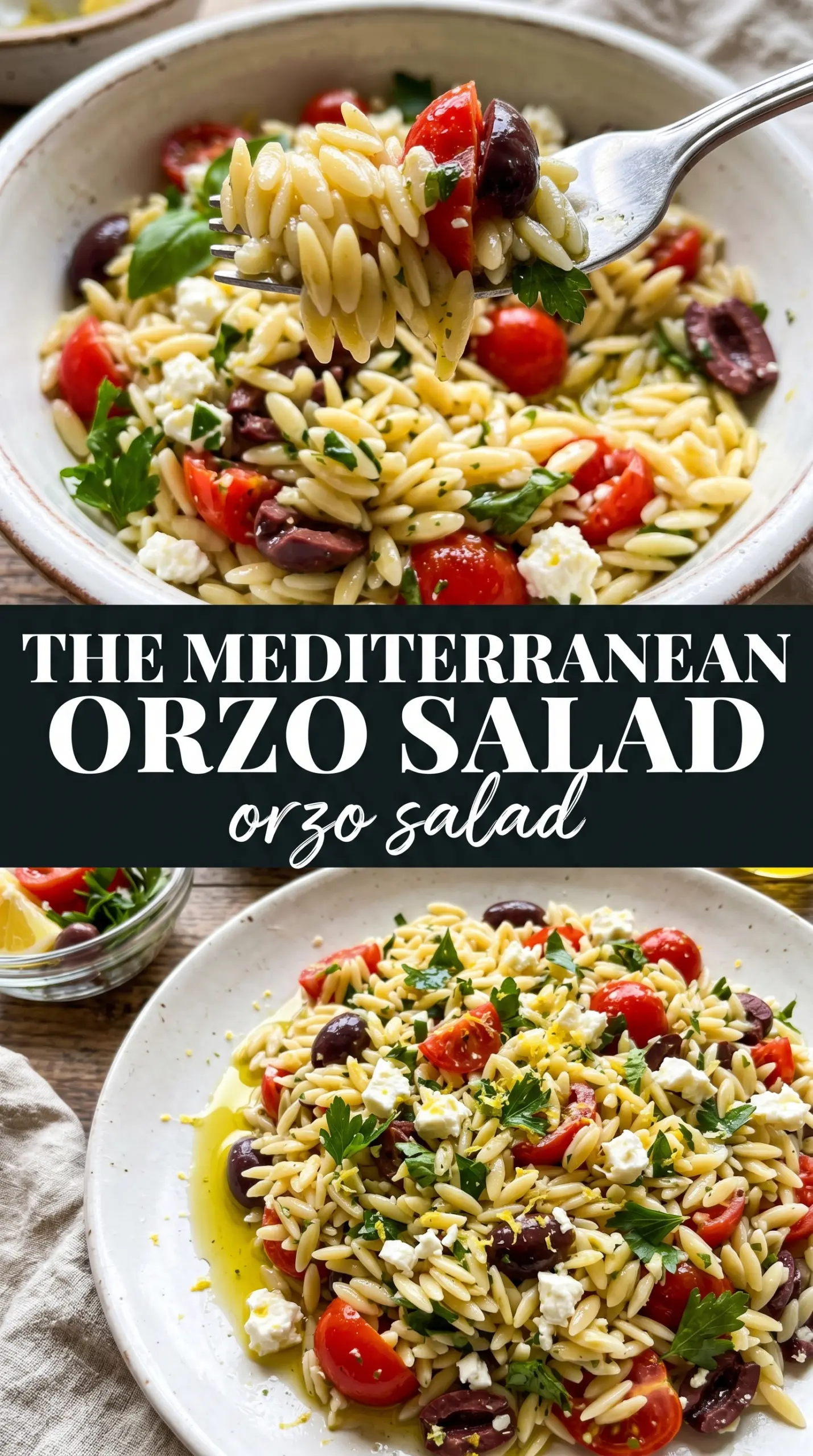
- Orzo pasta — This is the base that carries the dressing. Cook it to just tender, then drain it well and cool it fully so it doesn’t clump or turn gummy when tossed with the vegetables.
- Fresh lemon juice and zest — The juice gives the salad its brightness, and the zest adds the perfume you miss if you only use juice. Bottled lemon juice won’t give the same lift here.
- Dijon mustard — This helps the dressing emulsify so the oil and lemon stay together instead of separating at the bottom of the bowl. You won’t taste mustard in a sharp way; it just makes the dressing coat better.
- Feta cheese — Use a block if you can and crumble it yourself. Pre-crumbled feta is drier and dustier, while freshly crumbled feta stays creamier and gives the salad better texture.
- Fresh parsley and basil — These need to go in fresh, not dried. Parsley keeps the salad clean and herbal, while basil adds a softer, sweeter note that works especially well with the tomatoes.
- Kalamata olives — Their briny edge keeps the salad from tasting one-note. If you need to swap them, use another olive with a similar salty bite; a mild green olive changes the balance a lot.
How I Build the Salad So Every Bite Stays Bright
Make the dressing first
Whisk the olive oil, lemon juice, zest, vinegar, Dijon, honey, oregano, salt, and pepper until the dressing looks slightly thickened and unified. If it still looks streaky, keep whisking; that emulsion is what helps the orzo get evenly coated instead of slicked in spots. Taste it now because once the salad is mixed, the cold dulls the seasoning a little.
Cool the pasta before anything else
Drain the orzo well and spread it out briefly if it seems steamy. A wet, hot pile of pasta traps moisture and makes the salad soggy. You want the grains separate and cool to the touch before they hit the vegetables.
Fold, don’t mash
Combine the orzo, tomatoes, cucumber, olives, onion, parsley, and basil in a large bowl, then pour the dressing over the top. Toss gently from the bottom so the orzo gets coated without breaking up the tomatoes. Fold in most of the feta last so some of it stays intact and some of it melts into the dressing, which gives the salad a creamier finish.
Chill long enough for the flavor to settle
Refrigerate the salad for at least 30 minutes before serving. That rest gives the orzo time to absorb the dressing and the onion time to mellow. Right before serving, taste again and add a little more salt or lemon if the flavors need waking up.
How to Adapt This Orzo Salad Without Losing the Balance
Make it dairy-free
Skip the feta and add a handful of chopped toasted almonds or sunflower seeds for contrast. You lose the creamy saltiness, so bump the salt in the dressing a little and lean on the lemon zest to keep the salad lively.
Make it gluten-free
Use a gluten-free small pasta that holds its shape, then cool it the same way you would regular orzo. Some gluten-free pastas soften faster after chilling, so dress it lightly at first and add a touch more oil or lemon right before serving if it looks dry.
Add protein for a fuller meal
Chopped grilled chicken, chickpeas, or flaked salmon all fit here. Chickpeas keep the Mediterranean feel strongest, while chicken makes it more filling without changing the dressing balance.
Storage and Reheating
- Refrigerator: Keeps well for 3 to 4 days. The herbs soften a little and the orzo absorbs more dressing, so it tastes best within the first two days.
- Freezer: I don’t recommend freezing this salad. The cucumber, tomatoes, and feta change texture after thawing and the dressing separates.
- Reheating: This salad is meant to be served cold or at cool room temperature. If it tastes tight after chilling, let it sit out for 15 to 20 minutes and add a small drizzle of olive oil or squeeze of lemon instead of heating it.
Answers to the Questions Worth Asking
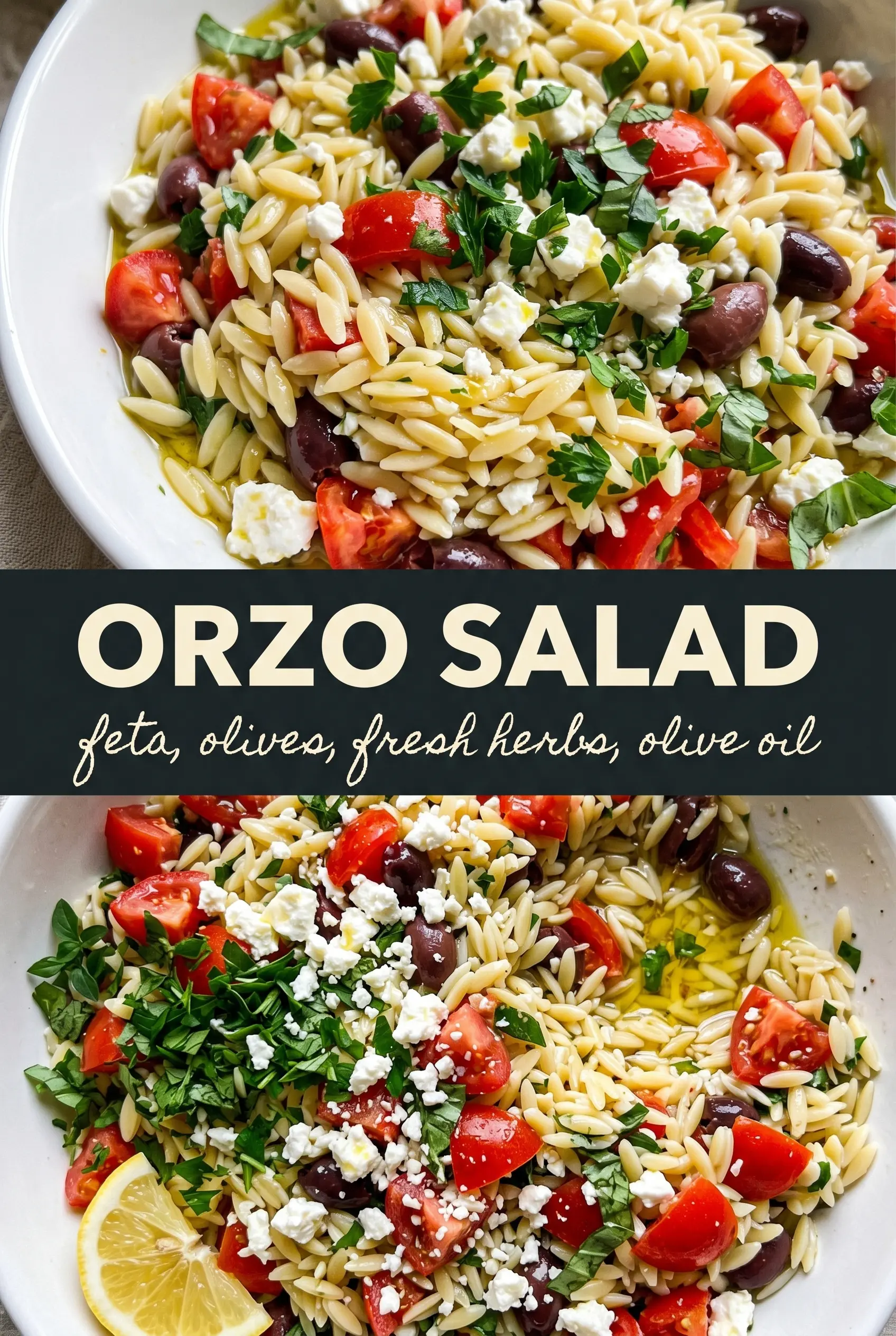
Orzo Salad
Ingredients
Equipment
Method
- Whisk together olive oil, fresh lemon juice, lemon zest, red wine vinegar, Dijon mustard, honey, dried oregano, salt, and pepper until emulsified, thick and glossy.
- Combine cooled orzo, cherry tomatoes, English cucumber, Kalamata olives, red onion, fresh parsley, and fresh basil in a large bowl.
- Pour the lemon herb dressing over the salad and toss until everything is evenly coated, with a bright sheen on the orzo and vegetables.
- Fold in most of the crumbled feta so it disperses through the orzo.
- Refrigerate for at least 30 minutes to let the flavors meld, then taste and adjust lemon or salt.
- Top with remaining feta and extra fresh herbs before serving for a fresh, vivid finish.