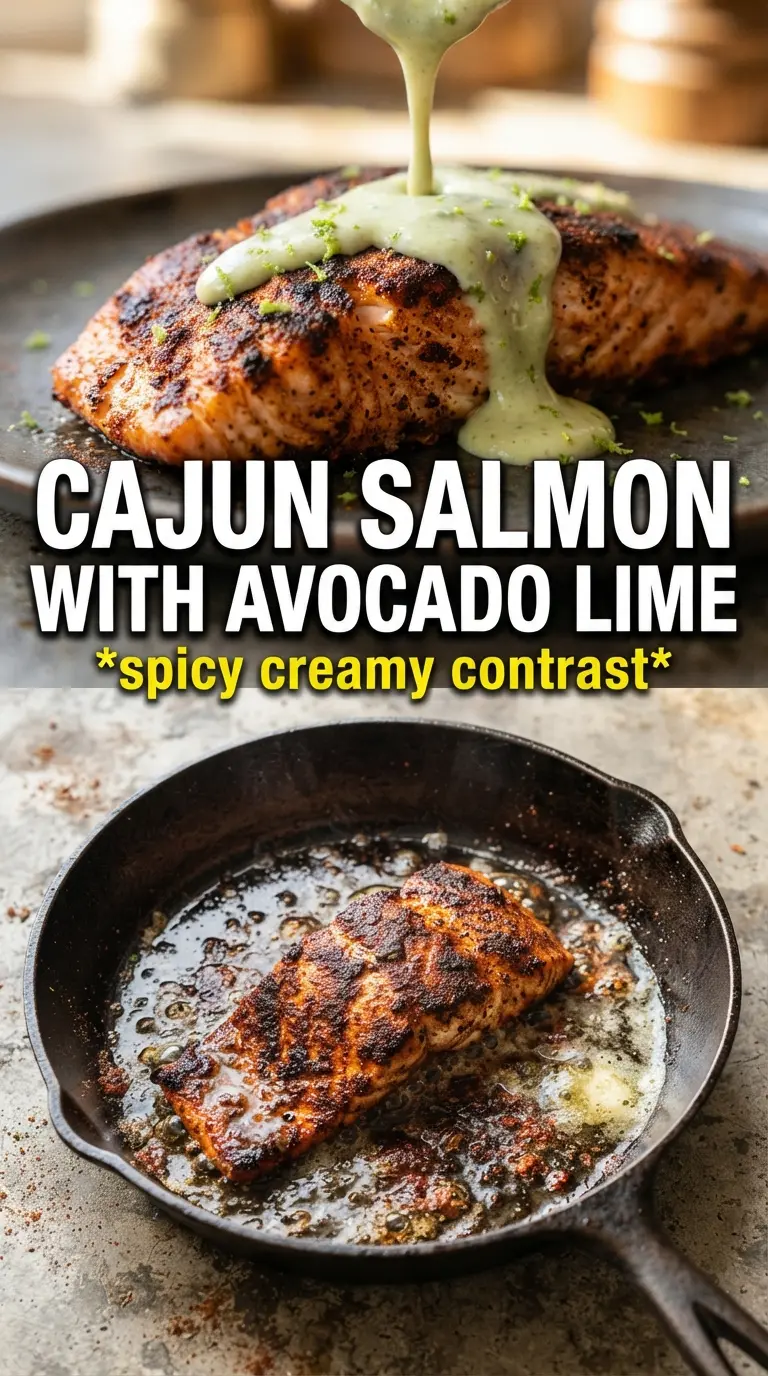
Fiery Cajun salmon gets a cooling finish here, and that contrast is exactly why this plate works so well. The salmon crust turns deeply seasoned and a little crisp at the edges, while the avocado lime sauce lands smooth, tangy, and bright enough to cut right through the heat.
The trick is keeping both parts in balance. Cajun seasoning needs direct contact with the hot pan to bloom into something bigger than surface-level spice, and the sauce needs enough lime and yogurt to stay lively without turning thin or heavy. When the salmon is seared properly, the spices stick, the fish stays juicy, and the sauce has something rich to cling to instead of sliding off the plate.
Below, I’ve included the little details that matter most: how to keep the avocado sauce from going dull or pasty, what to look for when the salmon is ready to flip, and a few ways to adapt the dish if you want it dairy-free or less spicy.
The salmon crust got beautifully dark and the avocado lime sauce stayed silky instead of turning watery. I served it with rice and my husband kept spooning extra sauce over everything.
Like this Cajun salmon with avocado lime sauce? Save it for a fast dinner that brings spicy crust and creamy citrus in one pan.
The Salmon Crust Fails When the Pan Is Not Hot Enough
Salmon that goes into a lukewarm skillet tends to stew in its own moisture before it ever gets a chance to brown. That is the difference between a dull spice coating and a crust that tastes toasted, fragrant, and worth repeating. Let the oil shimmer before the fish hits the pan, and don’t move the fillets too early; the seasoning needs a few uninterrupted minutes to set.
Another common mistake is crowding the pan. If the fillets are packed too tightly, the surface temperature drops and the Cajun spices can’t caramelize properly. Give the salmon space, keep the heat at medium-high, and let the first side release on its own before flipping.
- Dry the salmon first — A paper towel pat-down helps the seasoning stick and keeps the surface from steaming.
- Use enough oil — You only need a thin layer, but the pan shouldn’t look dry or the spices can scorch in spots.
- Watch for easy release — If the fillet sticks, it usually needs another minute; once the crust forms, it lifts cleanly.
What the Avocado Lime Sauce Is Really Doing Here
- Avocados — These give the sauce its body and that soft, rich texture you can’t fake with oil alone. Use ripe avocados that yield slightly when pressed; underripe fruit turns the sauce grainy and flat.
- Greek yogurt — This adds tang and helps the sauce stay spoonable instead of becoming heavy. Sour cream works in a pinch, but Greek yogurt keeps the sauce brighter and a little lighter.
- Lime juice — Fresh lime is the point here. Bottled juice tastes dull and can make the sauce read muddy instead of sharp and fresh.
- Garlic and cilantro — These give the sauce the savory green edge that makes it taste intentional, not just creamy. If you don’t love cilantro, parsley will keep the color and freshness, though the flavor will be less punchy.
- Water — Add it slowly. The sauce should drizzle, not pour, and too much water is the fastest way to make it thin and sad.
Building the Dish So the Heat and Creaminess Stay Balanced
Blend the Sauce Until It Turns Silky
Add the avocado, yogurt, lime juice, garlic, cilantro, salt, pepper, and a little water to a blender or food processor. Blend until the sauce looks smooth and glossy, scraping down the sides if needed. If it seems thick enough to dollop but not drizzle, it is right where you want it. The biggest mistake here is over-thinning it, which makes it slide off the salmon instead of coating each bite.
Season the Fish with a Heavy Hand
Coat the salmon generously with Cajun seasoning on all sides that will touch the pan. Salmon can take a bold seasoning layer, and this is not the place to be timid. If your Cajun blend is salt-heavy, skip extra salt on the fish and let the spice mix do the work. The surface should look well coated, not dusty.
Sear Until the Crust Sets
Lay the salmon in the hot skillet and leave it alone until the underside has a deep golden color and the edges look opaque halfway up the fillet. That usually takes about four to five minutes, depending on thickness. Flip once and cook the second side until the fish flakes easily and the center is just cooked through. If the pan is smoking hard, the heat is too high and the spices can turn bitter before the fish finishes.
Finish with Sauce at the Table or Right Before Serving
Spoon the avocado lime sauce over the hot salmon, then finish with lime wedges and cilantro. If you want the crust to stay extra crisp, serve the sauce on the side and let everyone add their own. The contrast between hot spice and cool sauce is the whole point of the dish, so don’t let it sit too long before eating.
How to Adapt This Cajun Salmon When You Need a Different Finish
Dairy-Free Avocado Sauce
Swap the Greek yogurt for an equal amount of plain unsweetened coconut yogurt or add a splash more lime juice and water if you want a simpler sauce. The result will taste a little softer and less tangy than the original, but the avocado still gives you that creamy finish without dairy.
Less Spicy, More Citrus
Use a milder Cajun seasoning or cut the amount back by about a third, then lean harder on the lime and cilantro in the sauce. You’ll lose some heat, but the salmon will still taste bold, and the sauce will read brighter and fresher.
Air Fryer Salmon
Cook the seasoned salmon in a preheated air fryer at 400°F until it flakes easily, usually around 8 to 10 minutes depending on thickness. You won’t get quite the same pan-crisp crust, but the spice coating still gets nicely toasted and the fish stays moist.
Storage and Reheating
- Refrigerator: Store the salmon and sauce separately for up to 2 days. The sauce may darken slightly from the avocado, but the lime helps it hold its color.
- Freezer: The salmon freezes well for up to 2 months if wrapped tightly, but the avocado lime sauce does not freeze well and will turn watery and grainy.
- Reheating: Warm the salmon gently in a skillet over low heat or in a 300°F oven just until heated through. High heat dries it out fast and makes the spice crust taste harsh.
Questions I Get Asked About This Recipe
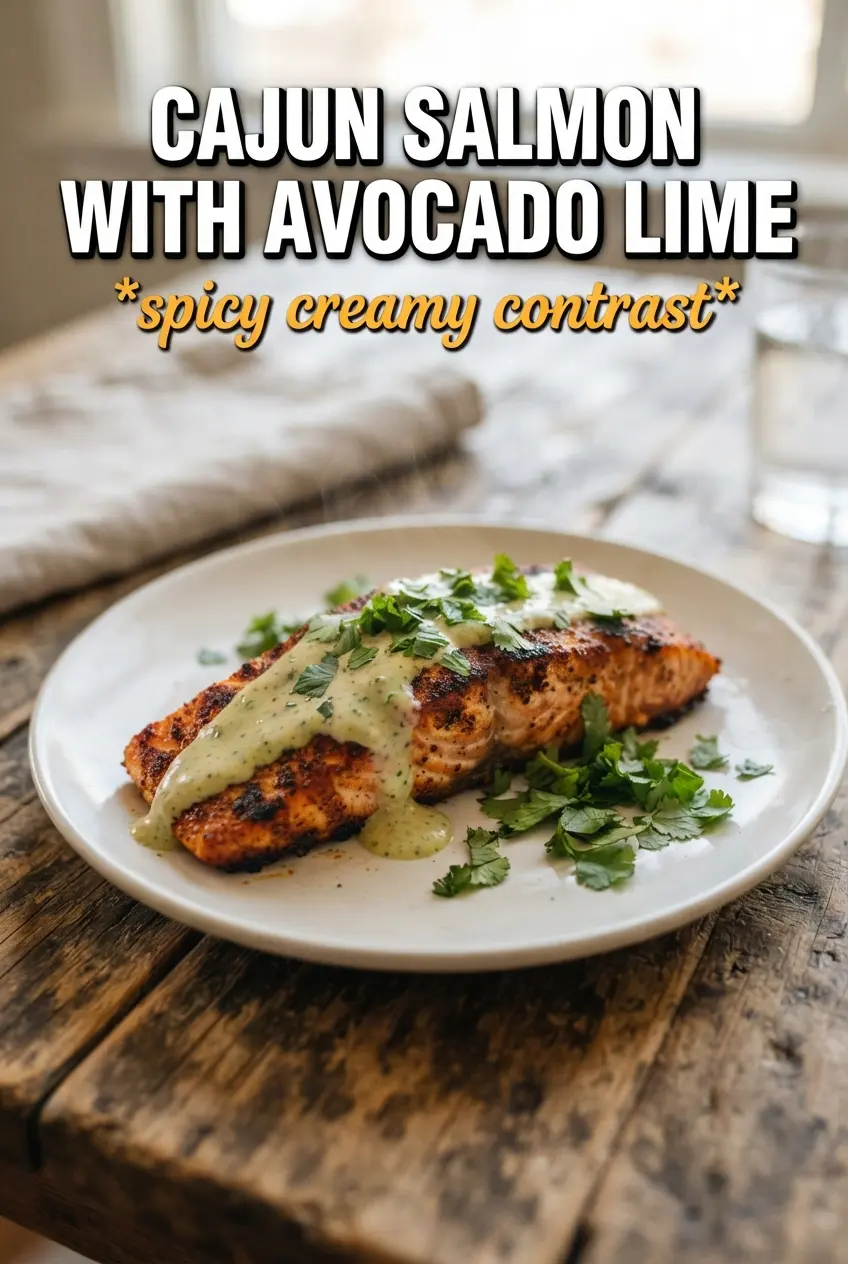
Cajun Salmon with Avocado Lime Sauce
Ingredients
Equipment
Method
- Blend the ripe avocados, Greek yogurt, lime juice, garlic, cilantro, salt, pepper, and water until smooth and creamy, adding more water 1 tablespoon at a time to reach a pourable consistency.
- Season the salmon fillets generously with Cajun seasoning, pressing lightly so it adheres to the surface.
- Heat the olive oil in a skillet over medium-high heat, then sear the salmon for 4–5 minutes per side until cooked through and the spice crust is deeply golden.
- Drizzle the avocado lime sauce over each salmon fillet.
- Garnish with lime wedges and fresh cilantro before serving.