Garlic Dijon shrimp and salmon foil packs come out tender, juicy, and packed with the kind of buttery pan sauce that tastes like it took a lot more work than it did. The foil traps steam, which keeps the salmon from drying out and turns the shrimp plump instead of rubbery. At the same time, the vegetables catch all that garlic Dijon butter as they cook, so every bite has a little sauce clinging to it.
The trick is balance: enough acid from the lemon and Dijon to keep the butter from tasting flat, but not so much that it overpowers the seafood. I also like slicing the zucchini thin enough that it softens in the same window as the salmon and shrimp. That keeps the packet cooking evenly instead of leaving you with firm vegetables and overdone seafood.
Below, I’ve included the timing cues that matter most, plus a few smart swaps if you want to change up the vegetables or make this work with what you already have.
The foil packs stayed incredibly juicy, and the garlic Dijon butter soaked into the zucchini instead of pooling on the pan. My salmon was perfectly cooked in 20 minutes, and the shrimp were tender, not tough.
Garlic Dijon shrimp and salmon foil packs are the kind of no-fuss dinner worth keeping in your back pocket for busy nights.
The Reason These Foil Packs Stay Juicy Instead of Turning Dry
Foil packs can go wrong fast if the seafood and vegetables are treated like they cook at the same pace as a sheet-pan dinner. They don’t. Shrimp need only a short window, and salmon dries out when it sits exposed to dry heat for too long. The sealed packet changes the game by trapping steam and butter around the food, which gives you a gentler cook and a glossy sauce in one step.
The other piece that matters is how you layer the packet. Put the vegetables underneath so they soak up the butter and help cushion the fish, then place the salmon and shrimp on top where the heat can reach them evenly. If the packet is packed too tightly or crimped poorly, the steam escapes and you lose the moist, tender finish that makes this work.
What Each Ingredient Is Actually Doing In This Dish
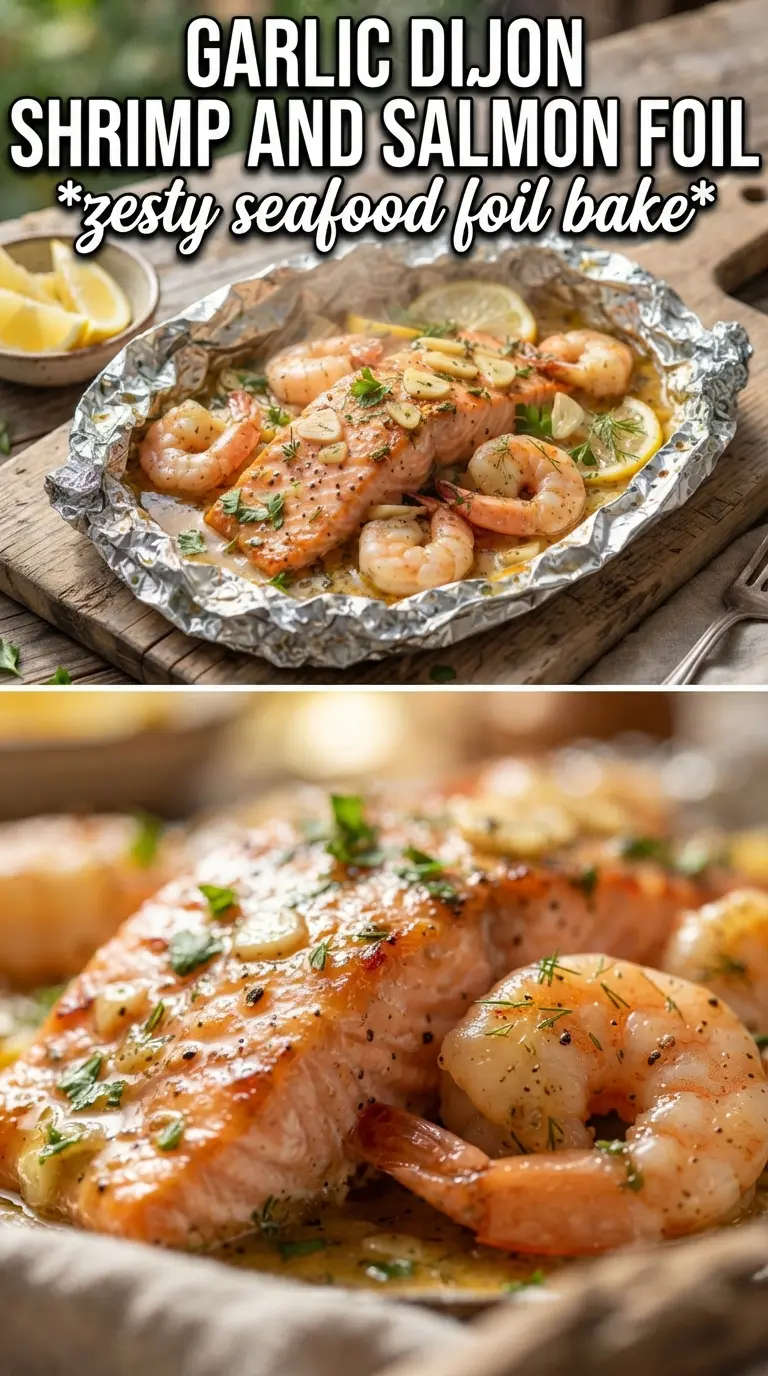
- Salmon — The fillets bring richness and enough fat to stay tender in the oven. Skin-on works too, but skinless is easier to serve from the packet. If your fillets are much thicker than 5 ounces each, add a few minutes and check the center with a fork.
- Shrimp — Large shrimp hold up best here because they can finish in the same time as the salmon without turning chalky. Smaller shrimp cook too fast and can go rubbery before the fish is done.
- Dijon mustard — This isn’t just for tang. Dijon helps the butter turn into a loose emulsion that coats the seafood instead of separating into greasy puddles. Yellow mustard won’t taste or behave the same way.
- Butter — Melted butter carries the garlic and mustard through the packet and gives you that glossy finish. If you want to lighten it up, swap in half olive oil, but the sauce will be less rich and a little less rounded.
- Zucchini and cherry tomatoes — The zucchini softens into the sauce, and the tomatoes burst just enough to add sweetness and juice. Slice the zucchini thin so it finishes on time; thick rounds stay too firm.
- Lemon juice and thyme — Lemon wakes up the butter, and thyme gives the whole packet a subtle savory edge. Fresh thyme works too, but dried thyme is plenty strong here if that’s what you have.
Building the Packet So Everything Finishes at the Same Time
Mix the garlic Dijon butter first
Stir the melted butter, Dijon, garlic, lemon juice, and thyme together before anything hits the foil. That gives the seasoning a chance to distribute evenly, so you don’t end up with one bland packet and one aggressively garlicky one. If the butter is hot enough to sizzle the garlic, let it sit for a minute so the raw garlic doesn’t taste sharp.
Layer the vegetables underneath
Divide the zucchini and cherry tomatoes between the foil sheets and keep them in the center of each piece. They act like a bed for the seafood and catch the sauce as it runs down. If you spread them too thin across the whole sheet, the packet gets harder to seal and the vegetables dry out faster.
Seal tight, then bake hot
Place the salmon and shrimp over the vegetables, drizzle on the butter mixture, and season with salt and pepper. Fold the foil up and crimp the edges tightly so the steam stays trapped inside; loose seals are the main reason foil packs cook unevenly. Bake at 425°F until the salmon flakes and the shrimp turn pink and opaque, then open the packet carefully because the steam will be fierce.
Swap the zucchini for asparagus
Asparagus works well if you want something a little firmer and greener. Use thin spears or cut thicker ones into shorter pieces so they finish in the same time as the fish. The flavor stays clean and bright, though you lose a little of the soft, saucy texture that zucchini gives.
Make it dairy-free with olive oil
Replace the butter with olive oil for a dairy-free version. The packets still cook up juicy, but the sauce will be lighter and less silky, so add an extra teaspoon of Dijon if you want more body and punch. This is the cleanest swap when you need the recipe to stay simple and pantry-friendly.
Use cod or another firm white fish
Cod, halibut, or haddock can stand in for the salmon if that’s what you have. Keep the shrimp on the packet, or leave them out and add a couple more minutes only if the fish fillets are thick. White fish has a milder flavor, so the Dijon butter becomes even more important.
Storage and Reheating
- Refrigerator: Store leftovers in an airtight container for up to 2 days. The shrimp is best early on, while the salmon may firm up a bit after chilling.
- Freezer: I don’t recommend freezing the finished foil packs. The seafood texture suffers after thawing, and the vegetables turn watery.
- Reheating: Warm gently in a covered skillet over low heat or in a 300°F oven until just heated through. High heat dries out the salmon and makes the shrimp tough fast.
Questions I Get Asked About This Recipe
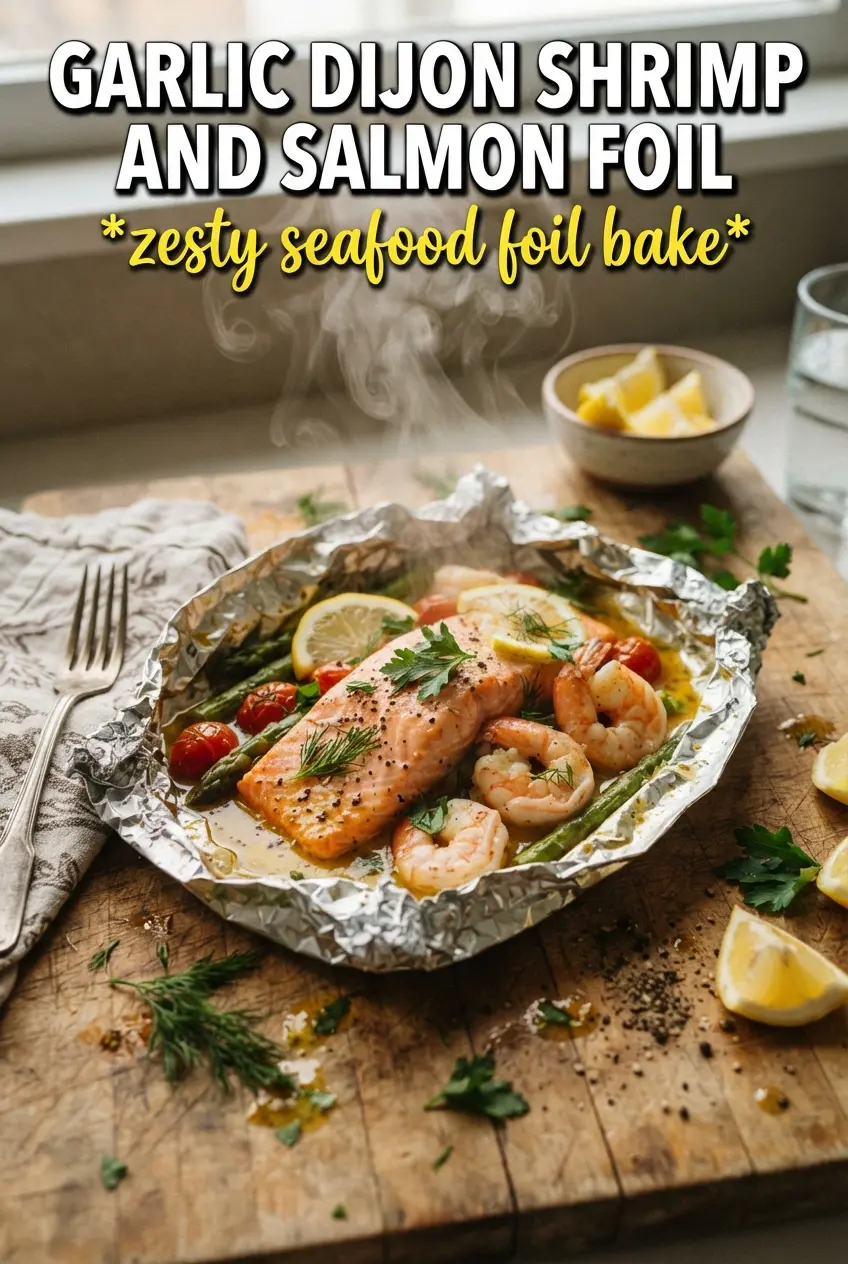
Garlic Dijon Shrimp and Salmon Foil Packs
Ingredients
Equipment
Method
- Preheat the oven to 425°F and whisk together melted butter, Dijon mustard, minced garlic, lemon juice, and dried thyme until smooth.
- Lay four large sheets of foil on a baking sheet and divide the sliced zucchini and cherry tomatoes among them.
- Place one salmon fillet and a portion of shrimp on top of the vegetables in each packet.
- Drizzle each packet with the garlic Dijon butter, then season salmon and shrimp with salt and pepper.
- Fold and crimp the foil tightly to seal, leaving no gaps for steam to escape.
- Bake at 425°F for 18–20 minutes, until the salmon is cooked through and the shrimp are pink.
- Open the foil carefully, then garnish with fresh parsley and spoon the glossy juices over the fish.