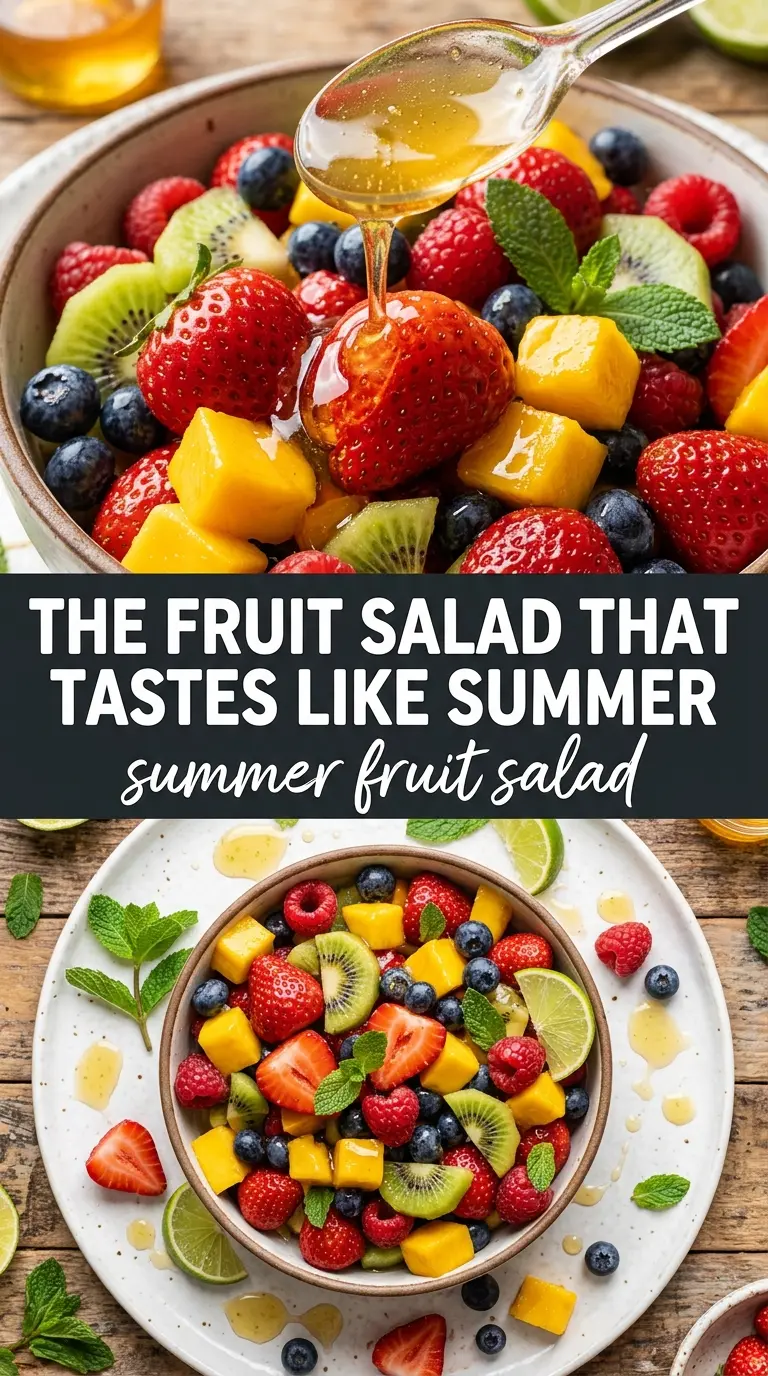
Juicy summer fruit salad is one of those bowls that disappears fast because every bite hits a different note: crisp watermelon, sweet strawberries, tart kiwi, and blueberries that pop when you bite into them. The honey-lime dressing doesn’t drown the fruit; it coats just enough to make everything taste brighter and more unified without turning the bowl watery.
The trick is using fruit that’s ripe but still holds its shape, then tossing it gently so the softer berries don’t break down. A short chill in the fridge gives the lime and honey time to settle into the fruit, and that resting time matters more than extra dressing ever will. Mint goes on at the end so it stays fresh and fragrant instead of sinking into the juices.
Below, you’ll find the little details that keep this salad from turning mushy, plus easy ways to swap in whatever fruit looks best at the market.
The honey-lime dressing was just enough to wake up the fruit, and after 20 minutes in the fridge the whole bowl tasted even better. The mint on top made it taste fresh, not just sweet.
Save this honey-lime summer fruit salad for potlucks, cookouts, and any day the fruit bowl needs to taste brighter.
The Real Secret to a Fruit Salad That Stays Fresh
The difference between a fruit salad that looks bright and one that turns soupy is moisture control. Fruit with a lot of surface water, especially berries and cut melon, will start pooling as soon as salt, sugar, or acid hits it. That’s why this salad works best when the fruit is dry after washing and cut close to serving time.
The other thing that keeps it from tasting flat is balance. Honey softens the lime’s sharp edge, while lime zest carries the citrus flavor without adding more liquid. If the dressing seems thin, don’t add more honey right away; it needs a minute to sit on the fruit and spread before you decide whether it needs adjustment.
What Each Fruit Is Doing in the Bowl
- Watermelon — This brings the cold, juicy base that makes the salad feel abundant. Cut it into sturdy cubes so it doesn’t collapse when tossed. If your melon is extra soft, add it just before serving.
- Strawberries, blueberries, and raspberries — These create the color and the mix of textures. Strawberries hold their shape best; raspberries are the most delicate, so fold them in last to avoid turning the bowl pink. If raspberries are expensive or soft, you can reduce them and add more strawberries instead.
- Pineapple, kiwi, and grapes — These keep the salad from tasting one-note. Pineapple adds tang, kiwi adds a sharper green fruit note, and grapes give a juicy crunch. Use seedless grapes and slice the kiwi right before mixing so it stays vivid and doesn’t weep.
- Honey-lime dressing — This is the part that ties everything together without making the fruit heavy. Lime juice adds brightness, lime zest adds aroma, and honey smooths the edge. If your honey is thick, warm it just enough to stir easily, but don’t heat it enough to cook the lime flavor out of it.
- Mint — Add it at the end. Mint bruises quickly and can taste dull if it sits in acid too long, so scattering it over the top right before serving keeps the salad fresh.
How to Toss Fruit Without Crushing It
Mix the Dressing First
Whisk the honey, lime juice, and zest until the honey disappears into the liquid. If the honey is sitting in ribbons at the bottom of the bowl, it hasn’t fully loosened and will cling unevenly to the fruit. A small bowl and a fork work fine here, as long as the mixture looks smooth and glossy before you pour it over the fruit.
Build the Bowl in the Right Order
Add the firmer fruit first: watermelon, pineapple, grapes, and strawberries. Then fold in the blueberries, kiwi, and raspberries with a broad spoon or spatula. The more delicate fruit goes in later because repeated stirring is what turns a nice salad into a crushed one.
Let the Chill Time Do Its Job
After tossing, refrigerate the salad for about 20 minutes. That short rest lets the fruit absorb the dressing without losing its structure. If you leave it much longer, especially with very ripe berries, the juices will collect at the bottom and the texture starts to go soft.
Finish With Mint and Serve Cold
Scatter the mint over the top right before serving so it stays bright and fragrant. Give the bowl one gentle stir, just enough to redistribute the dressing that settled at the bottom. If the salad tastes a little flat after chilling, a tiny squeeze of extra lime wakes it right back up.
How to Adapt This Salad for Different Tables
Make It Dairy-Free and Naturally Vegan
This salad is already dairy-free and vegan as written, which is part of why it works so well for crowds. Keep the honey if that fits your table, or swap it for maple syrup if you need a fully plant-based sweetener. Maple gives a deeper, slightly warmer note than honey, so the salad tastes less floral and a little more rounded.
Use What’s Peak-Ripe Instead of Sticking to the List
The best fruit salad is the one built from fruit that actually tastes good that day. Mango, blackberries, cherries, or peaches can all stand in for one of the fruits here if they’re in season and fragrant. Just keep the total amount of fruit about the same so the dressing still coats everything lightly instead of pooling at the bottom.
Make It Sharper and Less Sweet
If you want a fruit salad that leans brighter than sweet, cut the honey back slightly and add a little more lime zest. That gives you a cleaner finish and keeps the salad from tasting syrupy, especially if your fruit is already very ripe. This version works well next to grilled food because it cuts through richer dishes instead of competing with them.
Storage and Reheating
- Refrigerator: Best the day it’s made, but leftovers keep for 1 day in a covered container. The fruit will soften and release more juice as it sits.
- Freezer: Don’t freeze it. The texture turns watery and mushy once thawed.
- Reheating: Not needed. Serve it cold straight from the fridge, and give it a gentle stir before plating if the dressing has settled.
Answers to the Questions Worth Asking
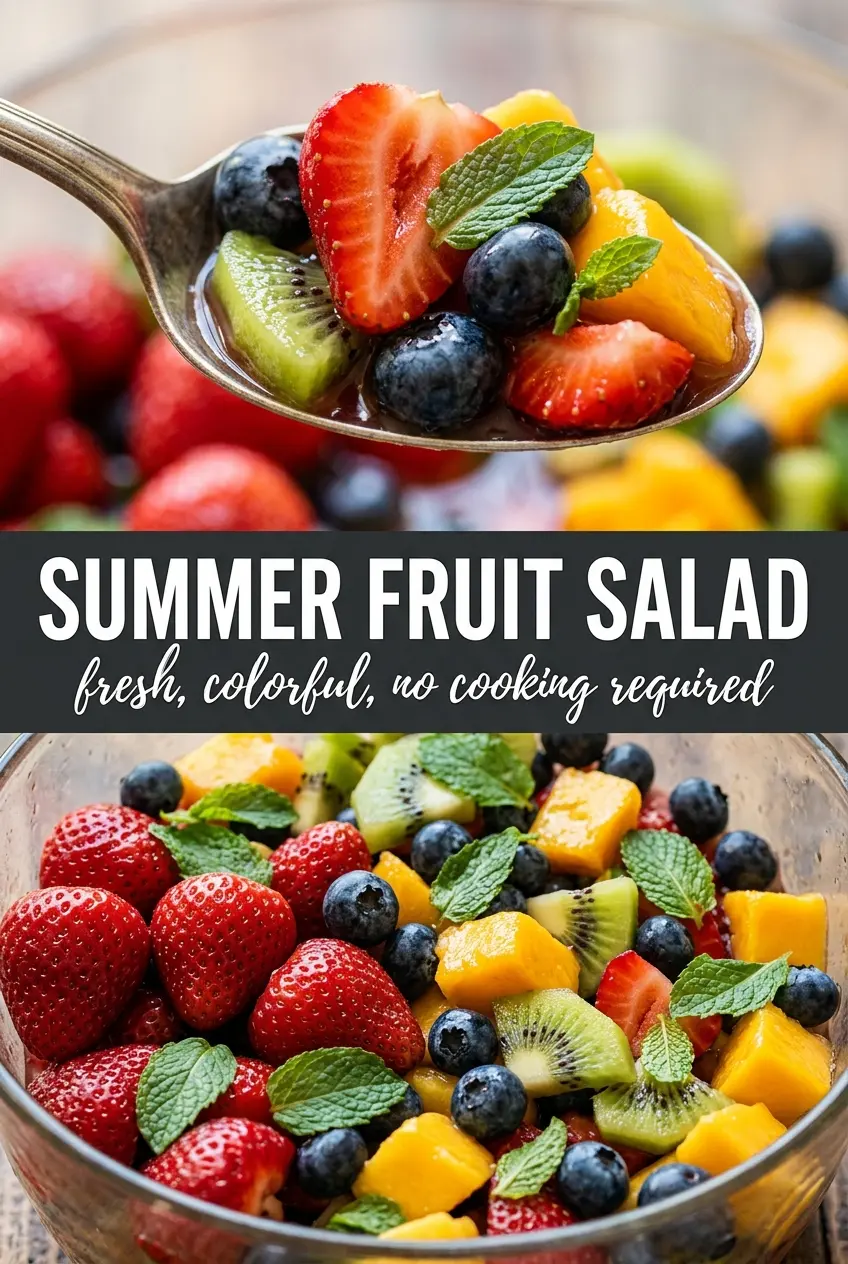
Summer Fruit Salad
Ingredients
Equipment
Method
- Cube the watermelon, halve the strawberries, and cut the pineapple into chunks, then place all prepared fruit in a large serving bowl (visual cue: a wide bowl of jewel-toned fruit).
- Add the blueberries, raspberries, sliced kiwi, seedless green grapes, and peach slices to the bowl and spread the fruit out evenly (visual cue: the bowl looks overflowing and colorful).
- Whisk the honey, fresh lime juice, and lime zest in a bowl until smooth and combined (visual cue: the dressing turns glossy and uniform).
- Pour the honey-lime dressing over the fruit and gently toss just until every piece looks lightly coated (visual cue: fruit glistens with a thin sheen).
- Taste and adjust honey or lime juice as desired, then give the salad one more gentle toss (visual cue: the flavor looks balanced and fresh).
- Refrigerate for 20 minutes to let the flavors meld (visual cue: the fruit chills and looks extra juicy and bright).
- Scatter fresh mint leaves over the top right before serving and serve chilled (visual cue: mint looks fresh and green against the colorful fruit).