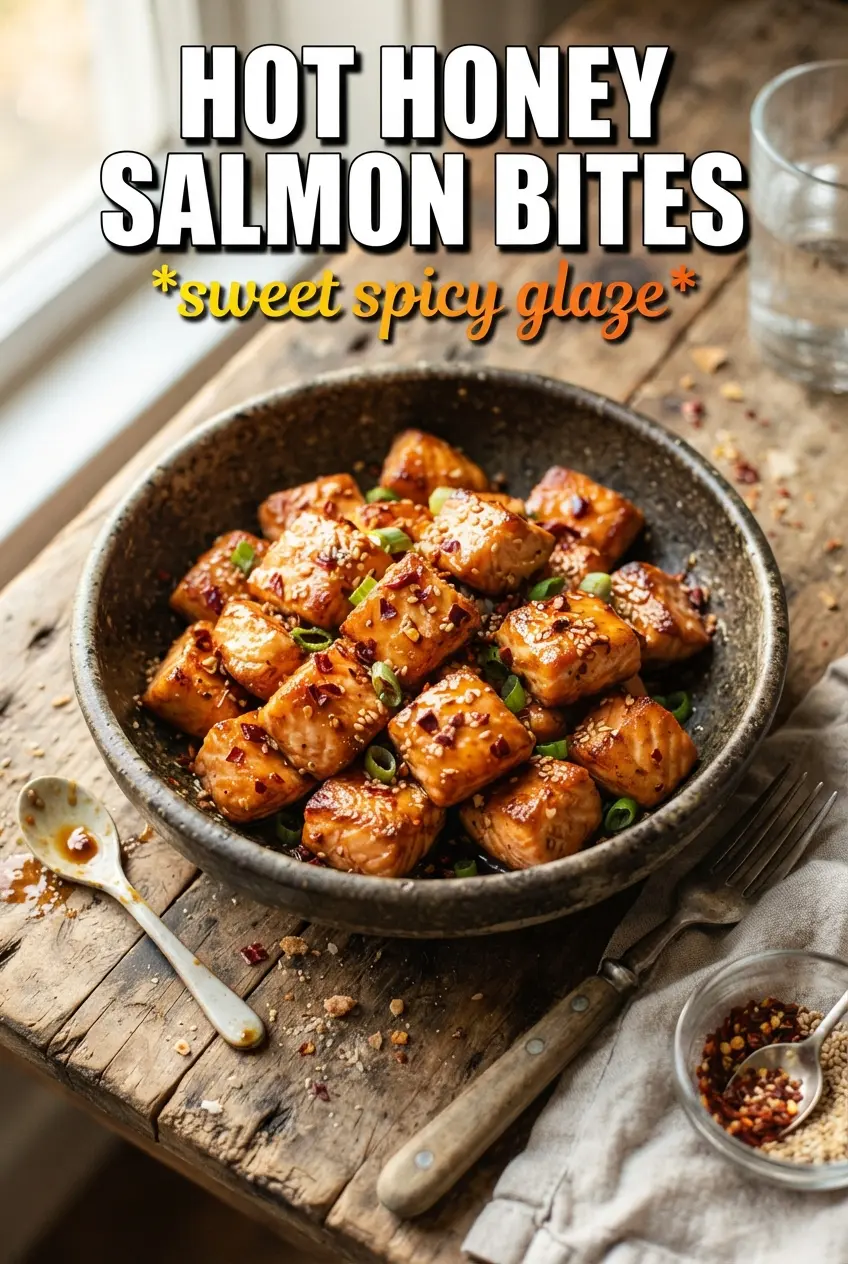
Crispy hot honey salmon bites hit the table with a sticky glaze that clings to every edge and a center that stays tender, not dry. The contrast is the whole point here: a quick sear for crunch, then a fast toss in a sweet-heat sauce that turns glossy in the pan. When they’re done right, each bite tastes bold enough for dinner but still light enough that you’ll want to make them again the next night.
The trick is treating the salmon like something that needs space, not stirring it around like a skillet full of vegetables. A dusting of cornstarch helps the outside crisp fast, and the glaze comes together in the same pan so the browned bits season the sauce instead of getting washed away. A little soy sauce keeps the honey from tasting flat, while vinegar gives the glaze enough snap to balance the sweetness.
Below, I’ll walk you through the texture cues that tell you when the salmon is ready to flip, how to keep the glaze from turning gummy, and the easiest swaps if you want these a little milder or need a gluten-free version.
The salmon stayed crispy even after I tossed it in the glaze, and the sauce thickened in less than a minute just like you said. My husband kept picking pieces straight from the pan.
Save these hot honey salmon bites for a fast dinner with crispy edges and a sticky sweet-heat glaze.
The Secret to Crispy Salmon Bites Without Overcooking Them
The mistake most people make with salmon bites is moving them too soon. Once the fish goes into the hot skillet, it needs a minute to build a crust before you touch it. If you try to flip early, the coating tears and the surface sticks, which is how you end up with soft, broken pieces instead of crisp edges.
Cornstarch does the heavy lifting here. It dries the outside just enough to help the salmon brown quickly, and that matters because salmon overcooks fast once the heat gets going. Medium-high heat is the sweet spot: hot enough for color, not so hot that the outside burns before the center turns opaque.
- Salmon: Skinless fillets cut into even cubes cook at the same pace, which keeps you from having a few dry pieces and a few underdone ones. Use fresh or fully thawed salmon for the cleanest sear.
- Cornstarch: This is what gives the bites their crisp shell. Flour won’t behave the same way here; it tends to make the coating heavier.
- Smoked paprika: It adds a little depth under the glaze. If you use regular paprika, the bites will still work, but they’ll taste a little flatter.
- Olive oil: You need enough oil to coat the pan so the salmon browns instead of steaming. If your skillet is dry, the coating will stick before it crisps.
What the Hot Honey Glaze Is Doing in the Pan

Honey gives the glaze its shine and sticky finish, but it needs the other ingredients around it or it just tastes sweet. Sriracha brings heat and a little garlic, soy sauce adds salt and depth, and apple cider vinegar keeps the glaze from feeling heavy. Red pepper flakes are there for a sharper, more noticeable heat at the end.
If you need a substitute for the soy sauce, use tamari or coconut aminos. Tamari keeps the same savory backbone and is the best gluten-free swap. Coconut aminos work too, but they’re sweeter, so the glaze will lean softer and you may want a little extra vinegar to keep the balance.
The glaze should simmer just long enough to turn loose and glossy. If it cooks too long before the salmon goes back in, it can get sticky and thick in the pan instead of coating the fish cleanly.
Getting the Sear, the Glaze, and the Toss Right
Coating the Salmon Evenly
Pat the salmon dry before you season it. Any surface moisture will fight the cornstarch and keep the bites from crisping. Toss gently until the cubes look lightly dusted, not caked, because too much starch leaves a dusty texture instead of a thin crust.
Building Color in the Skillet
Heat the oil until it shimmers, then lay the salmon in a single layer. The pieces should sizzle as soon as they hit the pan. Let them sit undisturbed for 2 to 3 minutes per side until the edges look golden and the salmon releases easily. If it sticks, it needs another few seconds.
Turning the Pan Drippings into Sauce
Once the salmon is out, pour the glaze ingredients into the same skillet. The pan will hiss and loosen the browned bits, which is exactly what you want. Stir just until the sauce bubbles and starts to thicken, then return the salmon immediately so it gets coated before the glaze reduces too far.
Finishing with a Fast Toss
After the salmon goes back in, toss for about a minute. You’re looking for a shiny coat that clings to the bites without pooling heavily in the pan. If the sauce gets too thick, pull the skillet off the heat and splash in a teaspoon of water to loosen it.
How to Adjust These Salmon Bites for Different Needs
Milder Hot Honey Salmon
Cut the sriracha in half and leave out the red pepper flakes. You’ll still get a sweet-savory glaze with a little warmth, but the heat will sit in the background instead of leading the dish.
Gluten-Free Version
Swap the soy sauce for tamari or coconut aminos. Tamari gives you the closest match in savory depth, while coconut aminos make the glaze a little sweeter and lighter.
Air Fryer Salmon Bites
Cook the coated salmon in a preheated air fryer until crisp and just cooked through, then toss with the glaze in a bowl instead of the skillet. You won’t get quite the same pan-seared crust, but the edges still crisp up nicely and the glaze coats cleanly.
Storage and Reheating
- Refrigerator: Store leftovers in an airtight container for up to 2 days. The coating softens as it sits, but the flavor stays strong.
- Freezer: I don’t recommend freezing the glazed salmon bites. The texture turns soft and the glaze loses its glossy finish after thawing.
- Reheating: Reheat gently in a skillet over low heat or in a 300°F oven until warmed through. High heat will dry out the salmon and can push the glaze from sticky to burnt.
Questions I Get Asked About This Recipe
Hot Honey Salmon Bites
Ingredients
Equipment
Method
- Toss the salmon cubes with cornstarch, smoked paprika, salt, and pepper until every piece looks lightly dusted. The coating should cling evenly with no dry patches.
- Heat the olive oil in a cast iron skillet over medium-high heat until shimmering. Add salmon in a single layer and cook undisturbed for 2–3 minutes per side until crispy and golden, then remove from the pan.
- In the same skillet, mix honey, sriracha, soy sauce, apple cider vinegar, and red pepper flakes. Simmer for 1 minute, watching for a glossy bubbling syrup.
- Return the salmon to the skillet and toss to coat in the hot honey glaze, making sure the sauce clings to the browned surfaces. You should see a shiny coat forming on the cubes.
- Cook for 1 more minute until the glaze thickens around the bites, leaving a sticky sheen. The sauce should look reduced and lightly clinging rather than runny.
- Garnish with green onions and serve immediately. For best texture, serve hot so the coating stays crisp.