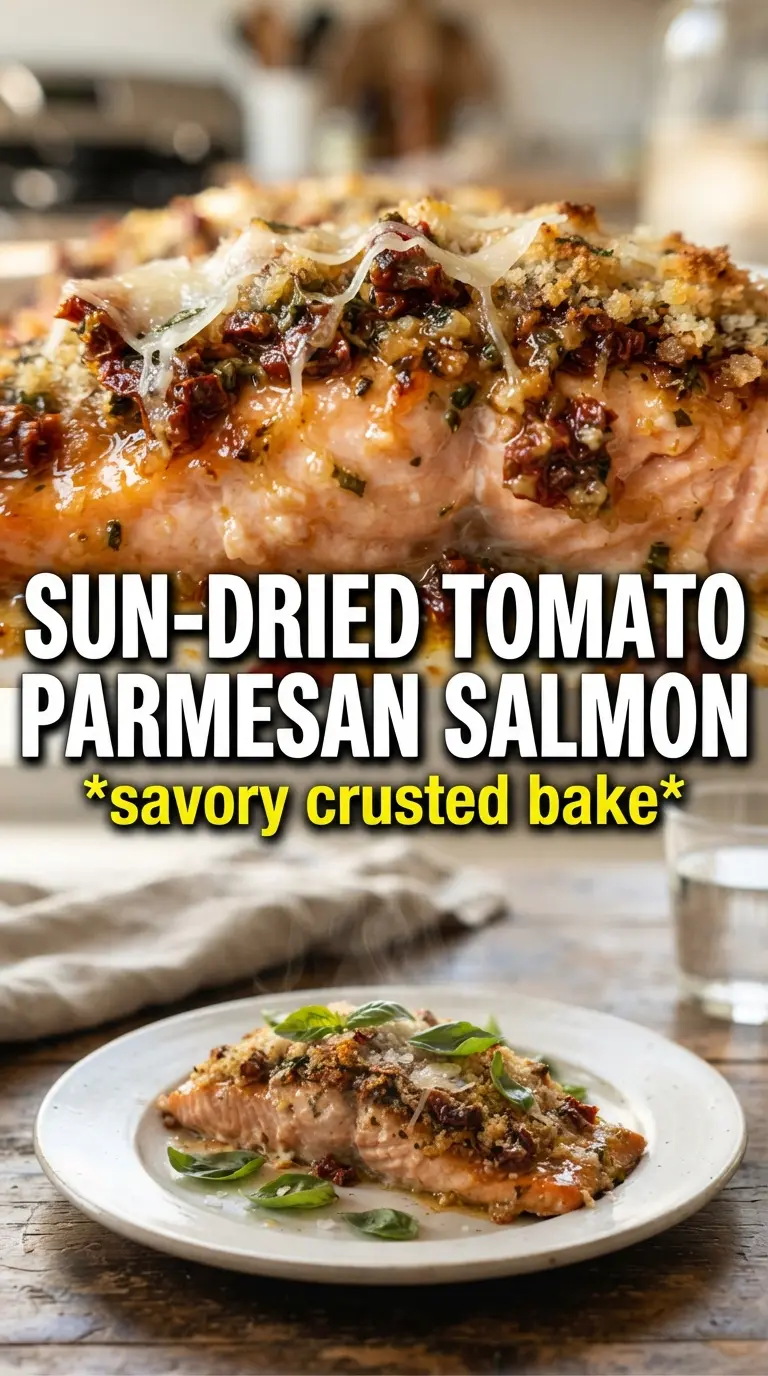
Sun-dried tomato parmesan crusted salmon lands on the plate with a golden, savory cap that stays crisp enough to crack when you cut into it. Underneath, the salmon stays tender and flaky, with the tomato pieces giving every bite a little chewy intensity and a concentrated sweet-tangy note that keeps the crust from tasting flat.
The trick is using the tomato oil in the crumb mixture instead of plain oil. It carries more of that sun-dried tomato flavor straight into the crust, and it helps the parmesan and panko brown without turning greasy. The mayo layer underneath sounds unusual, but it gives the topping something to cling to and helps protect the fish so the crust can finish before the salmon dries out.
Below, I’ll walk through the part that matters most: getting the crust to stick firmly and bake up evenly instead of sliding off the fish. I’ve also included a few swaps for different diets and a couple of practical fixes for the most common salmon mistakes.
The crust browned beautifully and stayed on the salmon instead of sliding off, and the little bits of sun-dried tomato made every bite taste richer. I baked it for 16 minutes and the fish was just flaking at the center.
Save this sun-dried tomato parmesan crusted salmon for the nights when you want a crisp topping and tender baked salmon without a fussy sauce.
The Crust Stays Put Because the Fish Stays Dry
The biggest mistake with crusted salmon is piling on a wet topping and hoping it behaves. Salmon naturally gives off moisture as it bakes, and if the surface is bare, that steam softens the crust before it has time to brown. The mayo here solves two problems at once: it gives the topping something sticky to grab, and it forms a thin barrier so the fish underneath stays juicy.
Press the crust on firmly. Not gently. You want the panko, parmesan, and chopped tomatoes packed into the mayo layer so they bake into one cohesive lid instead of a loose scatter of crumbs. A hot oven finishes the job quickly enough to brown the topping before the salmon overcooks, which is why this works best at 425°F rather than a lower, slower temperature.
What the Sun-Dried Tomatoes Are Really Doing Here
- Sun-dried tomatoes in oil — These bring concentrated tomato flavor and a chewy little burst in the crust. Dry-packed sun-dried tomatoes can work, but they’ll taste sharper and less plush unless you soak them first. Chop them finely so they spread through the crust instead of falling off in clumps.
- Parmesan — This is what gives the crust its salty backbone and helps it bake into a lacy, browned top. Use finely grated parmesan, not big shreds, or the mixture won’t bind as well. The pre-grated shelf-stable stuff works in a pinch, but freshly grated melts and browns better.
- Panko breadcrumbs — Panko keeps the topping light and crisp instead of dense. Regular breadcrumbs will work, but the crust will be tighter and a little less shattery. If you need gluten-free, use a gluten-free panko and the texture stays close.
- Mayonnaise — This is the glue. It also adds a little fat, which helps the crust brown without drying out the fish. If you want a lighter result, use a thin layer of Greek yogurt, but expect a tangier finish and a topping that browns a little less evenly.
- Fresh basil — Basil keeps the crust from leaning too salty and heavy. Dried basil won’t give the same fresh lift, so if you can’t get fresh, use a smaller amount of chopped parsley instead.
Building the Topping So It Browns Before the Salmon Overcooks
Mix the Crust First
Stir the chopped sun-dried tomatoes, parmesan, panko, tomato oil, garlic, and basil together until every crumb looks lightly stained and moistened. You’re aiming for a mixture that holds together when pinched, not a dry pile that falls apart on the fish. If it looks sandy, add a touch more oil from the jar rather than more mayonnaise later, since the crust should stay textured, not paste-like.
Prep the Salmon Surface
Pat the fillets dry before seasoning them with salt and pepper. Any extra surface moisture turns into steam and works against the crust, especially around the edges. Set the fillets on a lined baking sheet with a little space between them so the heat can move around each piece instead of trapping moisture underneath.
Press on the Mayo Layer and Crust
Spread a thin layer of mayonnaise over the top of each fillet, then pack the tomato-parmesan mixture on firmly. Press down with your fingertips so the crust actually adheres; if you just sprinkle it on, it will slide off as soon as the fish starts to release steam. The layer should look thick and even, with no bare salmon peeking through.
Bake Until the Top Turns Deep Gold
Bake at 425°F for 15 to 18 minutes, depending on the thickness of the fillets. The crust should turn deep golden with darker browned spots, and the salmon should flake easily at the thickest part. If the topping is browning too fast before the fish is done, move the pan to a lower rack for the last few minutes rather than dropping the oven temperature.
How to Adapt This Salmon for Different Plates and Pantry Days
Gluten-Free Version
Swap in gluten-free panko and keep the rest the same. The crust stays crisp and savory, though the crumbs may brown a little faster, so start checking a minute or two early.
Dairy-Free Version
Use a dairy-free parmesan-style alternative with decent saltiness and keep the mayo, or swap in a dairy-free mayo if needed. The crust will still cling and crisp, but it won’t have quite the same nutty sharpness as real parmesan.
What to Do With Thicker Fillets
For salmon closer to 1 1/2 inches thick, give it the full 18 minutes and check the center before pulling it out. Thicker pieces need the extra time for the middle to turn opaque without burning the crust, so a brief extra bake is better than undercooking the fish.
Storage and Reheating
- Refrigerator: Store leftovers in an airtight container for up to 2 days. The crust softens, but the flavor stays good.
- Freezer: Freezing isn’t ideal once the salmon is cooked, since the crust loses its texture. If you need to prep ahead, assemble the topping and freeze it separately, then bake the salmon fresh.
- Reheating: Warm it in a 300°F oven for 8 to 10 minutes until just heated through. The microwave makes the crust soggy and pushes the salmon past tender, so skip it unless you don’t mind the texture change.
Questions I Get Asked About This Recipe
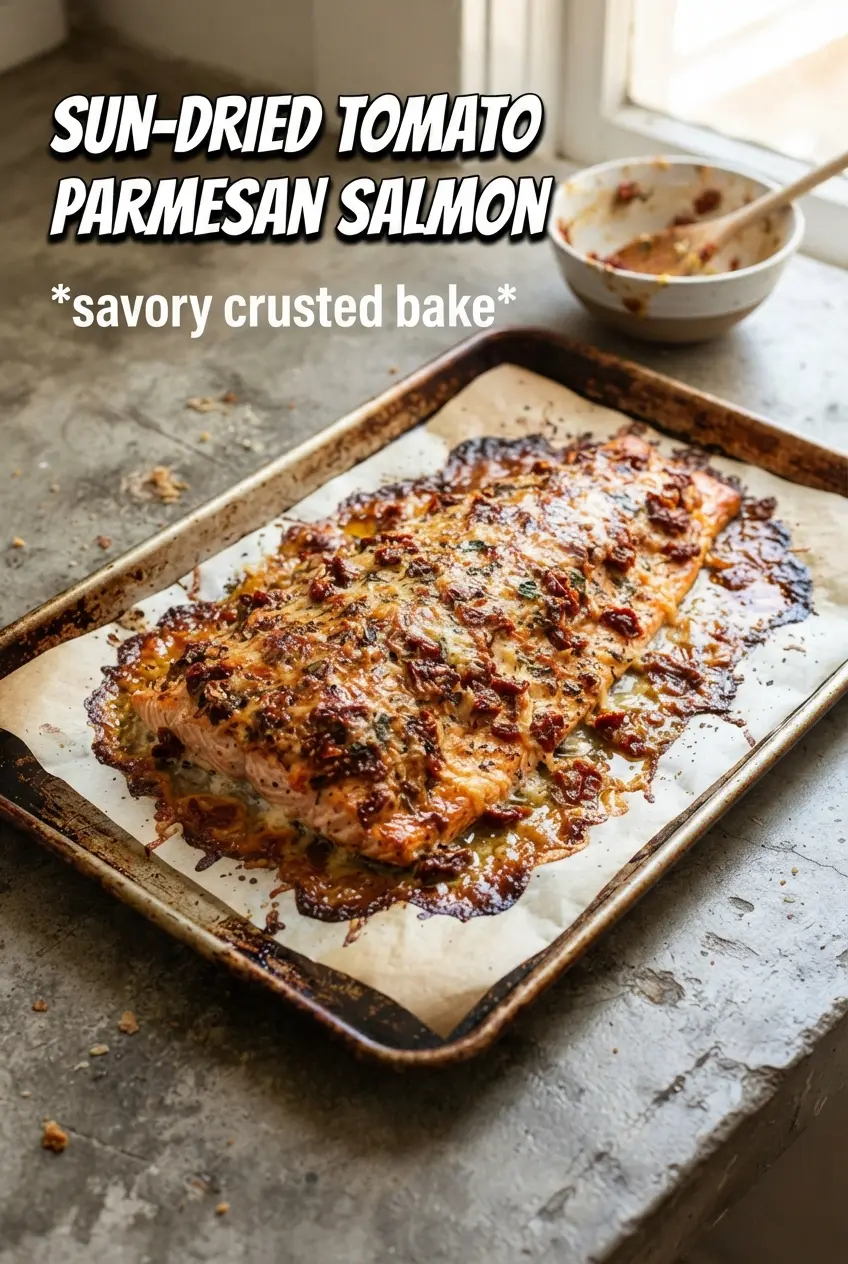
Sun-Dried Tomato Parmesan Crusted Salmon
Ingredients
Equipment
Method
- Preheat the oven to 425°F, then mix sun-dried tomatoes, parmesan, panko, sun-dried tomato jar oil, garlic, and basil until combined. The mixture should look evenly speckled with red tomato pieces.
- Season the salmon fillets with salt and pepper, then place them on a lined sheet pan. Aim for even seasoning across the top surface.
- Spread mayonnaise over the top of each salmon fillet. Cover the surface so the crust can adhere.
- Press the sun-dried tomato parmesan mixture firmly onto the mayo layer on each fillet. Press gently but firmly so the crust looks packed on, not loose.
- Bake at 425°F for 15–18 minutes until the crust is deep golden and the salmon flakes easily. Look for a browned, crisp-looking top with visible red tomato flecks.
- Serve immediately with lemon wedges. Squeeze lemon over the crust and salmon for brightness.