Sweet and spicy pineapple salmon comes out with sticky edges, glossy glaze, and salmon that stays tender in the center instead of drying out under a sugary coating. The pineapple gives the sauce brightness, the honey brings body, and the sriracha keeps the whole thing from drifting into one-note sweetness. It lands on the table looking like a takeout-order upgrade, but it cooks fast enough for a regular weeknight.
The trick is thickening the glaze before it ever hits the fish. Pineapple juice carries a lot of liquid, and if you brush it on too early or leave it thin, it runs off the salmon and pools on the pan. A quick cornstarch slurry turns it into a sauce that clings, caramelizes in the oven, and finishes under the broiler with those dark, sticky edges everybody fights over.
Below, I’ll walk through the part that matters most: how to keep the salmon juicy while still getting that amber glaze to set. I’ve also included a few swaps if you need to work with frozen salmon, cut the heat back, or make the whole dish gluten-free.
The glaze thickened up beautifully and actually stayed on the salmon instead of sliding off. I broiled it for the last 2 minutes and the edges caramelized just like the picture. The pineapple chunks on the tray were the best part.
Save this sweet and spicy pineapple salmon for a glossy weeknight dinner with caramelized edges and juicy pineapple in every bite.
The Reason the Glaze Sticks Instead of Sliding Off
The biggest mistake with pineapple-glazed salmon is treating the sauce like a marinade and expecting it to do everything at once. Pineapple juice is thin, honey burns if it goes in too thick, and salmon releases moisture as it cooks. If the glaze isn’t cooked down first, it thins out in the oven and leaves you with wet fish and sugary runoff on the pan.
This version fixes that in two places. First, the glaze gets simmered until it turns syrupy enough to coat the back of a spoon. Second, the salmon is brushed with only half the sauce before the rest is saved for finishing, which keeps the surface flavorful without drowning the fillets. The broiler at the end matters, too — that short blast is what turns the glaze amber instead of just warm and sticky.
- Cooked pineapple juice — Fresh juice works, bottled juice works, but it has to be reduced. That’s what concentrates the pineapple and keeps the glaze from acting watery.
- Cornstarch slurry — This is the difference between a brushable glaze and a pan sauce that runs everywhere. Stir it in at a simmer, not a hard boil, so it thickens cleanly instead of turning lumpy.
- Sriracha — The heat doesn’t just add spice; it cuts the sweetness and keeps the glaze balanced. If you want less heat, reduce it rather than skipping it entirely.
- Salmon with the skin removed or on — Either works, but skin-on fillets hold together a little better under the broiler. If you use skinless salmon, line the pan well and watch the edges so they don’t overcook.
How to Build the Glossy Finish Without Overcooking the Fish
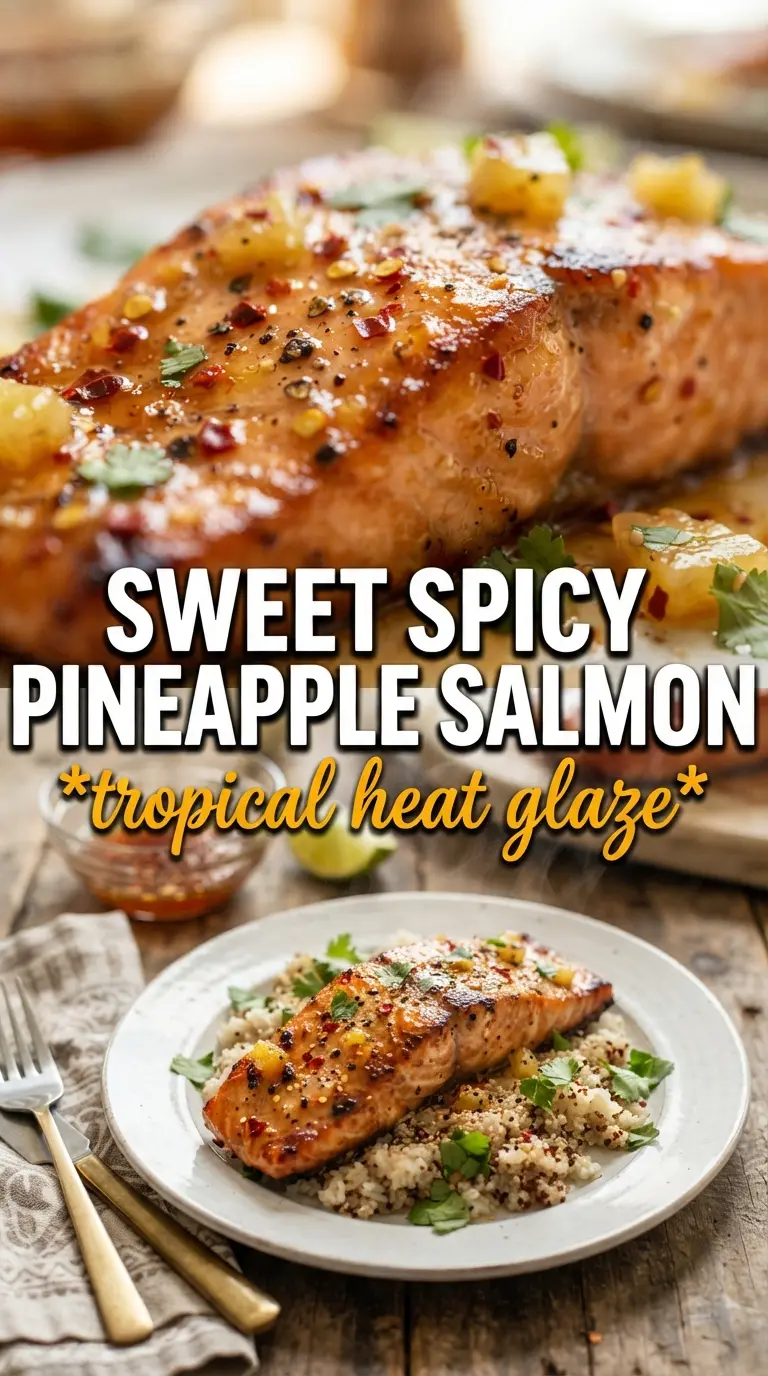
- Salmon — Choose fillets that are similar in thickness so they finish at the same time. Thicker pieces stay juicier under the broiler, while very thin tail pieces can dry out fast.
- Pineapple juice — Use the juice to build the glaze, not as a raw soak. The heat mellows the acidity and turns it into something sticky and polished.
- Fresh pineapple chunks — These caramelize around the salmon and pick up the glaze from the pan. Canned pineapple works in a pinch, but drain it well or the tray turns syrupy instead of browned.
- Soy sauce — This adds salt and depth, and it keeps the sweetness from tasting flat. For a gluten-free version, use tamari or coconut aminos, though coconut aminos will taste a touch sweeter.
The 20 Minutes That Actually Matter
Reducing the Glaze
Bring the pineapple juice, honey, soy sauce, sriracha, and garlic to a simmer first, then stir in the cornstarch slurry and let it bubble just until it turns glossy and lightly thickened. It should coat a spoon, not turn into jelly. If it gets too thick in the pan, add a teaspoon of water at a time until it brushes on smoothly.
Marinating the Salmon
Brush the salmon with half the glaze and let it sit for 20 minutes. That’s long enough for the surface to pick up flavor, but not so long that the acidity starts to change the texture of the fish. If you leave salmon in an aggressively sweet marinade for much longer, the outside can get a little cured and the glaze won’t cling as cleanly.
Baking With the Pineapple
Set the salmon on a lined baking sheet with the pineapple chunks scattered around it. Bake at 400°F until the fish is mostly opaque and flakes at the thickest part with gentle pressure, usually 15 to 18 minutes depending on thickness. Spoon or brush on more glaze halfway through so the surface builds layers instead of just soaking it up all at once.
Finishing Under the Broiler
Move the tray under the broiler for 2 to 3 minutes and watch it closely. The glaze should darken at the edges and the pineapple should pick up a few caramelized spots. If you walk away here, the honey can go from glossy to burnt fast, so keep the pan near the top of the oven and pull it the second you see that amber color.
How to Adapt This Pineapple Salmon Without Losing the Sticky Glaze
Make It Gluten-Free
Swap the soy sauce for tamari or coconut aminos. Tamari keeps the same savory depth, while coconut aminos taste a little milder and sweeter, so the finished glaze may need an extra splash of soy-free salt or a touch more sriracha to keep the balance.
Dial Back the Heat
Use half the sriracha and taste the glaze before it thickens. You still want a little heat because it keeps the pineapple from tasting candy-sweet, but reducing the chili gives you a softer, more family-friendly finish without changing the texture.
Use Frozen Salmon
Thaw it completely and pat it dry before glazing. Extra surface moisture is the main reason frozen salmon can slide around on the pan and steam instead of caramelizing, so drying it well matters more here than in a plain baked salmon recipe.
Storage and Reheating
- Refrigerator: Store leftovers in an airtight container for up to 3 days. The glaze will thicken more in the fridge, but the salmon stays moist if it was cooked just until flaky.
- Freezer: It freezes, but the texture of the glaze changes a bit after thawing. Freeze the salmon and pineapple in a single layer first, then transfer to a container for up to 2 months.
- Reheating: Reheat gently in a 300°F oven, covered loosely with foil, until warmed through. A microwave can make the salmon tough and can cause the glaze to separate, so low and slow is the safer move.
Questions I Get Asked About This Recipe
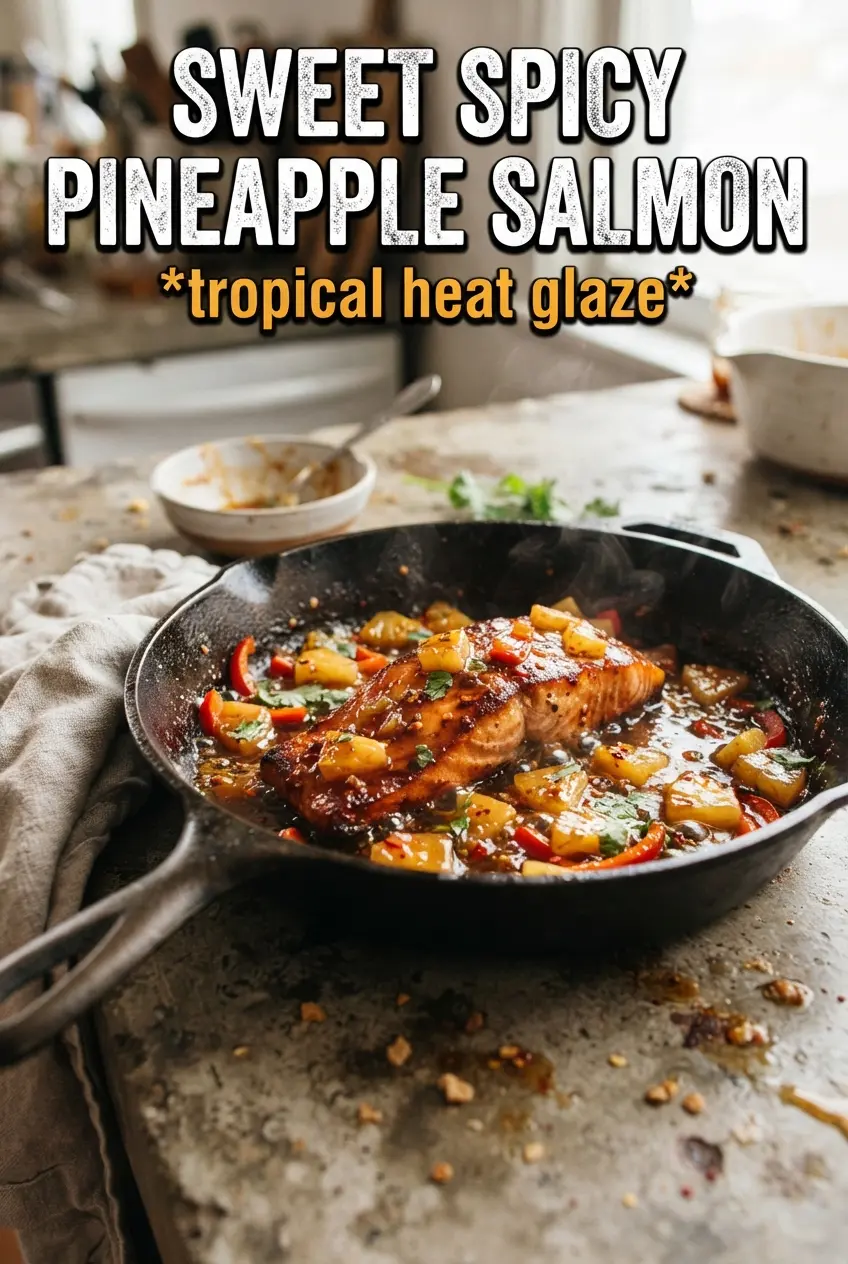
Sweet and Spicy Pineapple Salmon
Ingredients
Equipment
Method
- In a saucepan, mix pineapple juice, honey, soy sauce, sriracha, and minced garlic until combined. Bring to a simmer over medium heat and stir often.
- Stir the cornstarch mixture into the simmering sauce and cook until thickened, about 1–2 minutes. The glaze should look smooth and glossy.
- Season the salmon fillets with salt and pepper to taste on both sides. Brush with half the pineapple glaze, coating lightly.
- Let the salmon marinate for 20 minutes so the glaze clings. It will look slightly tacky as it rests.
- Preheat the oven to 400°F. Arrange the salmon on a lined sheet pan with fresh pineapple chunks around it.
- Bake for 15–18 minutes, brushing the salmon with extra glaze halfway through. The salmon should be opaque and the pineapple should look lightly browned.
- Broil for 2–3 minutes until caramelized. Look for amber, glossy spots on the glaze and lightly charred edges on pineapple.
- Top with fresh cilantro for garnish right before serving. The surface should still be shiny from the reduced pineapple glaze.