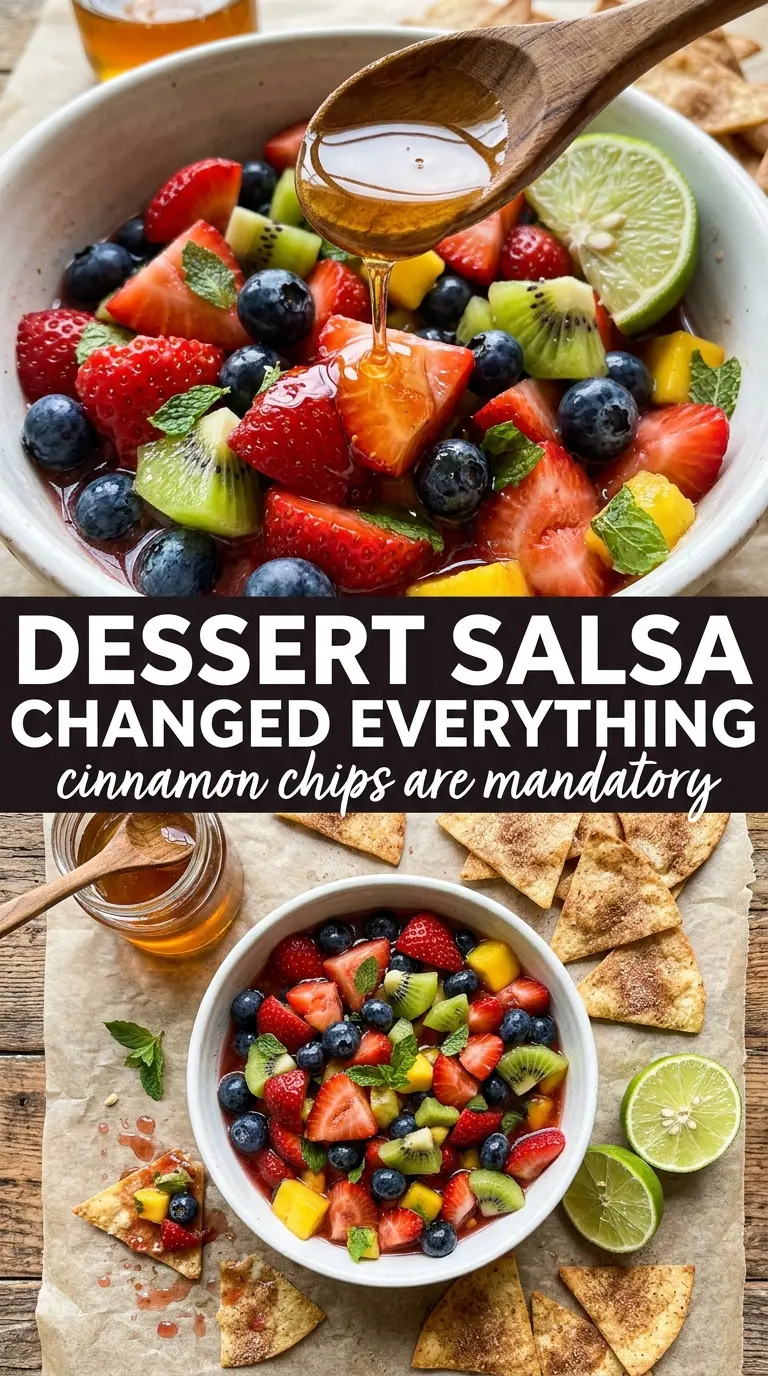
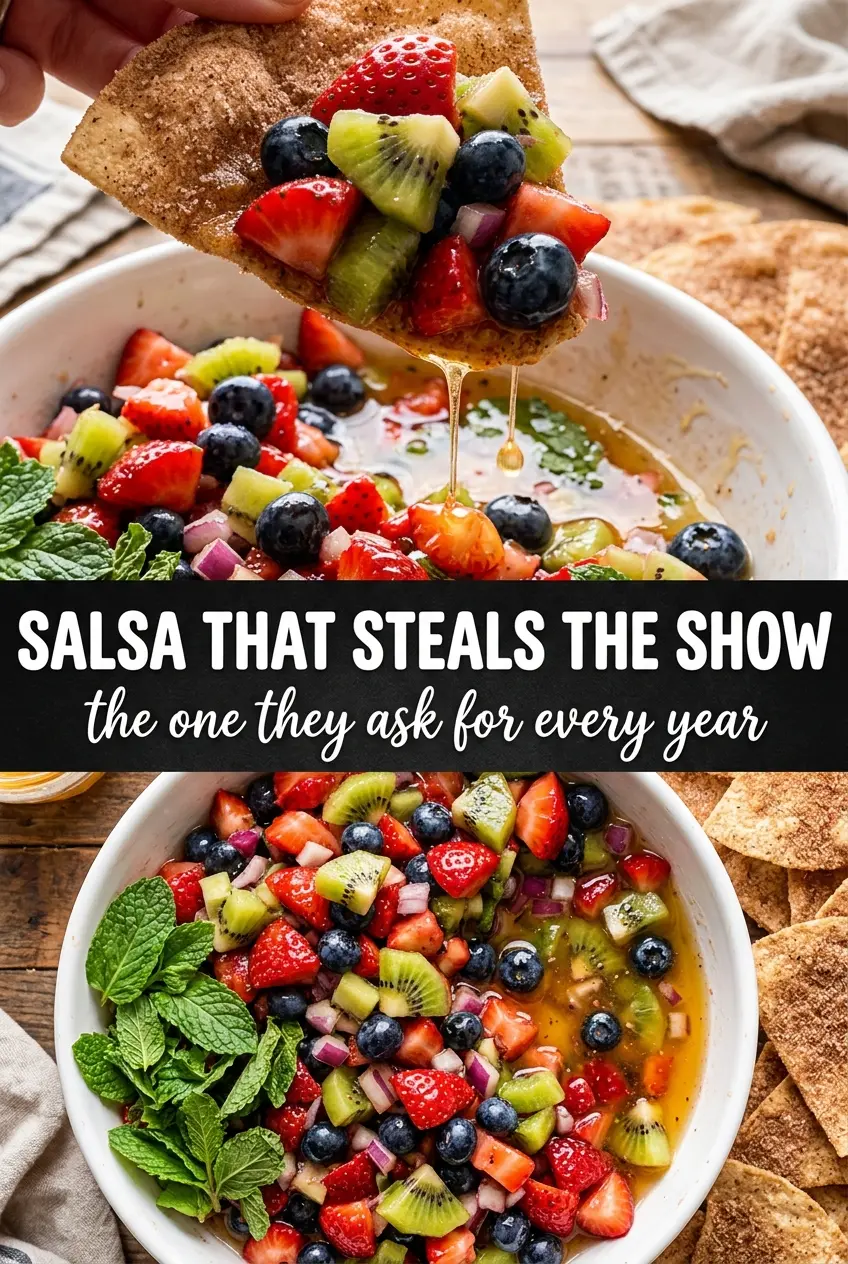
Sweet fruit salsa disappears fast when the fruit is cut small, chilled just long enough to turn glossy, and served with something crunchy to scoop it up. The strawberries soften into the honey-lime syrup, the blueberries hold their shape, and the white peaches bring enough perfume to keep each bite from tasting flat or one-note. It eats like a fresh dessert dip, but it still feels bright and light enough to sit right next to the rest of a party spread.
The trick here is balance. Dice the fruit into even pieces so the juices distribute instead of flooding one corner of the bowl, then let the salsa rest for a short chill so the honey loosens and the lime wakes everything up. Too much mixing bruises the strawberries and turns the whole thing mushy; a gentle stir is all it needs. The mint stays in the background, where it should be, giving the salsa a cool edge without taking over.
Below, you’ll find the small details that keep the fruit crisp, the sweet-tart flavor balanced, and the chips from getting soggy before the bowl is empty.
The fruit stayed in little jewel-like pieces after chilling, and the honey-lime syrup was just enough to tie it together without making it watery. I served it with cinnamon pita chips and the bowl was scraped clean in minutes.
Like this red, white, and blue fruit salsa? Save it to Pinterest for the next party when you need a fresh appetizer with cinnamon chips.
The Part That Keeps Fruit Salsa from Turning Soupy
Fruit salsa sounds simple until the bowl turns loose and watery after five minutes on the counter. That usually happens when the fruit is cut too large, overmixed, or too ripe. Small, even dice give the honey-lime mixture enough surface area to coat every piece, and the short chill time lets the fruit release a little juice without collapsing.
White peaches or nectarines matter here because they bring sweetness without drowning out the strawberries and blueberries. If you use yellow peaches, the salsa still works, but the flavor will be a little more floral and the color won’t stay as crisp and patriotic. The key is to stop mixing as soon as everything looks glossy. That sheen is what you’re after.
What Each Ingredient Is Actually Doing in This Recipe
- Primary ingredient (the star) — Quality matters most. Choose the best you can find.
- Cooking medium (oil, butter, or broth) — This carries flavors and prevents dryness.
- Seasonings (salt, pepper, spices, herbs) — Layer flavors so nothing overpowers. Build depth gradually.
- Aromatics (garlic, onion, herbs) — Cook with fat to bloom flavors. Become the foundation.
- Supporting ingredients — Complement the main ingredient without overpowering it.
- Sauce or liquid (if applicable) — Brings flavors together. Balance richness with acid.
- Acid (lemon, vinegar, wine, or other) — Brightens and prevents flat-tasting results.
- Final finish (garnish, glaze, or sauce) — Prevents one-dimensional taste and adds visual appeal.
What the Honey, Lime, and Mint Are Doing in the Bowl
- Honey — This doesn’t just sweeten the salsa; it pulls the fruit juices into a light syrup that clings to the fruit instead of pooling at the bottom. If your fruit is already very ripe, cut the honey back slightly so the salsa stays bright instead of candy-like.
- Lime juice and zest — The juice sharpens the sweetness, and the zest brings the lime flavor forward without adding extra liquid. Fresh lime matters here because bottled juice tastes flatter and can make the salsa feel dull.
- Strawberries — These should be finely diced so they hold their shape while still releasing enough juice to flavor the bowl. Bigger chunks look pretty for about a minute, then they slip into a messy, overripe texture.
- Mint — Use a light hand. It should cool the fruit, not make the salsa taste like a mojito. Chop it finely so it distributes evenly and doesn’t clump.
- Cinnamon sugar pita chips or graham crackers — The crunchy, sweet dipper is part of the recipe, not an afterthought. Cinnamon chips give the best contrast, but graham crackers work when you want something softer and a little more dessert-like.
Chilling the Fruit Just Long Enough to Draw Out the Syrup
Building the Bowl
Start with the strawberries and peaches in small, even pieces, then add the blueberries whole. The goal is a mix that looks jewel-like and scoops easily, not a chopped fruit salad with random sizes. Once the honey, lime juice, zest, and mint go in, stir with a light hand until every piece is coated. If you stir hard, the strawberries break down and the salsa loses its clean, fresh texture.
Letting the Flavor Settle
Cover the bowl and chill it for 30 minutes. That rest time is where the salsa turns from chopped fruit into something spoonable and glossy. Skip the chill and the honey sits on the fruit instead of blending with the juices; chill it too long and the strawberries start to slump. One more gentle stir before serving brings the syrup back up from the bottom of the bowl.
Serving It the Right Way
Spoon the salsa into a serving bowl just before it hits the table and set the chips alongside it. If you dump the chips into the bowl too early, they’ll soften fast from the fruit juices. This is best served cold, with the fruit still bright and the chips still crisp enough to snap when you scoop.
How to Adapt This for Different Crowds and Diets
Make it vegan
Swap the honey for maple syrup or agave. Maple gives the salsa a deeper note, while agave stays neutral and keeps the fruit flavor front and center. Start with the same amount, then taste after chilling since some sweeteners read a little sweeter than honey once the juice comes out of the fruit.
Lower-sugar version
Cut the honey to 1 tablespoon and let the fruit do more of the work. This keeps the salsa brighter and less syrupy, especially if your peaches are very ripe. The texture will be a touch looser, so serve it soon after chilling.
Swap the chips
Cinnamon sugar pita chips give the best crunch, but vanilla wafers or plain shortbread turn this into a more dessert-style dip. If you’re serving a crowd that prefers less sweetness, plain tortilla chips can work too, though the contrast will feel more snacky than dessert-like.
Storage and Reheating
- Refrigerator: Best eaten the day it’s made, but it will keep for up to 2 days. The fruit softens and the bowl gets juicier as it sits.
- Freezer: Don’t freeze it. The fruit texture turns mushy once thawed, and the syrup separates.
- Reheating: No reheating needed. Serve it cold after a short chill, and drain off a little excess liquid if the bowl sits out for a while.
Answers to the Questions Worth Asking
4th of July Fruit Salsa
Ingredients
Equipment
Method
- Dice the strawberries and peaches into small, uniform pieces and add them to a medium bowl with the blueberries (keep pieces similar in size so the salsa stays even).
- Add honey, lime juice, lime zest, and fresh mint to the bowl, then stir gently to combine without mashing the fruit (look for a glossy coating on the berries).
- Cover the bowl and refrigerate for 30 minutes so the flavors meld and the fruit releases juices (chilled salsa will look more vibrant and lightly syrupy).
- Stir once more before serving, then transfer to a serving bowl and serve alongside cinnamon sugar chips (the syrup should cling lightly to the fruit).