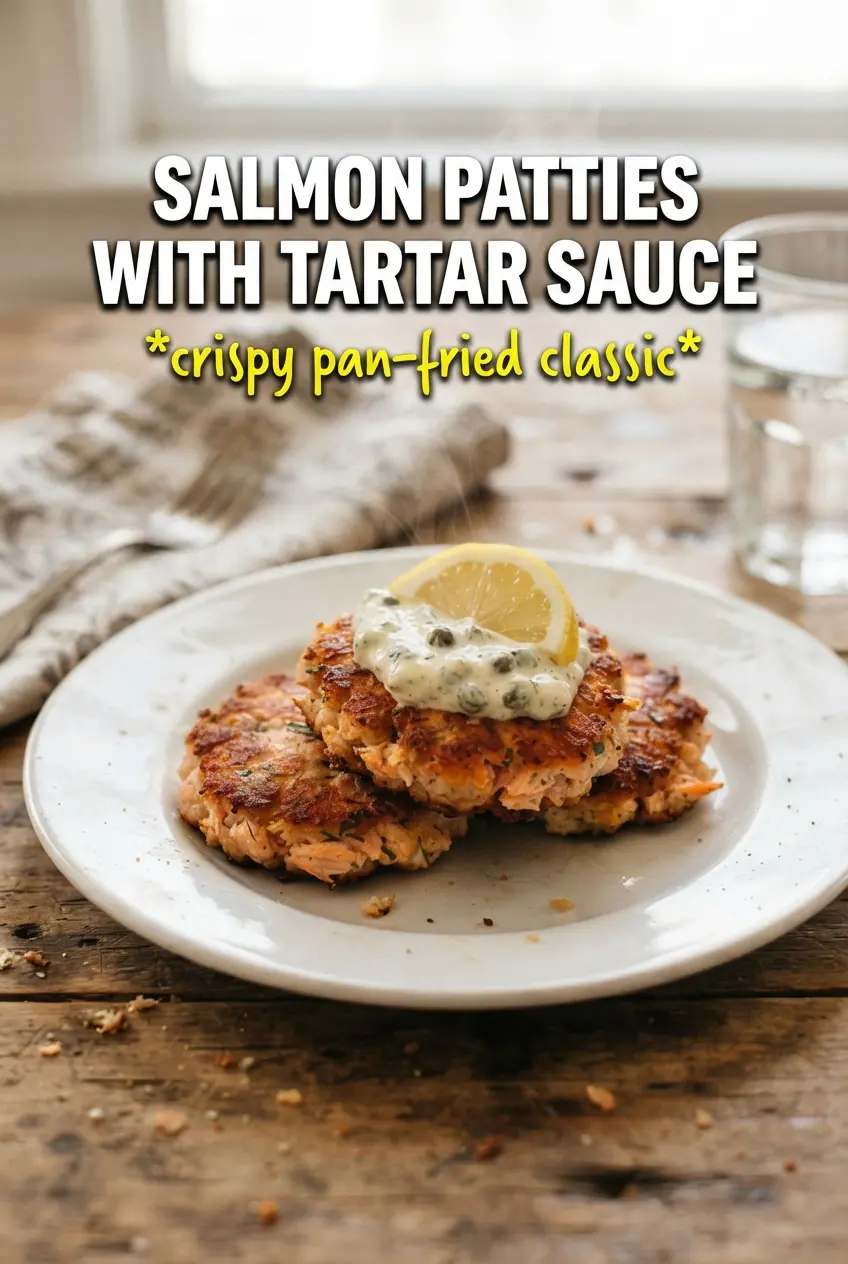
Golden-brown salmon patties with tartar sauce hit that sweet spot between crisp and tender that keeps them in regular rotation. The outside gets a deep, savory crust, while the inside stays moist and flaky instead of dry or pasty. That contrast is the whole point here, and it’s what makes a simple pantry dinner feel like something worth sitting down for.
The trick is in the balance. Canned salmon brings the main flavor, but breadcrumbs, mayo, and egg keep the patties soft enough to hold together without turning dense. Celery and red onion add crunch and sharpness, and a short chill in the fridge gives the mixture time to firm up before it meets the skillet. That rest makes a bigger difference than people expect.
Below, I’ll walk through the small choices that keep these salmon cakes from falling apart, plus the tartar sauce ratio that gives you a bright, creamy finish without drowning out the fish.
The patties held together beautifully after that quick chill, and the center stayed moist while the outside got crisp in butter. The tartar sauce was the perfect tangy finish.
Save these crispy salmon patties with tartar sauce for a fast dinner with a crunchy crust and a cool, tangy finish.
The Reason These Salmon Patties Hold Together Instead of Crumbling
Most salmon patties fail for one of two reasons: the mixture is too wet, or it never gets a chance to firm up before frying. Canned salmon can hold more moisture than you expect, especially if it wasn’t drained well, and that extra liquid makes the patties fragile in the pan. Breadcrumbs and egg handle structure, but the chill time is what sets that structure enough to survive the flip.
The other detail that matters is how hard you pack them. Press them into compact patties that feel cohesive, not loose and shaggy. If the mixture seems soft, let it sit in the fridge a few extra minutes instead of adding more breadcrumbs right away; too many crumbs turn the center dry and bready instead of tender.
What Each Ingredient Is Actually Doing in the Patties and Tartar Sauce

- Canned salmon — This is the backbone of the dish. It gives you rich salmon flavor without any extra prep, and it’s sturdy enough to hold its texture after pan-frying. Drain it well, but don’t obsess over making it bone-dry; a little moisture helps the patties stay tender.
- Breadcrumbs — These absorb excess moisture and help the patties form a crust that doesn’t collapse when you flip them. Fine breadcrumbs work best here. If you use panko, crush it a bit first so the patties don’t fall apart from a too-loose texture.
- Mayonnaise and eggs — Mayo adds fat and moisture, while the eggs bind everything together. That combination keeps the interior soft. If you skip the mayo, the patties can turn lean and crumbly.
- Dijon mustard — Dijon sharpens the salmon and gives the patties a little backbone. Regular yellow mustard will work in a pinch, but Dijon has a cleaner, more grown-up bite that fits this dish better.
- Celery, red onion, and parsley — These keep the patties from tasting flat. The celery adds crunch, the onion adds a little bite, and the parsley lightens the whole mixture. Dice them finely so they disappear into the patties instead of poking out and making the cakes fall apart.
- Butter and olive oil — Butter gives flavor and browning, while oil keeps the butter from burning too quickly. That mix is what gives you a deep golden crust without scorched spots in the pan.
- Tartar sauce — Mayo, sweet relish, and lemon juice make the cool, tangy finish that cuts through the richness of the fried patties. The relish brings sweetness and texture, and the lemon keeps the sauce from tasting heavy. Fresh lemon juice matters here more than bottled.
Getting the Golden Crust Without Drying Out the Center
Mix Just Until the Salmon Holds Together
Combine the salmon, breadcrumbs, eggs, mayo, mustard, celery, onion, parsley, salt, and pepper until everything looks evenly mixed. Stop there. If you keep stirring, the salmon breaks down too much and the patties lose that nice, flaky texture. The mixture should look cohesive and slightly sticky, not wet and loose.
Chill Before You Shape or Fry
Form the mixture into 8 patties, then refrigerate them for 15 minutes. That rest lets the breadcrumbs hydrate and the fats firm up, which makes the patties easier to handle. If they go into the skillet right away, they’re much more likely to spread or crack at the edges.
Fry in Butter and Oil Over Medium Heat
Heat the butter and oil together until the butter is foaming but not browning hard. Lay the patties in gently and leave room between them so the pan stays hot. Cook for 5 to 6 minutes per side until the outside is deep golden brown and the crust releases cleanly; if they’re sticking, the pan isn’t ready yet. Pull the heat down if the butter starts smoking, because burned butter gives you bitterness instead of the rich, savory crust you want.
Serve Them Hot With the Sauce on the Side
Stir together the tartar sauce ingredients and chill it while the patties cook. A cold sauce against a hot patty gives you the best contrast, and the flavor settles if it sits a few minutes. Add a squeeze of lemon at the table if you want a brighter finish, especially if your salmon is on the saltier side.
Three Ways to Adapt These Salmon Patties Without Losing the Good Part
Make Them Gluten-Free
Swap the breadcrumbs for certified gluten-free breadcrumbs or crushed gluten-free crackers. You’re still aiming for the same bind and moisture control, so use the same amount and let the mixture chill before shaping. The texture stays crisp on the outside and tender in the middle.
Make Them Dairy-Free
The patties themselves are already dairy-free if you use oil instead of butter in the skillet. Use all olive oil for frying, then keep the tartar sauce as written or choose a dairy-free mayo if needed. You’ll lose a little of the buttery flavor, but the crust still browns nicely.
Use Fresh Salmon Instead of Canned
Cook and flake about 1 pound of salmon, then let it cool before mixing. Fresh salmon gives a cleaner, less briny taste and a slightly firmer bite, but you’ll need to watch the moisture level because it can dry out faster than canned. If the mixture seems too loose, add another spoonful of breadcrumbs rather than more mayo.
Storage and Reheating
- Refrigerator: Store cooked patties in an airtight container for up to 3 days. They’ll soften a little as they sit, but the flavor holds up well.
- Freezer: Freeze cooked patties in a single layer, then transfer to a bag or container for up to 2 months. Thaw in the fridge before reheating so the centers warm evenly.
- Reheating: Warm them in a skillet over medium-low heat with a little oil until hot through. The oven works too, but the skillet brings back the crisp edges best. Don’t microwave them if you want to keep the crust.
Questions I Get Asked About This Recipe
Salmon Patties with Tartar Sauce
Ingredients
Equipment
Method
- In a bowl, mix the canned salmon, breadcrumbs, eggs, mayonnaise, Dijon mustard, celery, red onion, fresh parsley, salt, and black pepper until evenly combined, with no dry crumbs left. Stir until the mixture looks cohesive and clumps when pressed (no visible eggy streaks).
- Form the mixture into 8 equal patties about 3/4-inch thick. Set them on a plate and refrigerate for 15 minutes so they hold their shape and don’t crumble when flipped.
- Stir together mayonnaise, sweet relish, lemon juice, salt, and black pepper for the tartar sauce until smooth and creamy. Refrigerate for 15 minutes while the patties chill so the flavors meld.
- Heat butter and olive oil in a skillet over medium heat until the butter foams lightly. Place patties in the skillet and cook for 5–6 minutes, until the bottoms are deep golden brown and you can see crisp edges.
- Flip patties and cook another 5–6 minutes until both sides are deep golden brown and the patties feel set in the center. Remove to a plate and let them rest briefly so the interior stays moist.
- Serve salmon patties hot with tartar sauce alongside lemon wedges and fresh dill garnish. Spoon sauce over or at the side and cut one open to confirm the center is moist and herb-flecked.