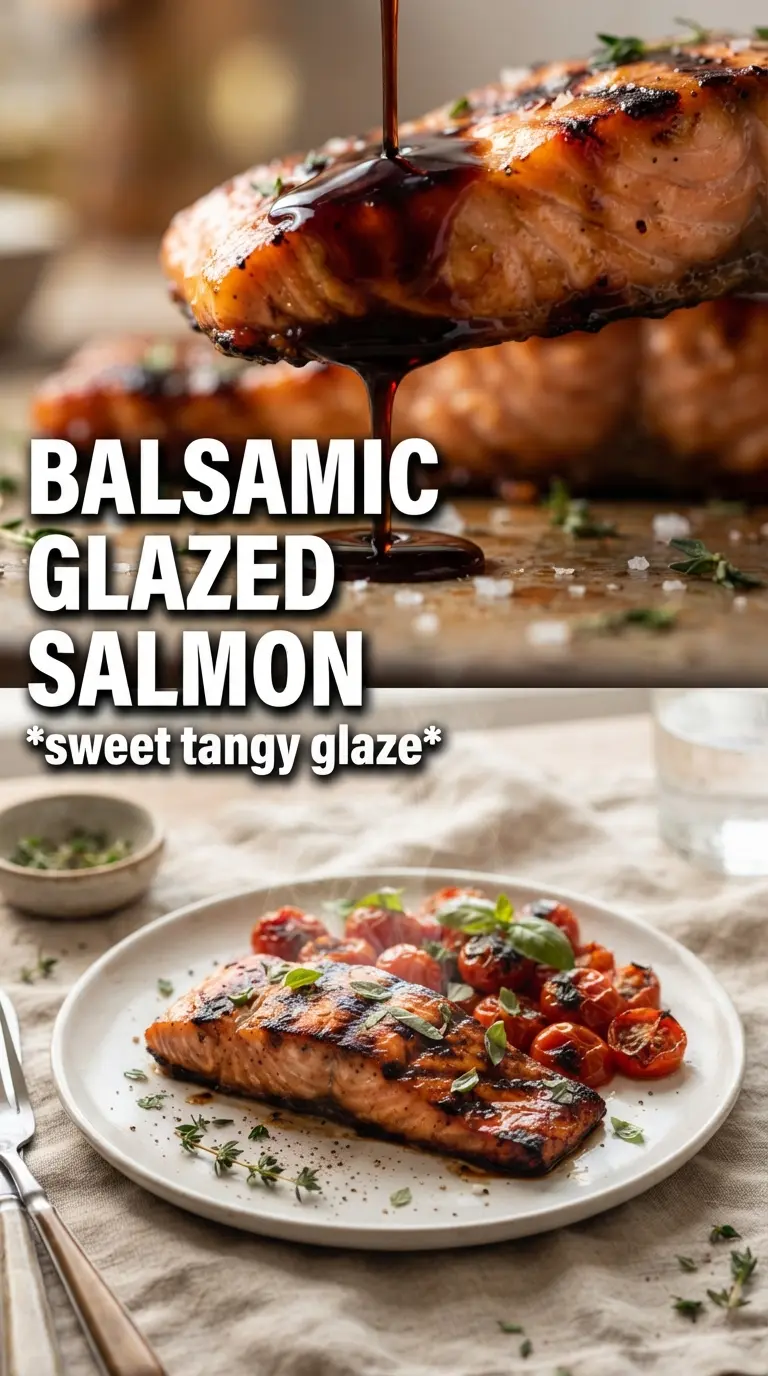
Glossy balsamic glazed salmon hits the pan with crisp edges, tender flakes, and a sweet-tart finish that clings to every bite. The glaze turns deep mahogany as it reduces, and when it’s spooned over the fish at the end, it settles into the flakes instead of sliding off the plate. That’s the difference between a sauce that just coats and one that actually stays where you want it.
The key is treating the salmon and the glaze as two separate jobs. The fish needs a hot pan and enough time to pick up color before you move it. The glaze needs its own few minutes to reduce until it looks syrupy and lightly nappes the spoon. If you combine those too early, the salmon overcooks before the sauce thickens, and the whole dish loses that lacquered finish.
Below, I’m walking through the exact timing that keeps the salmon moist and the balsamic reduction glossy, plus a few useful swaps if you need to work with what’s already in the kitchen.
The glaze reduced into a perfect syrup in about 4 minutes, and it coated the salmon without pooling all over the plate. I loved how the garlic stayed mellow and the rosemary made it taste restaurant-worthy.
Save this balsamic glazed salmon for the night you want crisp-edged fish and a glossy balsamic reduction without a long ingredient list.
The Trick to Keeping the Balsamic Glaze Glossy Instead of Grainy
Balsamic reduction can go from silky to sticky too fast if the heat is too high. Once the vinegar, honey, and mustard hit the pan, the goal is a steady simmer, not a hard boil. A hard boil drives off liquid too quickly and leaves you with a sharp, almost burnt edge before the sauce has time to thicken evenly.
The other common miss is letting the glaze reduce while the salmon keeps cooking. Pull the fish out first, then build the sauce in the same pan. Those browned bits left behind help the glaze taste rounder and more savory, and the fish only goes back in for the last minute, just long enough to get lacquered without drying out.
What Each Ingredient Is Actually Doing in This Salmon
- Salmon fillets — Pick fillets that are similar in thickness so they cook at the same pace. Skin-on works well here because it helps protect the flesh in the pan, but skinless also works if that’s what you have.
- Balsamic vinegar — This is the backbone of the glaze, so use a bottle you actually like the taste of. A harsh or overly acidic vinegar will stay harsh after reducing; a balanced one turns deep, sweet, and glossy.
- Honey — Honey gives the sauce body and helps it cling to the fish. Maple syrup can replace it, but the flavor gets a little darker and less floral.
- Dijon mustard — Dijon doesn’t make the sauce taste mustardy; it sharpens the glaze and helps it emulsify. Grainy mustard will work in a pinch, but the finish won’t be as smooth.
- Garlic — One quick 30-second sizzle is enough. If it browns before the vinegar goes in, it turns bitter, so add it only after the salmon comes out of the pan.
- Olive oil — Use enough to keep the fish from sticking and to help the surface brown evenly. You don’t need anything fancy, just a decent oil that can handle medium-high heat.
Building the Pan Sauce and Finishing the Fish at the Right Moment
Seasoning and Searing the Salmon
Pat the salmon dry, then season it right before it hits the pan. A dry surface gives you better browning, and that first sear is what keeps the texture from turning soft and steamed. Start with the skin-side up in the hot oil, then flip after about 4 minutes when the underside has a deep golden crust and the fish releases without sticking. If it clings to the pan, give it another 20 to 30 seconds; forcing it early tears the surface.
Reducing the Balsamic Glaze
Once the salmon is out, drop in the garlic for just a short sizzle, then add the balsamic vinegar, honey, and Dijon. Stir and watch the bubbles; you want the liquid to reduce until it looks shiny and slightly thick, like warm maple syrup. If it gets too far, pull the pan off the heat and stir in a teaspoon of water to loosen it. That keeps the glaze pourable instead of turning into a sticky candy shell.
Coating and Serving
Return the salmon to the pan and spoon the glaze over the top for about a minute. The fish only needs enough heat to warm through and absorb some of the sauce, not a full second cook. You’ll know it’s ready when the glaze clings in a smooth layer and the salmon flakes at the edges but still looks moist in the center. Finish with rosemary while the glaze is still hot so the herb’s aroma lifts right away.
How to Adapt This Salmon for Different Nights and Different Pantries
Make It Gluten-Free Without Changing the Texture
This recipe is naturally gluten-free as written, so there’s nothing to swap. Just check your Dijon label if you’re cooking for someone sensitive, since a few brands add thickeners or flavoring that aren’t always obvious.
Use Maple Syrup for a Deeper, Less Floral Glaze
Swap the honey for pure maple syrup if that’s what you’ve got. The glaze will taste a little darker and more earthy, and it may reduce a touch faster, so keep an eye on it during the last minute.
Make It Mildly Less Sweet
If you want a sharper glaze, cut the honey back to 1 tablespoon and add a small splash of water to help the sauce reduce evenly. You’ll get a brighter, tangier finish that leans more savory and less sticky.
Storage and Reheating
- Refrigerator: Store leftovers in an airtight container for up to 2 days. The glaze will thicken as it chills, and the salmon will firm up a little.
- Freezer: Freezing cooked salmon is possible, but the texture softens after thawing, so I don’t recommend it for the best result.
- Reheating: Warm gently in a covered skillet over low heat with a spoonful of water or extra glaze. High heat dries out salmon fast and can turn the balsamic sauce sticky and dull.
Questions I Get Asked About This Recipe
Balsamic Glazed Salmon
Ingredients
Equipment
Method
- Season salmon fillets with salt and black pepper to taste. Heat olive oil in a cast iron skillet over medium-high heat and sear salmon skin-side up for 4 minutes until the edges look lightly browned.
- Flip the salmon and cook for 3 more minutes until the salmon is opaque and flakes easily. Remove salmon from the pan and set aside.
- Add minced garlic to the hot pan and cook for 30 seconds until fragrant. Keep the heat at medium-high so it doesn’t brown too fast.
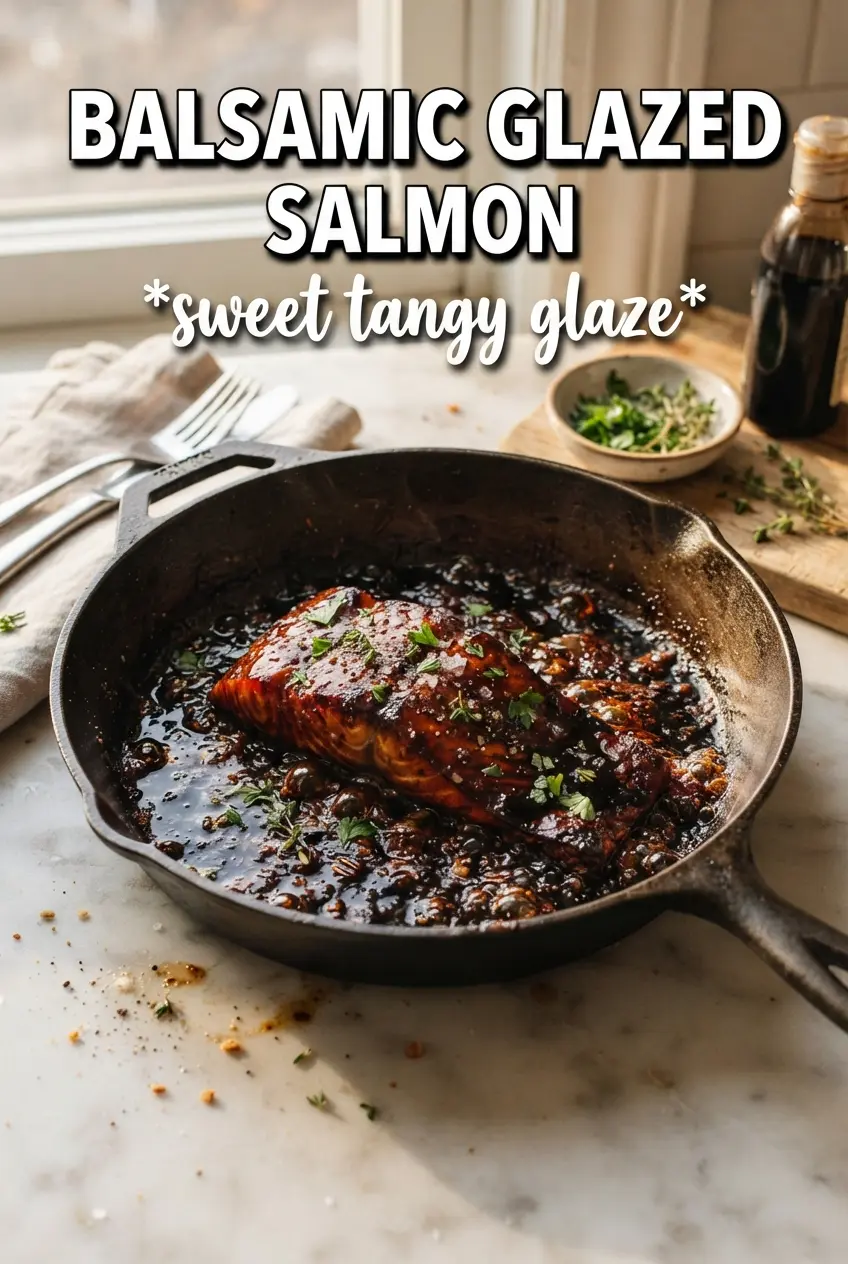
- Pour in balsamic vinegar, honey, and Dijon mustard, then simmer for 3–4 minutes until the sauce reduces to a syrupy glaze. Stir occasionally so the glaze thickens and turns deep mahogany.
- Return the salmon to the pan and spoon the glaze over each fillet. Tilt the pan as needed so the glossy glaze pools in the salmon flakes.
- Cook the salmon for 1 more minute, just to lacquer the surface, then garnish with fresh rosemary.