Thick cucumber rounds, ripe tomatoes, and soft mozzarella make this salad crisp, juicy, and clean-tasting in the best way. The cucumbers bring crunch, the tomatoes bring sweetness and acidity, and the mozzarella gives each bite a cool, creamy finish that keeps the whole dish from feeling too sharp. A good balsamic glaze pulls everything together without drowning the fresh ingredients.
What makes this version work is the balance of moisture and structure. English cucumbers stay firm and don’t throw off nearly as much water as standard slicing cucumbers, so the platter holds its shape longer. Using balsamic glaze instead of thin vinegar matters too — it clings to the vegetables and cheese instead of pooling underneath them. Salt goes on at the end for the same reason: it wakes everything up without drawing out too much liquid too soon.
You’ll find a few practical tips below for choosing the right tomatoes, arranging the salad so it looks as good as it tastes, and adjusting it when you need a dairy-free or bigger-batch version.
I loved how the balsamic glaze stayed right on top instead of running all over the plate, and the cucumber slices stayed crisp even after sitting out for our picnic lunch.
Save this cucumber caprese salad for the days when you want a no-cook side with crisp cucumbers, juicy tomatoes, and glossy balsamic drizzle.
The Trick to Keeping Cucumber Caprese Crisp Instead of Watery
The biggest mistake with a cucumber caprese salad is treating it like a bowl salad instead of a platter salad. Once you cut the cucumbers and tomatoes, they start giving off moisture, and if they sit in a deep bowl together, the whole thing turns slick at the bottom. Arranging everything in a single layer on a platter keeps the ingredients visible and helps the balsamic glaze stay where you want it.
English cucumbers are the right choice here because the skin is thin and the seeds are soft. You get crunch without the bitter edge that some larger cucumbers bring. If your tomatoes are especially juicy, slice them and let the cut sides rest on a paper towel for a minute before assembling. That tiny pause helps the salad stay bright instead of puddly.
What Each Ingredient Is Actually Doing in This Salad
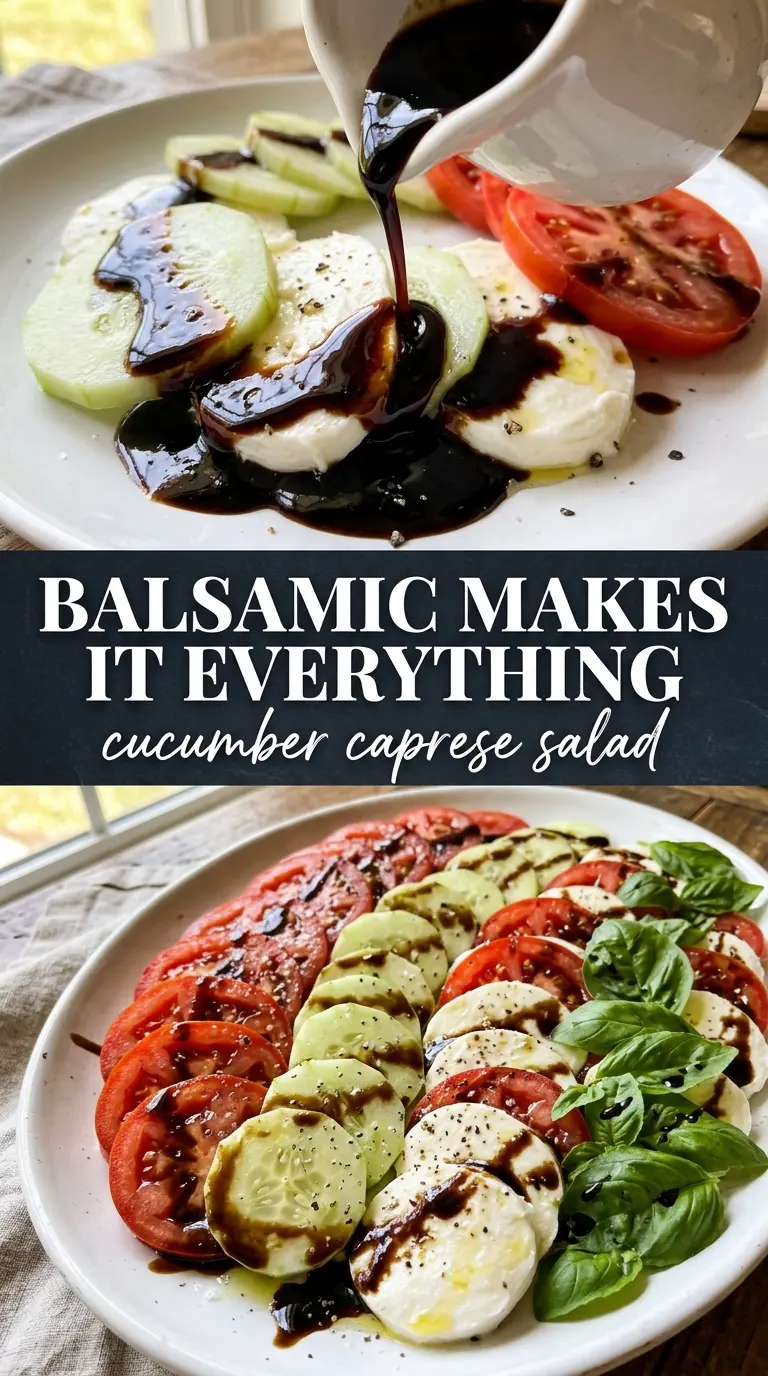
- English cucumbers — These are the backbone of the salad. Their firm texture holds up under the olive oil and glaze, and the thin skin means you don’t need to peel them unless the outside looks rough. If you use standard cucumbers, peel them and scrape out some of the seeds so the platter doesn’t turn watery.
- Tomatoes — Ripe cherry tomatoes are easiest because they stay neat and sweet, but sliced medium tomatoes work if they’re firm and in season. Soft or underripe tomatoes will make the salad taste flat. Salt helps them wake up, but only at the end.
- Fresh mozzarella — This is where the salad turns creamy and satisfying. Fresh mozzarella has the soft milky texture this dish needs; block mozzarella won’t give you the same result. If you use pearl mozzarella, pat it dry first so the platter doesn’t get slick.
- Fresh basil — Basil should be added just before serving so it stays fragrant and doesn’t darken. Tear larger leaves if they’re oversized; that opens up the aroma without bruising them into shreds.
- Balsamic glaze — Glaze matters more than thin balsamic vinegar here because it adds sweetness and body. If you only have vinegar, simmer it down until it lightly coats a spoon, then cool it before drizzling.
Assembling the Platter So Every Bite Gets a Little of Everything
Start with the cucumber foundation
Lay the cucumber rounds on a large platter in an overlapping pattern so they create a steady base. A little overlap helps the slices stay put and gives the salad that layered look you want. If the cucumbers are wet from washing, dry them well first or the olive oil will slide around instead of coating the vegetables.
Build the color and texture in between
Tuck the tomato pieces between the cucumber slices, then add the mozzarella where there are natural openings in the pattern. Don’t scatter everything randomly; the whole point is to make each forkful easy to pick up and balanced. If you’re using mozzarella pearls, press them lightly into gaps so they don’t roll off the platter.
Finish with the basil, oil, and glaze
Scatter the basil over the top, then drizzle the olive oil in a thin stream so it catches on the surfaces instead of soaking the plate. Follow with the balsamic glaze in loose stripes or spirals. Add salt and pepper at the very end, right before serving, because salted tomatoes and cucumbers start losing their structure fast.
Three Ways to Adjust Cucumber Caprese for Real Life
Dairy-Free Version That Still Feels Fresh
Swap the mozzarella for thick avocado slices or a dairy-free mozzarella-style cheese. Avocado gives you creaminess and a soft bite, while plant-based cheese keeps the classic caprese look. If you use avocado, add it right before serving so it doesn’t brown.
Make It Heartier With Protein
Add torn prosciutto for a salty edge or spooned chickpeas for a vegetarian protein boost. Prosciutto makes the salad feel more like an antipasto platter, while chickpeas add substance without changing the fresh, clean flavor too much. Either way, keep the amount modest so the cucumbers and tomatoes stay in charge.
How to Serve It for a Crowd
Double the ingredients and use a wide platter instead of a bowl. A bigger surface area keeps the salad from collapsing into its own juices and makes the arrangement look intentional. If you need to assemble ahead, hold back the basil, oil, glaze, salt, and pepper until the last minute.
Storage and Reheating
- Refrigerator: Best eaten right away, but leftovers will keep for 1 day. The cucumbers and tomatoes soften and release liquid as they sit.
- Freezer: Don’t freeze this salad. The cucumbers, tomatoes, and mozzarella lose their texture completely once thawed.
- Reheating: Not applicable. If the salad has been chilled, let it sit at room temperature for 10 to 15 minutes before serving so the mozzarella loses its fridge-cold stiffness.
Answers to the Questions Worth Asking
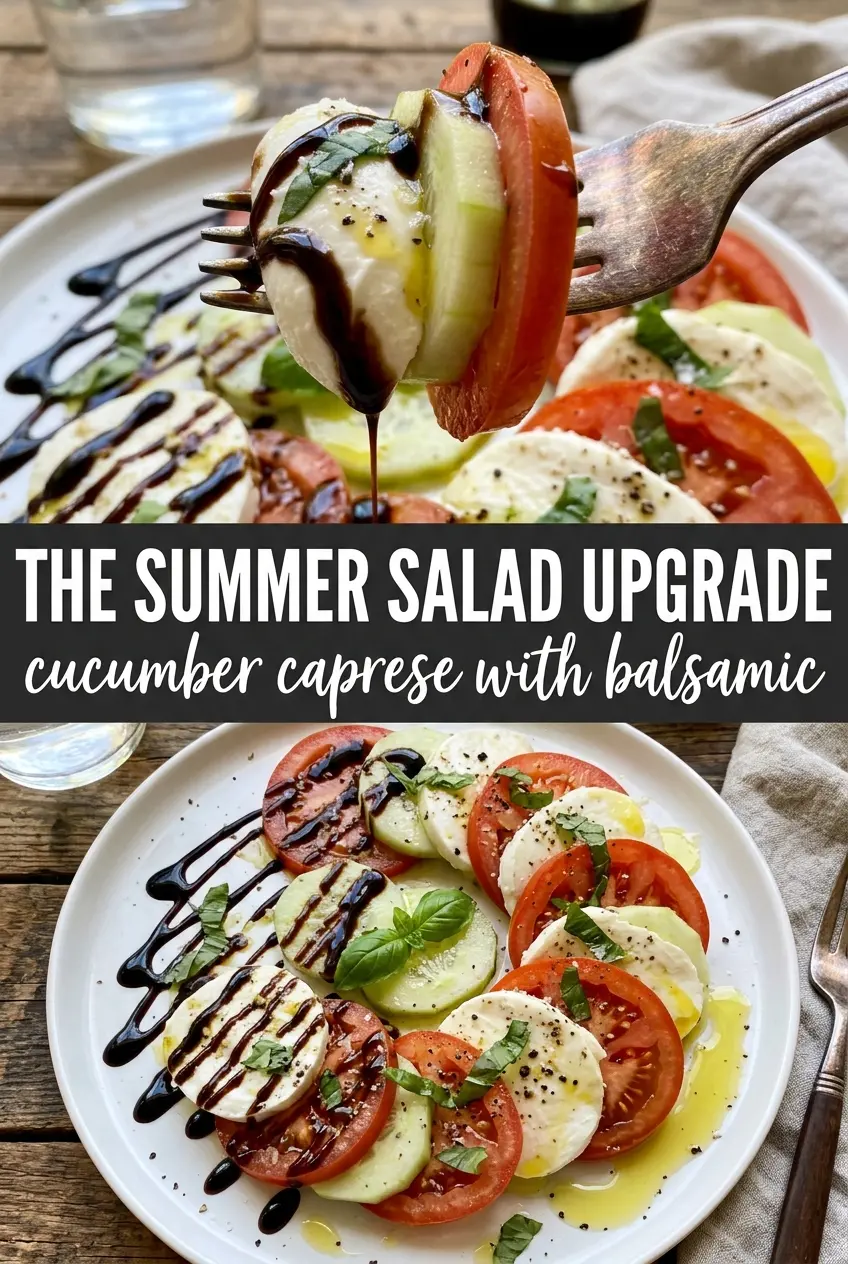
Cucumber Caprese Salad
Ingredients
Method
- Arrange the cucumber rounds on a large serving platter in an overlapping pattern so the layers are visible.
- Tuck tomato slices or halves between the cucumber rounds to create alternating red-and-green rows.
- Place fresh mozzarella slices or pearls throughout the arrangement, spacing them evenly across the platter.
- Scatter fresh basil leaves generously over the entire salad to finish each layer with a bright green pop.
- Drizzle the extra-virgin olive oil evenly over everything, letting it pool between cucumber, tomato, and mozzarella.
- Drizzle the balsamic glaze in an artistic pattern over the top for a glossy finish.
- Finish with flaky sea salt and cracked black pepper to taste, then serve immediately.