American flag charcuterie board spreads turn a simple appetizer into the first thing people notice, and this version earns its spot because the pattern stays clear from the first glance to the last cracker. The colors do the work here: deep blue berries in the canton, bright red rows of pepperoni and strawberries, and clean white stripes from mozzarella and provolone. It looks festive, but it also eats well, which is the part that matters once the party starts.
The trick is treating the board like a layout problem before it becomes a food problem. Tightly packed blueberries hold the blue corner in place, rolled salami gives the canton height and texture, and the red-and-white stripes work best when the slices overlap just enough to read as full bands instead of loose piles. Cold cheese helps the stripes stay crisp, and a board with enough surface area keeps the flag from looking cramped.
Below you’ll find the method I use to keep the shape sharp, plus a few smart swaps if you want to build the board around what you already have. The finishing touches matter here, and once you see how the stripes come together, you’ll probably start planning other boards the same way.
The blueberries stayed put, the salami rolled up beautifully, and the stripes looked clean all the way across the board. I added the rosemary at the corners and it made the whole thing feel finished.
Like this patriotic charcuterie board? Save it to Pinterest for the Fourth of July spread with crisp stripes, blueberry canton, and easy grazing for a crowd.
The Part That Keeps the Flag From Looking Crooked
The board only works if you build the blueprint first. That upper-left canton needs to be mentally marked before you start placing food, because once the stripes begin, it is hard to correct the proportions without pulling pieces back off the board. A big rectangular tray helps, but the real difference is packing the blue section tight enough that it reads as a block instead of a loose scatter.
Most people run into trouble when they start with the red stripes and try to squeeze the canton in afterward. That makes the flag look lopsided. Start with the blue corner, then work outward in long, even bands so the red and white rows stay straight across the full width.
- Blueberries — These create the canton base and give you a tight visual block. Fresh berries with a dry surface hold together best; wet berries slide around and make the corner look messy.
- Rolled salami — The rolls stand in for the stars and add height, which keeps the blue section from reading flat. Roll them loosely enough to give shape, but tight enough that they stay upright.
- Provolone or white cheddar — Either one gives you a clean white stripe, but provolone looks a little smoother while cheddar brings more edge and bite. Slice it evenly so the stripes stay straight instead of sagging.
- Prosciutto and strawberries — Use these to reinforce the red stripes where the pepperoni leaves gaps. Prosciutto adds a softer fold, while strawberries bring brightness and a fresher finish.
What Each Layer Is Doing on This Board
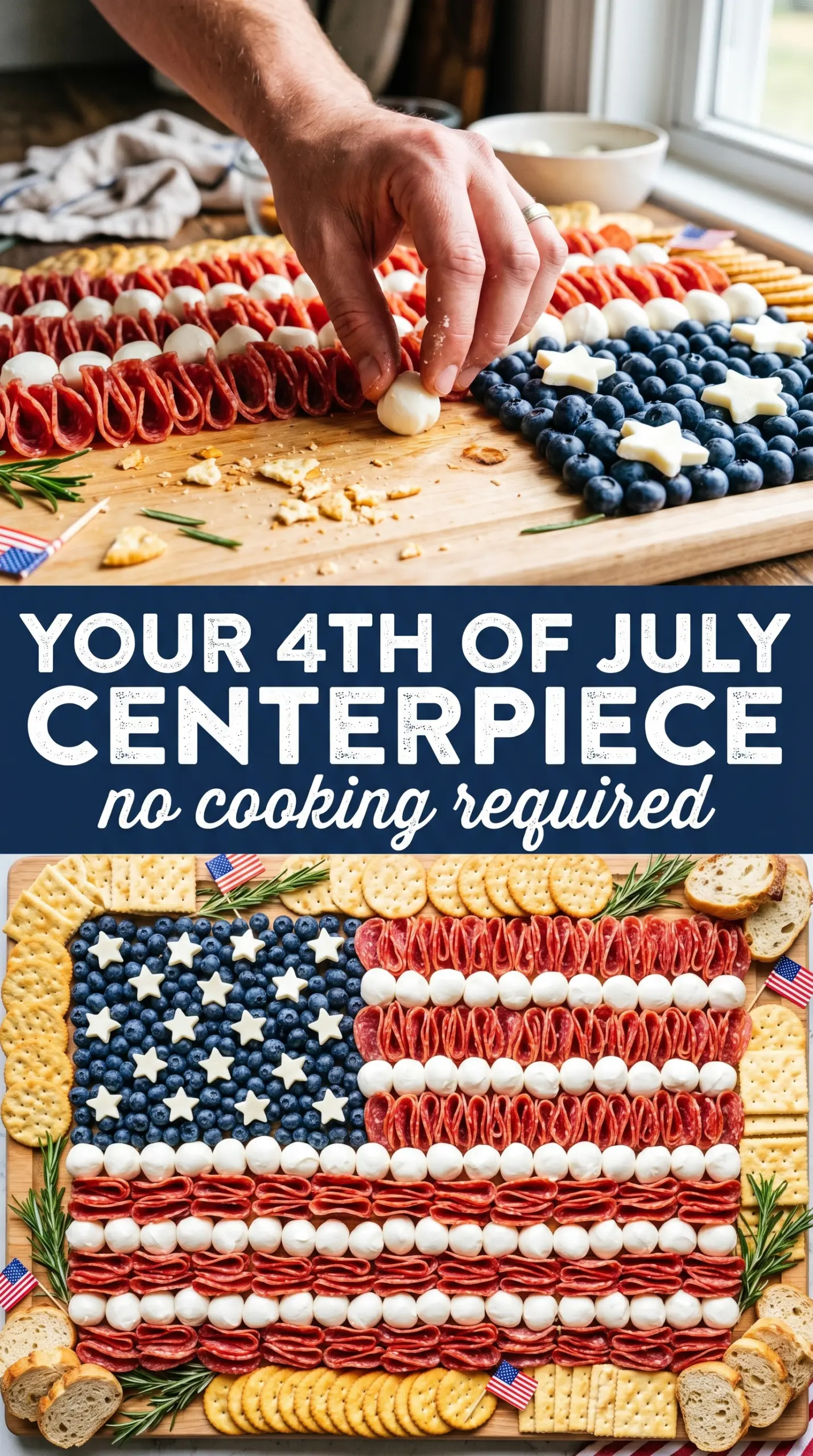
The board looks most convincing when each ingredient has a job. The cheeses create the visual structure, the cured meats bring the stripes to life, and the fruit keeps the whole thing from tasting too heavy. You do not need expensive ingredients here; you need ingredients that hold their shape and read clearly from across the table.
- Pepperoni slices — These are the cleanest way to get a strong red stripe fast. Choose slices that are not too oily, or they can stain the cheese and blur the pattern.
- Fresh mozzarella balls — Ciliegine mozzarella gives you bright white circles that are easy to place in rows. Pat them dry first so they don’t slide and make the board look damp.
- Blueberries — The small size is what matters most here. Bigger berries make the canton look sparse, while blueberries pack tightly and stay visually dense.
- Rosemary sprigs — These are garnish, but they also sharpen the edges of the board. Use them sparingly so they frame the design instead of crowding it.
- Assorted crackers — Put these around the perimeter, not in the flag itself. That keeps the design readable and gives guests an easy place to start serving themselves.
Building the Stripes Without Blurring the Design
Lay the Blue Corner First
Start with the upper left corner and pack the blueberries into a neat rectangle. Press them close enough that the board underneath barely shows through, because gaps make the canton look unfinished. Tuck the rolled salami pieces into that blue field after the berries are in place so they sit on top instead of sinking into the row.
Run the Red and White Rows Straight Across
Work from the top right side of the board outward, alternating red and white across the full width. Pepperoni slices should overlap slightly like shingles, and the cheese should form a clean, solid band without obvious spaces. If the rows drift up or down, stop and realign before adding the next stripe; small errors get obvious fast on a geometric board like this.
Fill the Gaps Last
Once the main flag shape is in place, use prosciutto folds and strawberry halves to tighten the red stripes where needed. This is the stage that makes the board look finished instead of assembled. Add rosemary sprigs at the corners and edges only after the main pattern reads cleanly, then set the crackers around the outside so the board still looks like a flag at first glance.
How to Adapt This for Different Crowds and Diets
Gluten-Free Flag Board
Skip the crackers on the board and serve them in a separate bowl with gluten-free labels if needed. The flag itself is naturally gluten-free as long as the cured meats and cheese you buy are certified safe, which keeps the design intact without changing the layout.
Lighter, Fresher Version
Use more strawberries and mozzarella, and reduce the amount of pepperoni and salami. The board still reads as a flag, but the flavor gets brighter and less salty, which is handy when the rest of the meal is already rich.
Bigger Crowd, Bigger Board
Scale everything up by keeping the same ratios and moving to a larger rectangular board or a tray set on top of parchment. The flag shape gets harder to control as the surface grows, so build the canton first and use longer rows of cheese and pepperoni rather than trying to patch in extra pieces later.
Storage and Make-Ahead Timing
- Refrigerator: Assemble up to 4 hours ahead, cover loosely, and chill. The berries hold best when the board isn’t sitting out too long, and the crackers should stay off until serving.
- Freezer: Don’t freeze this board. The cheese, fruit, and cured meats all change texture in a way that hurts the presentation and the bite.
- Serving: Let the board sit at room temperature for 15 to 20 minutes before serving so the cheese softens slightly. Add the crackers at the last minute so they stay crisp and don’t pick up moisture from the fruit.
Questions I Get Asked About This Recipe
American Flag Charcuterie Board
Ingredients
Equipment
Method
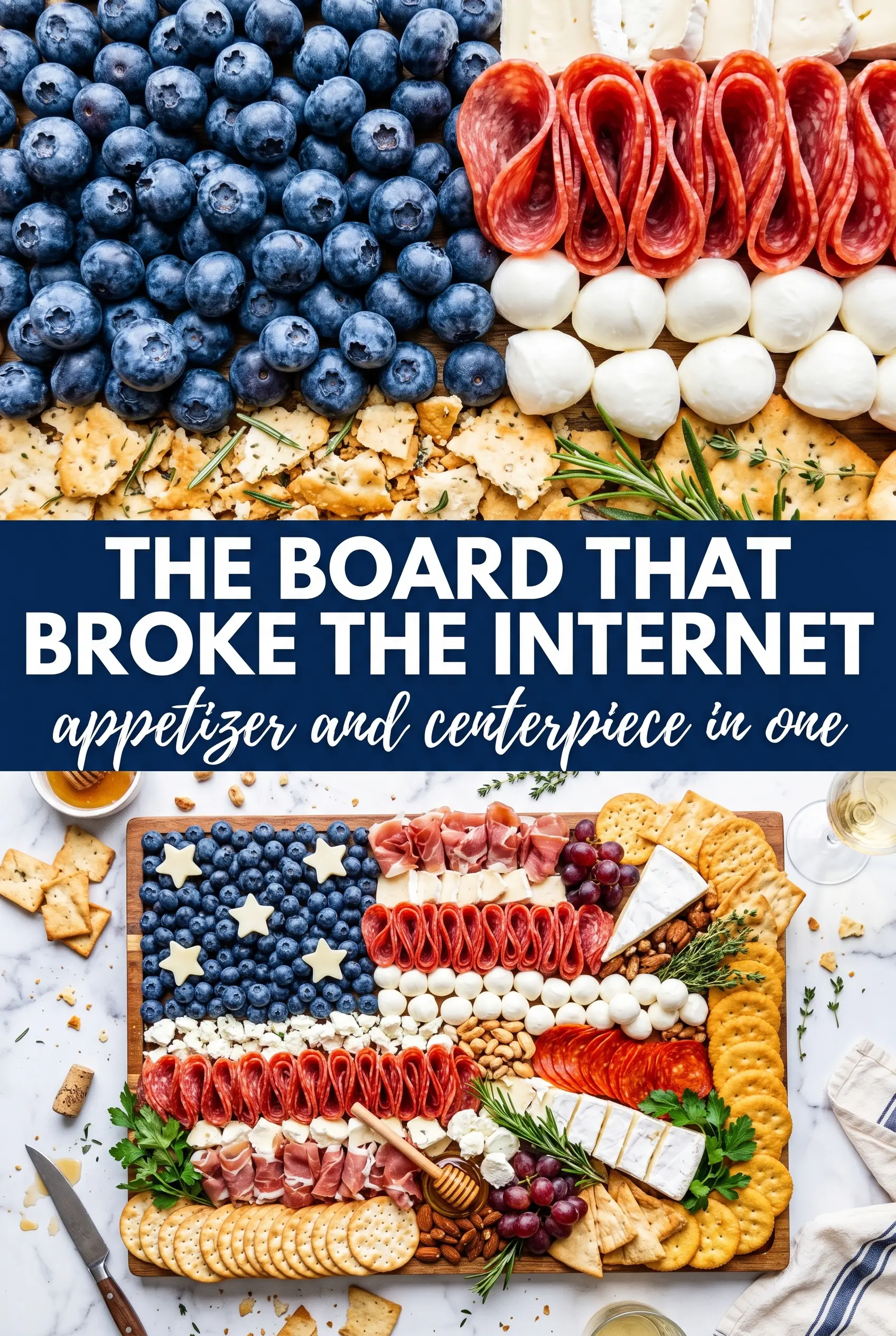
- Use a large rectangular wooden board or serving tray and mentally divide the upper left into a canton rectangle.
- Fill the canton with blueberries packed tightly together, then tuck rolled salami pieces in the center to resemble stars.
- Starting from the top right of the board, create a red stripe by layering pepperoni slices in a clean row across the full width of the board.
- Create the white stripes using rows of sliced white cheddar or provolone, alternating with the red stripes down the full board.
- Add prosciutto folds or strawberry halves to reinforce the red stripes and fill any gaps.
- Tuck rosemary sprigs at the corners and edges, then arrange crackers around the perimeter and serve.