Thinly shaved ribeye on a hot Blackstone gives you the kind of cheesesteak that actually earns the name: browned edges, juicy centers, sweet onions, and peppers that have gone soft and savory without turning limp. The whole thing comes together fast, which is exactly why the prep matters here. Once the steak hits the griddle, there’s no time to be hunting for a knife or slicing onions any thicker than they should be.
The difference between a good griddle cheesesteak and a great one is heat control and patience in the first few minutes. The vegetables need enough time to soften and caramelize before the meat goes on, and the ribeye needs to hit the griddle in a thin layer so it sears instead of steaming. A dome over the cheese at the end seals the deal and melts it into every bite.
Below I’m walking through the parts that matter most: how to get the steak paper-thin, how to keep the onions from scorching, and why the roll should be toasted right at the end so it stays sturdy under all that filling.
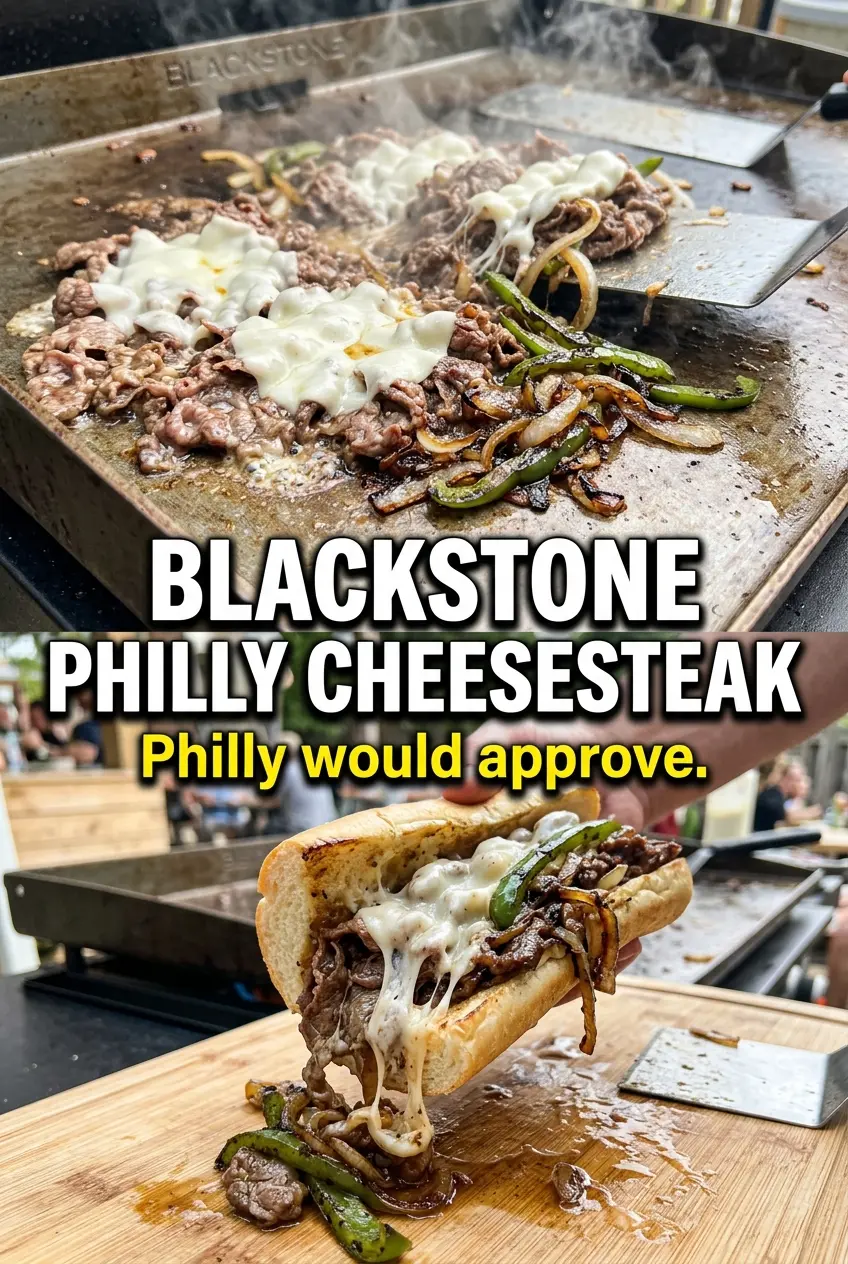
The ribeye stayed tender, the peppers got that sweet caramelized edge, and the provolone melted right into everything once I covered it for a minute. My husband said it tasted like the cheesesteaks we get at the boardwalk.
Save this Blackstone Philly cheesesteak for the nights when you want shaved ribeye, caramelized peppers, and melty provolone piled into a toasted hoagie roll.
The Part Most Cheesesteaks Get Wrong on a Flat Top
The biggest mistake with a Blackstone cheesesteak is crowding the meat or tossing everything together too early. Ribeye needs direct contact with a hot surface to brown, and if the pan is overloaded it starts to steam and tighten instead of staying tender. That’s why the vegetables cook first and get pushed aside, then the steak gets its own space before everything is chopped and combined.
The other thing that matters is the cut. Ribeye has enough fat to stay juicy on high heat, but it still needs to be shaved thin enough to cook in minutes. If the steak is sliced thick, it won’t chop cleanly on the griddle and you’ll end up with chewy pieces instead of that soft, shredded texture people expect from a good cheesesteak.
- Ribeye — This is the right cut because the marbling keeps the meat tender on a screaming-hot griddle. Freeze it for about 30 minutes first so you can slice it paper-thin without fighting the knife.
- Provolone — Provolone melts smoothly and gives you a mild, creamy finish that lets the beef stay front and center. If you want the most classic Philly-style result, Cheez Whiz works too, but it changes the texture into something looser and saltier.
- Hoagie rolls — Use rolls that are sturdy enough to hold up under hot filling. A quick toast on the cut side gives you structure, and that small step keeps the bottom from going soggy before you get to the table.
- Worcestershire sauce — This doesn’t make the sandwich taste like steak sauce; it adds a deep savory note that rounds out the beef. A little goes a long way, so the goal is boost, not soak.
How to Layer the Heat So the Steak Stays Tender
Getting the Vegetables Soft and Sweet
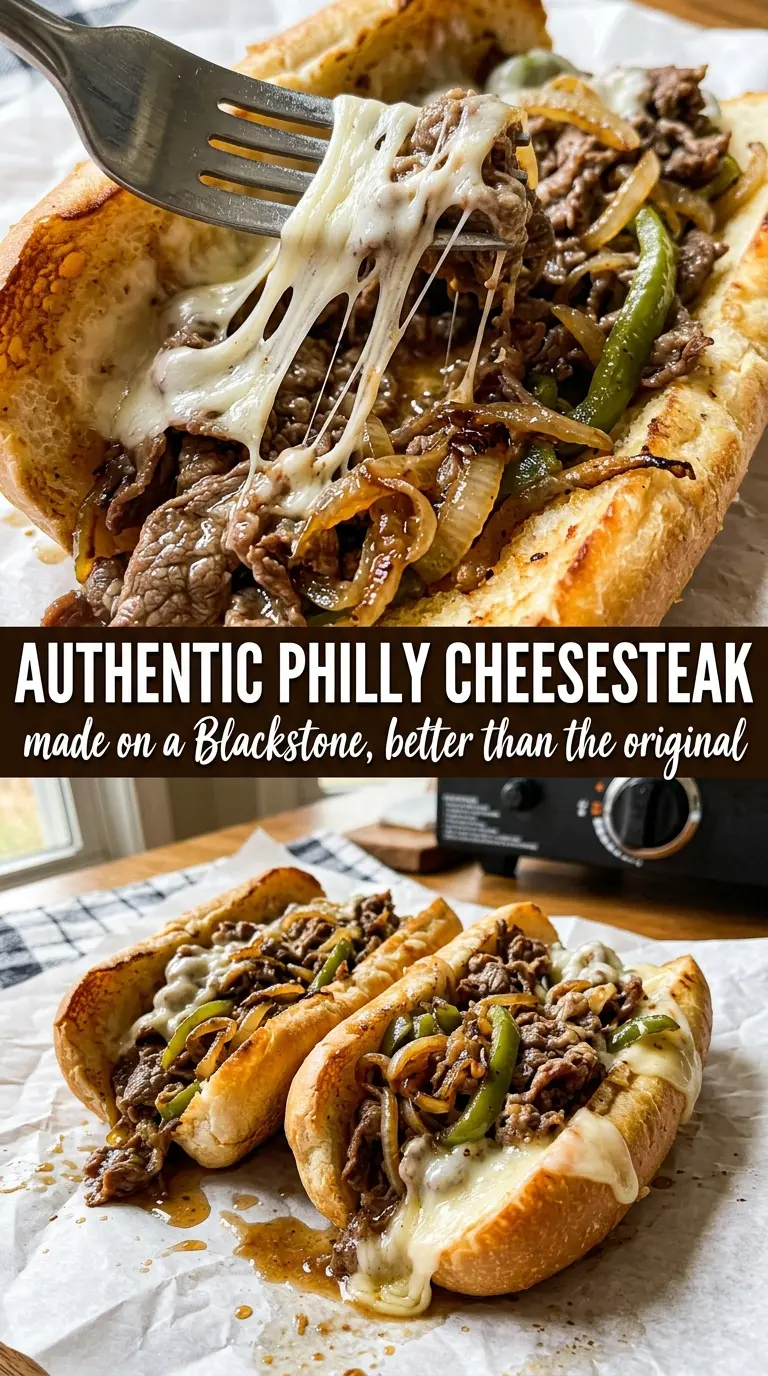
Start with the peppers and onions on one oiled section of the hot griddle and let them cook long enough to soften and pick up color. Stir them often enough to prevent scorching, but not so much that they never sit still long enough to caramelize. If the heat is too low, they’ll go watery before they brown; if it’s too high, the onions will char before the peppers lose their bite. You want soft edges, some golden color, and a smell that turns sweet instead of sharp.
Seeding the Steak for a Good Sear
Add the shaved ribeye in a thin layer on the hottest part of the griddle and leave it alone for about 2 minutes so it can brown. If you move it too soon, the meat will release and turn gray instead of developing those little crispy edges that make the sandwich worth eating. Once the underside has color, chop it and toss it on the griddle so the pieces stay small and easy to scoop. This is the point where people usually overwork it; stop as soon as the meat is cooked through and still juicy.
Bringing Everything Together Under the Cheese
Toss the steak with the cooked vegetables and Worcestershire, then divide the mixture into four portions. Lay the provolone over each pile and cover with a dome for about a minute so the steam melts the cheese without drying the filling out. If you skip the cover, the cheese will soften on top but won’t fully cloak the meat. Toast the rolls cut-side down last so they stay crisp, then scoop the filling in while it’s still hot and loose.
How to Adapt This Blackstone Cheesesteak Without Losing the Point
Cheez Whiz for a Classic Philadelphia-Style Finish
Swap the provolone for warmed Cheez Whiz if you want the softer, saltier, more old-school cheesesteak texture. It won’t give you the same stretchy melt as sliced cheese, but it coats the beef in a way that feels unmistakably Philly.
No Bell Peppers, Just Onions
Leave out the peppers and double the onions if you want a more traditional profile. The sandwich gets a little sweeter and more focused on the beef, and you’ll get less vegetable bulk inside each roll.
Gluten-Free Serving Option
Serve the filling in gluten-free rolls or over roasted potatoes if you need to skip the standard hoagie. The filling itself is naturally gluten-free as long as your Worcestershire sauce is labeled that way, and the texture stays just as satisfying without the bread.
Make It Ahead for a Crowd
You can slice the vegetables and shave the steak ahead of time, but cook the filling right before serving. Cheesesteak holds best when the meat stays hot and the rolls are toasted at the last minute; if it sits too long, the bread softens and the steak loses that fresh griddle texture.
Storage and Reheating
- Refrigerator: Store the steak and vegetables separately from the rolls for up to 3 days. The filling will still taste good, but the texture softens a bit once chilled.
- Freezer: The cooked filling freezes well for up to 2 months if you cool it completely first. Freeze it flat in a sealed bag so it thaws quickly and doesn’t get icy chunks.
- Reheating: Reheat the filling in a hot skillet or on the griddle over medium heat until steaming hot. Don’t microwave it straight from the fridge if you want to keep the beef tender; the bread will go soggy and the steak can turn rubbery.
Questions I Get Asked About This Recipe
Authentic Blackstone Philly Cheesesteak
Ingredients
Equipment
Method
- Preheat the Blackstone to high heat, add 1 tbsp oil to one zone, and cook the peppers and onions for 8-10 minutes, stirring until caramelized and soft. Season with salt and pepper to taste, then push the mixture to the side.
- Add the remaining oil to the hot griddle and spread the shaved ribeye in a thin layer, cooking without stirring for 2 minutes until browned. Keep the heat high so the meat sears quickly.
- Chop and toss the steak on the griddle, then season with Worcestershire sauce, salt, and pepper. Combine the steak with the caramelized peppers and onions.
- Divide the mixture into 4 portions, lay 2 slices of provolone over each portion, and cover with a dome to melt for 1 minute. Pull when the cheese is fully melted and bubbling.
- Toast the hoagie rolls face-down on the griddle for 1 minute until lightly crisp. Use a spatula to scoop each portion into a roll and serve immediately.