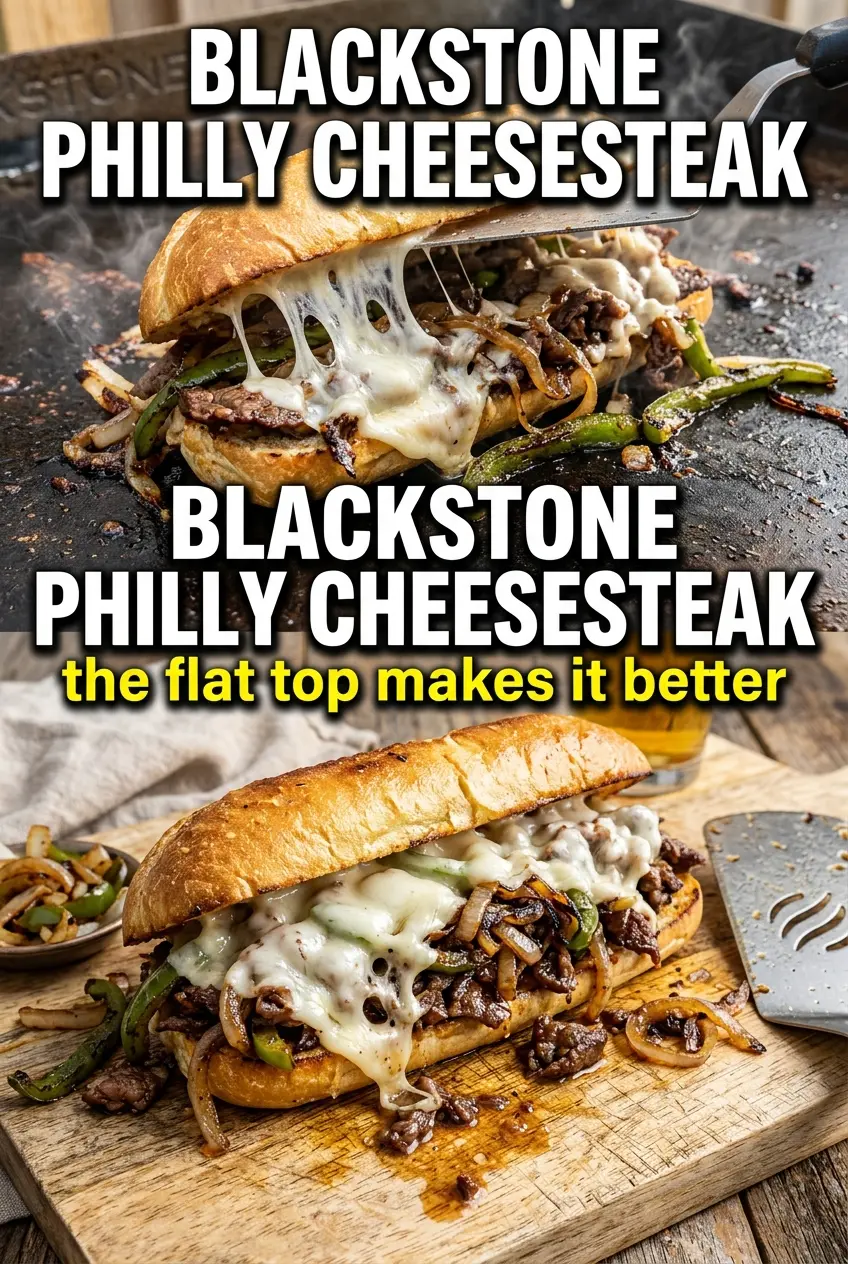
Thin-shaved ribeye, caramelized peppers and onions, and melted white American cheese on a toasted hoagie roll is the kind of sandwich that disappears fast and leaves a little stack of napkins behind. The flat top does the heavy lifting here. It gives you enough heat to brown the beef quickly while turning the vegetables soft and sweet instead of watery.
What makes this version work is the order. The vegetables get their time first so they can lose moisture and pick up color before the steak goes down. The meat cooks in a thin layer, just long enough to brown without turning tight or dry, then everything gets chopped together so every bite has steak, onion, pepper, and mushroom in the right ratio.
Below, I’m walking through the part that matters most: how to keep the steak juicy, how to get the vegetables truly caramelized, and how to melt the cheese without steaming the sandwich into mush.
The steak stayed tender, the onions and peppers got that sweet browned edge, and the cheese melted smooth under the dome. My husband said it tasted like a real cheesesteak from a roadside griddle stand.
Save these Blackstone Philly Cheesesteak Sandwiches for the days when you want shaved steak, melty cheese, and griddle-charred vegetables in one toasted hoagie.
The Part Most Cheesesteaks Get Wrong on a Flat Top
The biggest mistake is crowding the griddle and rushing the vegetables. On a Blackstone, onions, peppers, and mushrooms need enough space to release moisture and then get back into contact with the hot surface once that moisture cooks off. If they sit in a wet pile, they steam and turn soft without developing the deep sweetness that makes the sandwich taste finished.
The steak has the same issue in a different form. Shaved ribeye cooks fast, and if you keep stirring it, it never gets the browned edges that give the sandwich its best flavor. Spread it in a thin layer, let it sit long enough to color, then chop and combine it with the vegetables so the meat stays juicy instead of shredding into dry crumbs.
- Let the vegetables finish before the beef goes down. That extra few minutes gives you sweeter onions and peppers, plus mushrooms that taste roasted instead of wet.
- Use a strong, even heat. The flat top’s surface is the whole advantage here. A weak heat source leaves the steak gray and the vegetables limp.
- Cover the cheese briefly. White American melts smoothly under a dome without needing extra liquid, and the short steam helps it blanket the filling fast.
What Each Ingredient Is Actually Doing in These Sandwiches
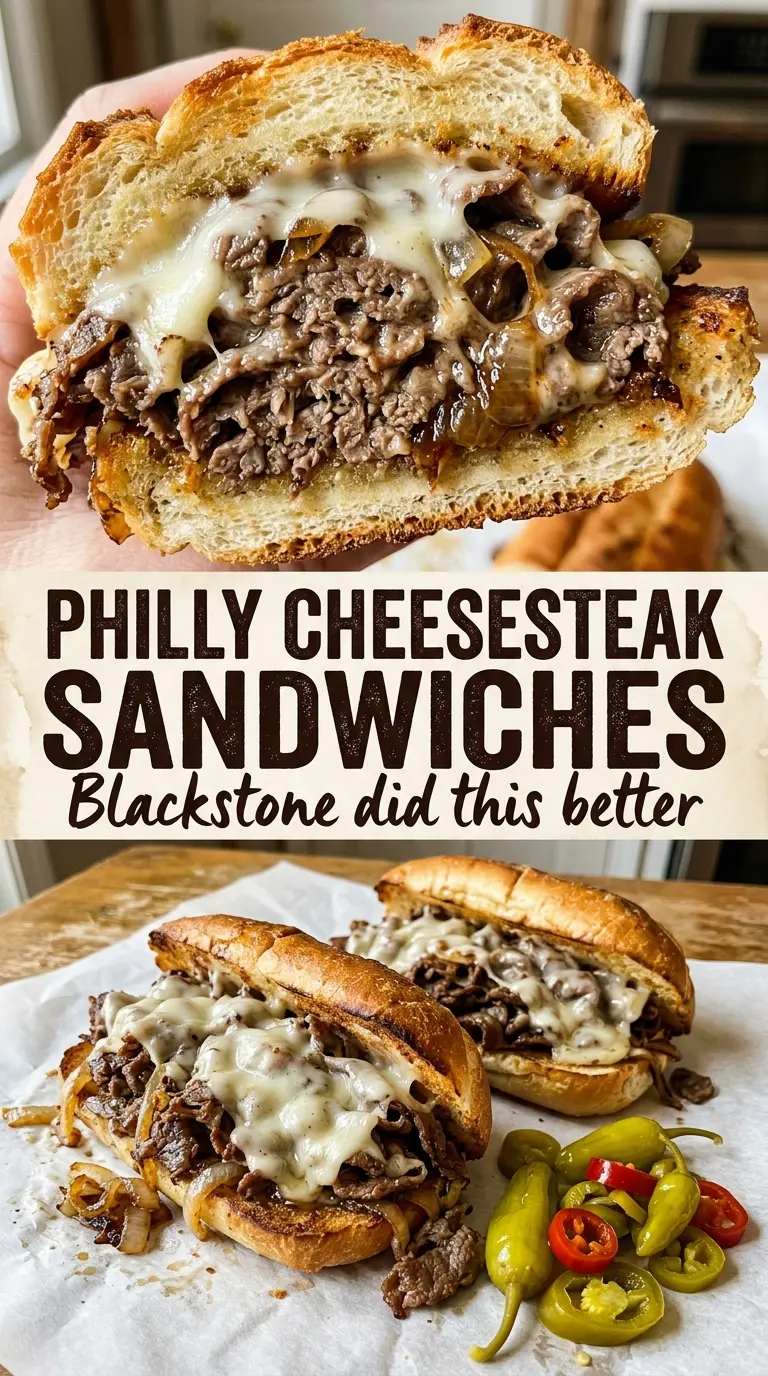
Shaved ribeye is the heart of the sandwich. Ribeye gives you enough fat to stay tender on a screaming-hot griddle, and shaving it thin means it cooks fast before it has time to toughen. If your market only sells a larger cut, freeze it for 20 to 30 minutes until it firms up, then slice it as thin as you can against the grain.
White American cheese matters more than it gets credit for. It melts smoothly and coats the filling without turning grainy, which is exactly what you want when the sandwich is assembled on the griddle. Provolone works if you want a sharper bite, but it won’t melt quite as silkily.
The vegetables are there for more than color. Onions bring sweetness, peppers give a little freshness, and mushrooms add a savory, meaty note that makes the filling feel fuller. Vegetable oil is neutral enough to keep the beef flavor front and center, and Worcestershire adds the background savoriness that makes the whole thing taste seasoned, not just salty.
- Hoagie rolls — Split rolls with a little chew hold the filling better than soft sandwich bread. Toasting them on the griddle keeps them from going soggy the second the cheese and beef hit.
- Worcestershire sauce — A small amount deepens the browned meat flavor. Add it after the steak is chopped so it coats the filling instead of burning on the surface.
- Garlic salt, salt, and pepper — Season at the end after the beef and vegetables come together. That keeps the salt from pulling too much moisture out of the mushrooms and onions early on.
How to Build the Filling So the Sandwich Stays Juicy
Starting With the Vegetables
Heat the Blackstone to high and add the oil before the vegetables go down. You want a steady sizzle the moment they hit the surface. Stir often, but not constantly, and keep cooking until the onions are soft, the peppers have collapsed a little, and the mushrooms have picked up some brown edges. If the pan looks wet, keep going until that liquid cooks off; that’s the difference between steamed vegetables and proper cheesesteak filling.
Brown the Steak Without Overworking It
Add the remaining oil and spread the shaved ribeye in a thin layer. Leave it alone for about 2 minutes so it can brown before you start chopping. If you stir immediately, the meat gives up its moisture and turns pale. Once you see color on the underside, chop it into the vegetables and keep the pieces moving just long enough to finish cooking.
Season, Portion, and Melt
Worcestershire goes in right after the steak meets the vegetables, followed by garlic salt, pepper, and any final salt you need. Divide the filling into four piles, top each with two slices of white American cheese, and cover with a dome until the cheese is glossy and fully melted. Toast the hoagie rolls on the griddle for about a minute, then slide each portion into a roll while everything is still hot and soft.
Three Smart Ways to Change These Cheesesteaks
Provolone Instead of White American
Swap in provolone if you want a sharper, more classic deli-style finish. It won’t melt as smoothly as white American, so keep the dome on a little longer and expect a firmer cheese pull rather than the ultra-creamy blanket you get with American.
Dairy-Free Cheesesteak Bowls
Leave off the cheese and serve the steak and vegetables over roasted potatoes or tucked into lettuce wraps. You’ll lose the melty finish, but the griddle-browned meat and caramelized vegetables still carry enough flavor to stand on their own.
Mushroom-Forward Filling
Double the mushrooms and trim the steak slightly if you want a fuller, earthier filling. The mushrooms need time to brown, so don’t rush the first stage; once they’ve lost their moisture, they add a meaty texture that stretches the sandwich further.
Extra-Spicy Version
Add sliced hot cherry peppers or a little crushed red pepper to the vegetable mix. That heat works best after the vegetables soften, when the peppers can cling to the oil and season the whole filling instead of scorching on the griddle.
Storage and Reheating
- Refrigerator: Store the filling separately from the rolls for up to 3 days. The vegetables will soften a little more, but the flavor holds up well.
- Freezer: The cooked filling freezes well for up to 2 months. Freeze it flat in a sealed bag, then thaw overnight before reheating.
- Reheating: Reheat the filling in a skillet or on the griddle over medium heat until hot. Don’t microwave it if you want to keep the texture intact; the steak can turn rubbery and the rolls can go soggy if everything is reheated together.
Questions I Get Asked About This Recipe
Blackstone Philly Cheesesteak Sandwiches
Ingredients
Equipment
Method
- Heat the griddle to high, then add 2 tablespoons vegetable oil and cook the onions, peppers, and mushrooms for 8-10 minutes, stirring often, until caramelized and very soft.
- Season the vegetables and push them to the side so you have an open cooking area on the griddle.
- Add the remaining vegetable oil, then cook the shaved ribeye in a thin layer without stirring for 2 minutes until browned.
- Chop and combine the steak with the vegetables, then add the Worcestershire sauce and season with garlic salt, salt, and black pepper.
- Divide into 4 portions, top each with 2 slices of white American cheese, and cover with a dome to melt for 1-2 minutes.
- Toast the hoagie rolls on the griddle for 1 minute, cut sides down.
- Use a spatula to load each cheesy steak portion into a toasted roll and serve right away.