Brown sugar peach cake bakes up tender and fragrant, with little pockets of juicy fruit in every slice and a deep caramel note that plain vanilla cake just can’t match. The brown sugar in the batter gives the crumb a softer, warmer sweetness, and the peaches keep the whole cake tasting fresh instead of heavy. With caramel cream cheese frosting between the layers, it lands right in that sweet spot between homey and celebration-worthy.
What makes this version work is the balance. Sour cream keeps the crumb moist without making it dense, and the peaches are folded in at the very end so they stay intact instead of streaking the batter. The cinnamon is subtle, not dominant; it just nudges the brown sugar and fruit in the same direction.
Below, I’m breaking down the one part that keeps this cake from turning gummy, plus a few practical swaps and storage notes that matter once you’ve got fresh peaches on the counter.
The cake stayed incredibly moist for three days, and the peaches baked into the crumb without sinking. The caramel cream cheese frosting set up thick enough to slice cleanly, which never happens when I make fruit layer cakes.
Like this brown sugar peach cake? Save it to Pinterest for the days when you want a juicy fruit layer cake with caramel frosting and a soft, golden crumb.
The Trick to Keeping the Peaches From Turning the Crumb Heavy
The biggest mistake with peach cake is treating the fruit like it’s just another mix-in. Peaches carry a lot of juice, and if they’re too ripe or cut too small, they leak straight into the batter and leave you with a dense strip in the middle instead of a clean, even crumb. Dice them into medium pieces and fold them in gently at the end so the batter stays aerated and the fruit stays distributed.
The other thing that matters here is the order. Cream the butter and sugars until the mixture looks pale and fluffy, because that’s where the cake gets its lift before the flour even goes in. If the batter starts looking curdled once you add the eggs and sour cream, keep going; it usually smooths out when the dry ingredients are added.
What the Brown Sugar, Sour Cream, and Fresh Peaches Are Doing Here
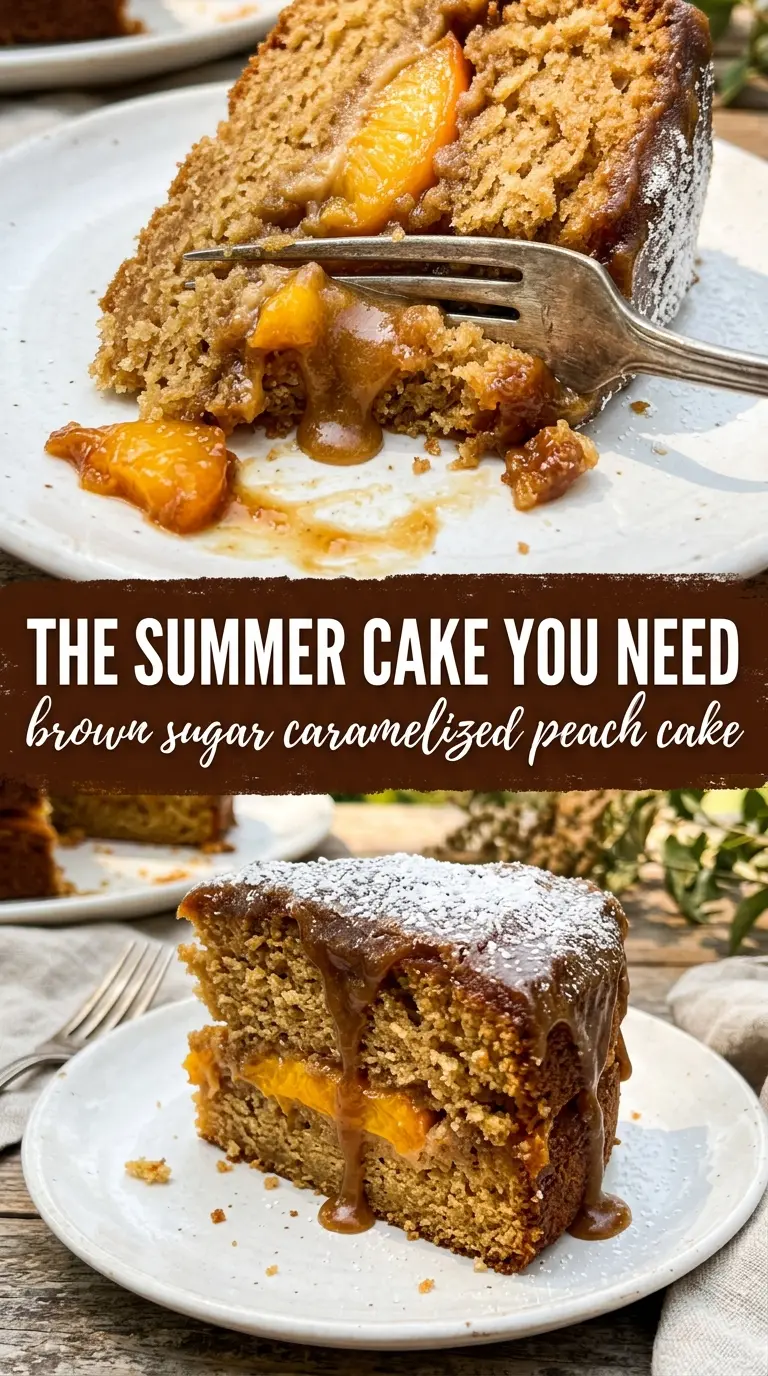
- Brown sugar — This brings the warm, caramel-like flavor that makes the cake taste deeper than a standard peach layer cake. Light or dark brown sugar both work, but dark brown sugar gives a stronger molasses note and a darker crumb.
- Sour cream — This is what keeps the cake plush. Full-fat sour cream gives the best texture; plain Greek yogurt works in a pinch, but the cake will be a little tighter and tangier.
- Fresh peaches — Fresh peaches are worth using when they’re ripe and fragrant. If they’re very juicy, pat the diced fruit dry with paper towels before folding it in so the batter doesn’t get watered down.
- Cream cheese frosting — The tang cuts through the sweetness of the cake and caramel sauce. Let the cream cheese and butter soften fully before beating, or the frosting will stay lumpy no matter how long you mix it.
- Caramel sauce — Use a thick sauce, not a thin ice cream topping, so the frosting holds its shape. If yours is loose, add it a teaspoon at a time and stop once the frosting tastes rich but still pipes or spreads cleanly.
Building the Batter and Frosting Without Losing the Texture
Creaming the Butter and Sugar Properly
Beat the butter with both sugars until the mixture looks fluffy and a little lighter in color. That step traps air, which helps the cake rise before the peaches go in. If you stop too early, the cake can bake up compact and heavy. Scrape the bowl once or twice so the butter from the bottom doesn’t stay unmixed.
Adding the Eggs and Sour Cream
Add the eggs one at a time and let each one disappear before adding the next. Then alternate the dry ingredients with the sour cream so the batter stays smooth instead of tightening up in one big lump. The batter should look thick and glossy, not runny. If it looks broken at this stage, keep mixing on low; it usually comes back together.
Folding in the Peaches
Fold the diced peaches in with a spatula, using just enough motion to distribute them. Overmixing here crushes the fruit and stains the batter, which can make the cake gummy around the edges. Divide the batter between the pans right away so the fruit doesn’t settle while it sits. The tops should look even and lightly mounded before they go into the oven.
Making the Caramel Cream Cheese Frosting
Beat the cream cheese and butter until completely smooth before adding the sugar. If they’re still cool in the center, the frosting will turn grainy. Add the powdered sugar gradually, then the caramel sauce and vanilla. The finished frosting should be thick enough to hold its shape but soft enough to spread without tearing the cake.
How to Adapt This Cake for Different Kitchens and Different Fruit
Use frozen peaches when fresh ones aren’t available
Frozen peaches work if you thaw them completely and drain off the excess liquid first. Pat them dry before folding them in, or the batter can turn wet in the center. The flavor is still good, but the texture will be a little softer than with fresh fruit.
Make it gluten-free with a 1:1 baking blend
A good cup-for-cup gluten-free flour blend can replace the all-purpose flour without changing the method. The crumb will be slightly more delicate, so let the layers cool completely before moving them. If the blend doesn’t already contain xanthan gum, use one that does for the best structure.
Turn it into a simpler sheet cake
Bake the batter in a greased 9×13-inch pan instead of layer pans and start checking a few minutes earlier. You’ll lose the tall layer-cake look, but you gain an easier, more casual dessert with the same peach-studded crumb. Spread the frosting over the cooled cake and finish with sliced peaches and caramel drizzle.
Storage and Reheating
- Refrigerator: Store covered for up to 4 days. The frosting firms up in the fridge, but the cake stays moist.
- Freezer: Freeze unfrosted layers well wrapped for up to 2 months. Thaw overnight in the refrigerator before frosting. Fully frosted cake can be frozen, but the texture of the frosting softens a bit on thawing.
- Reheating: This cake is best served at room temperature. If you want to take the chill off a refrigerated slice, let it sit out for 30 to 45 minutes instead of microwaving it, which can make the frosting greasy and the peaches mushy.
Answers to the Questions Worth Asking
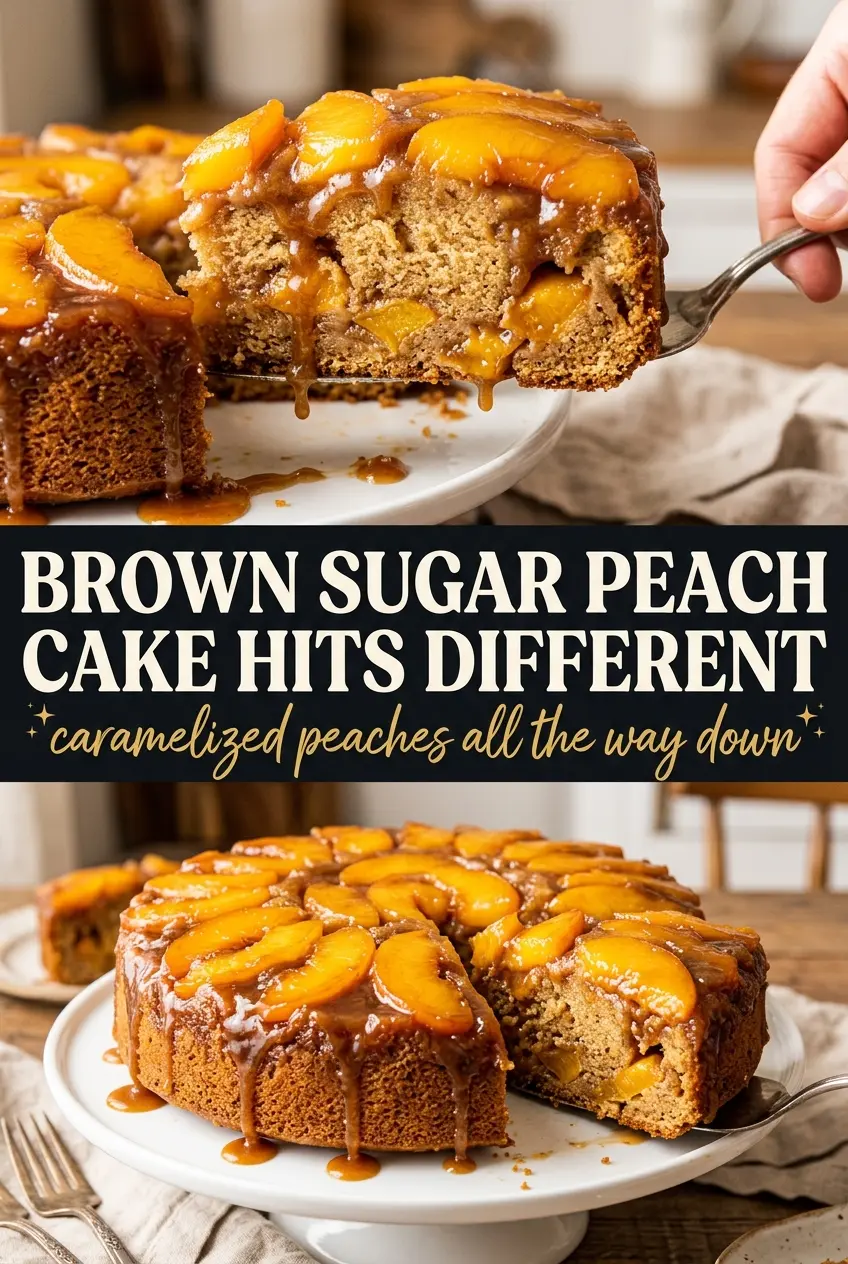
Brown Sugar Peach Cake
Ingredients
Equipment
Method
- Preheat the oven to 350°F and grease two 9-inch round cake pans; line with parchment so the cake releases cleanly.
- Mix the flour, baking powder, baking soda, salt, and cinnamon until evenly combined with no visible streaks.
- Beat butter and both sugars until light and fluffy, pausing to scrape the bowl for uniform creaming.
- Add eggs one at a time, mixing after each, until the batter looks smooth and thickened.
- Mix in the vanilla extract until incorporated and glossy.
- Alternately mix in the flour mixture and sour cream in a few additions, starting and ending with the flour for a cohesive batter.
- Fold in the diced peaches gently so the fruit stays distributed without overmixing.
- Divide the batter between the pans and smooth the tops so the layers bake evenly.
- Bake for 35-40 minutes at 350°F until a toothpick comes out clean and the tops look deeply golden.
- Cool the cakes completely before frosting so the caramel cream cheese sets without melting.
- Beat the cream cheese and butter until smooth and free of lumps, with a thick but spreadable texture.
- Add powdered sugar and mix until combined, then beat until fluffy and lighter in color.
- Mix in caramel sauce and vanilla extract until the frosting is creamy with a caramel-toned swirl.
- Fill and frost the cooled cake with the caramel cream cheese frosting, letting some frosting drape slightly for a side-slowing drip look.
- Arrange peach slices on top and drizzle with extra caramel before serving for visible fruit and caramel shine.