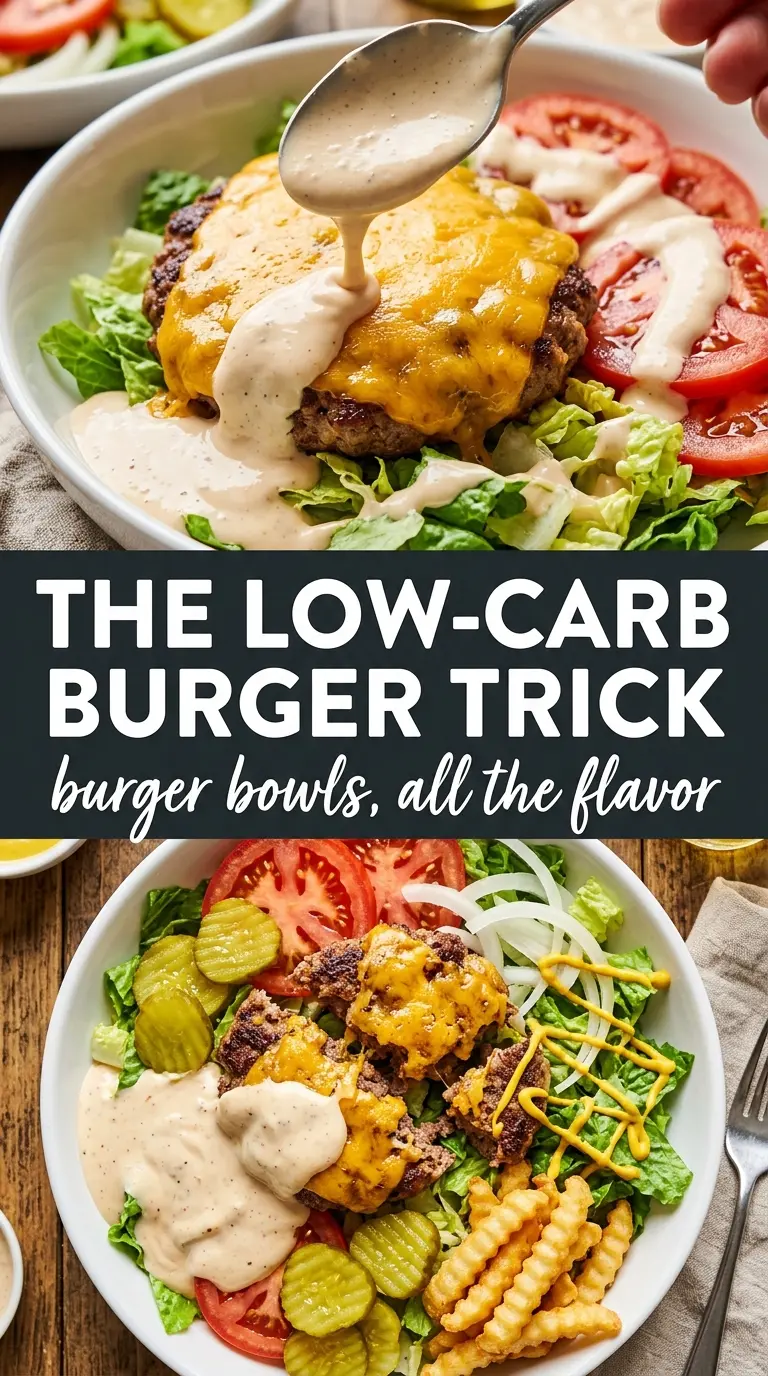
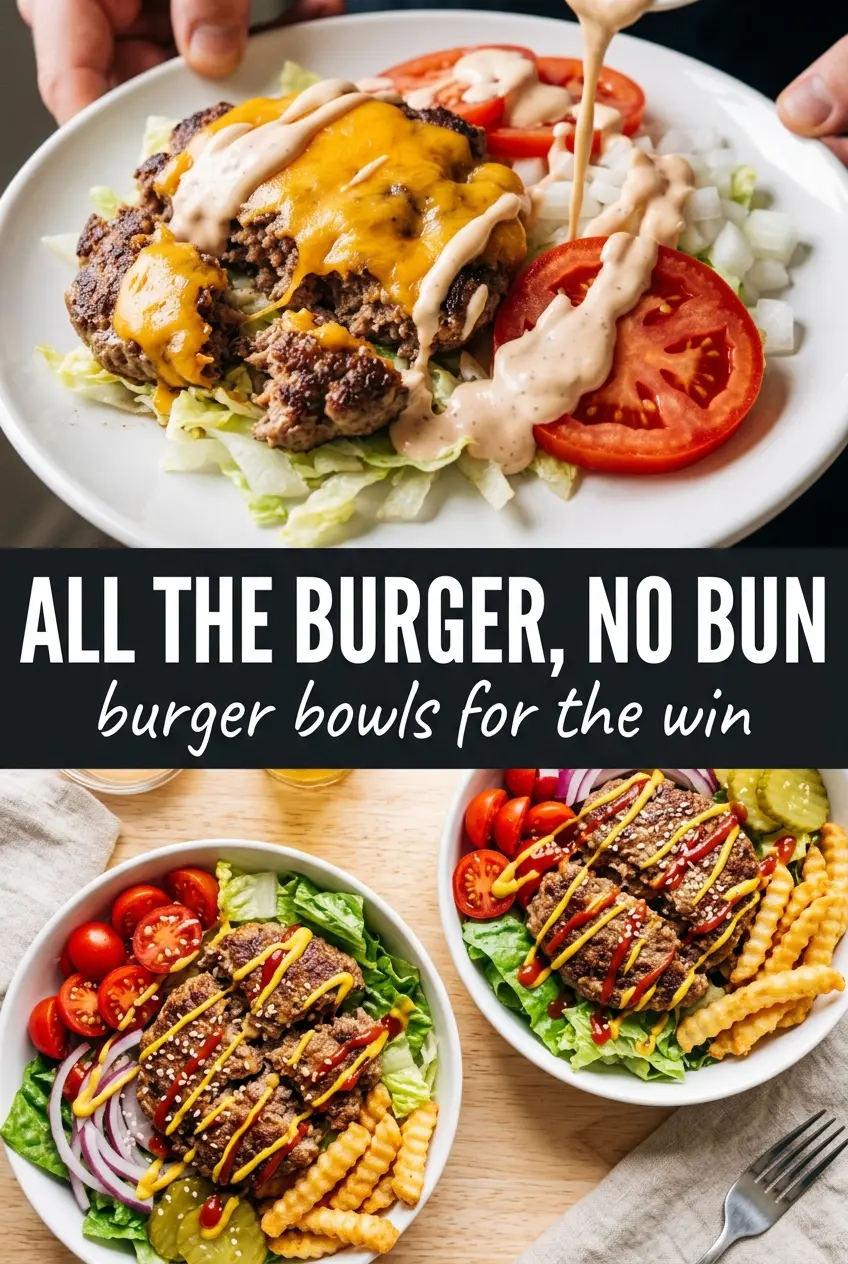
Juicy burger bowls hit all the best parts of a diner burger without the bun getting in the way. You get deeply browned beef, cold crisp lettuce, sharp cheddar, pickles, fries with real crunch, and that sweet-tangy sauce pulling everything together in one forkful. The texture mix is what makes this dinner worth repeating: hot beef against cool greens, salty fries against creamy sauce, and just enough pickle to keep each bite bright.
This version works because the beef is cooked hard enough to pick up color instead of just steaming in its own fat, and the sauce is built with familiar burger condiments that actually taste like a classic special sauce instead of a mayo dressing in disguise. I like using romaine or iceberg here because they stay crisp under the hot toppings, and the fries go in extra crunchy so they can stand up to the sauce.
Below you’ll find a few ways to change the bowl to fit what’s in your kitchen, plus the little details that keep the beef browned, the fries crisp, and the sauce from disappearing into the lettuce.
The beef got those browned edges I was hoping for, and the special sauce tasted just like a burger joint. I used extra crispy tots and they held up all the way to the last bite.
Pin these burger bowls for an easy low-carb dinner with crispy fries, seasoned beef, and burger sauce in every forkful.
The Reason the Beef Needs Hard Browning, Not Just Cooking Through
Burger bowls live or die by the beef. If the meat goes into a crowded pan and stays pale, the whole bowl tastes flat no matter how good the sauce is. Give the beef room in the skillet and let it sit long enough to brown before you start breaking it up into smaller pieces; that’s what builds the savory, burger-like flavor people expect from the first bite.
The other mistake is draining too early. You want some rendered fat left behind for flavor, then drain only the excess so the beef stays rich instead of greasy. Worcestershire helps deepen the meatiness, but it can’t replace actual browning. That part has to happen in the pan.
What Each Ingredient Is Actually Doing in This Recipe
- Primary ingredient (the star) — Quality matters most. Choose the best you can find.
- Cooking medium (oil, butter, or broth) — This carries flavors and prevents dryness.
- Seasonings (salt, pepper, spices, herbs) — Layer flavors so nothing overpowers. Build depth gradually.
- Aromatics (garlic, onion, herbs) — Cook with fat to bloom flavors. Become the foundation.
- Supporting ingredients — Complement the main ingredient without overpowering it.
- Sauce or liquid (if applicable) — Brings flavors together. Balance richness with acid.
- Acid (lemon, vinegar, wine, or other) — Brightens and prevents flat-tasting results.
- Final finish (garnish, glaze, or sauce) — Prevents one-dimensional taste and adds visual appeal.
What Each Topping Is Actually Doing in the Bowl
- 80/20 ground beef — The fat keeps the meat juicy and helps it brown properly. Leaner beef works, but the bowl loses some of that classic burger richness unless you add a little oil to the pan.
- Romaine or iceberg — Crisp lettuce is the cold, crunchy base that keeps the bowl from feeling heavy. Iceberg is the crunchiest; romaine gives you a little more structure and a slightly greener bite.
- Frozen fries or tater tots — These bring the diner-burger payoff. Cook them until they’re aggressively crisp, because soft fries turn to mush as soon as the sauce hits.
- Special sauce — Mayo, ketchup, mustard, relish, and vinegar make the bowl taste like a burger instead of just a beef salad. Don’t skip the vinegar; it keeps the sauce from tasting too thick and sweet.
- Shredded cheddar — Pre-shredded is fine here, but freshly shredded melts a little softer if you’re serving the bowls while the beef is still hot. It adds salt and gives the bowl that unmistakable burger-shop feel.
Building the Bowl So the Fries Stay Crispy
Whisking the Sauce First
Mix the mayonnaise, ketchup, mustard, relish, and apple cider vinegar before you touch the beef. The sauce tastes better after a short chill, and having it ready keeps the bowl assembly fast while the fries and meat are still hot. If the sauce tastes too sharp, it usually just needs another minute or two in the fridge to round out.
Cooking the Beef in a Hot Skillet
Season the ground beef generously, then cook it over medium-high heat without constant stirring. Let it sit in contact with the pan long enough to get dark bits before breaking it up into crumbles. If the meat starts to steam instead of sizzle, the pan is crowded or the heat is too low, and you’ll miss the browned edges that make this taste like a burger.
Getting the Fries Extra Crisp
Cook the fries or tots until they’re deeper in color than you might normally pull them. They need that extra crunch because they’re going under sauce and warm beef, which softens them fast. If they come out pale, they’ll taste fine for about two minutes and then disappear into the bowl.
Assembling Without Wrecking the Texture
Build the bowls in layers: lettuce first, then beef, then fries, tomatoes, onion, pickles, and cheddar. Put the sauce over the top at the very end so the lettuce stays crisp underneath and the fries keep some texture. Sesame seeds on top add that burger-bun look and a little nutty crunch, which makes the whole bowl feel finished.
How to Make Burger Bowls Fit Your Kitchen
Low-carb version with no fries
Skip the fries and add extra lettuce, tomato, pickles, and onion for a lighter bowl that still tastes complete. You lose the salty crunch, so I like to add a few more pickles or a handful of crispy onion bits if I have them.
Dairy-free bowl
Use your favorite dairy-free mayonnaise and a dairy-free cheddar-style shred if you want the full burger-bowl effect without dairy. The sauce still works because the mustard, relish, and vinegar carry the flavor, but the cheese topping will be a little less melty and more garnish-like.
Turkey or chicken burger bowls
Ground turkey or chicken works, but it needs a little extra help to stay juicy. Add a teaspoon of oil to the pan and keep a close eye on the cooking time, since leaner meat dries out fast once it loses its pink color.
Make it ahead for lunches
Cook the beef and sauce ahead, then store the toppings separately and assemble right before eating. The lettuce stays crisp, the fries stay usable, and the whole bowl tastes fresher than if everything sits together overnight.
Storage and Reheating
- Refrigerator: Store the beef and sauce for up to 4 days; keep lettuce, tomatoes, onions, pickles, and fries in separate containers. Once assembled, the bowl gets soggy fast.
- Freezer: The cooked beef freezes well for up to 2 months. Don’t freeze the lettuce, sauce, or fries; they lose the texture that makes the bowl work.
- Reheating: Reheat the beef in a skillet over medium heat or in the microwave in short bursts until hot. Warm the fries separately in the oven or air fryer so they crisp back up instead of turning limp.
Answers to the Questions Worth Asking
Burger Bowls
Ingredients
Equipment
Method
- Whisk together mayonnaise, ketchup, mustard, relish, and apple cider vinegar until smooth for the special sauce. Refrigerate while you cook the beef and fries so it thickens and the flavors meld.
- Heat a cast iron skillet over medium-high heat and add the ground beef. Season with salt, pepper, garlic powder, onion powder, and Worcestershire, then cook 6-8 minutes while breaking it into large crumbles until deeply browned.
- Drain off excess fat after the beef is browned. Keep the beef warm in the skillet briefly while you crisp up the fries.
- Cook the frozen fries or tater tots until extra crispy according to package directions. Set aside once crisp so they stay crunchy for assembling.
- Layer shredded lettuce into 4 wide bowls as the base. Add the beef crumbles over the lettuce to create a hearty first layer.
- Top each bowl with crispy fries or tots, cherry tomatoes, red onion, pickles, and shredded cheddar. Distribute toppings so the surface looks colorful and loaded.
- Drizzle the special sauce generously over everything in a dramatic zigzag. Finish with sesame seeds scattered across the top for crunch and visual contrast.
- Serve immediately while the fries are extra crispy and the cheddar is at peak melt. If needed, assemble right before eating to keep texture best.