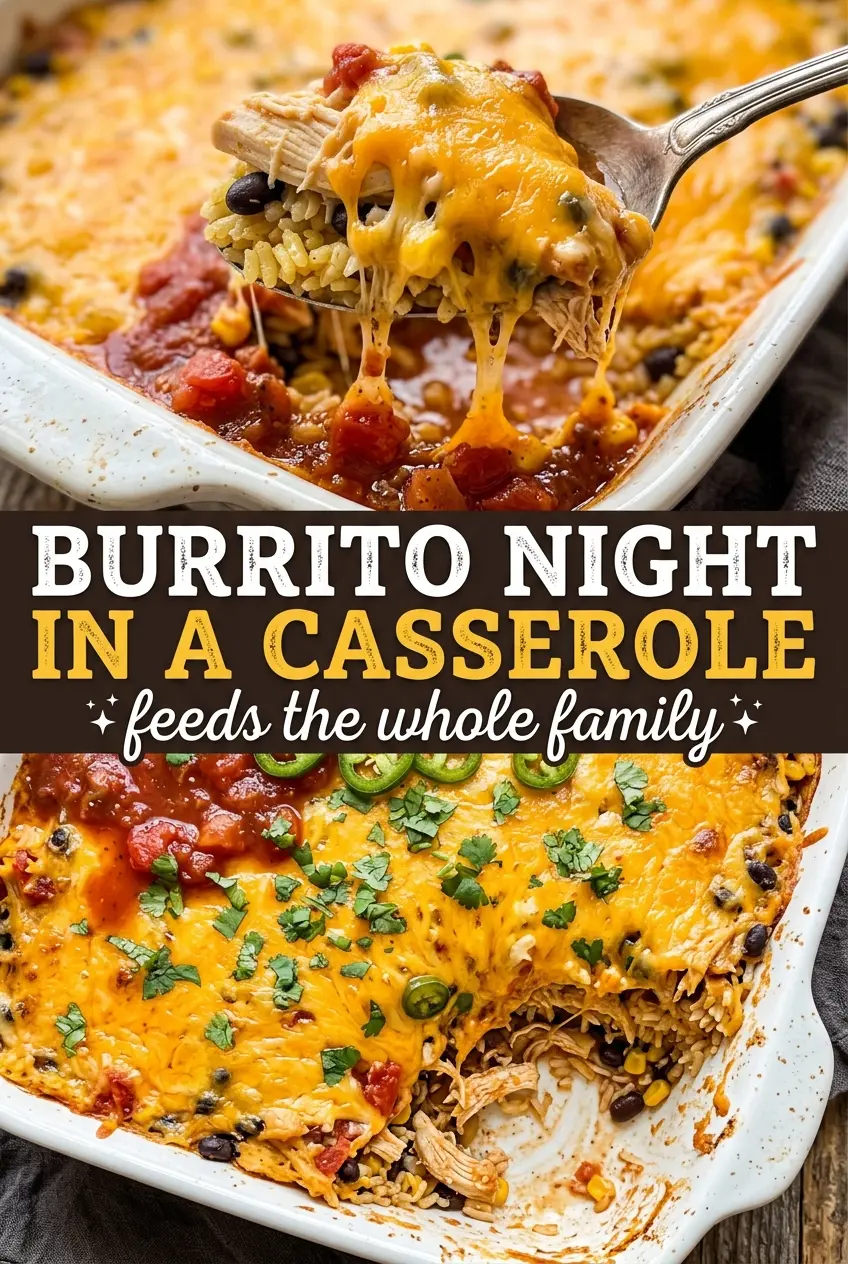
Bubbly, cheesy, and packed with the kind of burrito flavors that usually take extra assembly, this chicken burrito casserole bakes into a proper weeknight dinner with almost no fuss. The tortillas soften into the saucy filling, the rice holds everything together, and the cheese on top turns deeply golden at the edges. Every scoop feels hearty without turning heavy.
What makes this version work is the balance of moisture. The enchilada sauce and Rotel keep the chicken mixture loose enough to bake through, while the rice and torn tortillas soak up just enough liquid to slice and serve cleanly after a short rest. If the filling starts out too dry, the casserole can turn pasty; too wet, and the layers slide apart. This one lands right in the middle.
Below, I’ll walk through the little details that keep the casserole from turning mushy, plus the swaps that still give you that burrito-bowl-meets-bake feel when you need to work with what’s in the pantry.
The cheese browned up beautifully and the tortillas soaked in just enough sauce without turning to mush. I added a little extra cilantro on top and my kids went back for seconds immediately.
Love a baked dinner with melted cheese, tender chicken, and burrito-style layers? Save this Chicken Burrito Casserole for the nights when you want Tex-Mex comfort without rolling a single tortilla.
The Part That Keeps Burrito Casserole from Going Soggy
The biggest mistake with a casserole like this is treating it like a dump-and-bake skillet meal. The filling already contains a lot of moisture from the enchilada sauce, Rotel, corn, and beans, so the structure has to come from the rice and tortillas absorbing that liquid as they bake. That’s why this works best with cooked rice that’s fluffy and not wet from sitting covered too long.
The second thing that matters is the rest time. Pull it from the oven when the cheese is fully melted and the edges are bubbling, then let it sit for five minutes. That pause gives the sauce time to settle back into the layers instead of running all over the plate the second you cut in.
- Cooked rice — Use rice that’s already cooked and cooled slightly, not steaming hot from the pot. Freshly cooked rice can make the casserole gummy because it keeps releasing moisture in the oven.
- Torn flour tortillas — Torn pieces create soft, burrito-like layers instead of a neat tortilla crust. Corn tortillas can work in a pinch, but they’ll give you a firmer, more rustic bite and a less classic burrito texture.
- Red enchilada sauce — This is the backbone of the flavor and the main source of saucy texture. A store-bought can is fine here; just use one you actually like because it gets concentrated as it bakes.
- Rotel — The tomatoes and green chiles bring acidity and a little heat without extra chopping. Don’t drain it unless the casserole filling already looks loose; that liquid helps the rice and tortillas bake properly.
What Each Ingredient Is Actually Doing in This Dish
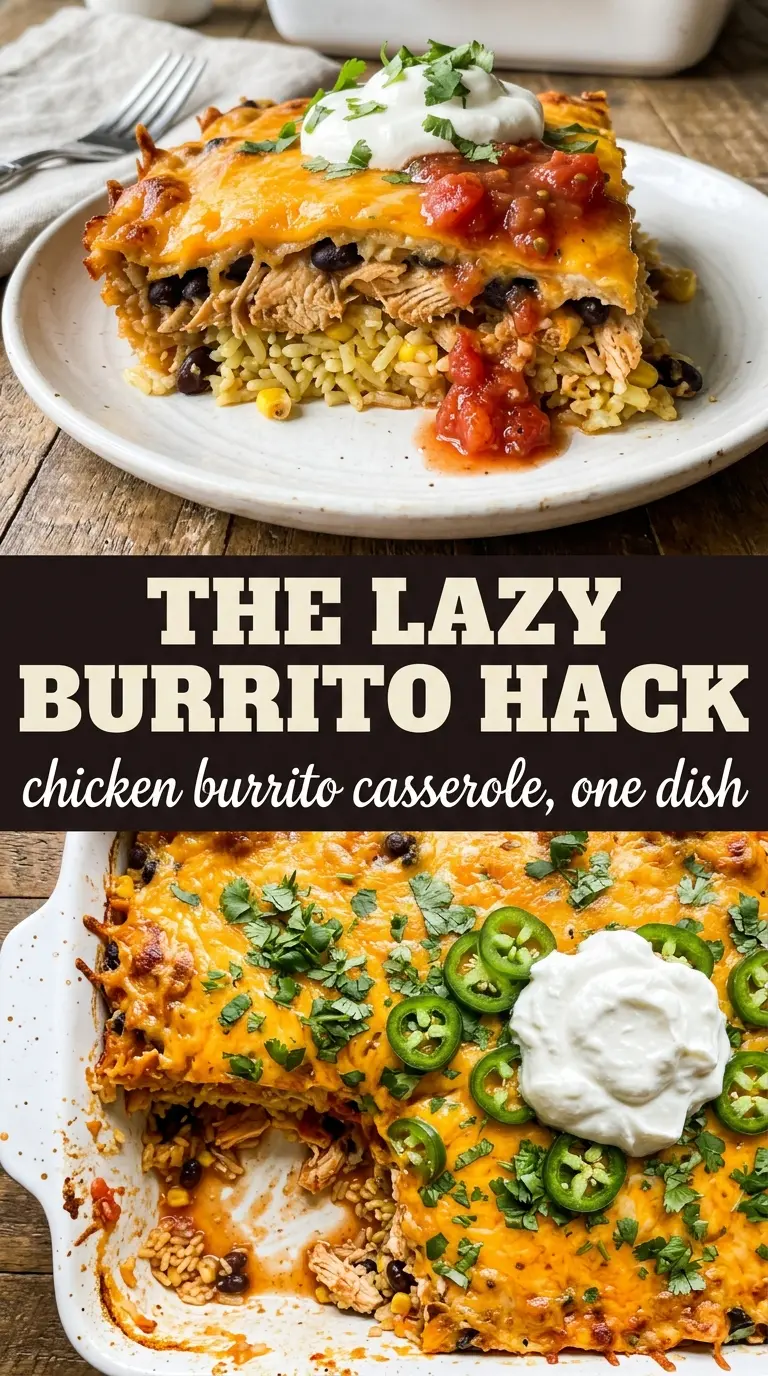
- Shredded chicken — This is the protein anchor. Rotisserie chicken is the easiest shortcut, and it works well because it’s already tender and seasoned enough to stand up to the sauce.
- Black beans — They add body and a creamy bite that helps the casserole feel complete. If you swap in pinto beans, the dish gets a little softer and more traditional burrito-shop-style.
- Corn — Corn gives sweet pops against the chili seasoning and keeps the filling from tasting flat. Frozen corn works fine if that’s what you have; thaw it first so it doesn’t cool down the filling.
- Mexican cheese blend — This gives you stretch, melt, and a browned top. Pre-shredded is fine, but if you grate your own, it melts more smoothly because it doesn’t carry the anti-caking coating.
- Taco seasoning — This seasons the whole pan quickly and evenly. If you’re using a salty packaged seasoning, taste the filling before baking and stop short of adding extra salt unless it needs it.
Building the Layers So Every Scoop Holds Together
Mix the filling first
Stir the chicken, rice, beans, corn, enchilada sauce, Rotel, and taco seasoning together in one big bowl until everything looks evenly coated. The goal is a loose, spoonable mixture, not a dry pile of ingredients with sauce pooled at the bottom. If it looks stiff, add a splash more enchilada sauce or a spoonful of the Rotel liquid before assembling.
Start with a tortilla base
Scatter half the torn tortillas across the bottom of the greased baking dish. This keeps the bottom layer from turning into plain chicken and rice, and it gives you that burrito-style bite underneath the filling. Overlap the pieces a little, but don’t pack them down tightly or they’ll bake into a dense mat.
Layer, then finish with cheese
Spread half the filling over the tortillas, add some cheese, then repeat with the rest of the tortilla pieces and filling before topping with the remaining cheese. That middle layer of cheese helps glue the casserole together, while the top layer browns into the bubbly crust everyone wants. Bake until the center is hot and the edges are actively bubbling; if the top browns too fast, lay a loose piece of foil over it for the last few minutes.
Let it rest before serving
The casserole needs a short rest so the sauce can thicken slightly and the layers can settle. If you cut it the second it comes out, the filling will run and the slices won’t hold. Five minutes is enough to clean up the texture without letting it go cold.
How to Adapt This for Different Kitchens and Different Crowds
Make it vegetarian
Skip the chicken and add an extra can of black beans or pinto beans. The casserole still bakes up hearty because the rice and tortillas carry the structure, and the cheese plus enchilada sauce keep the flavor grounded.
Make it gluten-free
Use certified gluten-free corn tortillas instead of flour tortillas. The texture gets a little softer and more layered, but the flavor stays squarely in Tex-Mex casserole territory.
Use leftover turkey or beef
Shredded turkey works almost exactly like chicken, and cooked taco-seasoned beef makes the casserole richer and a little heavier. If the meat is already well seasoned, ease up on the taco seasoning so the final dish doesn’t taste salty.
Storage and Reheating
- Refrigerator: Store covered for up to 4 days. The tortillas soften more as it sits, but the flavor stays strong.
- Freezer: It freezes well in portions or as a whole baked casserole. Wrap it tightly and freeze for up to 2 months; thaw overnight in the fridge before reheating.
- Reheating: Warm covered in a 350°F oven until hot in the center, or reheat single portions in the microwave. The common mistake is blasting it uncovered, which dries out the top before the middle is warm.