Chili lime salmon lands on the plate with a crust that’s smoky, bright, and just a little sticky at the edges, then flakes apart under a fork with the kind of tenderness that makes it easy to go back for another bite. The lime keeps the spice rub from tasting heavy, and the salmon’s richness gives the chili and paprika a place to settle in instead of just sitting on the surface.
What makes this version work is the paste-like coating. Olive oil carries the spices, lime zest brings the sharp citrus oils, and the small amount of lime juice loosens everything just enough to spread without sliding off the fish. I like a hot skillet for this because it gives the salmon a real crust before the center overcooks, but the oven method works too when you want less hands-on time.
Below you’ll find the exact cues I watch for when the crust is ready, plus a few smart swaps for baking, meal prep, and adjusting the heat without losing that bold chili-lime finish.
The spice paste caramelized into the salmon beautifully, and the lime kept it from tasting heavy. I used the skillet method and the crust turned out golden with just the right amount of char on the edges.
Like this chili lime salmon? Save it to Pinterest for the nights when you want a fast pan-seared dinner with a smoky citrus crust.
The Trick to Keeping the Chili-Lime Crust on the Fish
The biggest mistake with spiced salmon is adding a wet coating that slides off before the fish even hits the pan. This recipe avoids that by turning the lime juice, oil, and spices into a thick paste, then pressing it onto dry salmon so it has something to cling to. If the fillets are damp, the crust loosens and you lose that golden sear before it can set.
The other thing that matters is heat. Medium-high is hot enough to brown the spices and char the lime without scorching the garlic powder or burning the paprika into bitterness. If the pan smokes hard before the salmon goes in, it’s too hot. You want a steady sizzle the moment the fish touches the surface.
What Each Ingredient Is Actually Doing in This Salmon
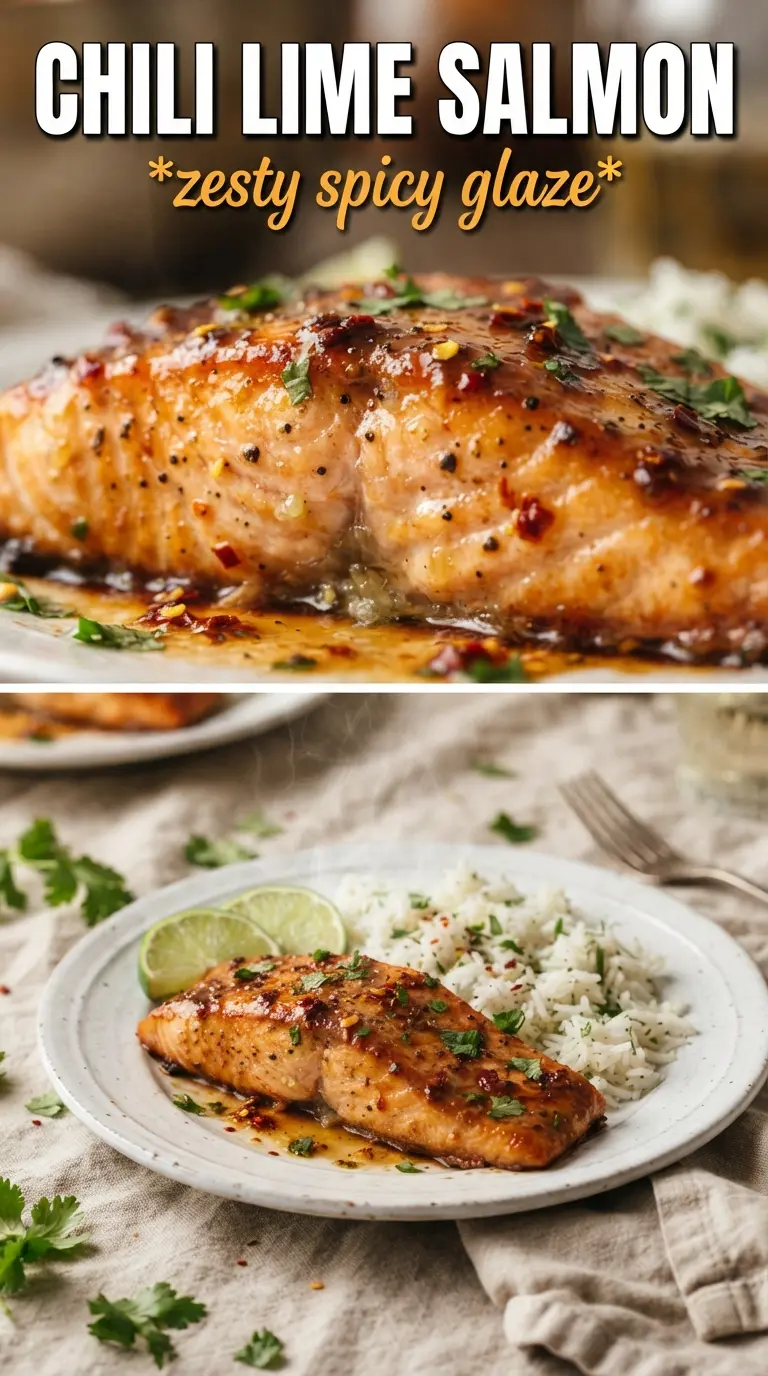
- Salmon fillets — Use center-cut fillets if you can. They cook more evenly and are easier to sear without the thin tail end drying out before the thick part is done.
- Olive oil — This loosens the spice mix into a paste and helps the crust brown instead of burning. Don’t swap in a tiny amount of oil here; the coating needs enough fat to spread and sear cleanly.
- Lime zest and lime juice — The zest gives you the bright citrus oils that survive heat, while the juice adds sharpness. If you only use juice, the flavor tastes flatter and the crust won’t smell as lively once it hits the pan.
- Chili powder, smoked paprika, cumin, garlic powder, and cayenne — This is the backbone of the rub. Smoked paprika gives depth, cumin adds warmth, and cayenne lets you dial the heat up without changing the texture of the coating.
- Cilantro and lime wedges — These finish the dish with freshness. They’re not decorative; they wake up the salmon after searing and keep each bite from tasting too rich.
Getting the Salmon Seared Before the Center Overcooks
Mix the Paste First
Stir the lime juice, zest, oil, and spices until you have a thick, spreadable paste. It should look more like wet seasoning than marinade. If it’s watery, the salmon will steam before it browns, and the crust won’t set properly.
Press It Onto Dry Salmon
Pat the fillets dry, then coat them on all sides with the chili lime mixture. Press it in with your fingers so it forms a thin layer instead of clumps. A thin, even coating browns better than a thick patchy one, and it keeps the fish from tasting muddy.
Let the Pan Do the Work
Heat the skillet until it’s hot enough that the salmon sizzles right away, then lay the fillets in and leave them alone. If you move them too soon, the crust tears and sticks. After 4 to 5 minutes, the edges should look opaque and the bottom should release more easily from the pan.
Finish Without Guessing
Flip and cook the second side until the salmon flakes but still looks moist in the center. For baked salmon, 12 to 14 minutes at 425°F usually lands in the right place. The best test is the thickest part: it should separate into large flakes, not dry shards.
How to Adapt This for a Milder, Hotter, or Dairy-Free Plate
Make It Milder for Sensitive Heat Levels
Cut the cayenne in half or leave it out completely and keep the smoked paprika. You’ll still get a warm, smoky crust, just without the sharper burn that hangs on the back of the throat.
Turn Up the Heat Without Changing the Method
Add another pinch of cayenne or a little chipotle powder. Chipotle brings smoke along with heat, which works especially well if you’re baking instead of pan-searing.
Use the Oven When You Want Hands-Off Cooking
Bake the salmon at 425°F for 12 to 14 minutes on a lined sheet pan. You won’t get quite the same charred crust as the skillet version, but you’ll still get clean, juicy fillets with less active attention at the stove.
Storage and Reheating
- Refrigerator: Store leftovers in an airtight container for up to 2 days. The crust softens a bit, but the flavor stays strong.
- Freezer: Salmon can be frozen after cooking, but the texture turns softer when thawed. Wrap tightly and freeze for up to 1 month if you need to, then thaw in the refrigerator overnight.
- Reheating: Warm gently in a 275°F oven until just heated through, or use a skillet over low heat with a splash of water and a lid. High heat dries salmon out fast and makes the chili coating taste bitter.
Questions I Get Asked About This Recipe
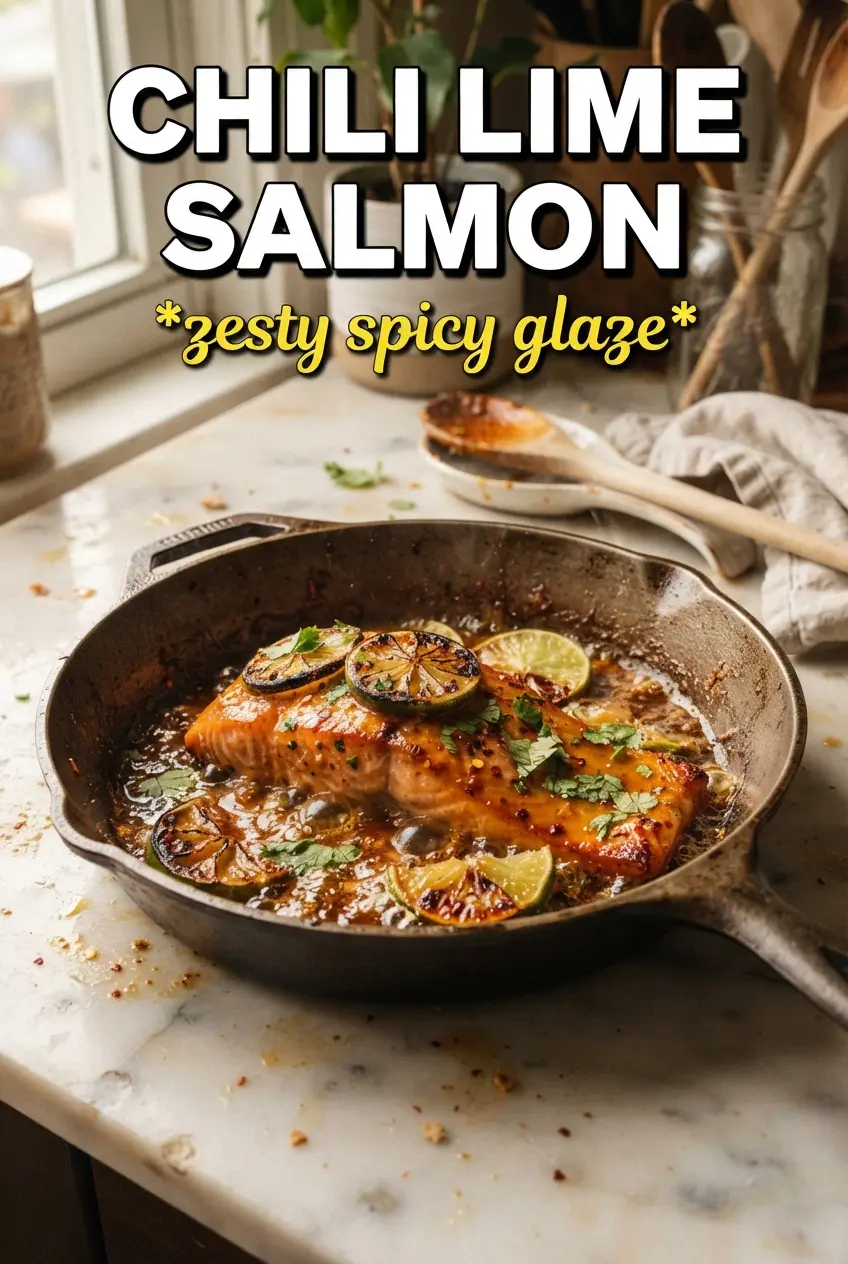
Chili Lime Salmon
Ingredients
Equipment
Method
- Mix fresh lime juice, lime zest, olive oil, chili powder, smoked paprika, cumin, garlic powder, cayenne, and salt into a paste, stirring until it looks evenly blended and clay-like.
- Coat the salmon fillets all over with the chili lime mixture until every surface is covered with a golden-red layer.
- Heat a skillet over medium-high heat and sear the salmon for 4–5 minutes per side, until the spice crust is golden and slightly charred.
- Alternatively, preheat the oven to 425°F and bake the salmon for 12–14 minutes until the spice coating looks set and fragrant with lightly browned edges.
- Garnish with lime wedges and fresh cilantro right before serving for a fresh, bright finish.