Chimichurri chicken thighs hit that sweet spot between smoky, crisp, and bright. The skin turns deeply charred and crackly on the grill, then the fresh herb sauce seeps into the hot edges and wakes everything up. You get rich chicken, punchy garlic, a little vinegar bite, and enough herbs to keep each bite tasting clean instead of heavy.
The trick is treating the chimichurri like two sauces in one. A couple of spoonfuls can touch the raw chicken for a short marinade, but the rest stays fresh and loose for serving, which keeps the herbs vivid and the garlic sharp. Bone-in, skin-on thighs handle the grill better than lean cuts because the fat bastes the meat as the skin renders, and they’re forgiving if the fire runs hot.
Below, I’ll walk through the one grilling detail that keeps the skin from sticking, plus the small chimichurri habits that make the sauce taste bright instead of muddy. If you’ve ever ended up with chicken that was cooked through but flat, this version fixes that fast.
The skin got shatter-crisp on the grill, and the little bit of chimichurri in the marinade made the chicken taste seasoned all the way through without turning the sauce dull.
Save these chimichurri chicken thighs for the nights when you want charred grill flavor and a fresh herb sauce in the same bite.
The Skin Has to Render Before the Sauce Can Shine
With chicken thighs, the biggest mistake is rushing the first side. If the skin doesn’t stay in full contact with the grates long enough to render, you’ll get soft, patchy skin instead of that crisp, bronzed finish that holds up under the chimichurri. Medium-high heat is right for this, but hot spots still matter, so the thighs need to go skin-side down and stay there until the fat has had time to melt out.
That little bit of marinade from the chimichurri helps season the meat, but too much sauce on the raw chicken can turn the herbs dark and muddy. Keep the fresh batch separate for serving. The goal is char on the outside, juicy meat inside, and a sauce that still tastes like parsley and garlic instead of cooked greens.
What the Parsley, Garlic, and Vinegar Are Really Doing

- Flat-leaf parsley — This is the backbone of the sauce. It gives chimichurri its green, grassy lift, and curly parsley won’t taste quite as full or savory. Pack it in the cup measure; you want a sauce that tastes herb-forward, not oily.
- Cilantro — Optional, but it changes the sauce in a good way if you like a brighter, more citrusy edge. Leave it out if you want a more classic parsley-only chimichurri. The sauce still works either way.
- Garlic — Raw garlic is part of the point here. Food-processor chimichurri needs enough garlic to stand up to the grill, but don’t puree it into a paste or it can turn harsh. Short pulses keep little flecks instead of a bitter slurry.
- Red wine vinegar — This sharpens the sauce and keeps it from tasting oily. Lemon juice can work in a pinch, but the vinegar gives the more traditional, rounder bite that clings to grilled chicken better.
- Chicken thighs with skin and bone — This cut gives you a forgiving grill window and the best texture here. Boneless thighs cook faster, but you lose some of the juicy cushion that keeps the meat tender while the skin gets properly crisp.
Grilling the Thighs Without Losing the Skin
Building the Chimichurri First
Pulse the parsley, cilantro, and garlic until the herbs are chopped but not turned into a smooth paste. Drizzle in the oil slowly so the mixture stays loose and spoonable, then add the vinegar, salt, pepper, and red pepper flakes. If you dump everything in at once and blend hard, the sauce can look bruised and the texture gets too uniform.
Coating the Chicken Lightly
Rub the thighs with olive oil, salt, and pepper, then use just a couple tablespoons of chimichurri as a short marinade. The chicken only needs that 30-minute rest to pick up flavor. If you leave it much longer, the vinegar starts to work the surface too hard and the herbs lose their fresh edge.
Cooking the Skin Side First
Set the chicken skin-side down on a preheated medium-high grill and don’t move it until it releases with a little resistance and the skin looks deeply browned. You’re listening for steady sizzling, not loud flare-ups. If the skin is sticking, it needs another minute; forcing it early tears off the crisp layer you worked for.
Finishing to Temperature
Flip the thighs and keep grilling until the meat reaches 175°F. Thighs eat better a little higher than breast meat because the connective tissue has time to soften. Let them rest for five minutes before spooning on the fresh chimichurri so the juices settle instead of running onto the plate.
How to Adjust These Chimichurri Chicken Thighs for Your Table
Dairy-Free and Naturally Gluten-Free
This recipe already fits both without any changes, which makes it easy when you’re feeding a mixed crowd. The main thing to watch is cross-contamination on the grill or serving platter if you’re cooking alongside breaded foods or sauces that contain dairy.
No Grill, Same Char
Use a cast-iron skillet over medium-high heat and start skin-side down. Let the fat render until the skin is crisp and the chicken lifts cleanly, then flip and finish in a 425°F oven if the thighs need more time. You won’t get the same smoke, but you’ll keep the crackly skin and the bright sauce contrast.
Milder Chimichurri
Cut the red pepper flakes in half and skip the cilantro if you want a cleaner parsley-garlic sauce. The chicken still tastes bold, but the heat stays in the background instead of building on the finish.
Storage and Reheating
- Refrigerator: Store the chicken and chimichurri separately for up to 3 days. The sauce may darken a little, but it still tastes bright.
- Freezer: The cooked chicken freezes well for up to 2 months. Freeze the chimichurri separately only if you don’t mind a softer herb texture after thawing; fresh sauce is better.
- Reheating: Warm the chicken gently in a 325°F oven or in a covered skillet over low heat until just heated through. High heat dries out the thighs and makes the skin leathery instead of crisp. Add the chimichurri after reheating, not before.
Questions I Get Asked About This Recipe
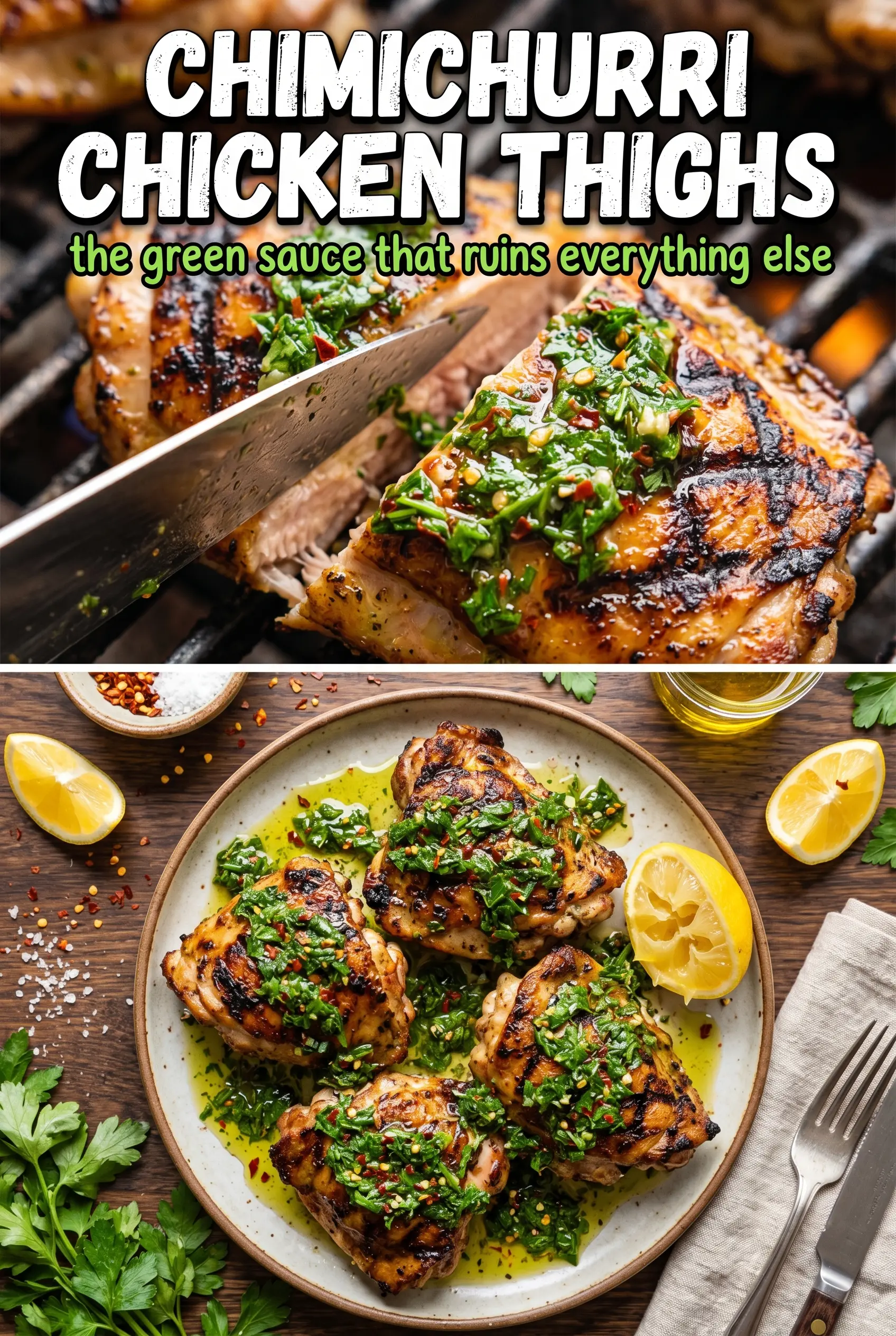
Chimichurri Chicken Thighs
Ingredients
Equipment
Method
- Pulse fresh flat-leaf parsley, fresh cilantro (if using), and garlic cloves in a food processor until finely chopped with some texture remaining. Slowly drizzle in olive oil while pulsing to form a rough, vivid green sauce.
- Add red wine vinegar, red pepper flakes, salt, and black pepper, then blend briefly to combine. Transfer to a bowl and set aside.
- Rub bone-in skin-on chicken thighs with olive oil, salt, and black pepper until evenly coated. Reserve 2 tablespoons chimichurri, spread it over the thighs, and coat thoroughly.
- Rest the chicken for 30 minutes at room temperature (or refrigerate if your kitchen is warm) so the marinade can soak in. Let it come off-cold slightly before grilling for more even cooking.
- Preheat the grill to medium-high heat. Make sure grates are clean for crisp skin.
- Grill chicken thighs skin-side down for 8-10 minutes until the skin is crispy and deeply charred. Keep the lid closed as much as possible to maintain grill heat.
- Flip the thighs and grill 8-10 more minutes until the thickest part reaches 175F. Grill time may vary based on thigh size—look for a firm texture and deep browning.
- Rest the grilled thighs for 5 minutes off the heat. Spoon fresh chimichurri generously over the top so it pools around the charred skin.