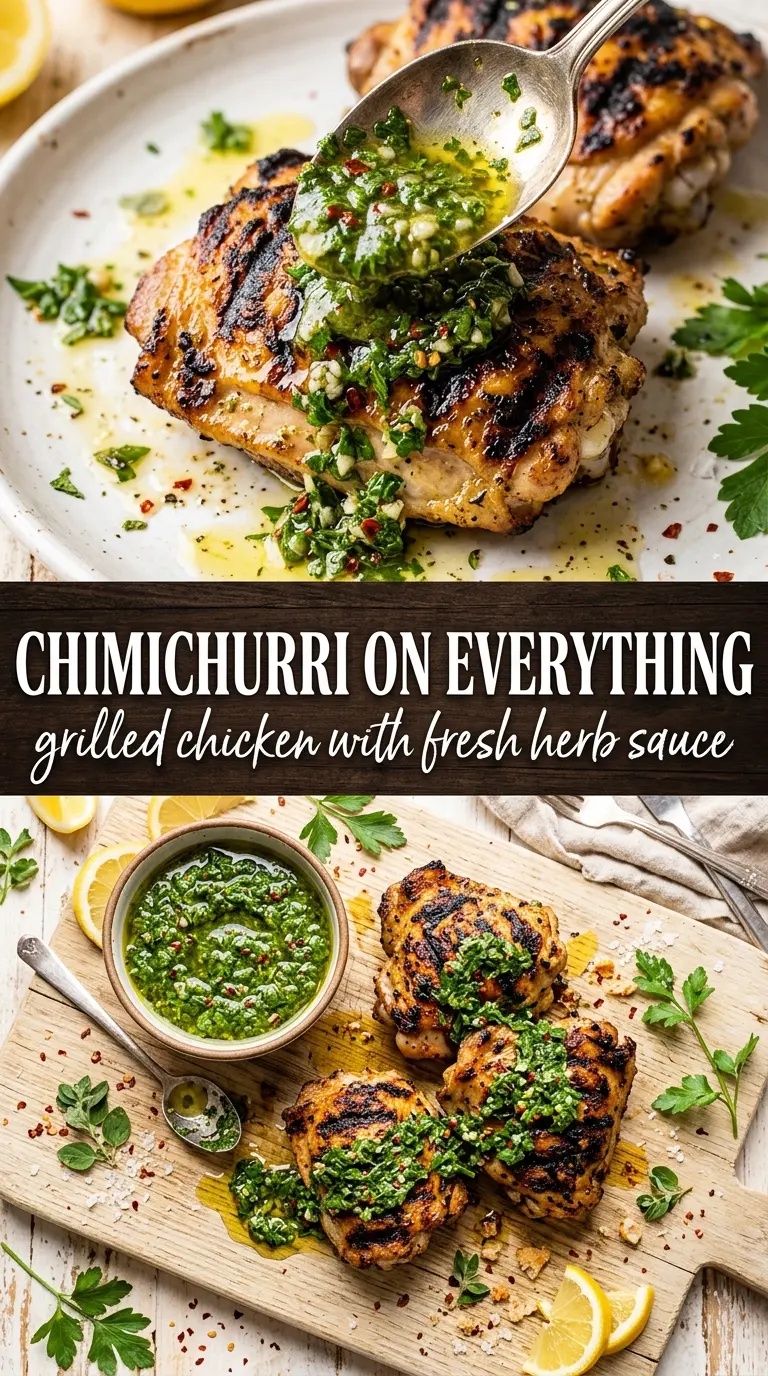
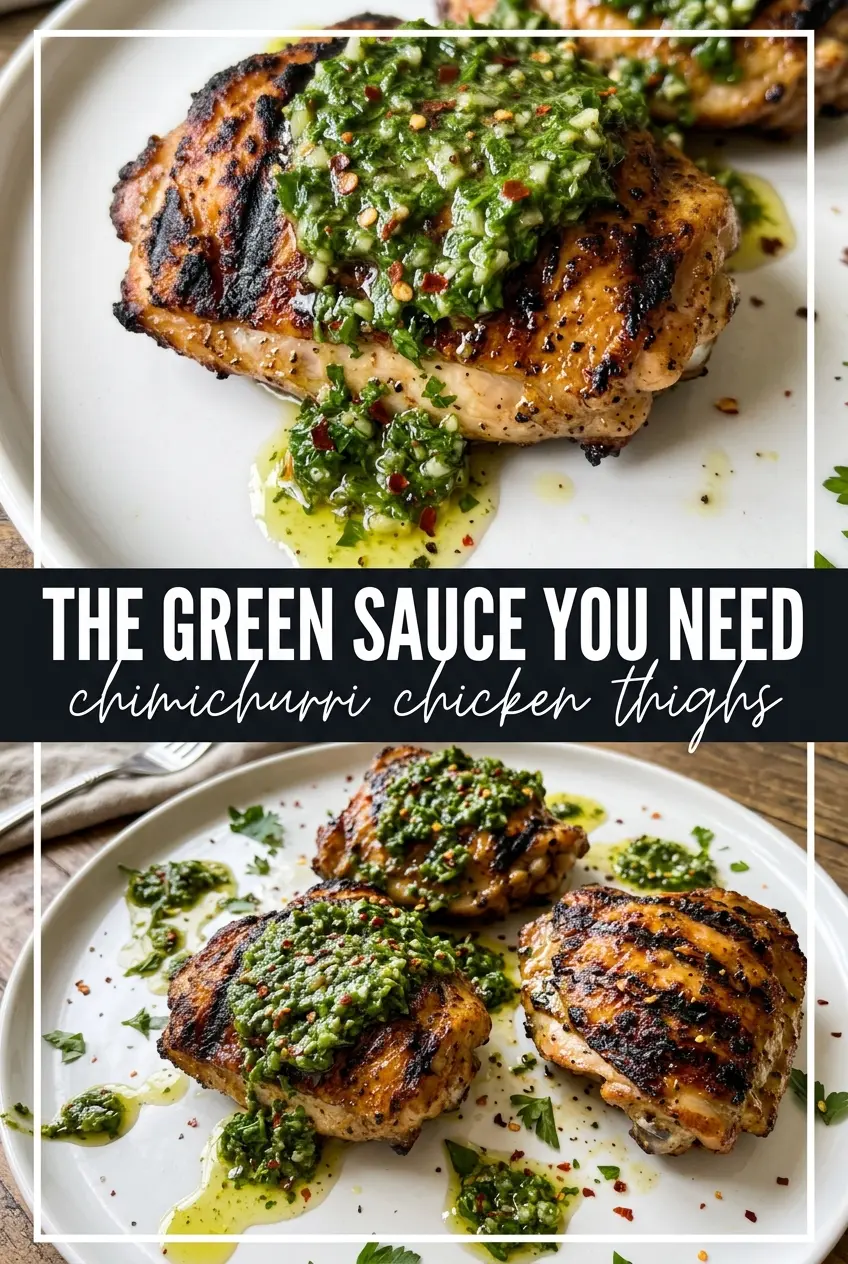
Golden-charred chicken thighs and bright chimichurri are a hard combination to beat. The skin turns crisp and deeply browned on the grill, then the sauce slides into every ridge and crack, bringing sharp vinegar, fresh herbs, garlic, and a little heat to each bite. It’s the kind of dinner that tastes like you worked on it for hours, even though most of the work is just giving the chicken a short marinade and letting the grill do what it does best.
What makes this version work is the balance between the sauce and the chicken skin. The chimichurri gets divided in two so one half seasons the meat and the other stays clean for serving, which keeps the finished dish fresh and punchy instead of muddy. Using bone-in, skin-on thighs also matters here: they stay juicy over direct heat and give you that crisp, rendered skin that boneless chicken just can’t match.
Below, I’ll walk through the small choices that make a difference, from keeping the sauce textured instead of paste-like to grilling the thighs so the skin crisps before the meat overcooks.
The chimichurri stayed bright even after grilling, and the skin came out shatteringly crisp. I followed the 30-minute marinade and the chicken was juicy all the way through.
Save these chimichurri chicken thighs for the nights when you want crispy grilled chicken and a sauce that stays bold, grassy, and garlicky.
The Trick to Keeping Chimichurri Bright Instead of Gritty
Chimichurri only tastes right when it still has some texture. If you blitz the herbs into a smooth puree, the sauce loses that fresh, chopped-herb bite and starts tasting flat. A food processor is still useful here, but stop as soon as the parsley and cilantro are mostly broken down and the mixture still looks lively.
The other thing that matters is dividing the sauce. Half goes onto the chicken before it rests, which seasons the meat and helps the surface brown a little more evenly. The reserved half stays clean for serving, and that’s the part that keeps the finished dish bright after the chicken comes off the grill.
- Flat-leaf parsley — This is the backbone of the sauce. Curly parsley can work in a pinch, but it won’t give you the same clean, herbal flavor.
- Cilantro — It softens the parsley’s edge and adds a little citrusy lift. If you hate cilantro, use extra parsley and a little fresh oregano instead.
- Red wine vinegar — This is what makes chimichurri taste sharp and alive. Lemon juice can substitute, but the flavor will read brighter and less rounded.
- Olive oil — Use a good one if you can. It doesn’t need to be expensive, but it should taste clean, since the sauce is basically herbs suspended in oil.
What Each Ingredient Is Actually Doing in This Chicken Dish
- Chicken (pat dry for browning) — Room temperature cooks more evenly. Even pieces ensure uniform doneness.
- Oil or butter (the browning medium) — High-heat oil essential for proper searing. Creates pan flavor.
- Seasonings (salt, pepper, spices) — Apply generously. Chicken carries the entire flavor profile.
- Aromatics (garlic, ginger, herbs) — Cook with fat to bloom flavors. Become the foundation.
- Sauce or braising liquid (if using) — This keeps chicken moist. Balance richness with acid.
- Vegetables (if using) — Layer by cooking time so everything finishes together.
- Acid (vinegar, wine, lime, or pineapple) — This brightens and prevents one-dimensional flavor.
- Proper doneness (165°F internal temperature) — Use thermometer for accuracy. Overcooked is dry.
Getting the Skin Crispy Before the Sauce Goes On
Building the Chimichurri
Blend the parsley, cilantro, garlic, olive oil, red wine vinegar, oregano, and red pepper flakes until mostly smooth but still a little rough around the edges. You’re aiming for a spoonable sauce, not a paste. Season it after blending so you can taste the salt level clearly, then split it in half right away. If you skip the divide and use one batch for everything, the serving sauce will pick up raw chicken juices and lose its freshness.
Marinating the Thighs
Season the chicken thighs with salt, pepper, garlic powder, and smoked paprika, then brush on half the chimichurri. Thirty minutes is enough here; any longer and the vinegar starts working on the surface in a way that can make the texture a little soft. Let the chicken sit while the grill heats so it isn’t ice-cold when it hits the grates. Cold chicken takes longer to cook through, which usually means the skin overcooks before the center is ready.
Grilling for Crispy Skin
Put the thighs skin-side down on a medium-high grill that has been oiled well. Don’t move them for those first 7 to 8 minutes; the skin needs steady contact with the grates to render and crisp. If the skin sticks, it usually needs another minute before it releases cleanly. Flip once the skin is deeply golden, then finish cooking on the second side until the thickest part reaches 165°F.
The Rest and the Finish
Let the chicken rest for 5 minutes before serving. That short pause keeps the juices in the meat instead of running onto the plate the second you cut in. Spoon the reserved chimichurri over the top generously, then put extra on the side for people who want more of that sharp herb and garlic hit. The sauce should stay bright green and loose enough to drizzle; if it thickens in the fridge, stir in a little olive oil before serving.
How to Adjust These Chicken Thighs for Different Kitchens and Crowds
Oven-Baked Chimichurri Chicken Thighs
If you don’t want to grill, sear the thighs skin-side down in a hot oven-safe skillet until the skin starts to brown, then finish them in a 425°F oven. You won’t get quite the same smoke-kissed edge, but the skin still crisps well and the chicken stays juicy. Add the reserved chimichurri after baking so the herbs stay fresh.
Dairy-Free and Gluten-Free by Default
This recipe already fits both diets as written, which is part of why it works so well for a crowd. Just check your smoked paprika and red pepper flakes for any blended seasoning additives if you’re cooking for someone with a strict gluten sensitivity. The texture and flavor stay unchanged.
Swap the Herbs When Cilantro Isn’t Welcome
Use all parsley and add a little extra oregano if cilantro tastes soapy to you or your guests. The sauce will read more herbal and less citrusy, but it still lands in the chimichurri lane. Keep the garlic and vinegar the same so the sauce doesn’t turn into a bland green dressing.
Storage and Reheating
- Refrigerator: Store the chicken and chimichurri separately for up to 4 days. The sauce may dull a little in color, but the flavor stays strong.
- Freezer: The chicken freezes well for up to 2 months, though the skin won’t stay crisp. Freeze the chimichurri in a small container or ice cube tray, then thaw and stir before serving.
- Reheating: Reheat the chicken uncovered in a 350°F oven until warmed through. The common mistake is microwaving it covered, which softens the skin and makes the thighs taste steamed instead of grilled.
Answers to the Questions Worth Asking
Chimichurri Chicken Thighs
Ingredients
Equipment
Method
- Blend fresh flat-leaf parsley, fresh cilantro, garlic, olive oil, red wine vinegar, dried oregano, and red pepper flakes in a food processor until mostly smooth but still textured. Season with salt and pepper, then divide the mixture in half.
- Season bone-in skin-on chicken thighs with salt, pepper, garlic powder, and smoked paprika. Brush with half the chimichurri and marinate for 30 minutes.
- Preheat the grill to medium-high and oil the grates. Grill the chicken skin-side down for 7-8 minutes until the skin is crispy and golden.
- Flip the thighs and grill another 12-15 minutes until internal temperature reaches 165°F. Keep grilling until the skin is deeply golden and charred at the edges.
- Rest the chicken for 5 minutes, then plate and drizzle the reserved chimichurri generously over the top. Serve with extra chimichurri on the side so the sauce can pool at the base.