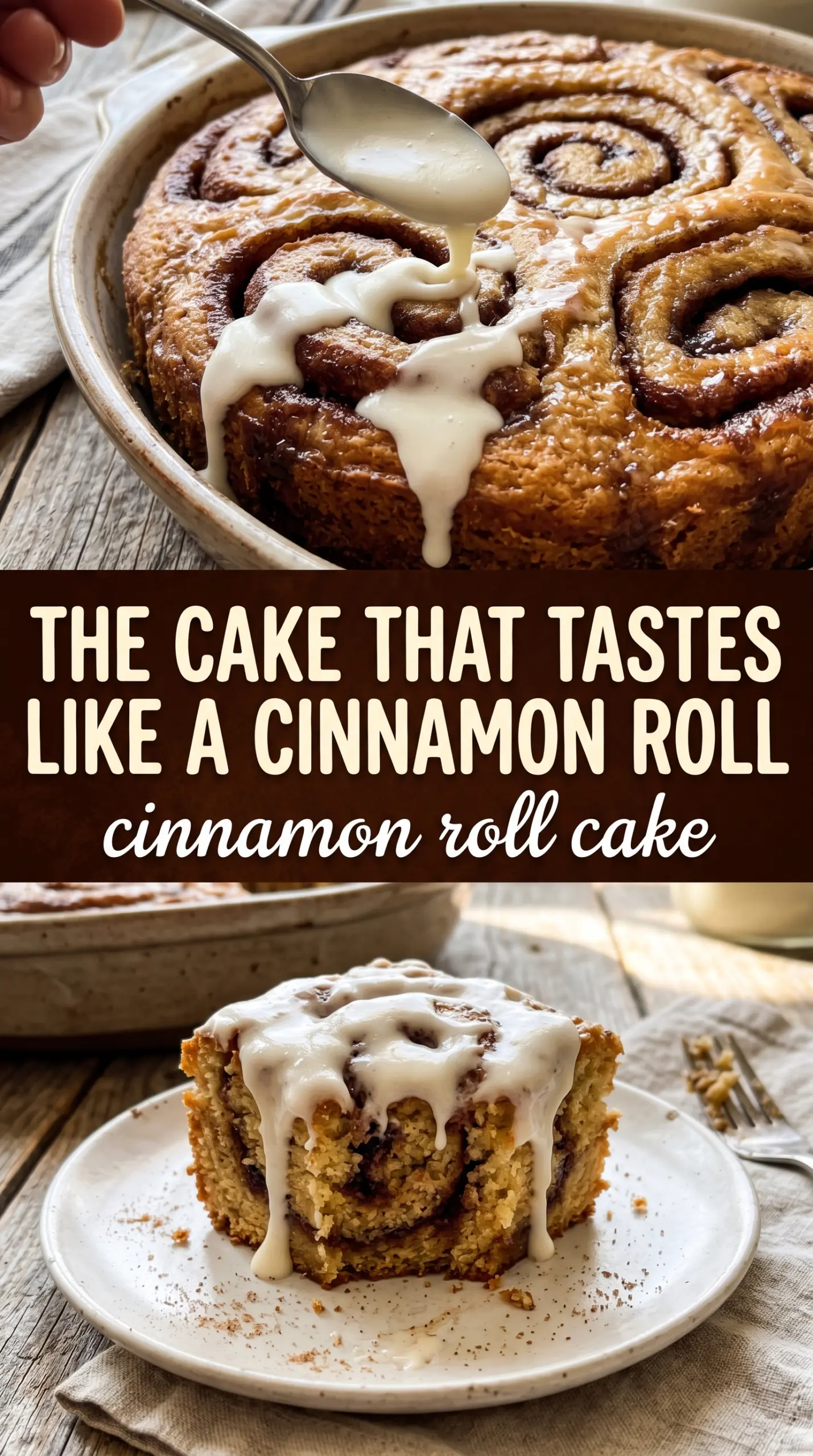
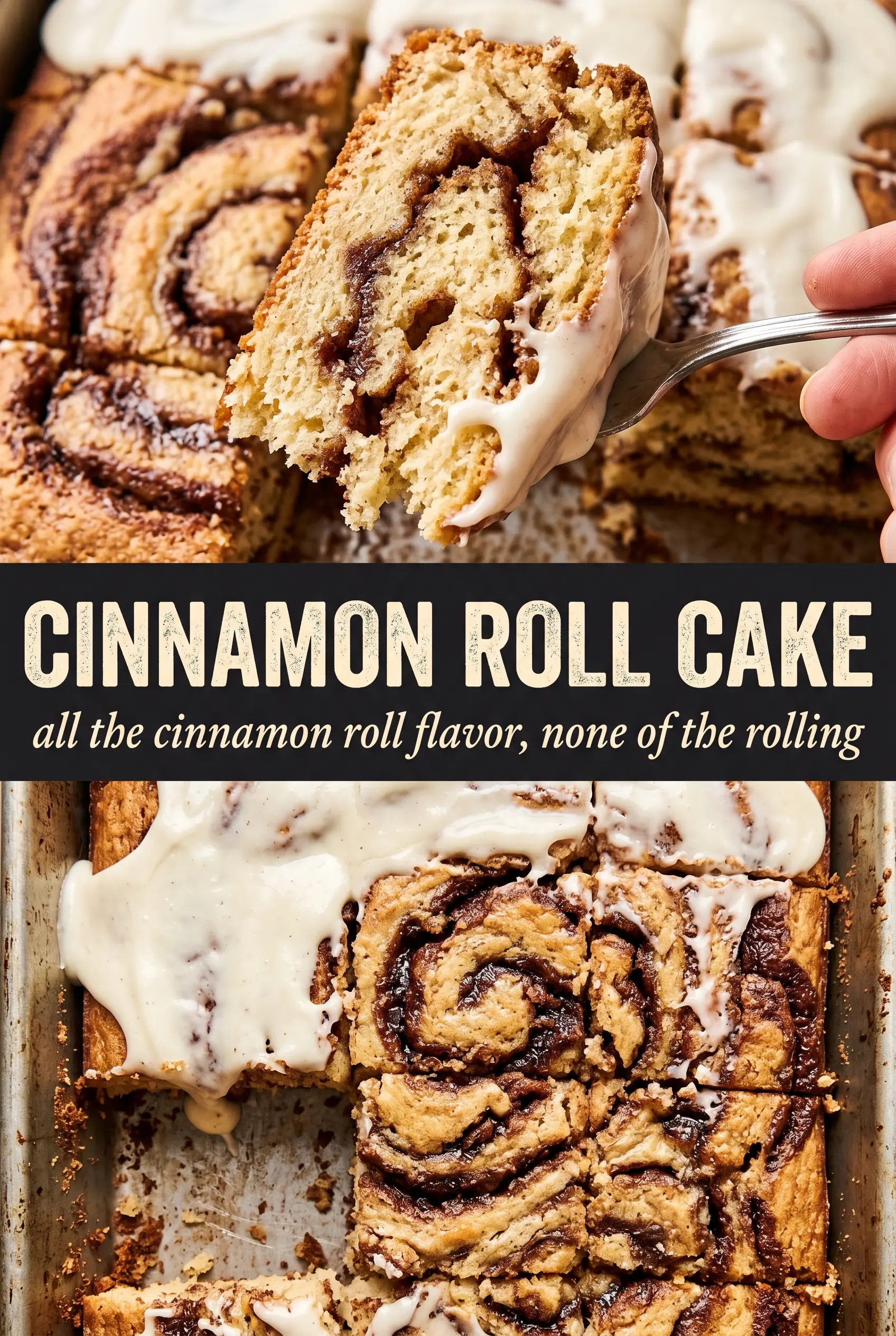
All the best parts of a cinnamon roll show up here in one easy sheet cake: tender crumb, deep brown sugar swirls, and a cream cheese glaze that melts into every ridge while the cake is still warm. The result lands somewhere between breakfast cake and coffee shop treat, with enough cinnamon to taste like the real thing and none of the work of rolling, proofing, or shaping dough.
What makes this version work is the batter. It stays simple and a little loose, which lets the cinnamon-butter mixture sink and ripple instead of sitting on top in a thick layer. The melted butter in the cake keeps the crumb soft, while the cream cheese glaze adds the tang and richness people expect from a cinnamon roll finish. Pour it on warm and it soaks into the surface instead of skating across it.
Below, I’ve included the one swirl technique that keeps the center from turning muddy, plus a few swaps that still give you that classic cinnamon roll flavor when you need to work with what’s in the pantry.
The cake baked up light, and the cinnamon swirl stayed distinct instead of disappearing into the batter. I poured the glaze on while it was still warm and it soaked right into the top just like a good cinnamon roll.
Save this cinnamon roll cake for the mornings when you want gooey swirls and cream cheese glaze without making yeast dough.
The Swirl Needs to Stay Thick, Not Mixed In
The biggest mistake with cinnamon roll cake is over-swirling. If you stir the cinnamon-butter layer into the batter too much, it turns the top muddy instead of giving you those dramatic ribbons people are after. Spoon the mixture over the batter in dollops, then run a knife through it just a few times in wide figure-eight motions.
That thick swirl mixture matters too. Softened butter gives you a spreadable filling that holds its shape long enough to bake into streaks, while brown sugar melts into little pockets that stay gooey. If the butter is too melted, the whole thing slips into the batter and you lose the contrast.
- Swirl mixture texture — It should look like a soft paste, not a sauce. That’s what keeps the cinnamon layer visible.
- Wide knife strokes — Fewer passes give you cleaner ribbons and keep the cake from getting dense.
- Warm glaze finish — Pouring the glaze over a warm cake lets it soak in instead of sitting in a slick layer.
What Each Ingredient Is Actually Doing in the Pan
- All-purpose flour — This gives the cake its structure without making it bready. Cake flour will make it a little softer, but all-purpose holds up better under the heavy swirl and glaze.
- Whole milk — The extra fat helps the crumb stay rich and tender. Lower-fat milk works, but the cake won’t taste quite as plush.
- Butter, melted for the cake — Melted butter keeps the batter simple and helps create a soft, even crumb. For the swirl, though, you want softened butter so it can hold the cinnamon sugar in place.
- Brown sugar and cinnamon — Brown sugar melts into caramel-like pockets, which is why this tastes closer to a cinnamon roll than a plain coffee cake. Don’t cut the cinnamon back too much or the glaze takes over and the cake tastes flat.
- Cream cheese — This is what gives the glaze its tang and that classic cinnamon roll finish. Neufchâtel works in a pinch, but full-fat cream cheese gives the smoothest, richest glaze.
Building the Cake So the Swirl Bakes Through, Not Down
Mix the Batter Just Until It Comes Together
Whisk the dry ingredients first, then add the milk, eggs, vanilla, and melted butter. Stir only until the flour disappears and the batter looks smooth with a few small lumps left behind. If you beat it hard, the cake turns tough and the crumb loses that soft, bakery-style texture. Spread it into the pan while it’s still easy to level.
Drop the Cinnamon Filling in Thick Spoonfuls
Beat the softened butter, brown sugar, and cinnamon until it looks fluffy and spreadable. Drop it over the batter in small mounds instead of dragging it across the surface. That keeps the swirl from sinking all at once and gives you those deep caramel-colored streaks after baking. A knife or skewer works best for the final swirl; a whisk will overwork it.
Bake Until the Center Springs Back
Bake at 350°F until the top is golden and the center no longer looks wet in the middle, usually 30 to 35 minutes. A toothpick should come out with a few moist crumbs, not raw batter. If the top browns too quickly, the oven is running hot, so tent loosely with foil for the last few minutes. Pull it before it looks fully dry or the cake will go from tender to crumbly.
Glaze While the Cake Is Still Warm
Beat the cream cheese glaze until it’s completely smooth, then pour it over the warm cake in a steady ribbon. The warmth helps the glaze sink into the swirls and melt just enough to coat the surface without running off the edges. If the glaze seems too thick, add a teaspoon of milk at a time. If it’s thin, it’ll disappear into the cake too fast instead of leaving that glossy top.
Three Ways to Work This Cinnamon Roll Cake Into Your Routine
Dairy-Free Version
Use plant-based butter, an unsweetened non-dairy milk, and dairy-free cream cheese. The cake still bakes up tender, but the glaze will taste a little less tangy, so add a small squeeze of lemon if you want that classic cream cheese edge.
Make It a Little More Coffee-Cake Style
Skip a little of the glaze and dust the top with powdered sugar after it cools for 5 to 10 minutes. You’ll get a lighter finish and the cinnamon swirl stays front and center instead of being covered completely.
Gluten-Free Swap
Use a cup-for-cup gluten-free flour blend that includes xanthan gum. The batter may bake a touch more gently, so check the center early and don’t overbake, or the crumb will turn sandy instead of soft.
Storage and Reheating
- Refrigerator: Store covered for up to 4 days. The glaze will firm up and the crumb gets a little denser, which is normal.
- Freezer: Freeze individual slices tightly wrapped for up to 2 months. Thaw overnight in the fridge; glaze texture softens a bit but still holds.
- Reheating: Warm slices in the microwave for 15 to 20 seconds, just until the glaze loosens. Don’t overheat or the cake dries out and the cream cheese topping gets oily.
Questions I Get Asked About This Recipe
Cinnamon Roll Cake
Ingredients
Equipment
Method
- Preheat the oven to 350°F and grease a 9x13 baking dish so the batter won’t stick.
- Whisk together all-purpose flour, granulated sugar, baking powder, and salt.
- Stir in whole milk, large eggs, vanilla extract, and melted butter until just combined.
- Spread the batter into the prepared dish in an even layer.
- Beat softened butter, brown sugar, and cinnamon until fluffy, then drop spoonfuls over the batter.
- Use a knife to swirl the cinnamon mixture into the batter, creating marbled streaks throughout (keep swirls visible on top).
- Bake for 30–35 minutes until a toothpick comes out clean and the top is golden.
- While the cake is still warm, beat cream cheese, powdered sugar, milk, and vanilla extract until smooth.
- Pour the glaze over the warm cake so it pools into every swirl and crevice.
- Let the glaze soak in for 5 minutes before serving warm.