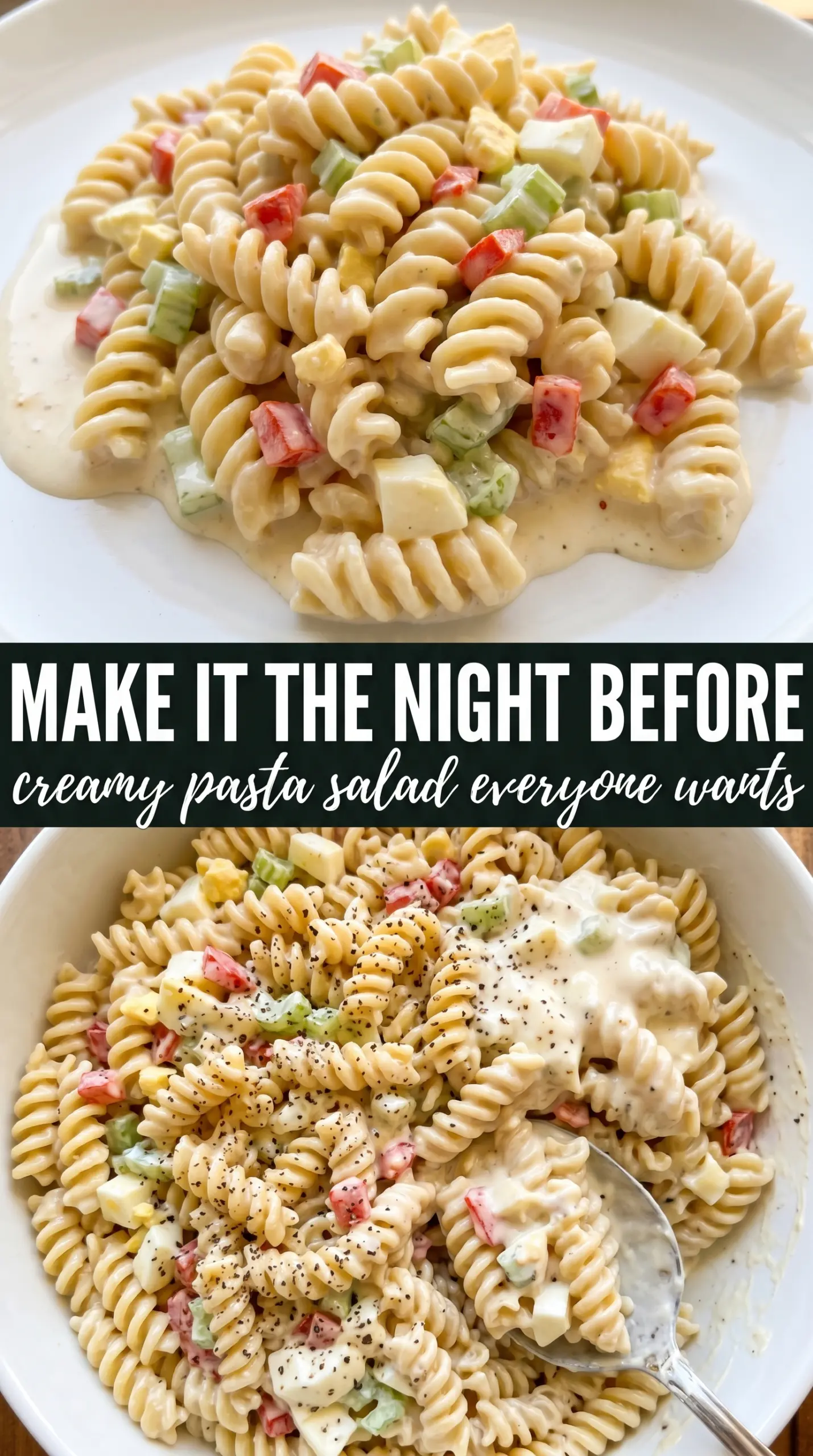
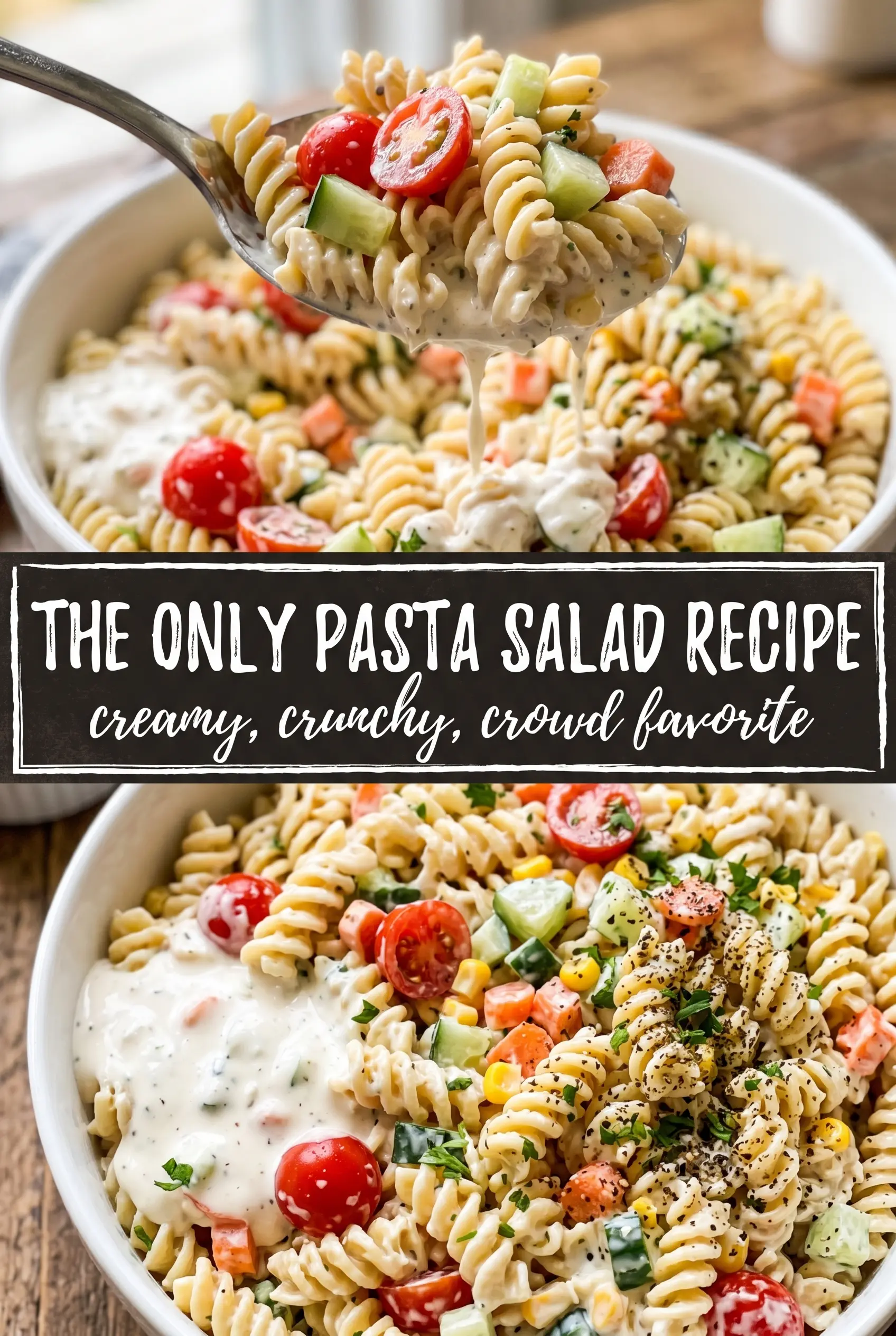
Tender rotini coated in a thick, tangy dressing is what makes creamy pasta salad worth repeating all year long. The dressing clings to every curve instead of pooling at the bottom of the bowl, and the mix of crisp peppers, briny olives, sharp cheddar, and a little celery gives each bite some contrast. It tastes like the version people go back for at potlucks, only this one stays creamy after chilling instead of drying out before the bowl is even half empty.
The trick is getting the pasta past al dente by just a minute or two, then cooling it completely so it can absorb the dressing without turning gummy. The dressing itself needs both mayonnaise and sour cream: mayo gives body, while sour cream keeps the flavor from tasting flat. Apple cider vinegar and yellow mustard cut through the richness, and a small amount of sugar smooths out the sharp edges so the whole salad tastes balanced instead of heavy.
Below, I’ve included the few details that matter most — how to keep the pasta from soaking up all the dressing, which substitutions still hold up, and what to do if you’re making it ahead for a crowd.
The dressing coated every piece after chilling, and the extra spoonful of mayo before serving brought it right back to that creamy texture. The balance of tangy and sweet was spot on.
Save this creamy pasta salad for potlucks, BBQs, and the kind of make-ahead side dish that still tastes fresh after chilling.
The Dressing Needs Time to Sink In, Not Sit on the Surface
The biggest mistake with creamy pasta salad is treating the dressing like it only needs to coat the noodles once. Pasta drinks up the dressing as it chills, especially rotini and macaroni, which means the salad that looks perfect right after mixing can turn dry by the time it reaches the table. That’s why this version is mixed, rested, and then finished with a little extra mayo if needed.
The other thing that matters is the pasta texture. If you cook it only to al dente, it stays too firm after chilling and the salad feels stiff instead of creamy. Give it that extra minute in the boiling water, then rinse until completely cold so it stops cooking and doesn’t turn mushy in the fridge.
What Each Ingredient Is Actually Doing in This Recipe
- Primary ingredient (the star) — Quality matters most. Choose the best you can find.
- Cooking medium (oil, butter, or broth) — This carries flavors and prevents dryness.
- Seasonings (salt, pepper, spices, herbs) — Layer flavors so nothing overpowers. Build depth gradually.
- Aromatics (garlic, onion, herbs) — Cook with fat to bloom flavors. Become the foundation.
- Supporting ingredients — Complement the main ingredient without overpowering it.
- Sauce or liquid (if applicable) — Brings flavors together. Balance richness with acid.
- Acid (lemon, vinegar, wine, or other) — Brightens and prevents flat-tasting results.
- Final finish (garnish, glaze, or sauce) — Prevents one-dimensional taste and adds visual appeal.
What Each Ingredient Is Actually Doing in This Salad
- Rotini or elbow macaroni — Both shapes catch dressing well, but rotini gives you more ridges for the creamy sauce to cling to. Elbows work fine if that’s what you have.
- Mayonnaise — This is the base that gives the salad its body and helps it stay thick after chilling. Use a good store-bought mayo here; there’s no reason to reach for anything fancy.
- Sour cream — It loosens the mayonnaise just enough and adds tang so the dressing doesn’t taste heavy. Full-fat sour cream gives the best texture, but plain Greek yogurt can step in if you want more bite.
- Apple cider vinegar and yellow mustard — These are the sharp notes that keep the salad from tasting flat. Together they cut through the richness and make the flavor wake up after a cold rest.
- Bell peppers, olives, celery, and red onion — These ingredients bring crunch, salt, and freshness. Dice them small so they distribute through the bowl instead of dropping to the bottom.
- Cheddar cheese — It adds a little savory chew and makes the salad feel more substantial. Shred it yourself if you can; pre-shredded cheese tends to be drier and doesn’t blend in as nicely.
How to Keep the Pasta Creamy After It Chills
Cooking the Pasta Past Al Dente
Salt the water well, then cook the pasta until it’s just past al dente, with a softer bite than you’d want for a hot pasta dinner. That little extra time matters because chilled pasta firms up fast. Drain it, then rinse under cold water until it’s completely cool and the surface starch is washed off; if it’s still warm, it will thin the dressing and keep absorbing it unevenly.
Whisking a Dressing That Stays Thick
Mix the mayonnaise, sour cream, vinegar, mustard, sugar, garlic powder, onion powder, salt, and pepper until smooth before it touches the pasta. If the dressing looks grainy, keep whisking until the sugar dissolves and the sour cream blends in fully. A smooth dressing coats better and doesn’t leave pockets of sharp vinegar or mustard in one bite and bland noodles in the next.
Folding in the Add-Ins
Add the cooled pasta, peppers, olives, onion, celery, and cheddar to a large bowl, then pour the dressing over the top and toss until every piece looks glossy. Work from the bottom of the bowl so the heavier bits don’t settle out. If the bowl looks crowded or the coating seems patchy, use a bigger bowl; cramped pasta salad never mixes evenly.
The Chill That Makes It Taste Finished
Refrigerate the salad for at least an hour so the flavors settle and the dressing thickens around the pasta. Right before serving, check the texture and stir in 2 to 3 tablespoons of extra mayonnaise if it looks dry. Finish with paprika over the top for color and a little smoky note, but don’t add it too early or it will streak through the dressing.
How to Adapt This for Different Tables
Dairy-Free Version
Use a dairy-free mayonnaise and swap the sour cream for a thick unsweetened dairy-free yogurt. Skip the cheddar or use a plant-based shredded cheese if you like, but know the salad will taste a little less rich and a little brighter.
Gluten-Free Pasta Salad
Choose a sturdy gluten-free rotini or elbow and cook it just until tender, because some gluten-free pastas get fragile if they’re overcooked. Chill it fully before mixing so it doesn’t break apart when you toss in the dressing.
Lighter, Tangier Version
Replace half the mayonnaise with plain Greek yogurt for a sharper, leaner dressing. The salad will taste a little brighter and less silky, but it still holds together well if you let it chill before serving.
Make It Heartier for a Main Dish
Fold in diced ham, chopped hard-boiled eggs, or shredded chicken and the salad turns from side dish to lunch. Add the extra mix-ins after the dressing so they don’t get smashed while you toss everything together.
Storage and Reheating
- Refrigerator: Keeps well for 3 to 4 days. The pasta will keep absorbing dressing, so expect it to thicken a little each day.
- Freezer: Don’t freeze this one. The mayonnaise and sour cream separate after thawing, and the vegetables lose their crisp bite.
- Reheating: Serve it cold straight from the fridge. If it looks tight after chilling, stir in a spoonful or two of mayonnaise rather than trying to warm it, which breaks the creamy texture.
Questions I Get Asked About This Recipe
Creamy Pasta Salad
Ingredients
Equipment
Method
- Bring a large pot of well-salted water to a rolling boil, then cook rotini or elbow macaroni until just past al dente, about 8–10 minutes. Drain and rinse with cold water until completely cooled, then spread on a sheet pan and let cool briefly so steam doesn’t soften the noodles.
- Whisk mayonnaise, sour cream, apple cider vinegar, yellow mustard, granulated sugar, garlic powder, onion powder, salt, and pepper until smooth. Stop once the dressing is uniform and glossy, with no sour-cream streaks.
- Combine cooled pasta, red bell pepper, green bell pepper, black olives, red onion, and celery in a large bowl. Toss just to distribute the vegetables evenly.
- Pour the dressing over the pasta mixture and toss until everything is evenly coated. Add shredded cheddar and toss again so the cheese is tucked throughout rather than clumped.
- Refrigerate for at least 1 hour so the pasta absorbs the dressing. If the salad seems dry after chilling, stir in 2–3 tablespoons extra mayonnaise before serving.
- Dust with paprika just before serving for color and a light smoky note. Serve chilled, with the dressing clinging to every piece of pasta.