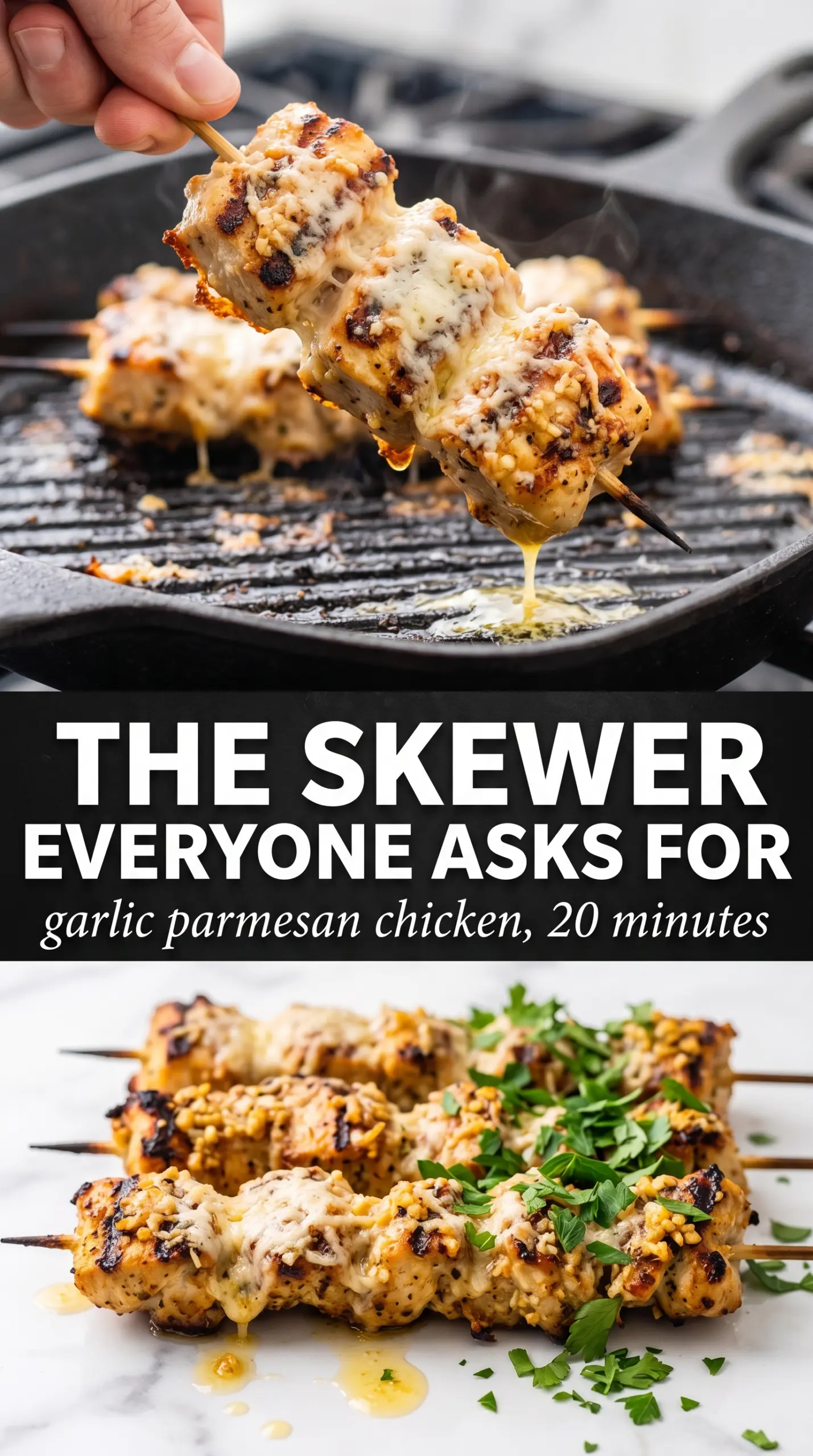
Garlic Parmesan chicken skewers come off the grill with crisp, caramelized edges, juicy centers, and just enough cheese to form a savory crust without turning heavy. The garlic gets sweet as it cooks, the Parmesan clings to the chicken instead of sliding off, and the finish of melted butter and lemon gives every bite a clean, salty lift.
The trick is in the marinade: olive oil carries the garlic and herbs, lemon helps season the chicken all the way through, and a portion of the Parmesan goes in early so it melts into the surface instead of burning at the end. Cutting the chicken into even cubes matters here. Uneven pieces mean some skewers are dry while others are still catching up on the grill.
Below, I’ve included the small details that keep these skewers juicy, plus a few smart swaps if you want to cook them another way or adjust for what’s in your kitchen.
The chicken stayed so juicy, and the Parmesan on top got those little browned bits that I kept picking off the plate. I marinated it for just 30 minutes like the recipe said, and the flavor still came through all the way to the center.
Save these garlic Parmesan chicken skewers for the next grill night when you want juicy chicken, charred edges, and a buttery Parmesan finish.
The Mistake That Keeps Garlic Parmesan Skewers From Browning Properly
The biggest failure point here is loading the chicken too wet and too crowded. If the marinade is dripping on the grill, the garlic and Parmesan scorch before the chicken has a chance to pick up color, and you end up with bitter spots instead of a deep savory crust. Let the chicken drip for a moment before threading it, and keep a little space between cubes on the skewer so the heat can reach more surface area.
Medium-high heat is the sweet spot. Too low and the chicken steams; too high and the cheese clings to the grates instead of the meat. You’re looking for visible char marks, a firm exterior, and juices that run clear when the thickest piece reaches 165°F.
What Each Ingredient Is Doing in These Chicken Skewers
- Chicken breasts — Lean chicken breast works well here because the marinade and quick grilling protect it from drying out. Cut the pieces evenly so they cook at the same pace; if one side of the skewer is full of smaller cubes, those bits will overcook before the larger ones are done.
- Olive oil — This carries the garlic, herbs, and Parmesan across the chicken and helps the surface brown instead of sticking. A decent everyday olive oil is fine here; save the fancy finishing oil for the table.
- Fresh garlic — This is the strongest flavor in the dish, and fresh matters. Jarred garlic can taste dull and can burn faster on the grill, while minced fresh cloves mellow just enough to get sweet at the edges.
- Parmesan — Freshly grated Parmesan melts into the marinade and finishes the skewers with a salty, nutty crust. Pre-shredded cheese won’t cling as well because of the anti-caking agents, so grate it yourself if you want that golden coating.
- Lemon juice — It brightens the garlic and helps season the chicken all the way through. Don’t add much more than listed or the acid will start changing the texture before the grill even heats up.
- Butter — The melted butter at the end gives the skewers that glossy, rich finish and helps the extra Parmesan stick. It’s a small step, but it’s the difference between good grilled chicken and chicken that tastes finished.
Building the Marinade, Skewer, and Grill Marks
Mixing the Marinade
Whisk the olive oil, garlic, a portion of the Parmesan, lemon juice, herbs, salt, and pepper until the mixture looks thick and loose, almost like a spoonable paste. That texture matters because it coats the chicken instead of pooling at the bottom of the bowl. If it looks oily and separated, keep whisking until the Parmesan starts to suspend everything together.
Letting the Chicken Take on the Flavor
Add the chicken and toss until every piece is slicked with the marinade. Thirty minutes is enough here because the chicken is cut small; go much longer and the lemon starts to work the texture too hard. If you’re prepping ahead, marinate it in the fridge and thread it onto skewers right before cooking so the chicken doesn’t sit damp and crowded.
Threading and Grilling
Soak wooden skewers first, then thread the chicken with a little breathing room between pieces. That tiny gap helps the heat hit more sides at once, which means better browning and less steaming. Oil the grates, place the skewers on medium-high heat, and let them sit long enough to pick up color before turning; if they stick immediately, they’re not ready to move yet.
Finishing with Butter and Cheese
Pull the skewers off when the centers hit 165°F and the edges are deeply golden. Drizzle the hot chicken with melted butter, then scatter the remaining Parmesan over the top so it melts into the surface instead of falling away. Finish with parsley and lemon wedges. The lemon keeps the butter from feeling heavy and makes the garlic taste sharper and cleaner.
Ways to Change the Skewers Without Losing the Good Part
Dairy-Free Version
Skip the Parmesan in the marinade and finish with a dairy-free herb sauce or a little extra lemon and parsley. You’ll lose the salty crusty edges that Parmesan gives, but the chicken still grills up with plenty of garlic and herb flavor.
Chicken Thigh Swap
Boneless skinless thighs work beautifully if you want a juicier result and don’t mind a slightly richer bite. Grill them a minute or two longer than breast meat, and watch for the same visual cue: deep color on the outside and 165°F in the center.
No Grill, Use a Broiler
Set the skewers on a foil-lined sheet pan and broil them close to the heat, turning once for even color. Broiling gives you browning fast, but it doesn’t give the same smoky edge as the grill, so watch closely and pull them the moment the Parmesan starts to toast.
Making It Gluten-Free
This recipe is naturally gluten-free as written, which makes it an easy main dish for mixed tables. Just check your Parmesan and seasonings if you’re using a packaged blend, since some mixes sneak in starches or additives.
Storage and Reheating
- Refrigerator: Store leftovers in an airtight container for up to 3 days. The coating softens a bit, but the flavor stays strong.
- Freezer: Freeze the cooked chicken off the skewers for up to 2 months. Wrap tightly so the garlic and cheese don’t pick up freezer smells.
- Reheating: Warm gently in a 325°F oven or in a covered skillet over low heat with a splash of water. High heat dries out the chicken fast and can make the Parmesan turn tough instead of melting back into the surface.
Answers to the Questions Worth Asking

Garlic Parmesan Chicken Skewers
Ingredients
Equipment
Method
- Whisk together olive oil, garlic, 1/4 cup Parmesan, lemon juice, Italian seasoning, basil, salt, and cracked black pepper until evenly combined; pour over chicken and toss to coat, then cover for a 30-minute marinate at room temperature (or refrigerate if your kitchen is warm).
- Visual cue: the chicken pieces should look slick and glossy with a light garlic-Parmesan coating before they rest.
- Soak wooden skewers in water for 30 minutes to prevent burning, then thread the marinated chicken onto the skewers once you’re ready to cook.
- Preheat a grill to medium-high heat and lightly oil the grates so the skewers release easily.
- Grill the skewers for 4-6 minutes per side until deeply golden with visible char marks and the internal temperature reaches 165°F.
- Visual cue: the edges should look caramelized and lightly blackened while the centers stay juicy.
- Remove the skewers from the grill and drizzle with melted butter so it melts over the hot chicken.
- Scatter the remaining Parmesan over the hot skewers to form a lightly toasted, speckled crust.
- Garnish with fresh parsley and serve immediately with lemon wedges.